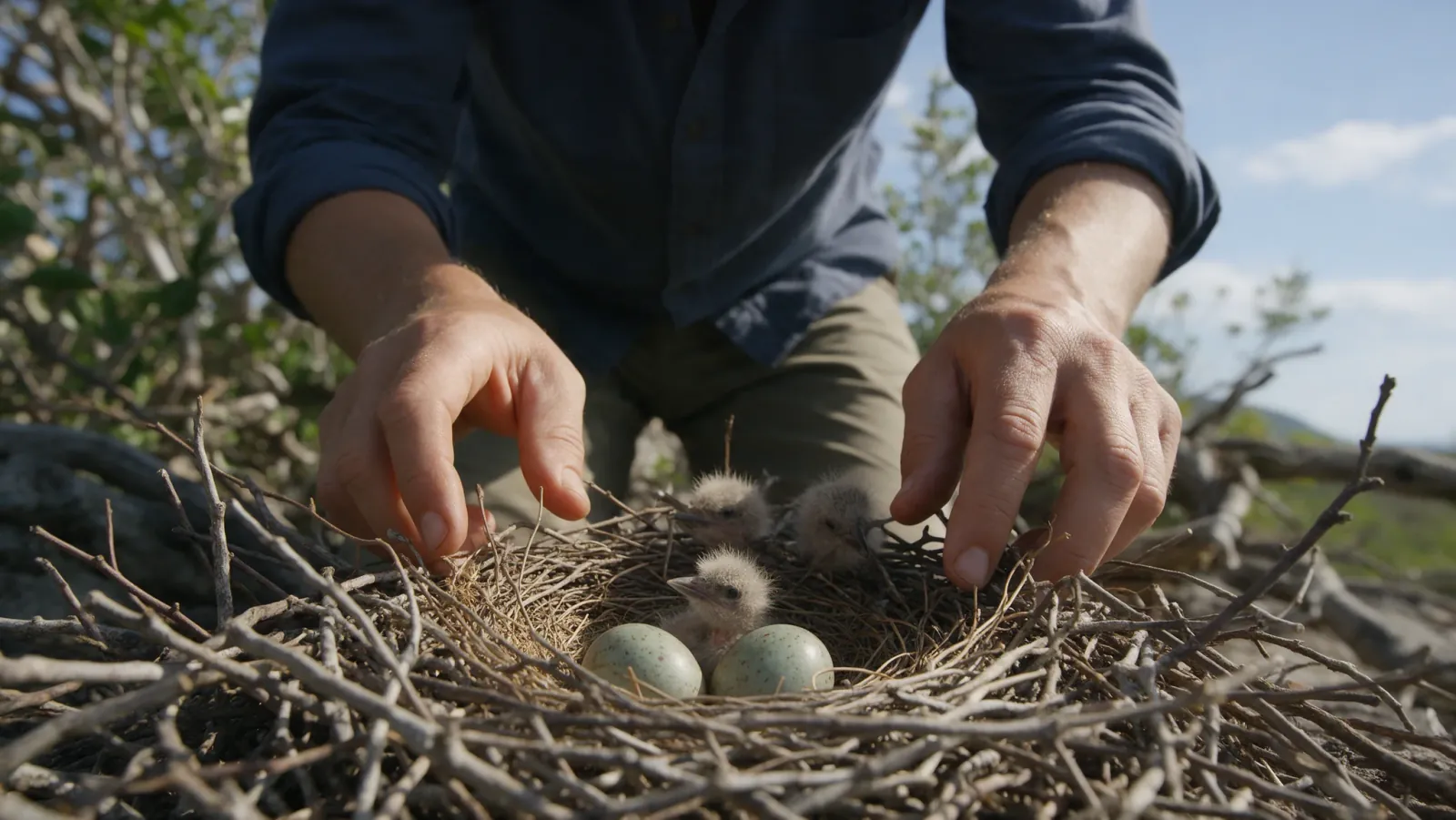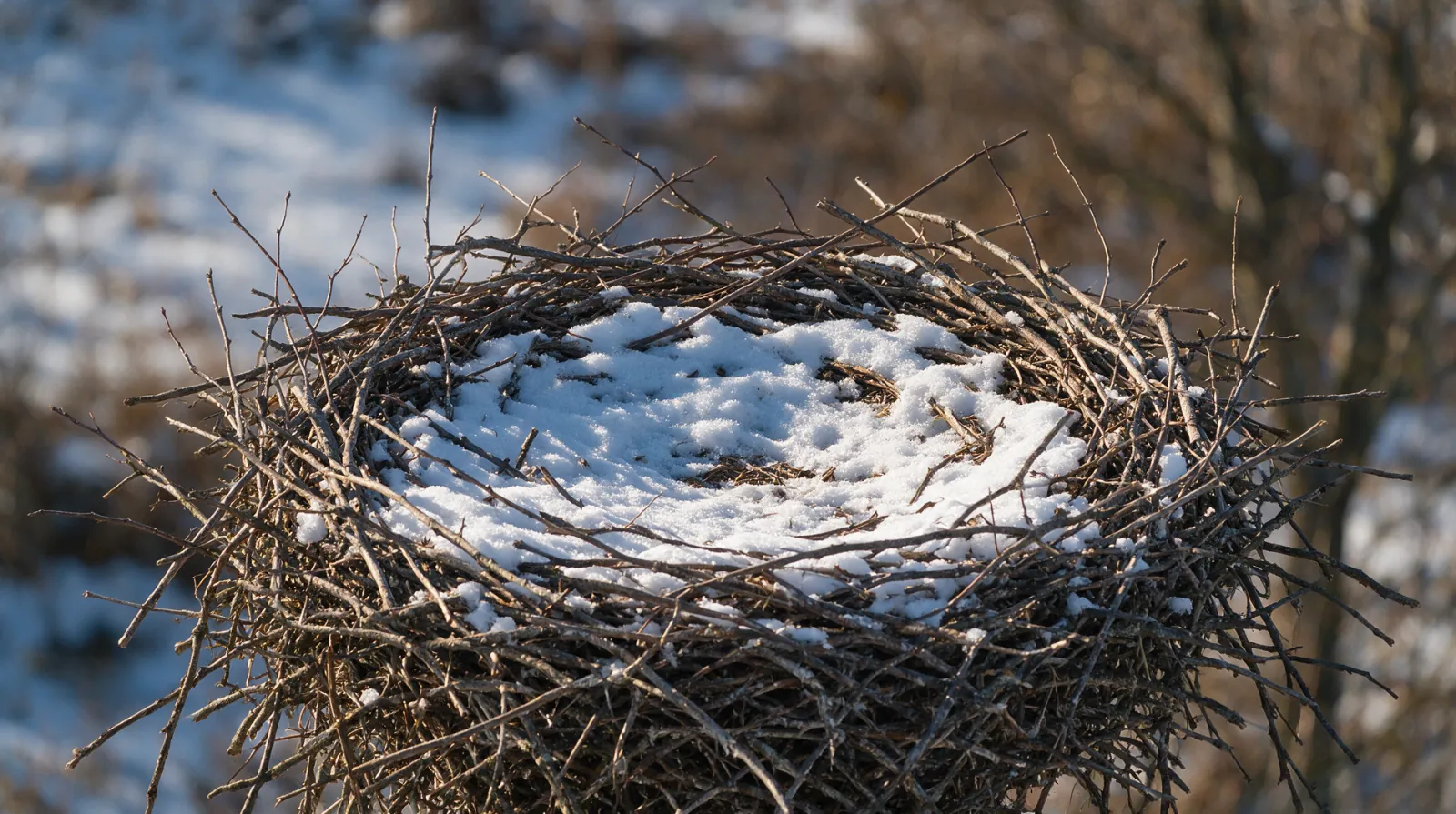
A white stork nest is mostly what the pair can lift. It is a platform of sticks, twigs, and branches, bound together with soil and lined with softer material. From the road it looks like a careless heap with a dent in the top, and that is close to what it is.
A frame of sticks
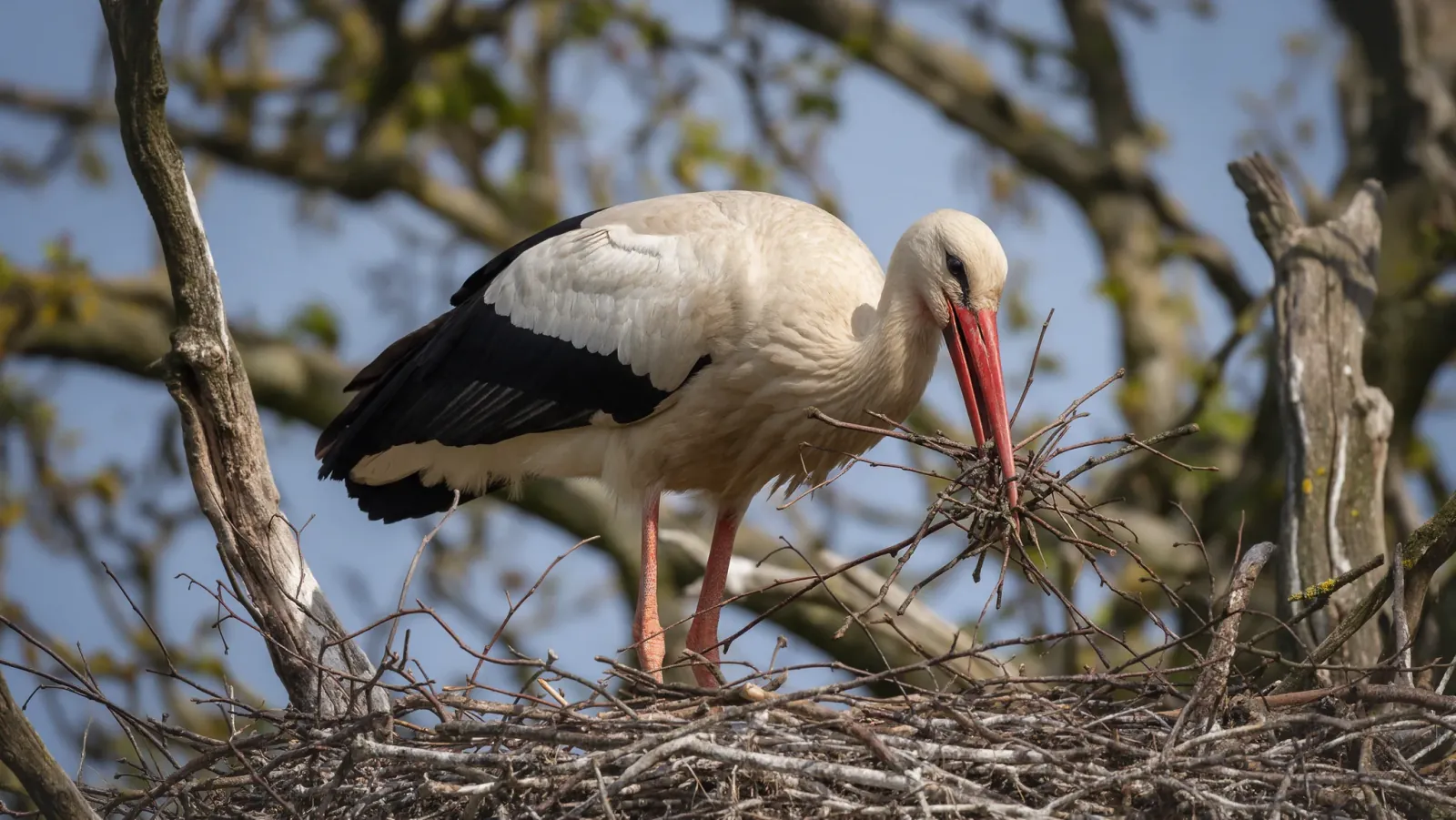
The outer structure is sticks. Some are small twigs. Some are branches as long as a bird's body. The pair collects them from the ground, from fields, and from old nests, and carries them one at a time to the platform.
The sticks are not arranged in a pattern. They are dropped, pushed, and wedged until they hold. A stork nest looks careless because it is built by feel, and the result is strong enough to hold a family and light enough to sit on a roof. The rim takes the weight of a landing bird, and the centre takes the eggs.
A stork builds by wedging, and the nest holds because the sticks press against one another. The pair tests the work with its feet. A stick that shifts under a bird is pushed again or pulled out.
Soil and dung
Between the sticks there is soil. The birds bring earth in their bills and press it into the gaps. When rain falls, the soil settles and binds the sticks together. The nest becomes a single mass rather than a loose heap.
Storks also use dung, which helps hold the structure and may help regulate temperature. The nest is a working structure, and it is built from whatever the pair can find. The soil turns a loose heap of sticks into a single mass.
A nest that has stood through a wet spring has had time to settle. The birds add soil through the season, and the surface is pressed flat by sitting bodies. The floor of the cup becomes smooth under the eggs.
A nest that has been used for several seasons has a cup like a shallow bowl, pressed by many sitting birds over many springs. The lining is renewed, and the shape underneath stays.
The soft cup
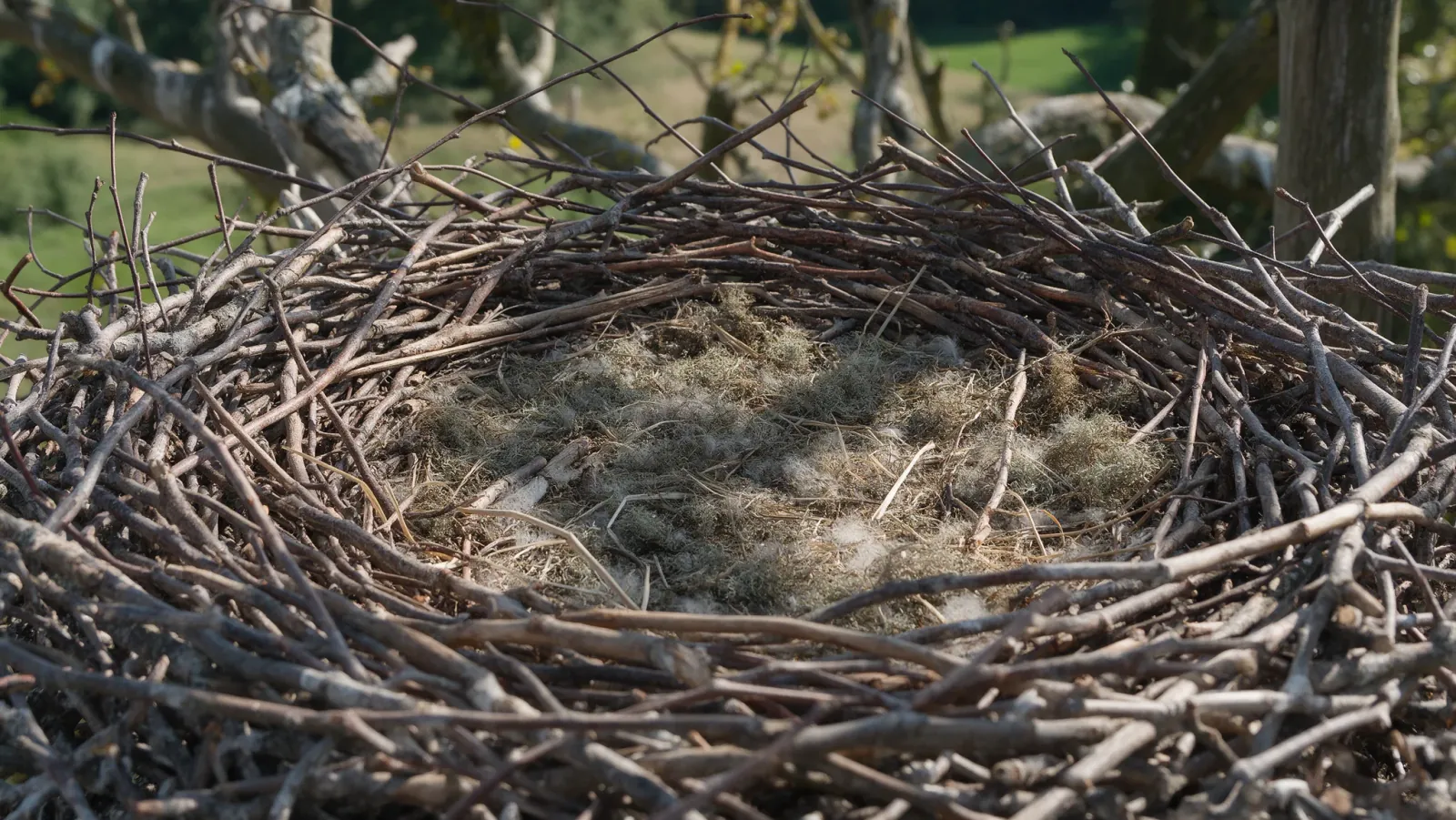
The cup at the top of the nest is lined with grass, moss, leaves, and soft plant material. The pair adds fresh lining each spring, and may add more when the chicks are small. The lining cushions the eggs and keeps them from rolling against the sticks, and it holds warmth in a cold spring.
Storks nest near people, and their nests contain pieces of human life. Rags, paper, string, and plastic turn up in the structure. The birds do not choose these materials for their colour. They choose them because they are available and easy to carry. A piece of cloth works like a piece of moss if it is soft and the right size.
A nest in a village may hold a mixture of natural and human material, and the birds do not distinguish between them. The contents are a sample of the place, assembled by birds that pick up what the weather and the people leave within reach.
The lining is the part the eggs touch, and it is the part the pair rebuilds most often. It is also the part that makes one nest different from the next, because the materials come from the place around it.
Why storks build high
A stork is a large bird with a long takeoff. It needs space below it to get into the air. A nest on the ground would trap it. A nest high in a tree gives it a clear drop and a clean line into the wind. Height is also safety. Foxes, dogs, and people can reach a low nest, and a high nest is out of reach of most ground predators.
Before roofs and poles, white storks nested in tall trees, cliffs, and rocky outcrops. A high fork in a broad tree still suits them. The fork must be wide enough to hold a platform and strong enough to carry its weight, and an old tree with thick limbs is ideal. The tree must be near food, because a nest too far from wet meadows makes every feeding trip longer.
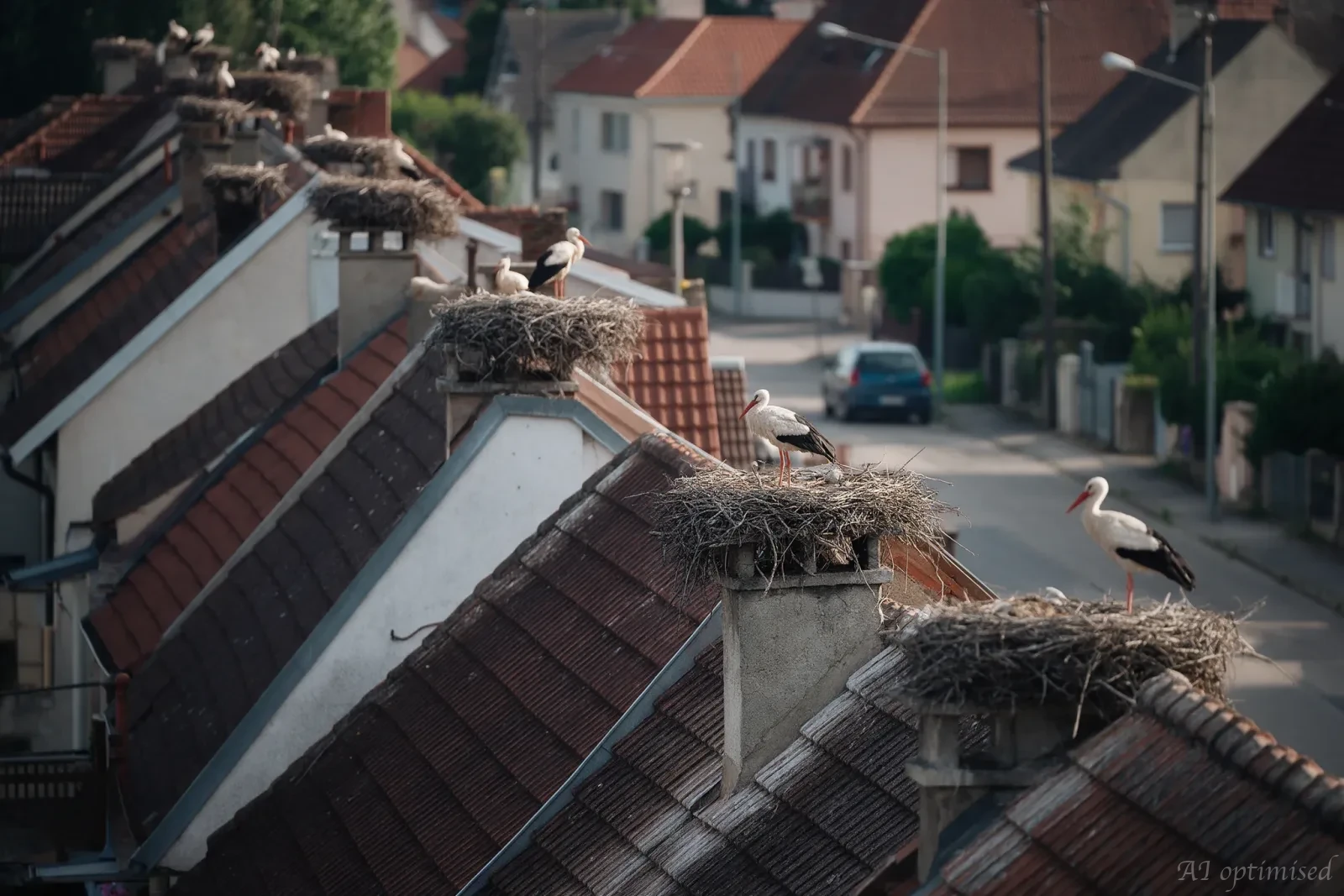
Height gives a stork two things: safety from the ground and a clear path into the air. Roofs and poles now provide both across much of Europe, and a chimney comes with a ready-made platform. The shift followed people. The instinct stayed the same.
A tree nest is not as stable as a nest on a chimney. The branches move in the wind, and the whole platform sways. The chicks learn to ride the movement before they can fly, and the flexible structure absorbs wind that a rigid one would crack under.
A nest that grows
A stork nest is always under construction. Each spring the returning pair repairs what winter damaged and adds new material. Sticks are piled on sticks. Soil and grass are pressed into the gaps. The platform rises and widens.
An old nest can be enormous. It may weigh far more than the birds that use it, and it may cover a chimney or the top of a pole completely. Some nests become landmarks in a village, visible from the road and known to the people who live there. The same nest may be used by a pair, then by another pair, then by the children of the first pair.
A stork nest is built by many pairs and owned by one at a time. The structure is a record of every season it has survived, and the site persists while the birds that use it change. A good site is hard to find, and returning to a known nest saves the days a pair would spend searching and building from nothing.
The nest is a record of the place as well as the season. The sticks come from the fields around it, the soil from the ground below, and the lining from the grass and the village. No two nests look quite the same, and each one belongs to its own stretch of road.
The repair work of spring
Winter leaves damage. Wind loosens the outer sticks, rain softens the soil that holds them, and frost lifts the base. A nest that stood firm in August may be a ragged heap by March. Some nests do not survive at all. A chimney can collapse, a pole can fall, and a platform can slide off a roof.
The male usually arrives first and begins the repair alone. He lands with a stick, sets it on the platform, and flies for another. There is no female to place the sticks, so he piles them where he can. When she arrives, the pace changes. She takes over the placement, and the two birds work as a team.
The repair ends when the first egg is laid. By then the nest is a solid platform with a soft cup in the middle. A pair that returns late may find another pair already settled on its platform. The rightful owners clatter and display, and the occupiers clatter back. Most disputes are settled by noise, and the loser builds again or takes an empty site. The loss costs days, and days matter in a season that is already short.
If the old pair keeps the platform, the repair resumes where it stopped. The female sets the sticks that were scattered, and the nest returns to its shape. The first egg waits until the work is done. The nest is repaired before it is used, and the repair is the first work of the pair.
Explore the gift