Spain holds one of the largest white stork populations in Europe, and a growing number of those birds no longer fly to Africa for winter.
The change is recent enough that older birdwatchers remember when every Spanish stork left in late summer. Now many stay, and the reason is food.
The winter that stopped
White storks are long-distance migrants. Birds from western Europe cross at Gibraltar and spend winter in Africa. In Spain, a growing share of the population stays through winter, feeding at landfills and in rice fields. Mild winters help. Reliable food helps more.
A stork that stays saves the cost of a long flight. It also starts the breeding season earlier, and early birds get the best nests.
Landfill life
Open waste sites hold a lot of food. Storks gather on the edges, walk among the rubbish and pick out scraps. The food is reliable, and it comes with plastic, poor waste and disease. Plastic, poor quality waste and disease are part of the bargain.
The dumps have changed the map. Villages near a landfill may hold more storks in winter than they did when the birds migrated. Towns without one may lose them.
The old farmland
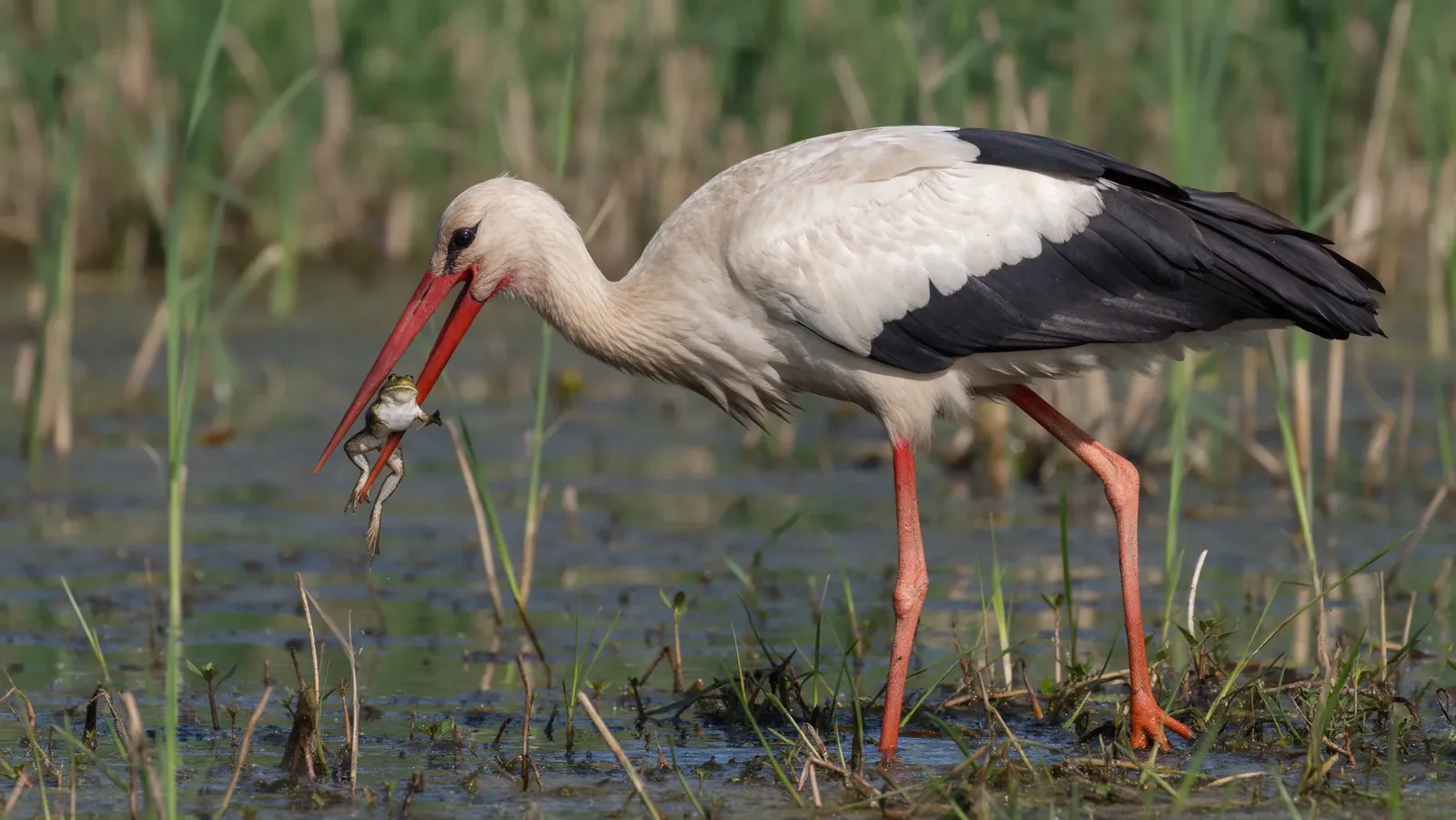
Away from the dumps, storks still feed in wet meadows, rice fields, marshes and the dehesa of the south and west. Frogs, insects, grasshoppers, voles and fish make up the natural diet. Irrigation and drainage decide how much of that food is available.
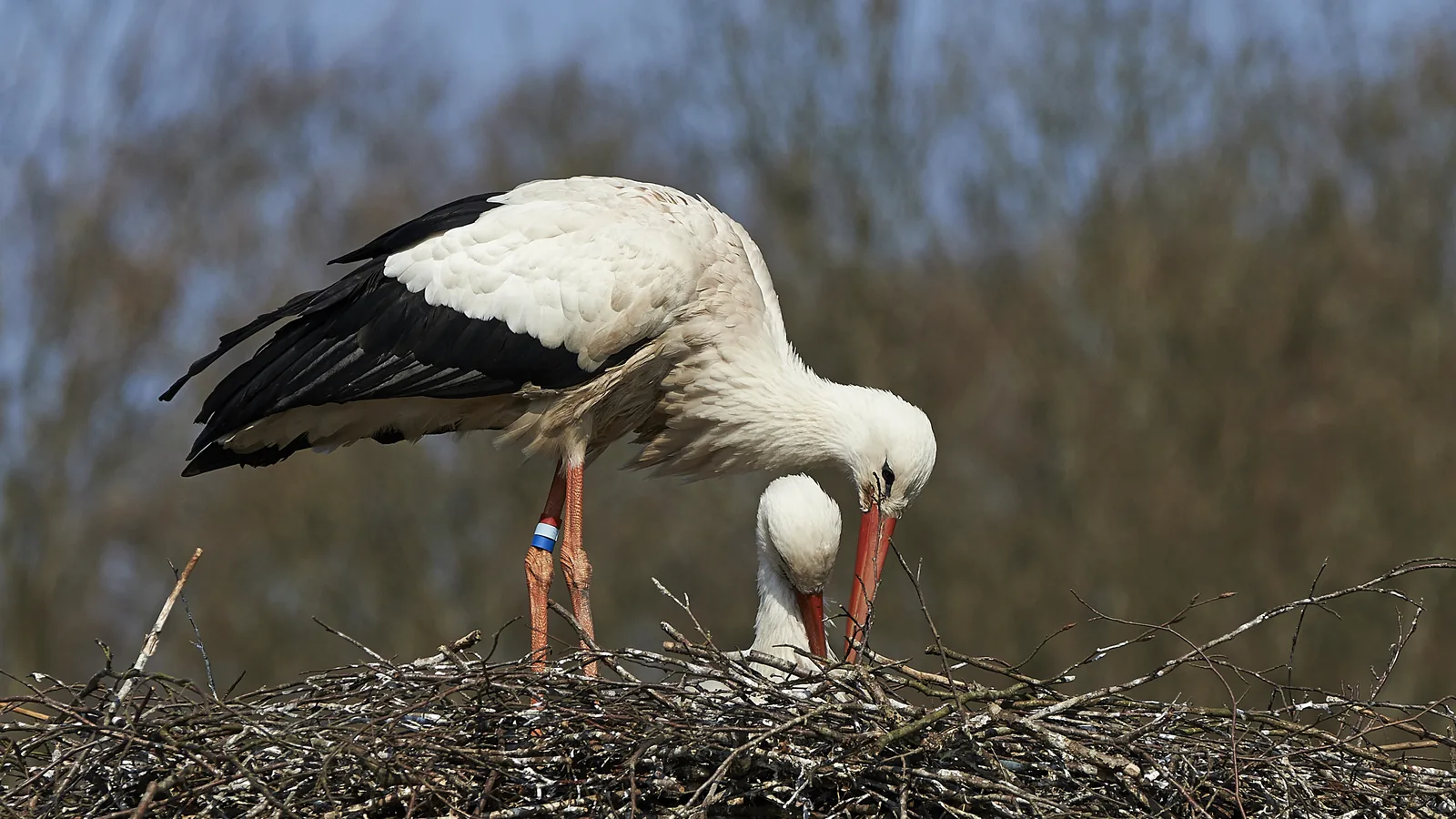
Spain's storks nest on churches, towers, pylons, trees and rooftops. A big nest on a bell tower is a common village picture, and some towers carry several nests at once.
Nests and people
A stork nest is heavy and it grows. On a church tower it can block a gutter or damage tiles, and on a chimney it can be a fire risk. Towns and conservation groups build platforms to move nests to safer spots.
The birds are protected, and removing a nest needs care and permission. In many villages the stork is part of the identity, and people watch the nests through the season.
A stork's day
A breeding stork starts early. The bird leaves the nest at first light, flies to a wet field or a dump, fills its bill and throat with food, and returns to feed the chicks. The trip repeats through the day, and the nest is never left alone for long.
By July the chicks are as big as their parents and stand at the edge of the nest, testing their wings. Fledging happens over days, and the family stays together in the fields before the season turns.
Migration still happens
Many Spanish storks still leave. Birds from the north and west cross to Africa, and the population is a mix of residents and migrants. The gathering at Gibraltar in late summer is one of the great bird movements of Europe.
A bird that winters in Spain and a bird that winters in Mali may nest in the same village. The two habits sit side by side.
Where to watch
Extremadura, Andalusia, Castile and the wetlands of Doñana. Spring is the best season, when nests are occupied and birds are feeding chicks. Keep back from nests on buildings and follow local advice. The birds that stay and the birds that go can be seen in the same week, sometimes in the same field.
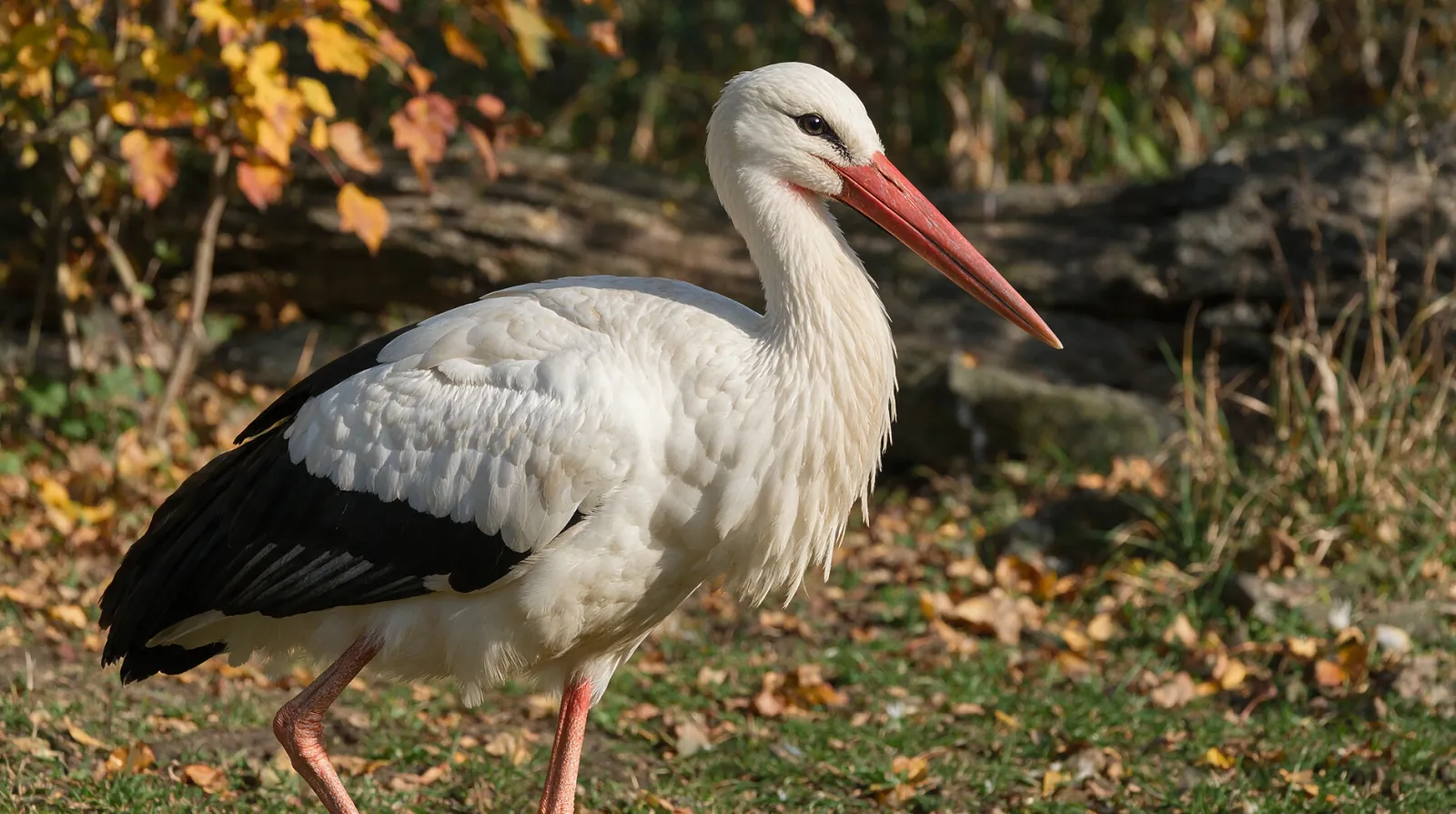
The white stork is unmistakable in Spain: white body, black flight feathers, red legs, long red bill. A bird standing in a rice field at dawn is the older picture. A bird on a landfill is the newer one.
Explore the gift