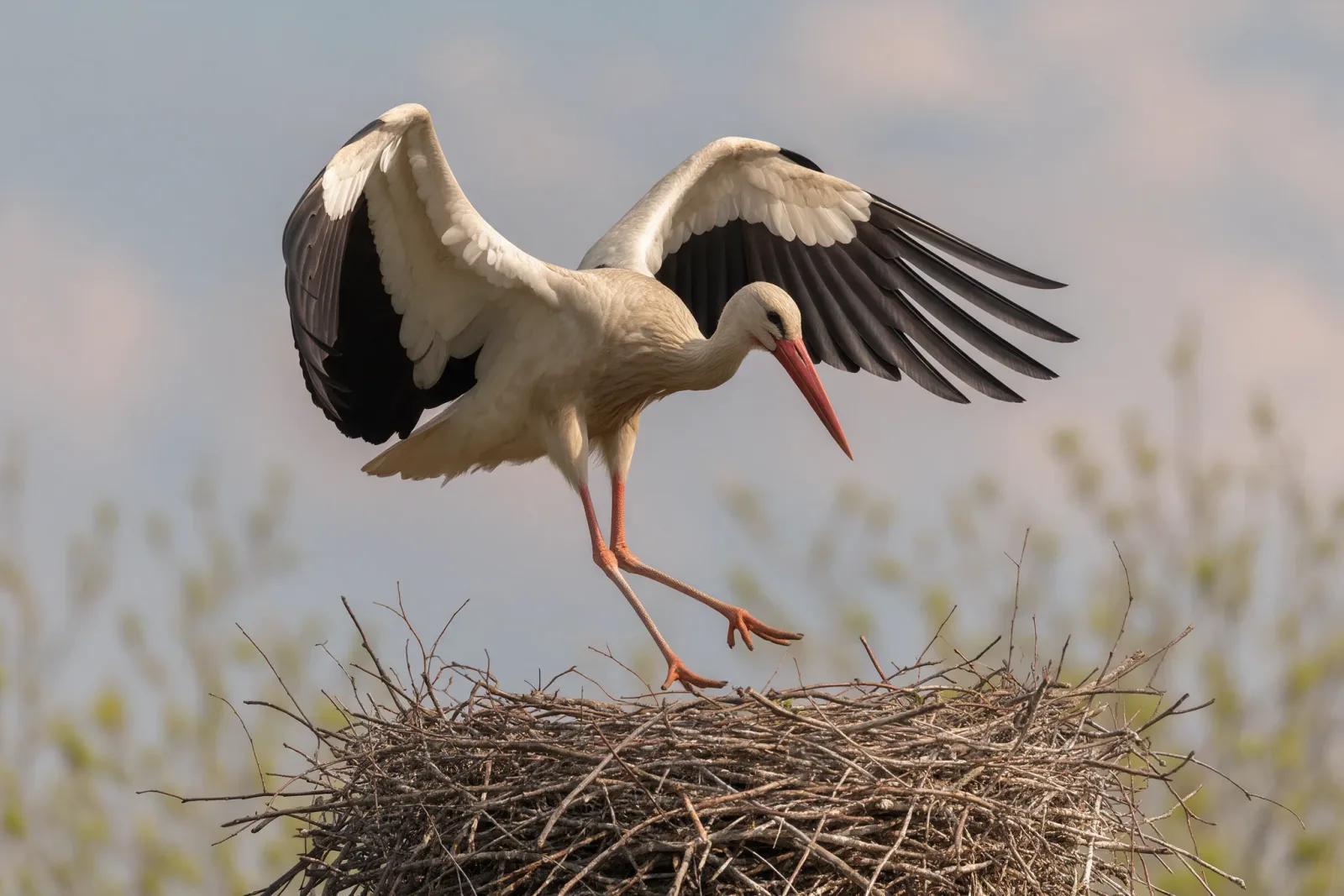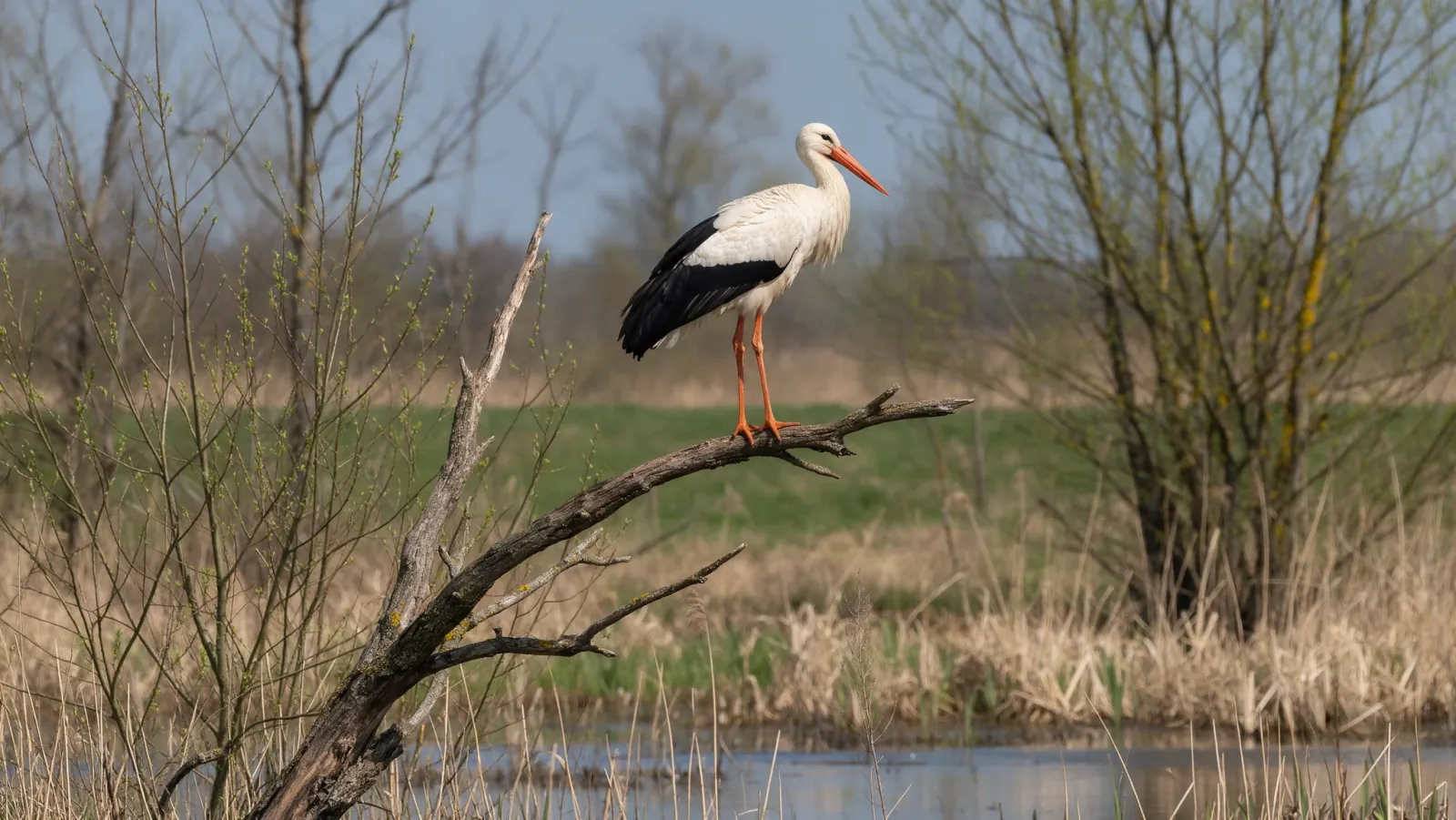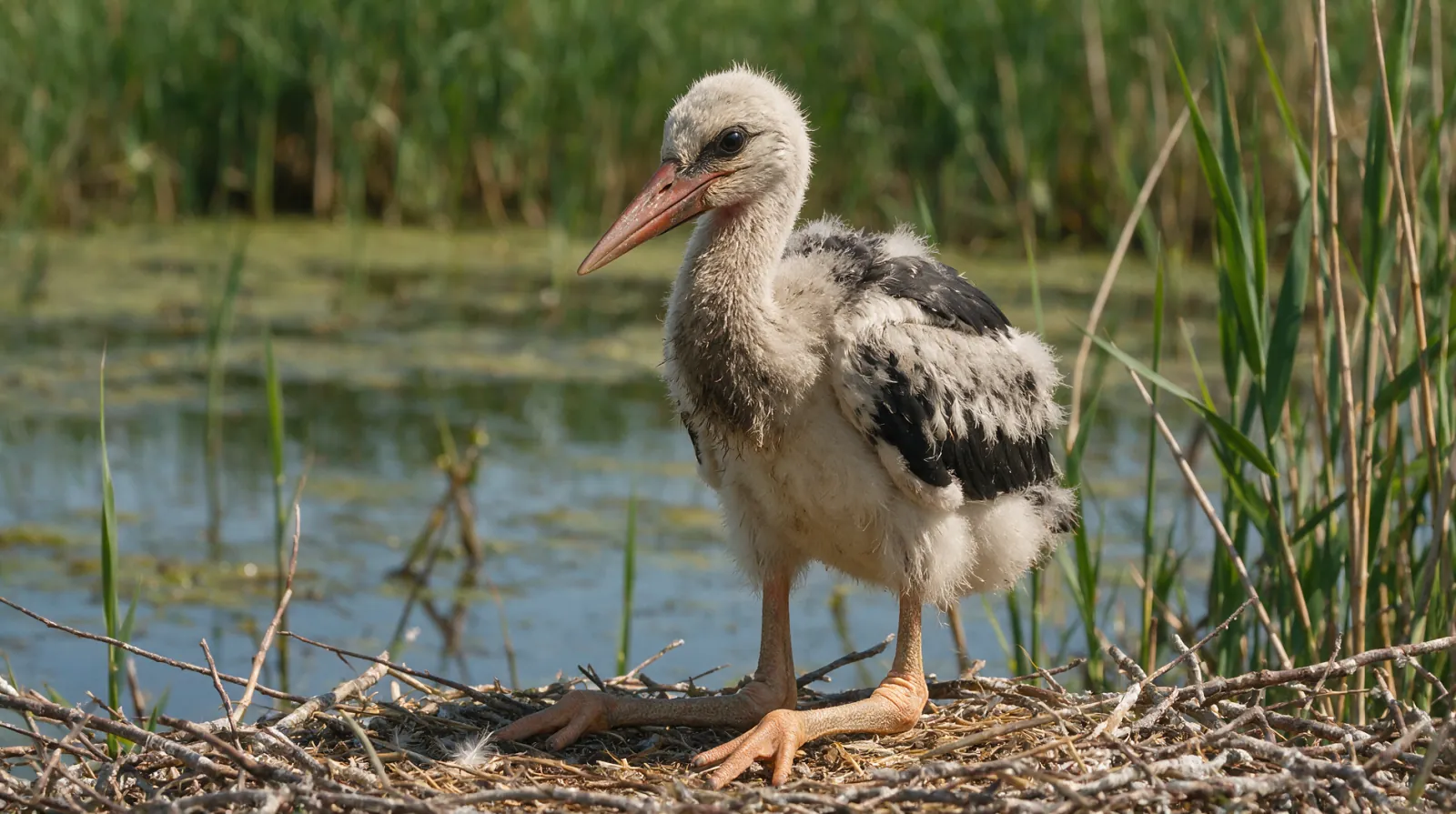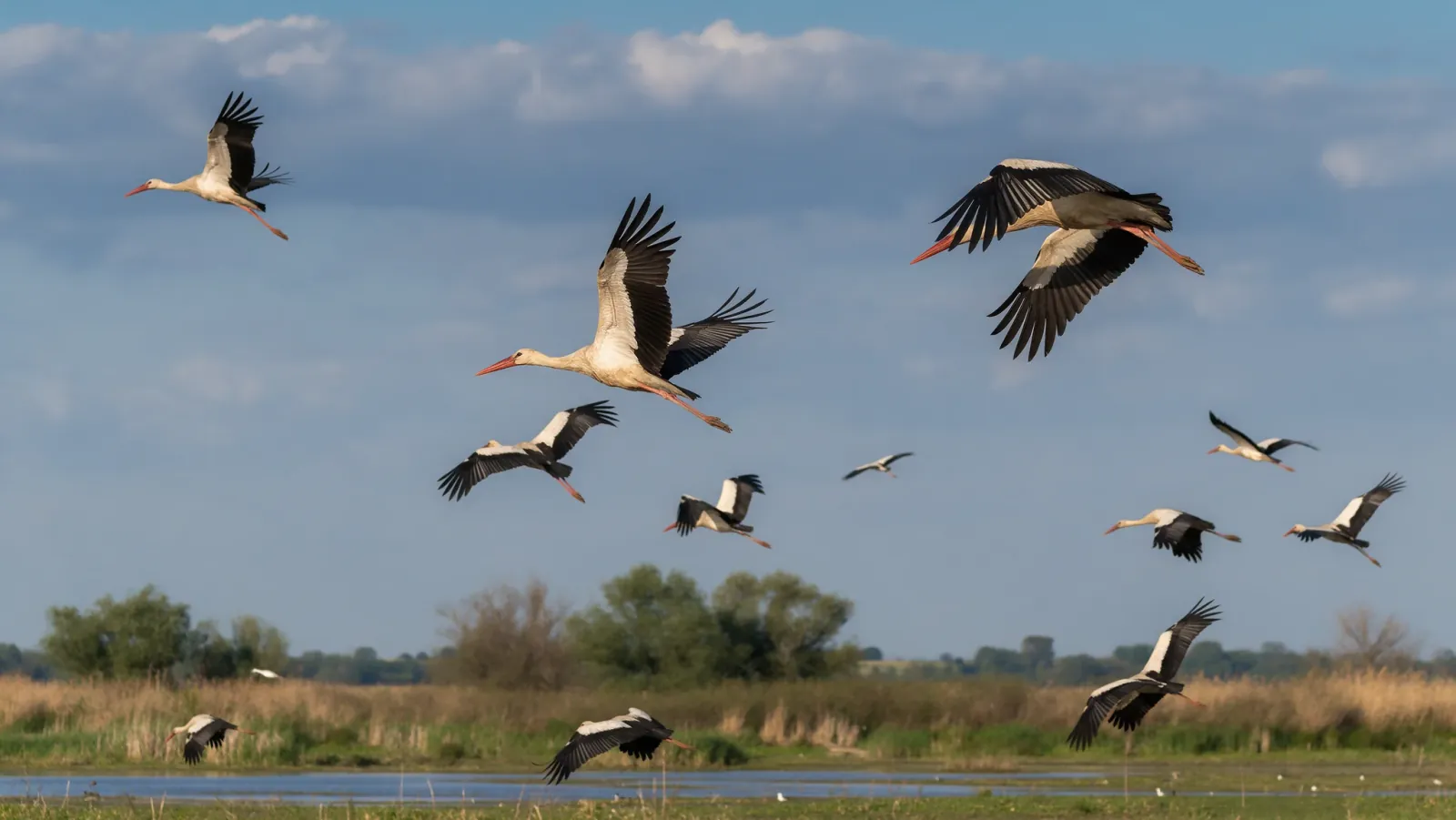
The same wind that hurries a stork south can hold it on the ground for a week. Wind decides the pace of the migration, and the birds plan around it. A field that is full of storks at dawn can be empty by noon, and the reason is rarely visible from below.
What a tailwind gives
A wind from behind pushes a gliding bird along and reduces the effort of every mile. On a good tailwind day a flock can leave a field in the morning and be far away by evening, with the birds arriving in better condition than they left. The fields empty by noon on those days. Everyone on the ground notices, and the birds take the help while it lasts.
A migrating flock on a strong tailwind is a steady, fast line of birds. The pace is set by the air, and a bird that would otherwise stop to feed keeps going. The day's distance can be remarkable, and the fat saved on a day like that is fat available for the desert or the sea.
A day like that also changes where the birds stop. A flock that has gained a hundred miles before lunch has a different set of fields to choose from, and the whole rhythm of the journey shifts forward. The next rest day comes sooner, in better country, with more left in reserve.
What a headwind costs
A wind from ahead is another matter. A stork flying into it must work harder for every mile, and a strong headwind can stop progress altogether. The birds feel this quickly. They drop lower, change heading, or come down and wait. Flying into a headwind spends fat without gaining ground, and a migrating bird cannot afford many days like that.
A week of contrary wind can cost a flock more fuel than a desert crossing. Waiting is the usual answer. A flock held by a headwind stands in the fields, feeds, and watches the sky. The wait can last a day or a week. The birds do not seem anxious. A stork standing in a field with its back to the wind is doing the sensible thing.
The wait costs time, and time costs food. A flock that sits for a week must feed harder when it moves, and the stopover marshes along the route carry the extra burden. A long hold in one valley can ripple down the whole flyway.
Wind at height
The air at a thousand metres can move in a different direction from the air near the ground. Birds climb to find a better breeze, and the direction can be different at different heights. A flock may circle up through a slack layer and find a tailwind above it.
Reading the air at height is part of the skill of migration, and old birds are better at it. A young bird follows the adults up and learns what a good layer feels like. The same climb that gains height can also gain a push, and the two together decide how far the flock travels before it comes down.
A bird that climbs into the wrong layer can be pushed sideways for hours before it notices. The old birds test the air at several heights before they commit, and the young ones follow. That patience at the start of a flying day saves effort for the rest of it.
The two seasons
Autumn winds are often steady and favourable, and the thermals are strong over land that has been baked all summer. Spring weather is less reliable. Cold fronts move across Europe, and a flock can be held for days south of the mountains.
In spring the winds that help come from the south. A warm southerly can carry a flock across the Mediterranean and up through Europe in a few days. A cold northerly can stop the whole movement, and the birds pile up on the southern shores. Spring is a deadline: the best nest sites go to the early arrivals. In a late spring the wait stretches, and the first nests are claimed by birds that took the risk.
A cold northerly can pile the birds up on the southern shores for a week, and the gathering grows until the wind turns. Then the whole movement releases at once, and a coast that was empty one morning is full of birds the next. The spring sky is a queue, and the queue moves in bursts.
The autumn sky is a different place. There is no nest to reach, the days are still warm, and the flocks are loose and mixed. A bird that arrives late in Africa has lost little. The hurry belongs to the other half of the year.
Autumn begins with long light and ends with short afternoons, and the birds are flying into the dark half of the year. Spring begins with short days and lengthens as they travel, so every mile north brings more light. A stork that leaves Africa in February reaches Europe in March, when the evenings are already opening.
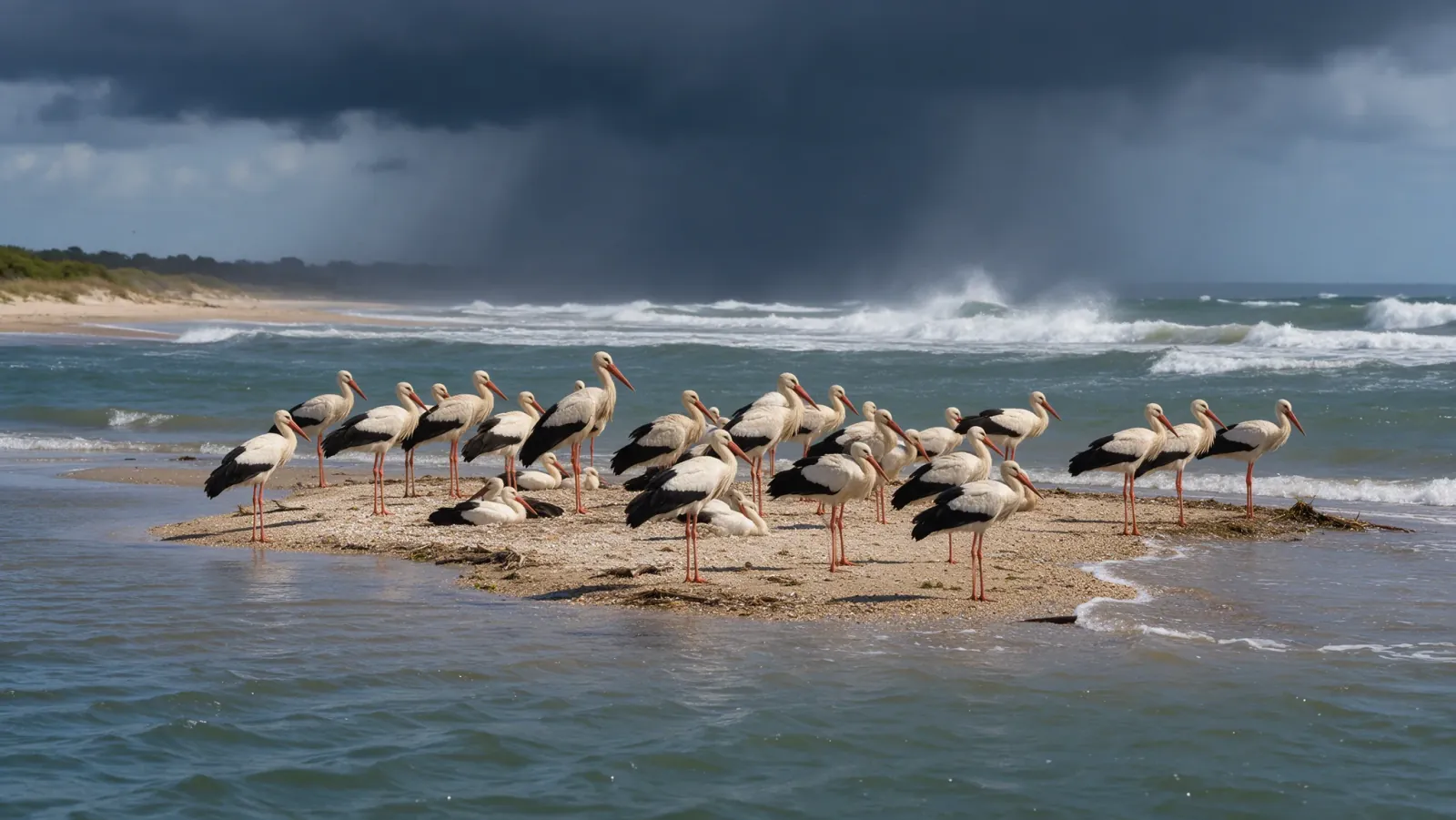
The storm and the pause
Low pressure over the water changes the plan long before the first bird leaves the ground. When a storm settles over the crossing, the birds do not try to fight it. They stay on the ground, feed quietly and wait. A storm brings strong headwinds, low cloud, and rain that soaks the feathers and makes every flap heavier.
The birds watch the wind direction as closely as the rain. A crossing made against a strong side wind is twice the work, so the storks wait for the wind to turn behind them. That moment usually comes in the clear air behind a passing front, when the sky has been washed and the ground begins to warm again. A passing front delays the crossing and concentrates it, so the morning after can send a far larger crowd over the water than any ordinary day.
Not every bird reads the weather well. A young stork on its first migration can be caught out, and a bird that starts across just before a storm rolls in has a hard, dangerous flight ahead. Some turn back and wait. Others push on and are blown wide of the crossing, and a few are lost at sea. The ones that survive learn to wait.
The day after
A strong wind is often followed by a flat calm, and calm is its own problem. Without a breeze the thermals rise straight and the birds climb well, but the crossings need a fair wind as much as height. The storks wait for the combination of lift and a following wind.
A calm day can also be a day of low cloud, and low cloud keeps the birds down as surely as a headwind. The combination the storks need is narrow, which is why so much of migration looks like standing still. The birds are fresh enough to fly and have nowhere to go. They are waiting for a sky that will carry them.
When it comes, the whole gathering leaves at once, in a rush that empties the shore. The fields behind it fill again with birds that were not ready, and the cycle of waiting and going starts over. Wind is the part of migration that people feel on their faces without thinking about the birds. On a blustery day in March, the storks on the roof may be waiting for exactly the same thing you are.
Explore the gift