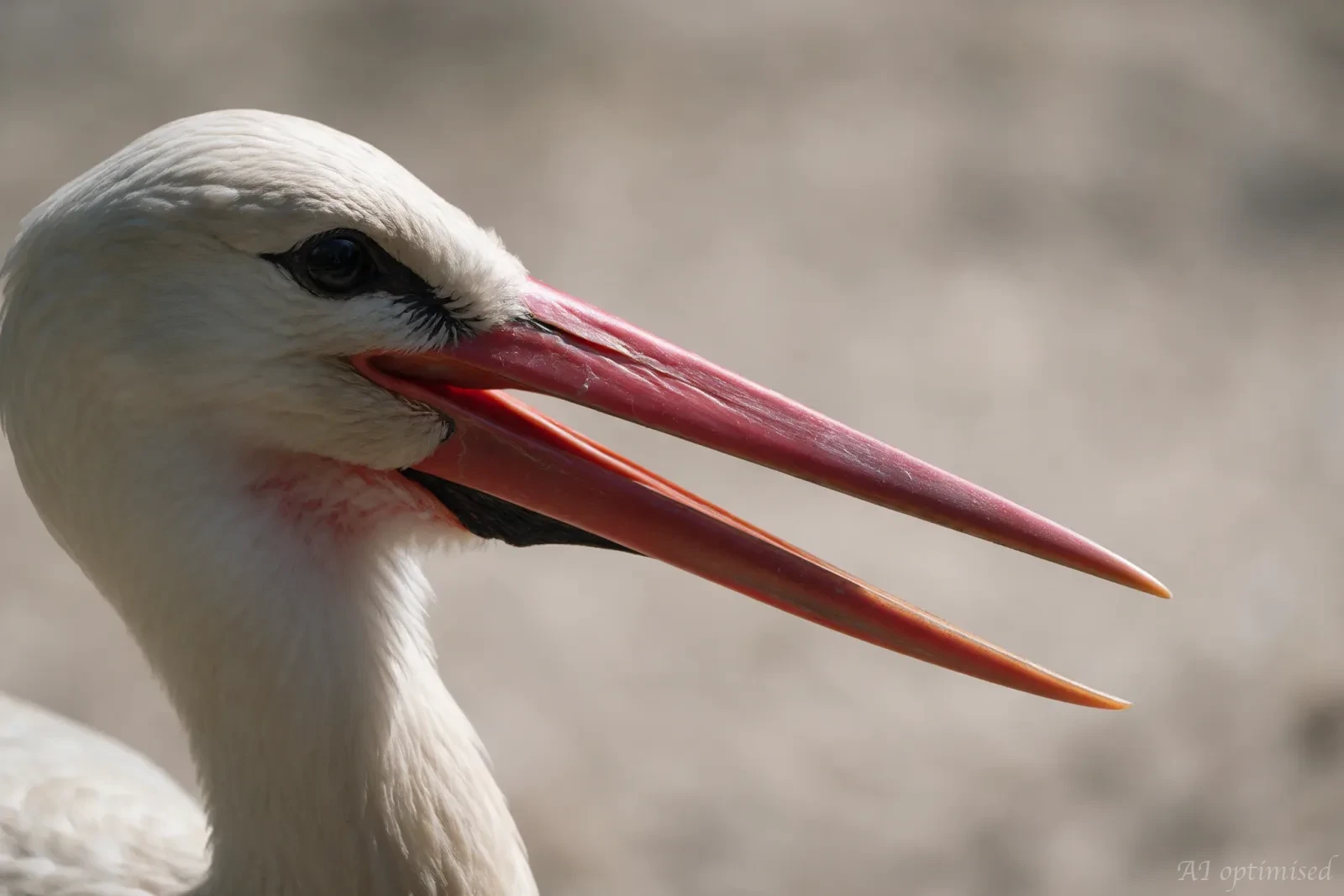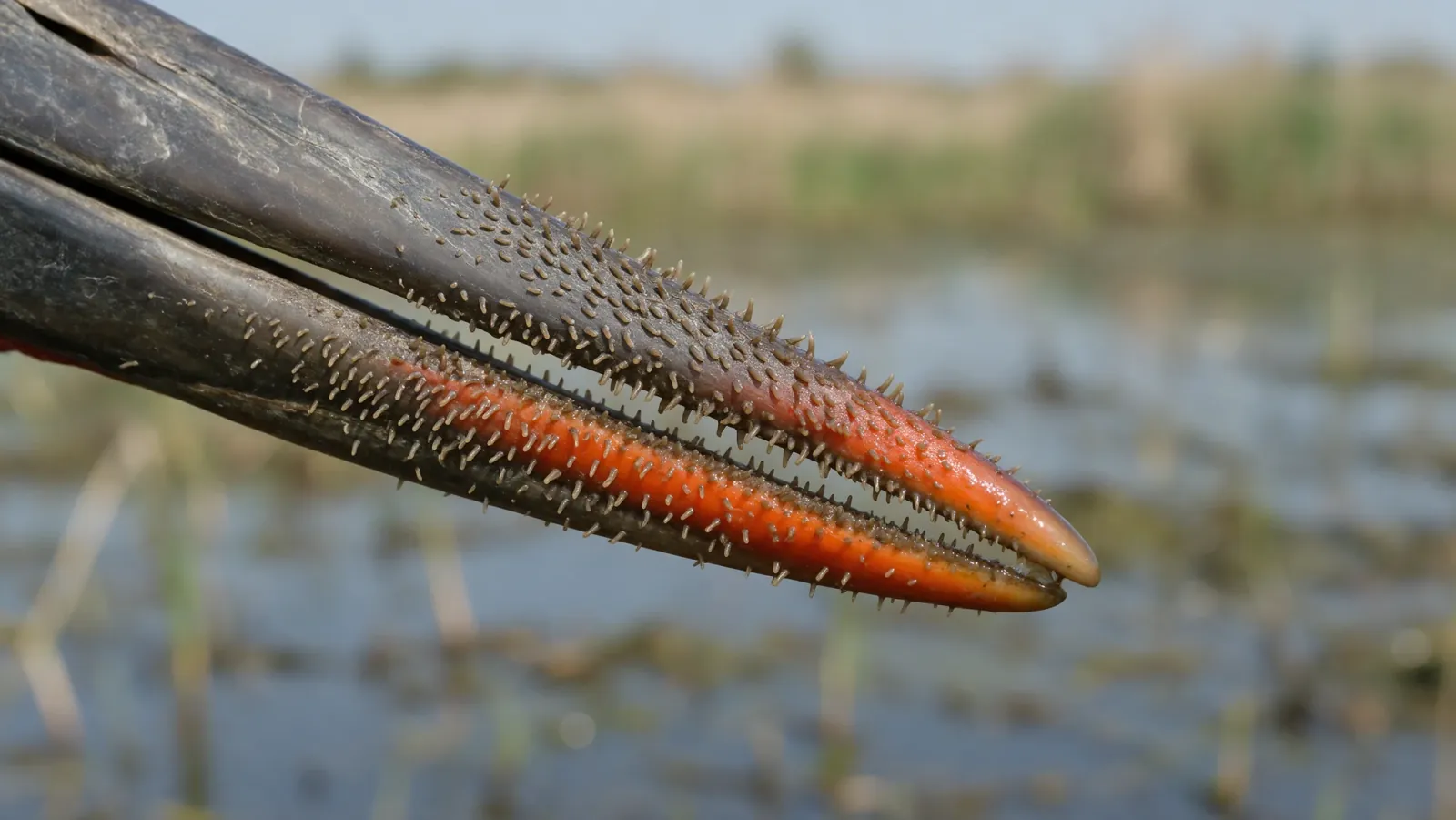
A white stork's bill is long, pointed and red. It works as a spear, a probe and a pair of fingertips. Near the tip, under the hard surface, sit clusters of tiny touch sensors. They let the bird feel prey in mud and dark water where its eyes are useless.
A shape made for reaching
The bill closes with a quick, clean snap. Its length lets the stork reach into grass and shallow water while keeping its body and legs clear. The pointed tip slips easily into soft ground. When the two halves meet, they close along their whole length, so a small, fast creature has little room to escape.
The shape is simple and effective. The stork reaches, snaps and swallows, and the whole motion takes a moment. The long bill makes that single motion possible. The bird can stand still, keep its feet out of the mud and put the tip exactly where the eye has found movement.
A young stork's bill is shorter and paler than an adult's. It darkens and lengthens as the bird grows, and by the first migration it has the long red tool of the species. The bill also grows slowly and wears at the tip. A stork that probes hard ground or carries many sticks will show a slightly blunted end, and the surface can chip. The bird keeps using it, and the wear is part of a working life.
Sensors under the surface
The tip of the bill is packed with nerve endings that respond to touch and vibration. They work the way fingertips do, reading pressure and small movements. When the bill dips into muddy water, those sensors pick up the faint tremor of a worm or the slight push of a frog moving in the dark.
The stork probes and waits. A touch, a tremor, and the bill closes before the prey knows it has been found. This is how a stork hunts in water too murky to see through. It is also why the bird can feed in places that look empty to us.
The tip is where the senses gather, and the bird uses two kinds of information at once. Its eyes scan the water ahead while the bill reads the ground close up. One sense works at a distance and the other works by contact, and together they cover the places where a frog might hide.
The gland above the tail
A small bump of skin sits where the tail feathers meet the body, hidden under the plumage. It produces a thin, waxy oil. When the stork preens, it presses its bill against the gland and carries the oil away to the feathers.
A little goes a long way. The oil is thin, and the bird spreads it in small amounts across a large surface. The gland is the workshop, and the bill is the brush. The bill that hunts and builds is also the tool that keeps the coat in order.
The oil does several things. It keeps each feather supple, so the wing can fold and unfold without cracking. It lays the tiny branches flat so the surface stays smooth. It also makes the feather less inviting to small pests.
The bill as a comb
The stork runs its long bill along each feather, straightening the barbs and pressing oil into them. The motion looks slow and deliberate. It is often done standing at the nest or at the edge of a field, the neck bent back over the body.
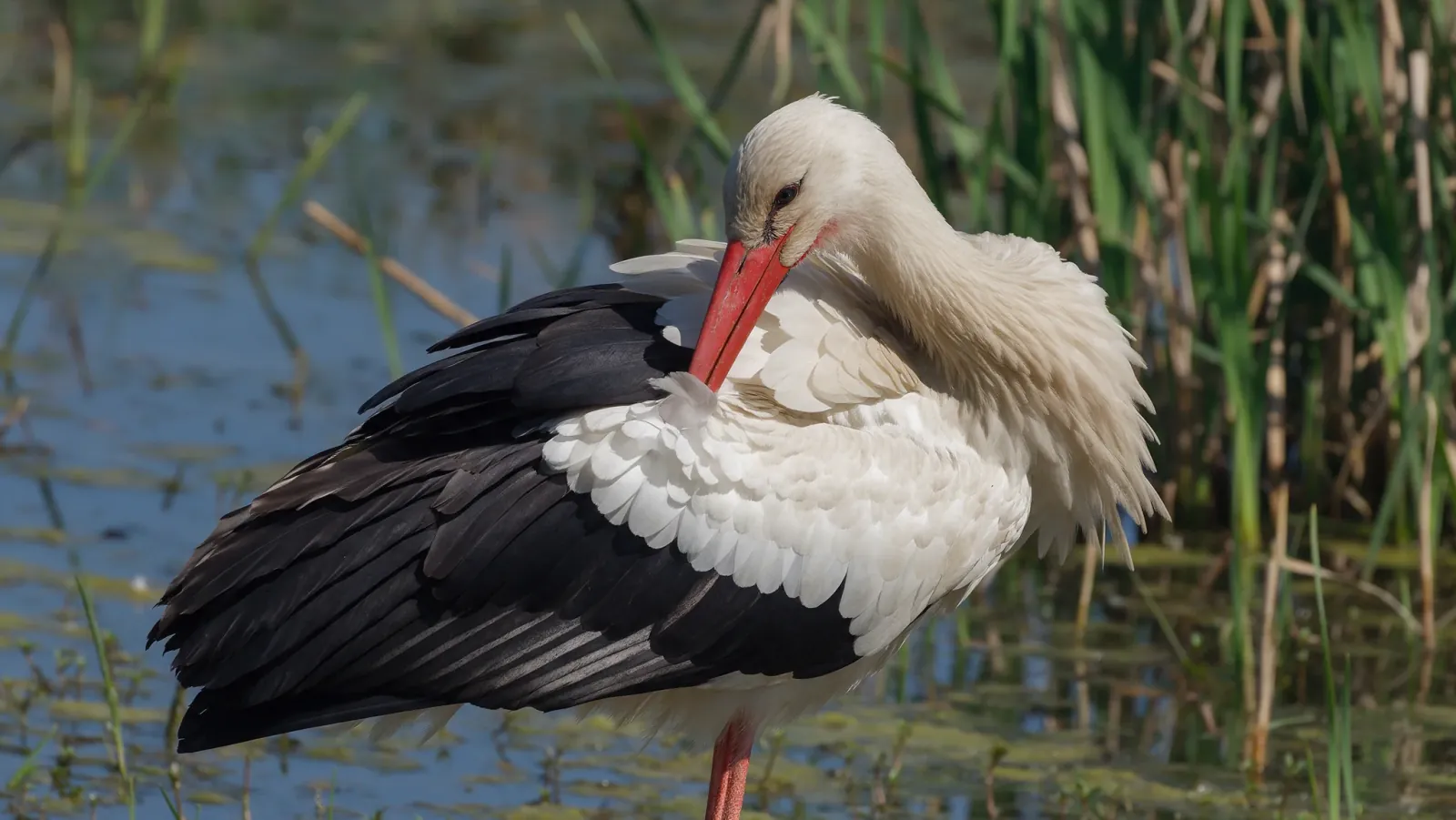
The head and neck are the difficult parts. A stork cannot reach every feather with its bill alone, so it uses a foot to scratch the head and neck, then draws those feathers through the bill. The motion is quick and practised. A bird in good condition keeps its plumage in order even in a busy nest.
A stork lives in mud, rain and dust. It leans over its chicks, wades through wet grass and brushes against the sticks of the nest. A neglected coat loses its smoothness, and a rough coat lets water reach the skin and drags in the air. Preening is the repair. Each session re-zips the feathers and lays down fresh oil.
Bathing and preening belong together. The stork wades into shallow water, ducks and flutters until the feathers are soaked, then steps out and begins the slow work of putting them right. The oil gland is visited again and again, and each feather is treated in turn.
Storks also sunbathe. A bird will spread its wings, settle on the ground and let the sun reach the skin between the feathers. The heat helps keep the plumage dry and the skin in good condition, and it is often followed by another round of preening. A stork preens most often after feeding and before roosting. The two quiet times frame the active part of the day.
Hooks that zip the coat
A stork can stand in a downpour and come away dry. Its coat works in two layers. The feathers are woven so tightly that water struggles to pass between them, and the oil the bird spreads while preening makes drops bead up and run off.
Each feather has a central shaft with many small branches. Each branch carries still smaller hooks that catch the branch beside it. The hooks fasten the feather into a smooth sheet, the way a zipper closes two edges of cloth. When every feather is zipped, the coat becomes one close surface. Water sits on top and finds no easy gap to the skin. The first line of defence is the way the feathers hold together.
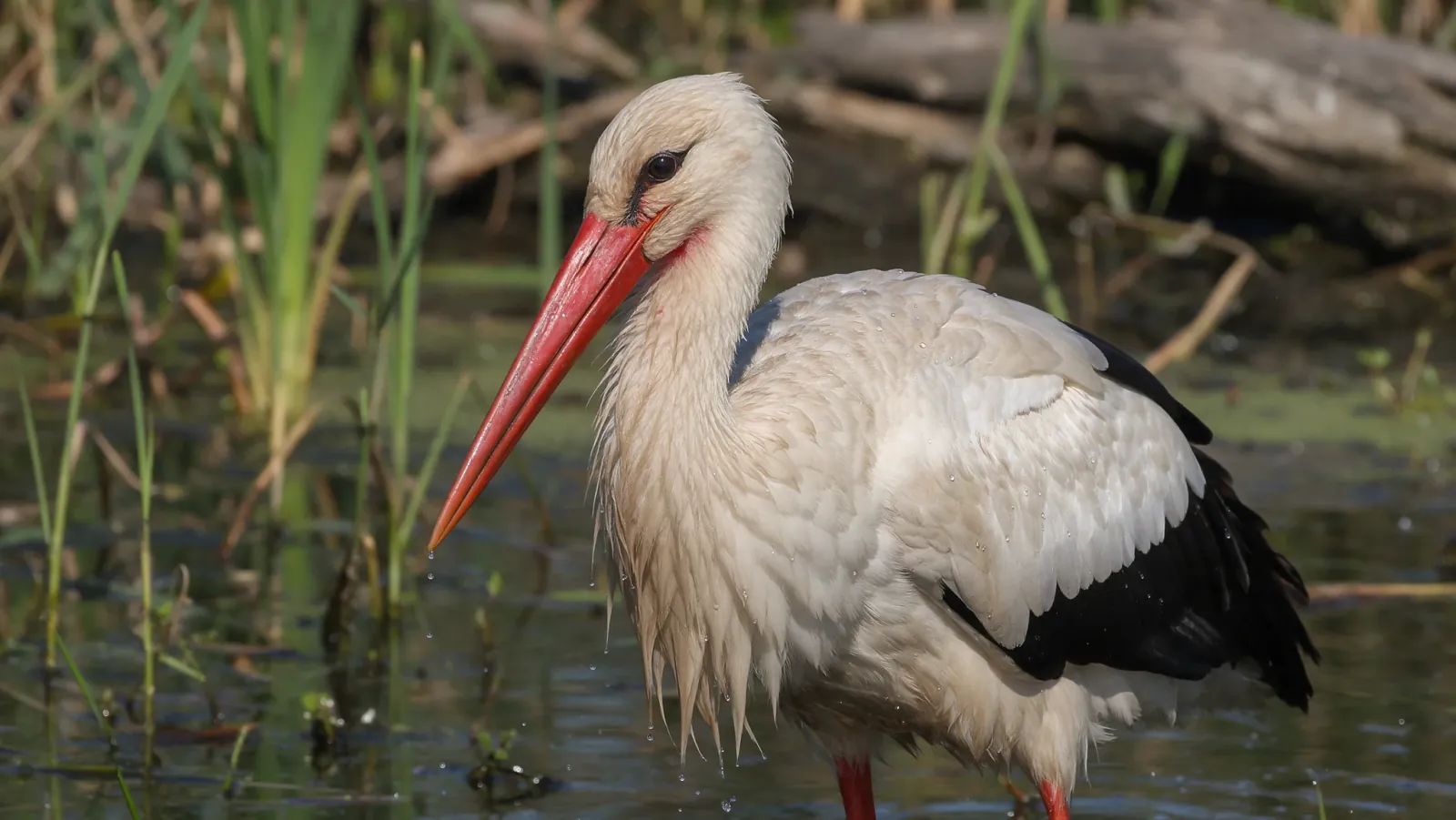
The second line is oil from the gland at the base of the tail. The stork spreads it during preening, coating the outer surface with a thin waxy layer. Water and oil do not mix, so raindrops bead on the treated feathers instead of soaking in. Drops gather into round beads and roll off the back, leaving the feathers dry underneath.
The structure does most of the work. Oil helps, but a feather whose hooks have come undone will leak even when it is oiled. The bird spends more time re-zipping the barbs than it spends at the gland, and that order of priorities is the right one.
Oil, rain and repair
A soaked bird is a cold bird. Wet feathers lose the air trapped between them, and that air is the insulation. Without it, body heat leaks away into the rain. A stork that could not keep dry would chill in a spring storm, and a chilled bird cannot sit on eggs or brood small chicks.
The dry coat also stays light. Wet feathers are heavy, and a heavy bird spends more effort flying. By staying dry, the stork keeps its warmth and keeps the weight off its wings.
The coat has to be renewed constantly. Oil wears away, hooks come undone, and every bath, wind and brush against the nest loosens the weave. This is why a stork preens so often. The waterproofing is a habit rather than a permanent finish. The bird in the rain looks untroubled because it has done the quiet work beforehand.
A bird that has been soaked for a long time loses the air layer and begins to chill. The stork answers by leaving the water, shaking out its feathers and preening at once. The oil gland gets extra attention, and the barbs are re-zipped one by one. In heavy rain a stork may simply stand with its back to the weather and wait. The coat sheds most of the water, and the bird conserves energy until the shower passes.
The same bill that feels for prey and builds the nest also keeps the coat in order. A stork on a wet morning is running two kinds of work through one instrument: the tip reads the ground for food, and the edge works oil into a feather. Both jobs happen with the same long red tool, and the coat stays dry through the next shower.
Explore the gift