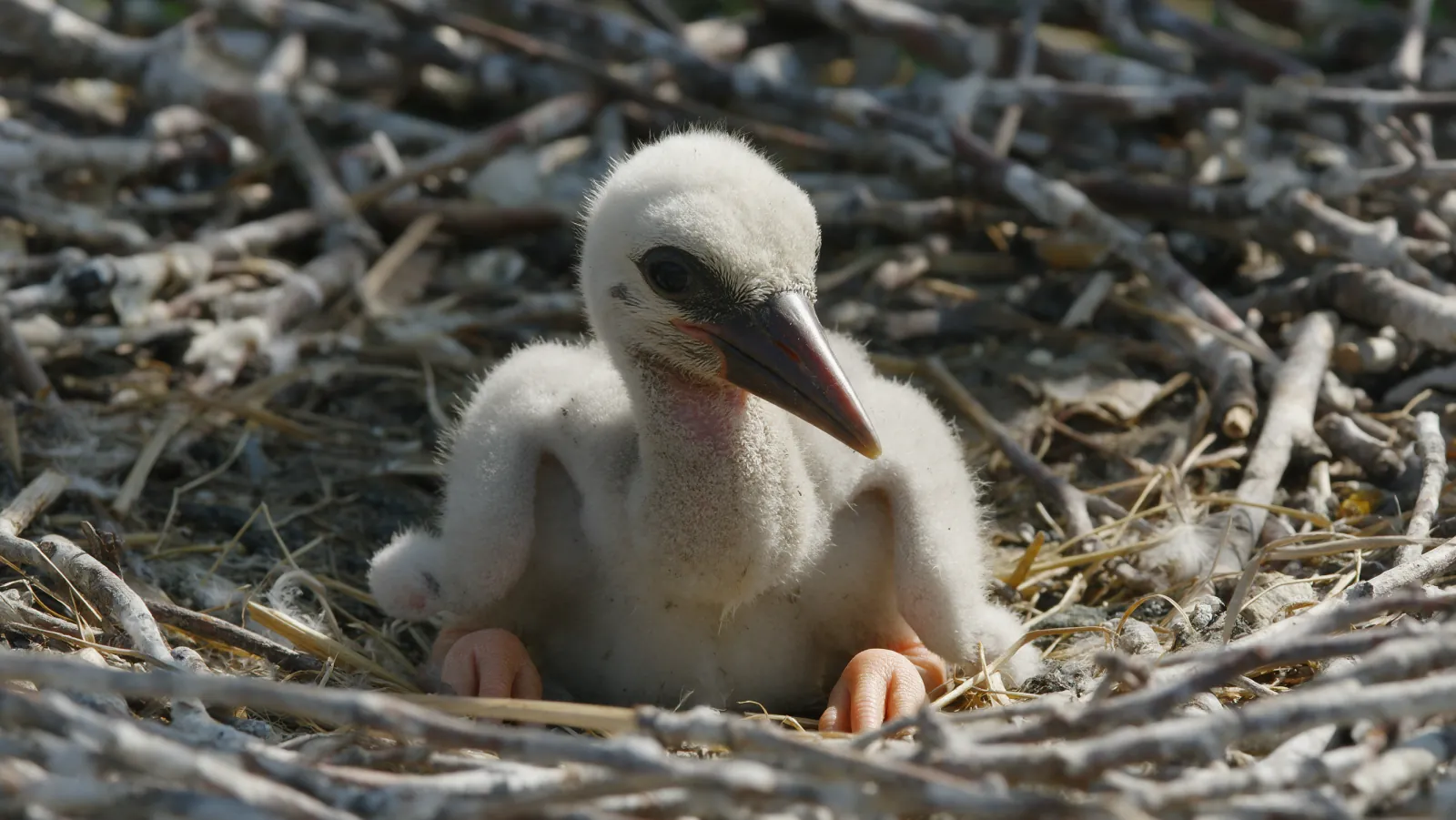
A white stork chick hatches small, sparse and unable to stand. It cannot feed itself or keep itself warm. For its first weeks the nest is the whole world, and two adults carry everything into it.
Born to stay
A duckling dries and walks to the water within hours. A stork chick hatches into a platform high on a chimney, a pole or a tree, and there it stays. Its legs are too weak to hold it, and its body carries little more than down.
It cannot leave, and it does not try. The nest is its whole world for the first weeks.
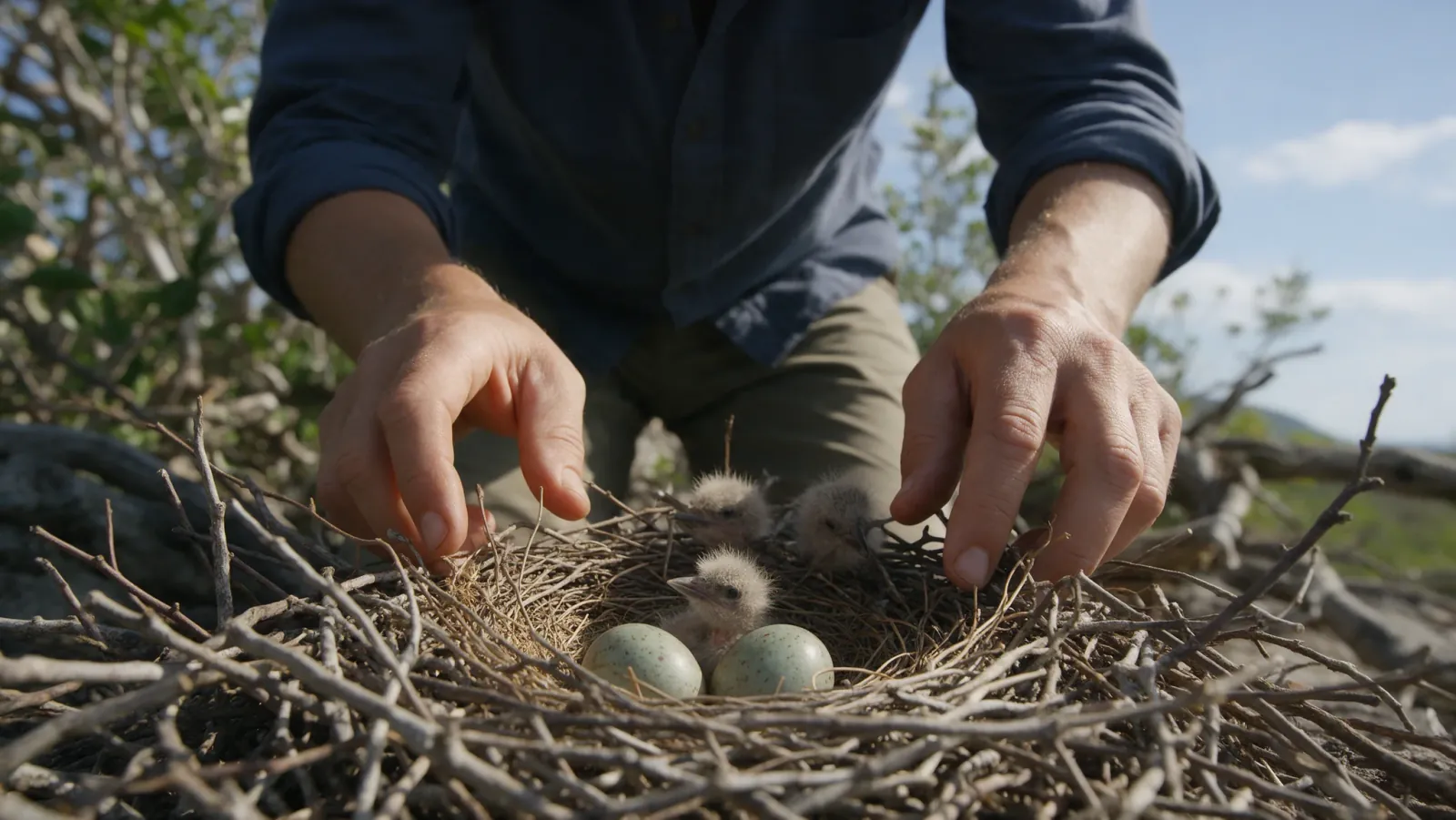
The platform is built for the job. It is a broad heap of sticks with a soft lining, and its rim keeps the chicks from rolling out. The same structure that held the eggs holds the growing young.
Month by month the chick gains down, then feathers, then the strength to stand on the rim. The platform has become a small colony of its own, with young standing shoulder to shoulder.
Fed by two
The work falls to both adults. They take turns flying to wet meadows and return with frogs, insects, earthworms and small fish carried in the throat. At the nest they tip the food out, and the chicks pick it up.
In the first days the parents bring the smallest food and watch closely. A helpless chick lives or dies by what the adults bring home. The nest becomes a feeding station, visited from first light until dusk.
A late-summer nest with big chicks is a busy place, both parents coming and going from dawn until dusk. The whole day is arranged around the small open bills in the middle of the platform.
Chicks hatch at slightly different times, so a nest can hold young of different sizes. The older, larger chicks reach the food first, and the smaller ones wait their turn. The parent feeds the brood as a whole, and the strongest voices get the first mouthfuls.
Shelter from weather
The chick cannot hold its own heat or keep itself dry. It needs a parent to sit over it in the cold and stand over it in the rain. The adult's broad body becomes a roof. It eats, sleeps and is warmed, and the food is turned almost entirely into new body.
In bad weather the parents shelter the chicks hour after hour, going without food themselves if they must. A wet, chilled chick will not last long. The care is feeding and cover both.
This is the part of the season that asks the most of the pair. A nest in a cold spring can fail for want of warmth, and the adults answer with their whole attention, one standing over the chicks while the other flies for food.
Legs first, feathers later
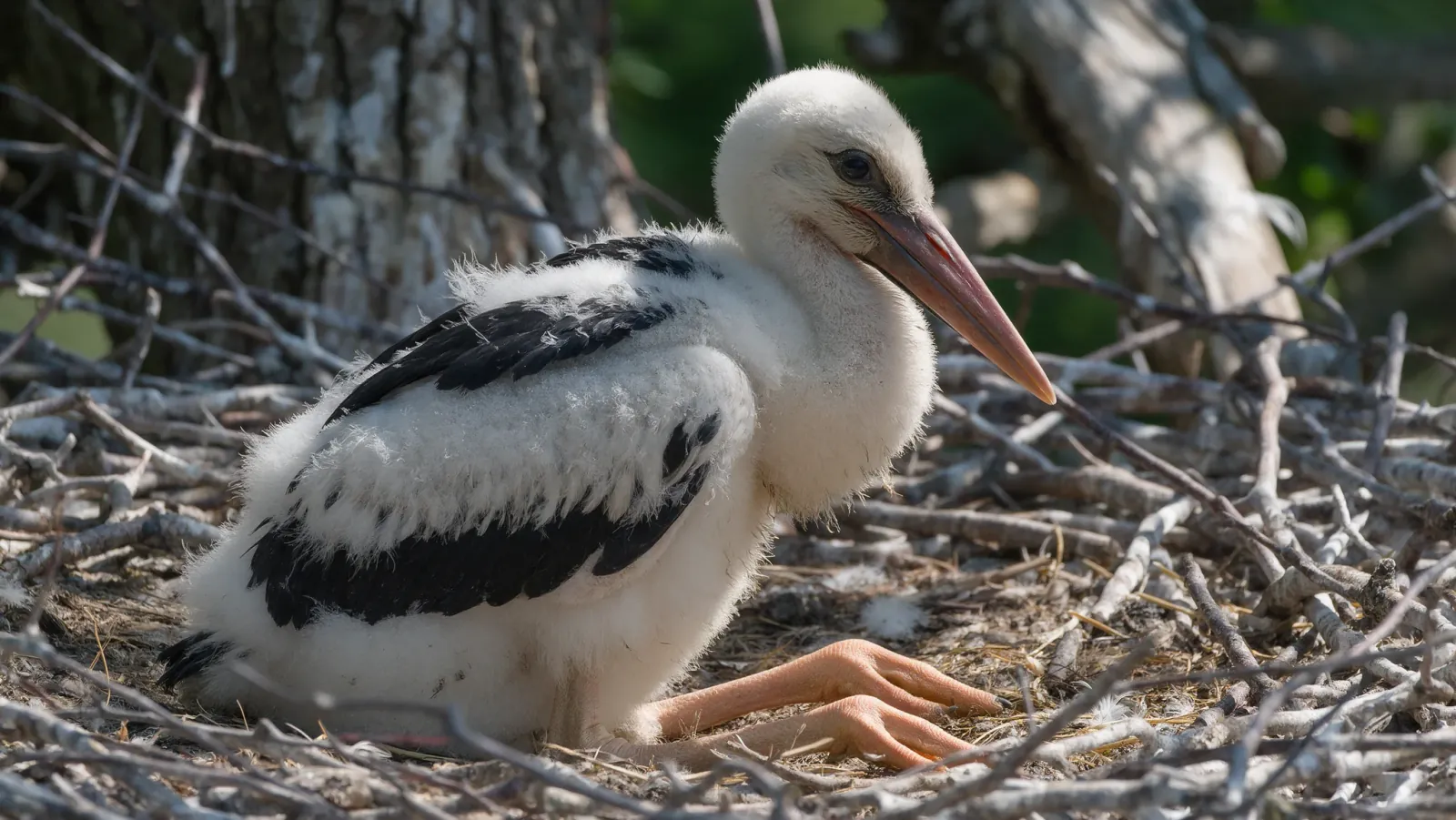
The chick changes through the summer. The sparse down thickens and is joined by the first feathers. The legs lengthen early, because a young stork needs to stand before it needs to fly. The wings follow, and the flight feathers come last.
That order shows in the bird's shape. A half-grown chick can look long-legged and short-winged, all legs and down. By the end of summer the proportions have evened out.
A chick grows fast. Food from two hunting adults is turned almost entirely into new body, and the bird that hatched as a wet scrap reaches close to the size of its parents within a couple of months. The nest shrinks as the bird grows into it. A platform that looked huge in May is crowded by July.
A chick's appetite is a good measure of its growth. A young bird begs often, and an older one begs more. The parents answer with more food, and the cycle continues until the young bird can feed itself.
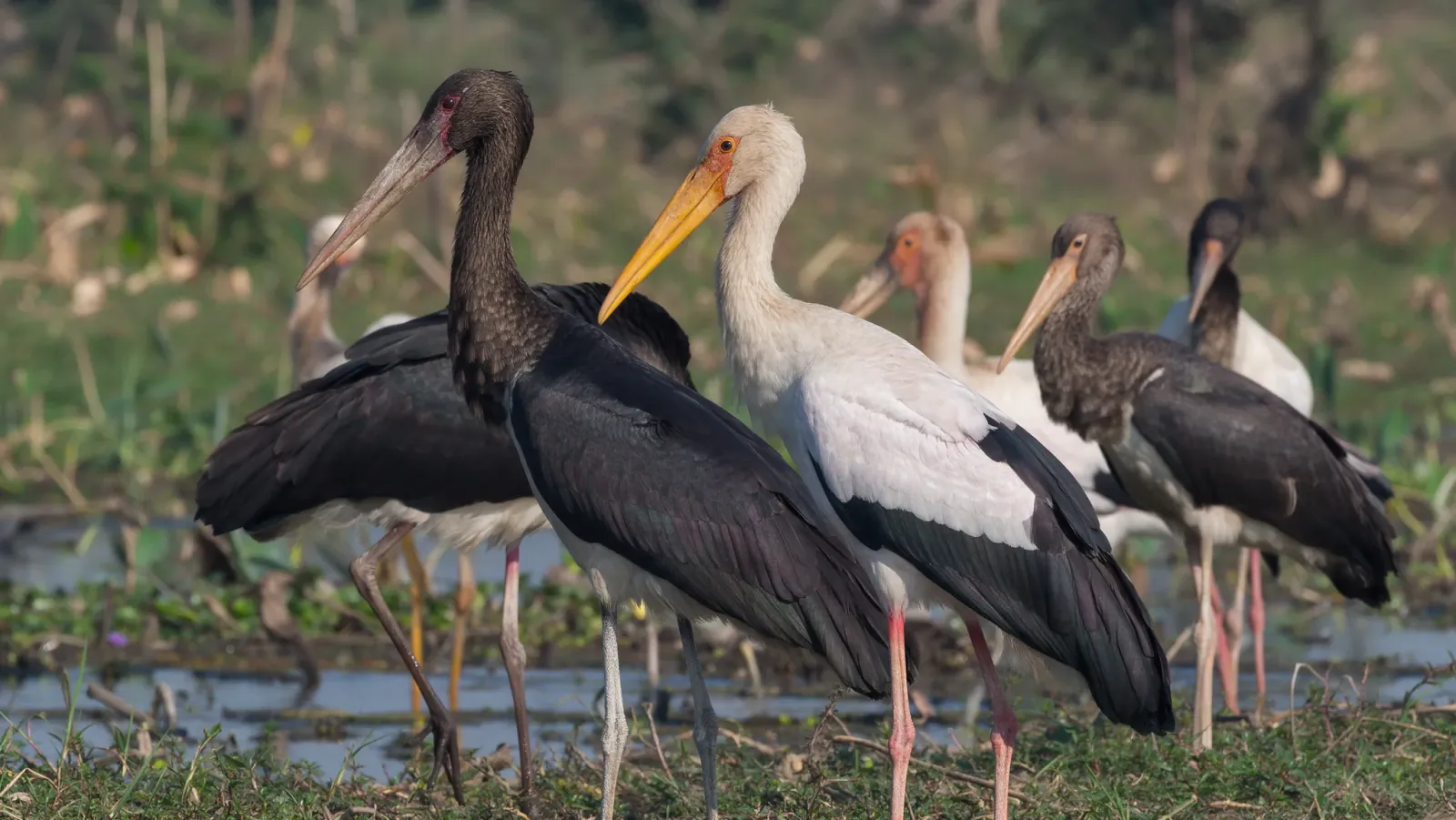
The first plumage is duller than the adult pattern. The full white and black comes later, over the bird's first year.
Practice on the rim
Flight is learned, and the lessons start without leaving the nest. The chick stands and beats its wings, again and again, until the muscles across its back and chest grow strong. At first the beats are weak and the bird barely lifts.
The nest is a training ground before it is a launch pad. Each beat teaches the body a motion it will need, and the chick repeats the same small thing until it comes easily.
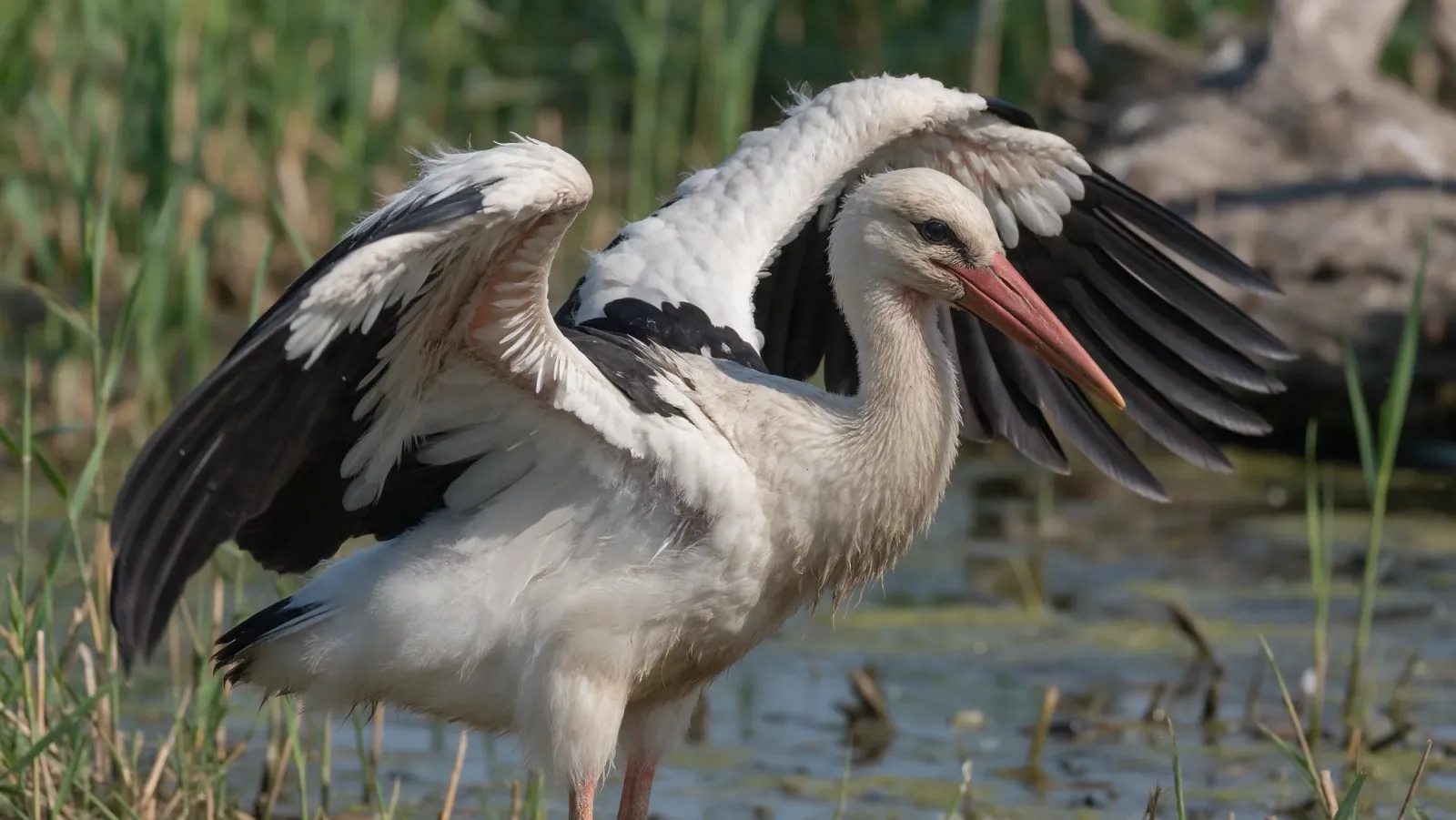
Then comes the first leap. The young stork steps to the edge, spreads its wings and jumps. The first flights are short and clumsy, a few flapping metres at most. Often they end on the ground or a nearby roof.
The trips grow longer and the landings steadier. The parents keep feeding the young bird through all of it, so a misjudged landing can end back at the nest with a meal. The safety lets the bird take the risks that learning demands.
Little by little the awkward flapping becomes controlled flight. The bird learns to use a headwind, to slow before landing and to turn without losing height.
The first autumn
Flying is half the skill of being a stork. The young bird must also find its own food, and the adults go on supplying the nest until it can. Leaving is gradual: the young returns each evening at first, then less and less, until one day it does not come back.
Young birds gather before they go. Juveniles from nearby nests meet in fields and on roofs and fly together in loose groups, which gives them more eyes for danger while they practise.
Then the season turns. A young stork may leave after the adults have gone, with no bird to follow and no route it has seen. It flies south on an inherited direction, and the journey teaches it the rest.
The bird that practised on the nest rim becomes a migrant in its first autumn. The lessons of balance and landing carry it over the first long flight. The parents do not teach by demonstration. The young bird learns by doing, and the adults provide food and space.
The odds of a first year
The first migration is the hardest thing the bird will ever do. It crosses open water and desert with no experience to lean on, and many young storks do not survive it.
The ones that do have crossed the worst of the journey once. The years after are easier. A stork that reaches its second spring has already beaten the long odds.
A survivor can return to the same nest for two decades or more, adding sticks each spring and raising chicks on the platform where it was fed. A stork that lives twenty years has crossed the desert many times and raised many chicks. The nest grows old alongside the bird. The nest can last longer than the bird that built it, and the pair adds sticks each year while the platform grows.
People beneath learn its timing and notice when it is late. An old stork looks much like a young one from a distance, white and black and red. Then one spring it does not arrive, and the nest waits.
Explore the gift