A white stork stands about a metre tall and carries a body built for distance. Getting it off the ground takes work. Once the bird is high, the air does most of the lifting and the wings do the steering.
The curve that makes lift
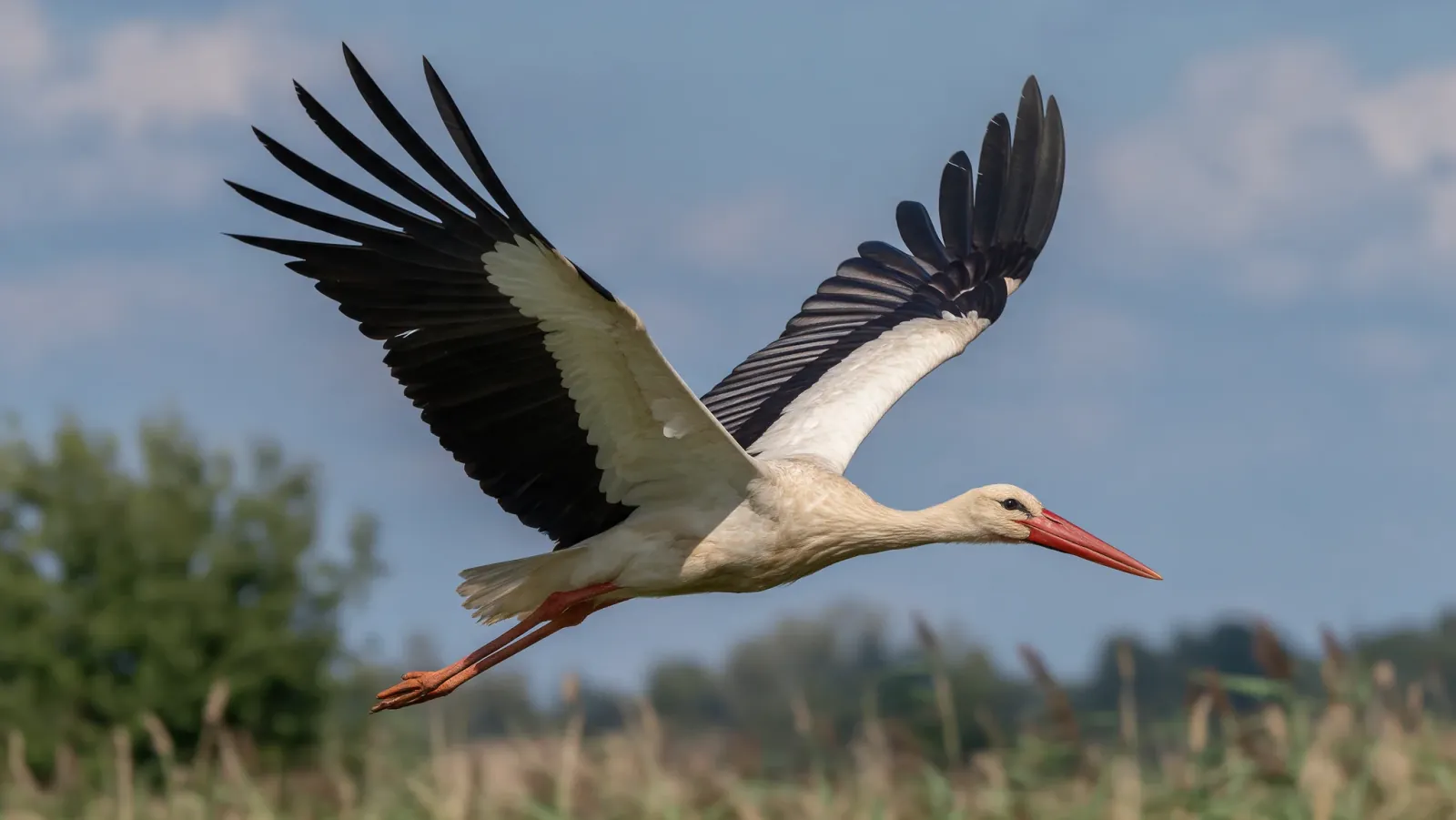
A stork's wing is broad and long, and it is curved so that air passing over the top travels faster than air passing beneath. Faster air presses less. The pressure below the wing is higher than the pressure above, and the difference pushes the bird upward.
Lift is the difference between the pressure above and below. The wing keeps a flow moving over a curved surface, and the flow does the work.
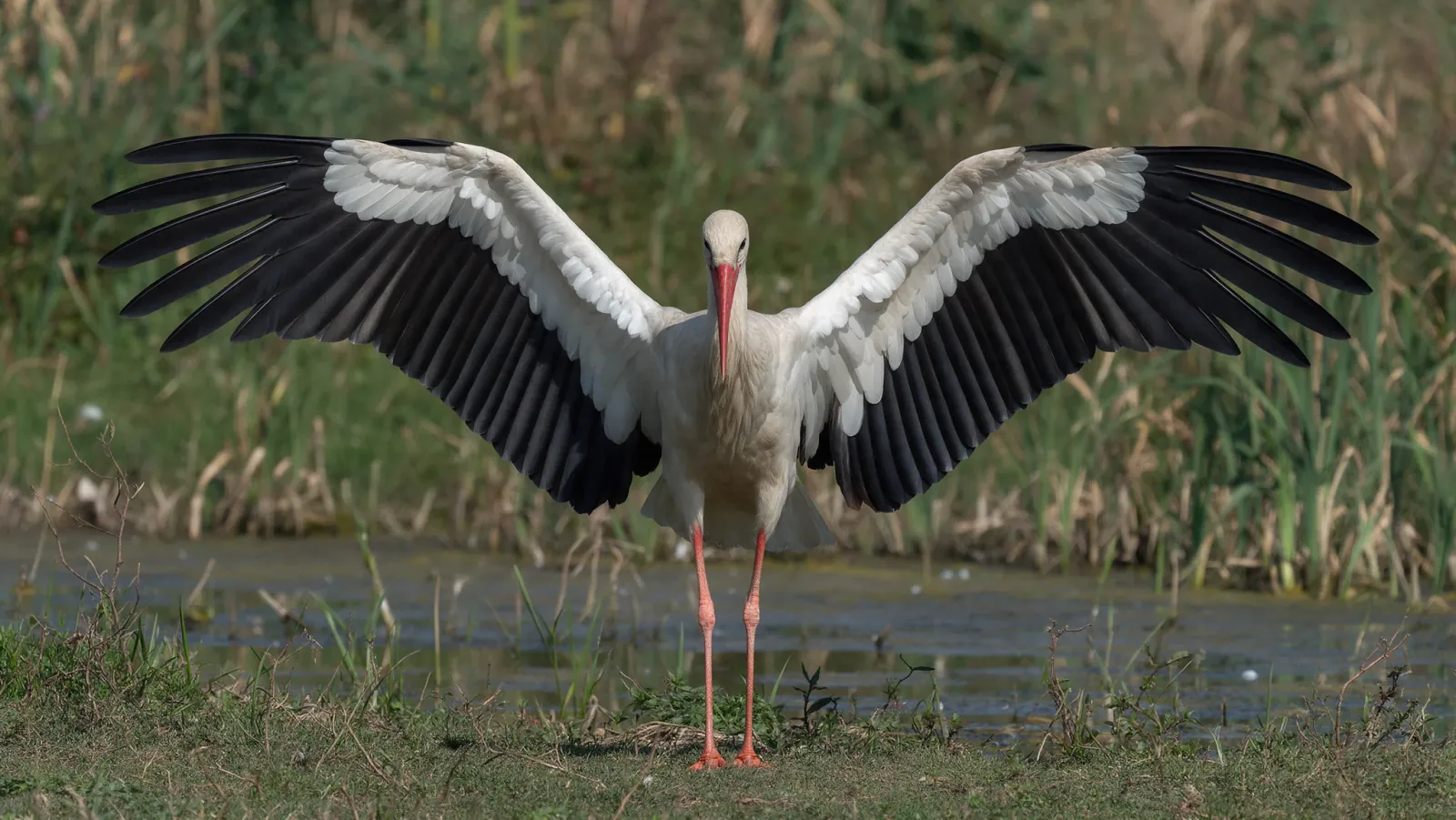
The same force that holds a glider up holds a stork up. The curve is easy to see in a bird gliding overhead, wings arched and the long flight feathers spread like fingers at the tip.
A wing makes lift from shape and moving air, with or without a flap. The wing can stay still while the bird rises, as long as the air beneath it moves up faster than the bird is sinking.
The tip is slotted. The long primaries spread apart in a glide and let air pass between them, which smooths the flow and cuts the drag that would otherwise build at the end of a broad wing. A stork can hold its wings still for long stretches, adjusting them only a little while the air beneath does the lifting.
A heavy body on light bones
The bird looks too big to fly. Its body is heavy, but the skeleton is a fraction of the weight it appears to be. The bones are hollow and thin-walled, braced inside so they stay strong while weighing little.
Hollow bones are braced with struts inside, so a bone that looks fragile is strong enough for a hard landing.
Strong chest muscles drive the wings. A light frame and powerful muscles let a broad wing do its work without a frantic beat. The bird can lock its wings out straight and hold them there.
The shape explains the whole performance. A heavy bird with small wings would need to beat constantly. A heavy bird with a broad span can rise on a slow beat and then settle into the air. A bird that big needs a broad wing, and the broad wing needs a light frame.
The first beats
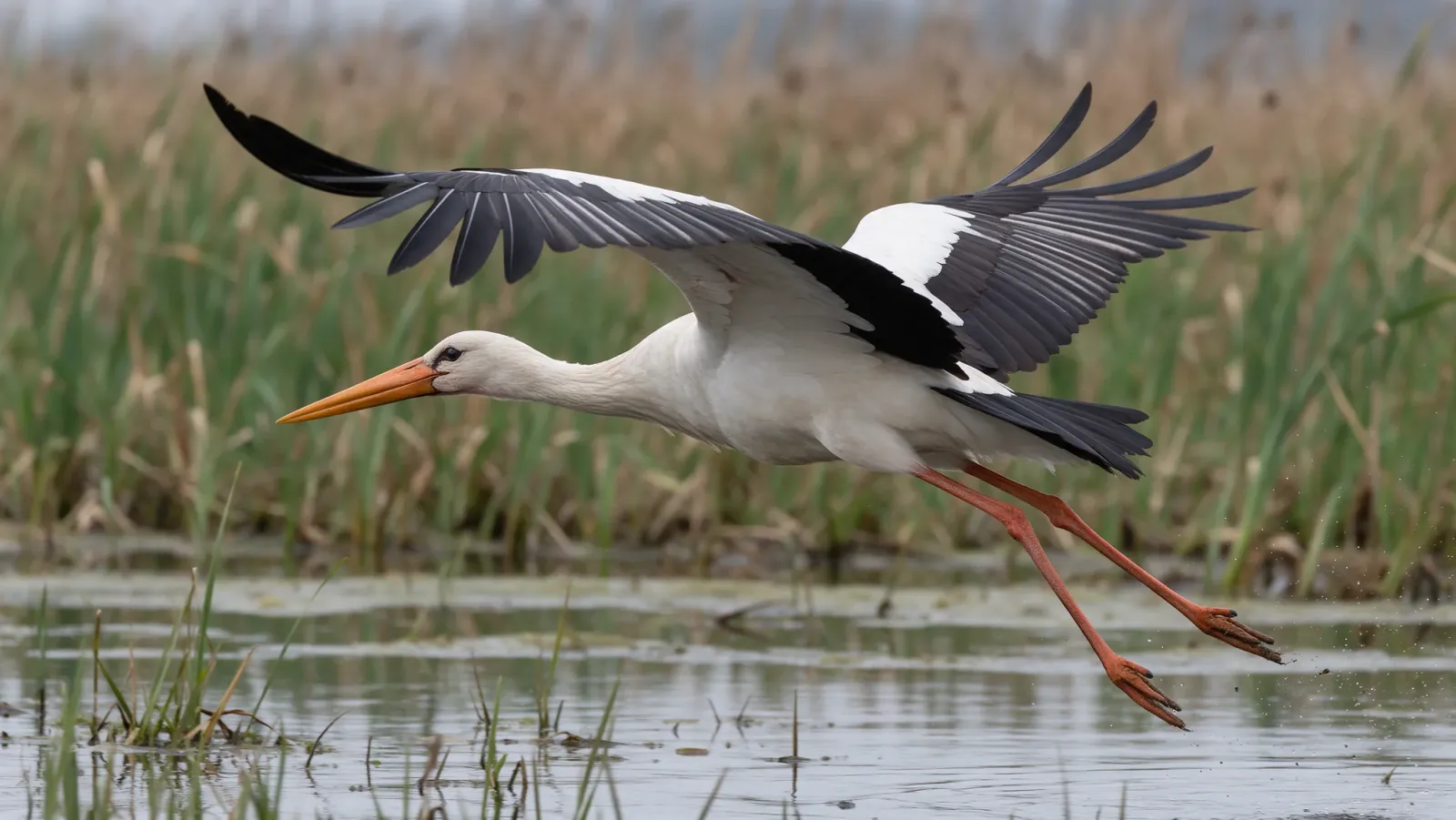
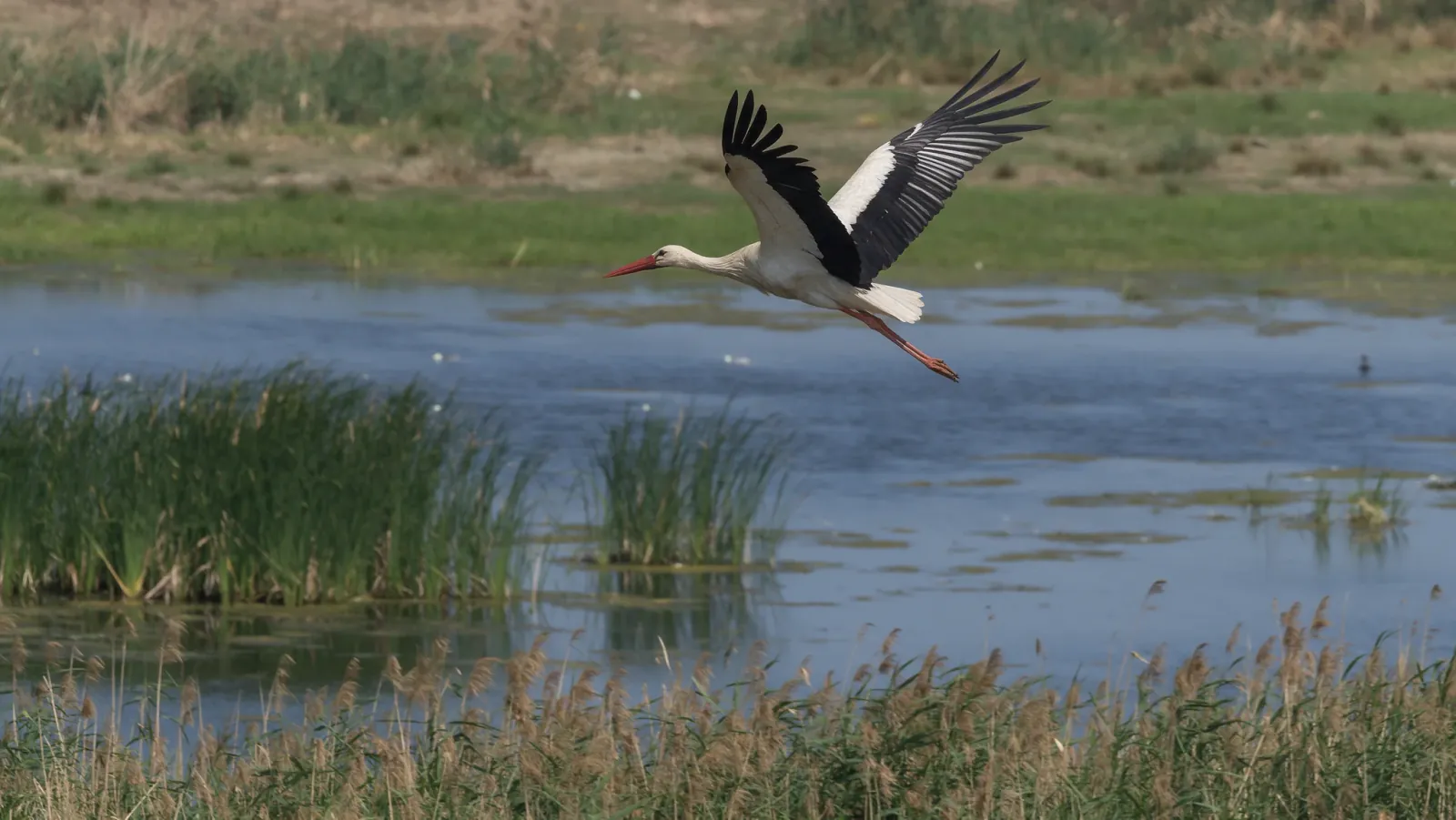
Takeoff is the hard part. The stork must get enough air moving over its wings to make lift, so it jumps and pushes down hard with the first beats. For a moment the bird is all effort, wings sweeping and legs trailing.
A few hurried steps into the wind help. Then the lift arrives, the body lightens, and the bird climbs. Every takeoff is a short argument with gravity, won by work.
The effort lasts seconds. For a bird this size, the first metre is the most expensive. What follows can last for hours, and most of that time the wings are still.
Climbing on rising air
A thermal is a column of warm air rising from sun-warmed ground. Ploughed fields, dry grass and bare earth heat faster than water or woodland. Warm air weighs less than cool air, so it lifts away in a plume.
A stork drifts into the column, spreads its long wings, and turns in wide circles. The column is narrow, and the bird stays inside it by turning, the way a boat keeps its hull in a current.
A strong thermal can carry a stork hundreds of metres with hardly a wingbeat. Other birds see the climber and come. A single stork becomes a group, then a tower of birds turning together on the same warm air.
The first thermal of the morning is often weak. The bird circles low and waits for the ground to warm. By midday the columns are strong and the flock is high and moving fast. A whole flock can rise together in one spiral, gaining height on the same warm air.
From the ground the flock looks like a slow whirl of wings. The whirl rises until it becomes a scatter of dark specks too high to follow.
The glide and the staircase
From the top of a thermal the stork tips its wings and slides forward, losing height slowly as it travels. Its long, broad wings make the glide shallow, and it can cross several kilometres before it sinks too low. Then it finds another column and climbs again.
A migration is a staircase of climbs and glides, thermal after thermal, day after day. The bird crosses whole countries this way, spending very little of its own strength. The sun does the lifting and the stork does the steering.
A migrating flock comes down in the afternoon, hunts in wet fields, and rises again the next morning when the ground begins to warm. The same shape that lifted the bird from the meadow lets it travel a long way on almost nothing.
This is why storks take the long way over land and avoid open sea. Water gives no thermals, and a bird that rides rising air has nowhere to climb above the waves. On a cool, overcast morning the air is heavy and the columns do not form. The bird flaps for shorter distances and waits for better weather.
A heart that keeps pace
On the ground the heart beats slowly and evenly. A bird that stands for an hour on one leg keeps the same quiet pulse. It is conserving what it has.
The first hard beats change that. Flight muscles call for far more oxygen, and the heart answers by speeding up. During a climb the beat is quick and driving. Once the stork settles into a thermal, the frantic effort stops and the heart eases into a steadier middle pace.
The pump and the muscle stay in step. A glide can look almost motionless from the ground, wings fixed and body level, while the heart keeps working. A landing reverses the change: the wings fold, the demand falls, and the pulse slows.
A roosting stork stands on one leg, tucks its head and lets the pulse settle. The next morning the cycle starts again with the first climb.
The range between rest and effort is what makes the bird a traveller. A single fixed pace could not serve a long afternoon on a roof and a hard climb into the sky.
The wing as a brake
Landing is the other half of flight. The stork spreads its wings and turns them to catch the air, slowing its descent. The legs come down at the last moment, and the bird settles onto the nest or the ground.
A broad wing gives a slow, controlled landing. The same surface that lifts the bird also lets it stop. The two abilities are part of one shape.
The bird can hover for a moment before it lands, beating against a breeze and holding its place. Then it folds its wings and is still. The wing is the visible part, and the shape of it turns a fall into a journey.
Explore the gift