A stork on a distant rooftop looks smaller than it is, and a stork in a field looks taller than it ought to. The measurements are worth knowing because each one explains something the bird does. A white stork stands about a metre tall and opens nearly two metres of wing. The white stork is the one most people see, and the one whose measurements are easiest to check.
Tall on the ground
The height comes mostly from legs and neck. The body is compact, but the legs lift it well off the ground and the neck adds more, so a standing bird rises to about a metre. Most of a stork's height is leg. That height is a working tool. It lets the bird stand in water and walk through reeds with its body dry, and it gives the eyes a high point from which to watch a meadow. A stork on a nest can look almost as tall as a person standing below the roof. The black stork is a little smaller, and it still stands close to a metre.
Two metres of wing
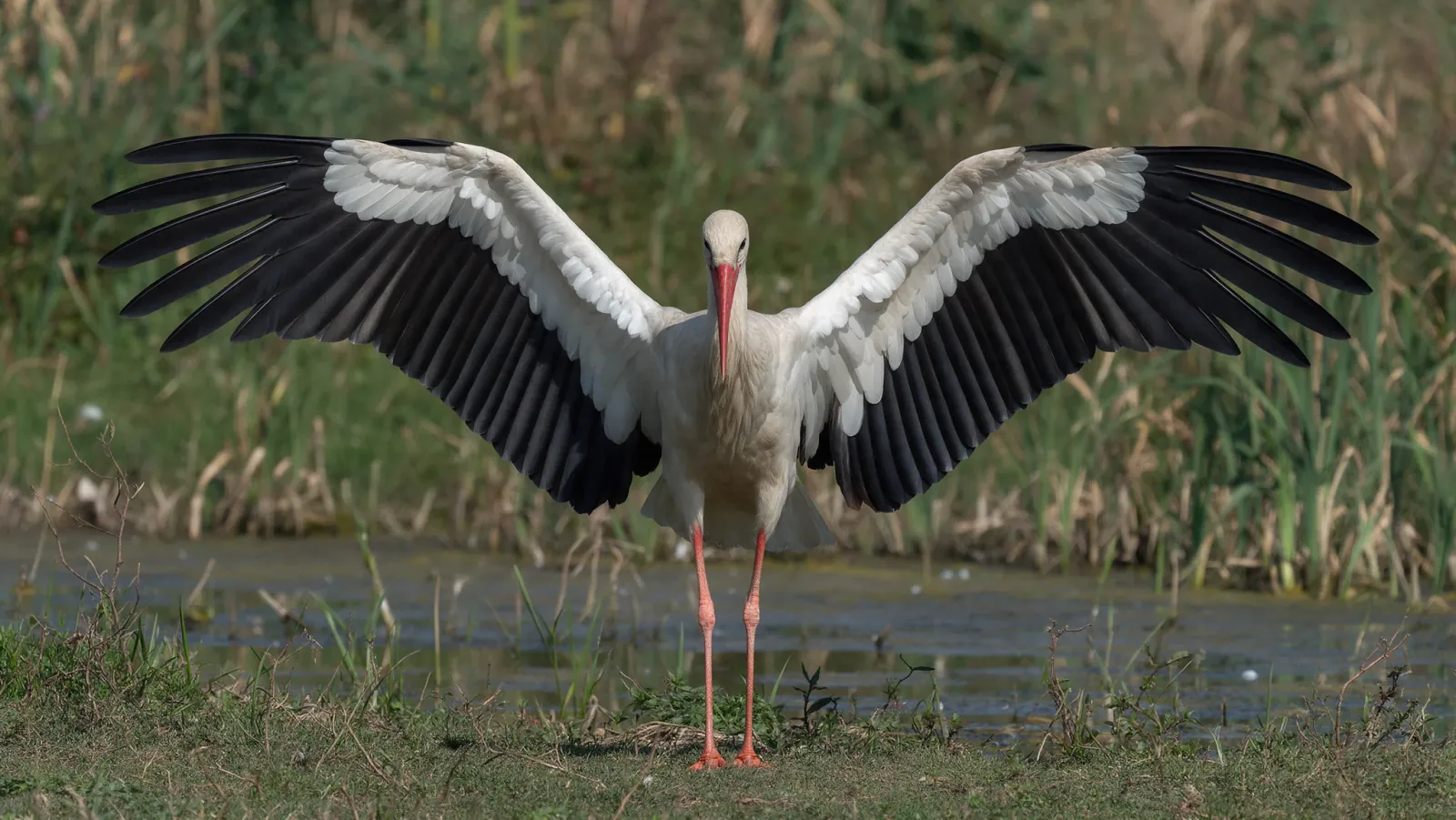
The real surprise is in the wings. A white stork with its wings spread is around two metres across, wider than a tall person's reach. The wings are broad and deep, built for soaring rather than speed, and they carry a heavy bird on rising warm air. Two metres of wing is what makes the migration possible. A stork does not flap across a continent. It climbs a thermal and glides, and the broad wings hold it up with little effort. The bird's body is narrow, which helps it slip through the air with less drag. At the wingtip the long primaries spread apart like fingers when the bird soars, and each can be turned a little to shape the air. On a white stork the tips are black, so the spread hand of feathers shows as a dark band against the white wing. A fast bird has narrow, pointed wings that cut the air. The stork has wide, rounded wings that cup it and hold it. The span is easy to underestimate in a photograph, where the bird sits flat on a page. Then it glides away with a stillness that makes the size look effortless.
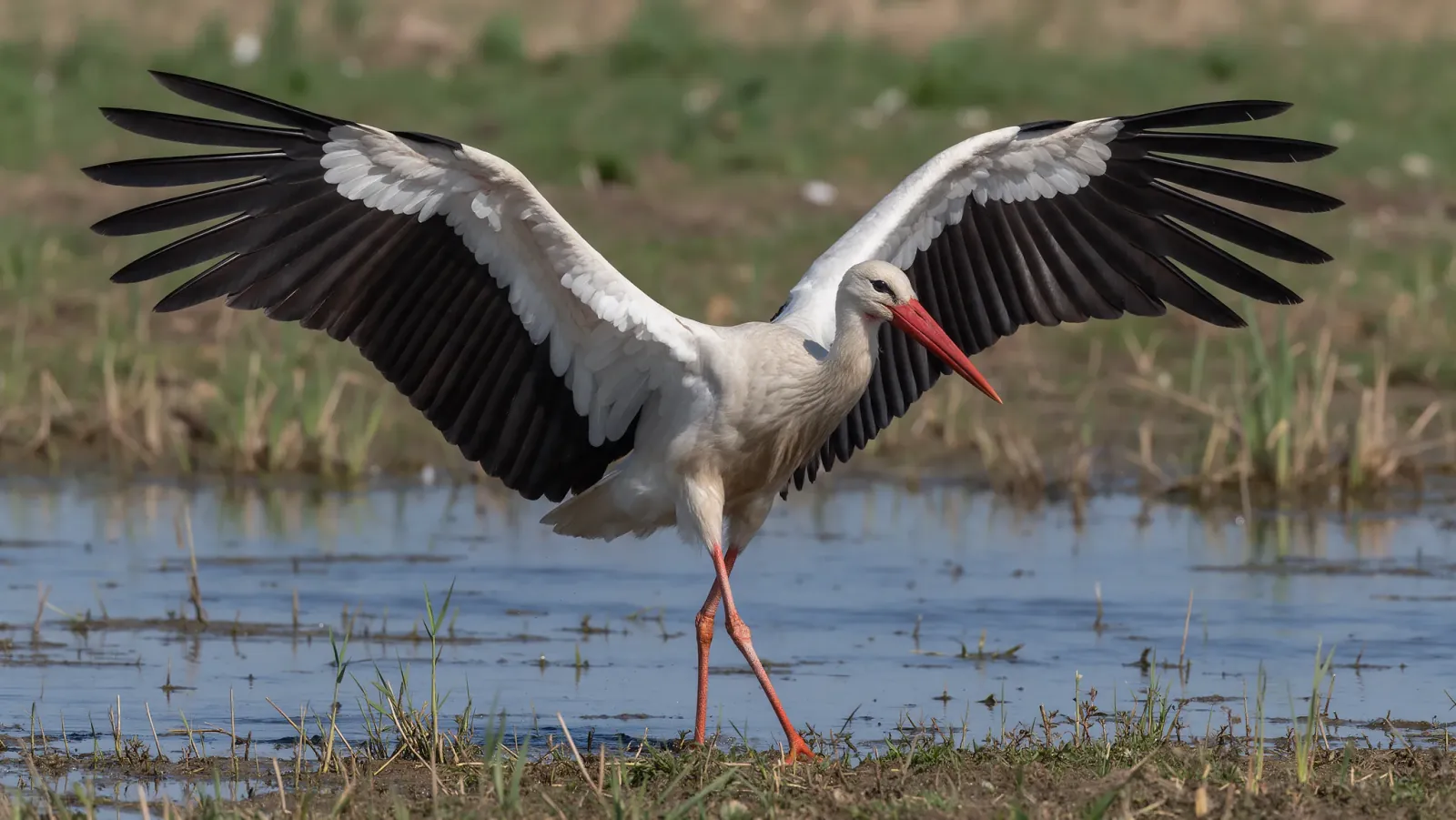
Built to soar
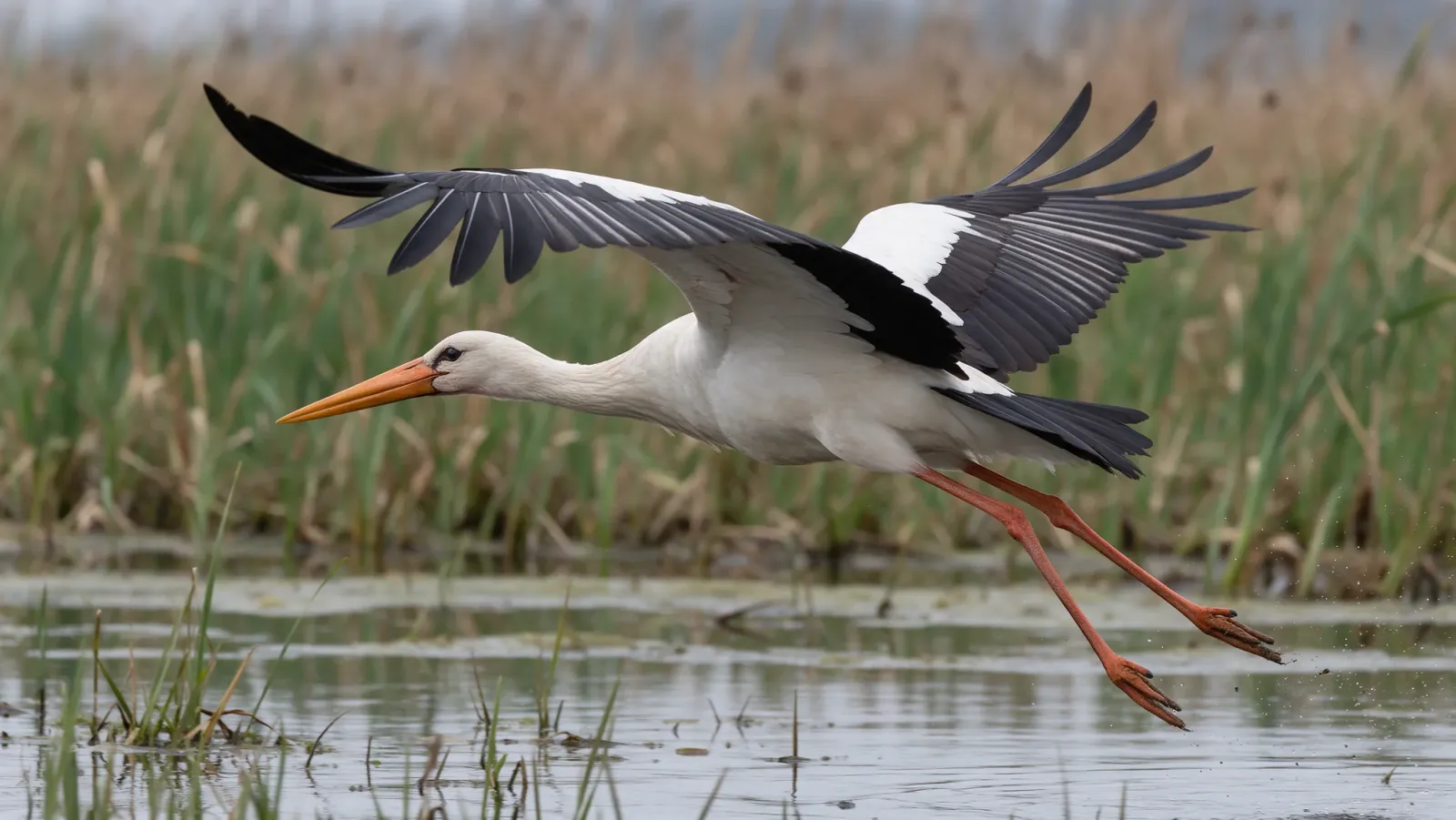
The wings are the wings of a glider. The bird pays for them with weight and a slow take-off. It needs a run and a few strong beats, and then the broad wings do the work, carrying it in circles on rising air without a flap. A stork can cross from Europe to sub-Saharan Africa with barely a flap on the way. A stork often leaves the ground from a rise or into a headwind, and it climbs in wide spirals until it is a speck. A stork cannot cross open sea, where no thermals rise, so the wings carry it along land routes from one column of warm air to the next. It climbs on a thermal, glides down to the next, and turns altitude into distance. The black tips are the flight feathers, and they do the hardest work. They push against the air, steer and brake, and they wear fastest. The dark pigment, melanin, makes a feather stiffer and more resistant to wear. A black feather lasts longer than a white one of the same size. When the bird comes in to land, the tips splay and cup the air, braking it to a slow touch-down on the nest.
Wading without wetting
The first purpose of the long legs is to keep the bird out of the water it hunts in. A stork wades belly-deep, and its bare, scaly legs carry it through without soaking the feathers. The water it feeds in is often cold, and dry feathers are the bird's only coat. A wet bird is a cold, heavy bird, and a heavy bird cannot take off easily or soar. The legs are bare for the same reason: no feathers to waterlog. The skin is tough and dries as soon as the bird steps onto dry ground. Wet legs lose heat fast, which matters in a cold meadow at dawn. The long legs do a second job: they raise the head. A stork standing on them sees over the reeds and the tall grass, and it can watch a wide stretch of meadow for movement. Height also keeps the wings clear of the ground and gives them room to beat on take-off. A stork that fed in deep water would need a different body entirely, and no stork does.
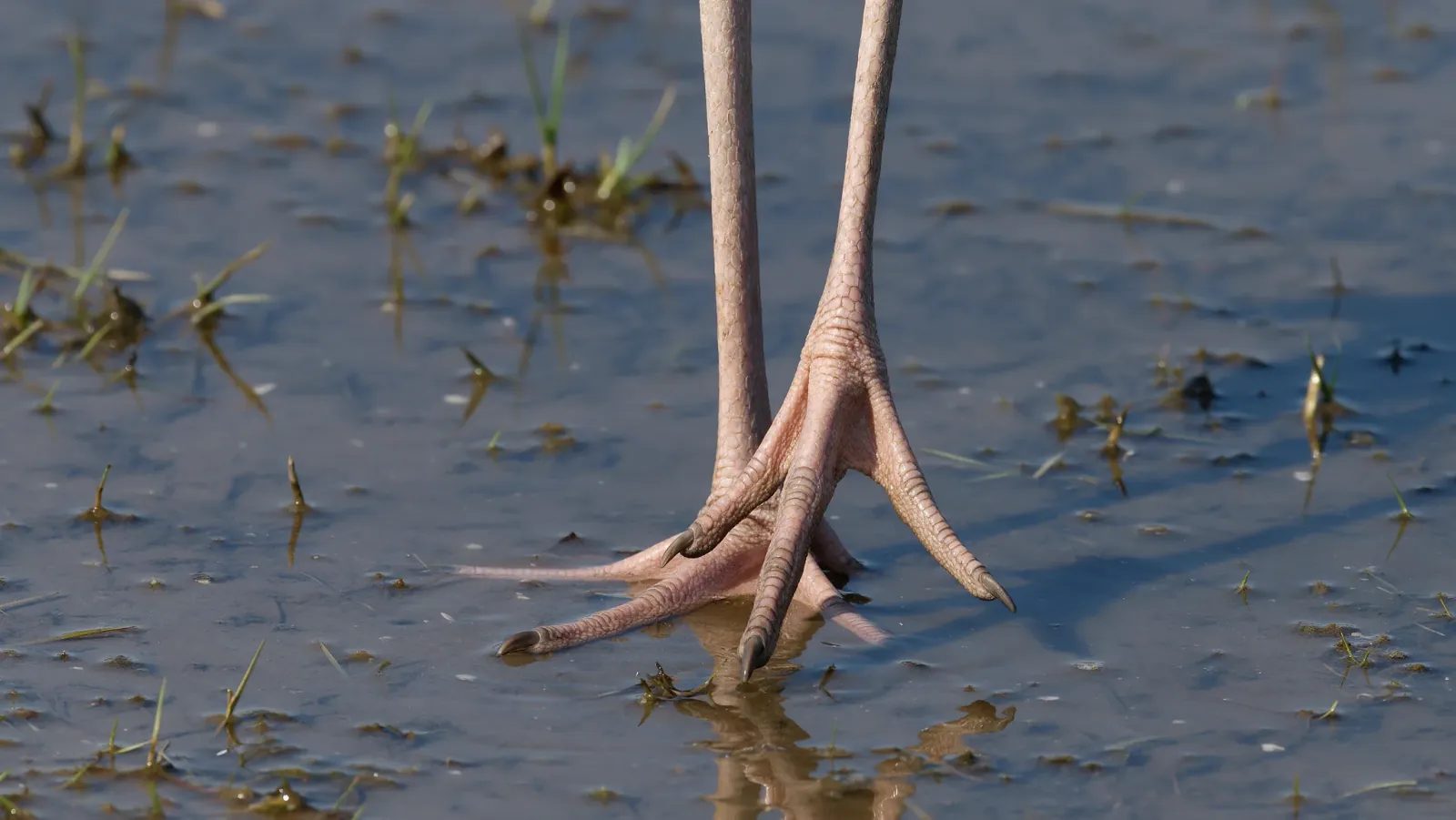
Feet for soft ground
The legs end in broad toes that spread the bird's weight over soft mud, so it does not sink as it walks the marsh. A stork's foot is not webbed, because the stork does not swim. It is a wader, made to step through water and stand on soft ground. The three front toes are long and spread, and the short hind toe points back and helps the bird grip. Each toe ends in a small claw, and the claws are short and strong enough to grip a branch or the sticks of a nest. In firm mud the claw leaves its own fine mark. A duck's foot leaves a wide fan, while a stork's print is open, with space between the toes. The best place to find a stork's print is the edge of shallow water, where the mud is soft and the bird has been feeding.
Standing on one leg
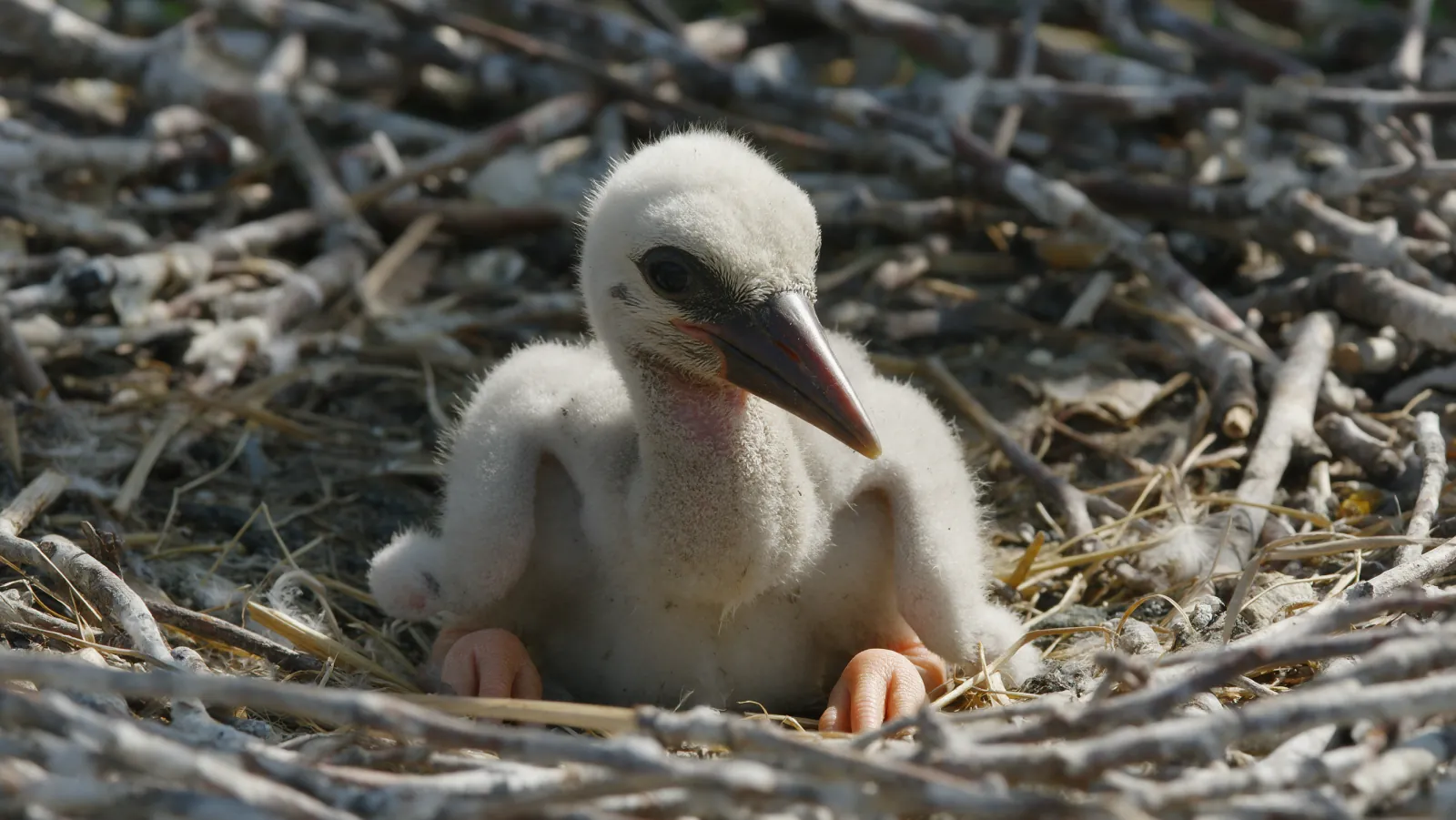
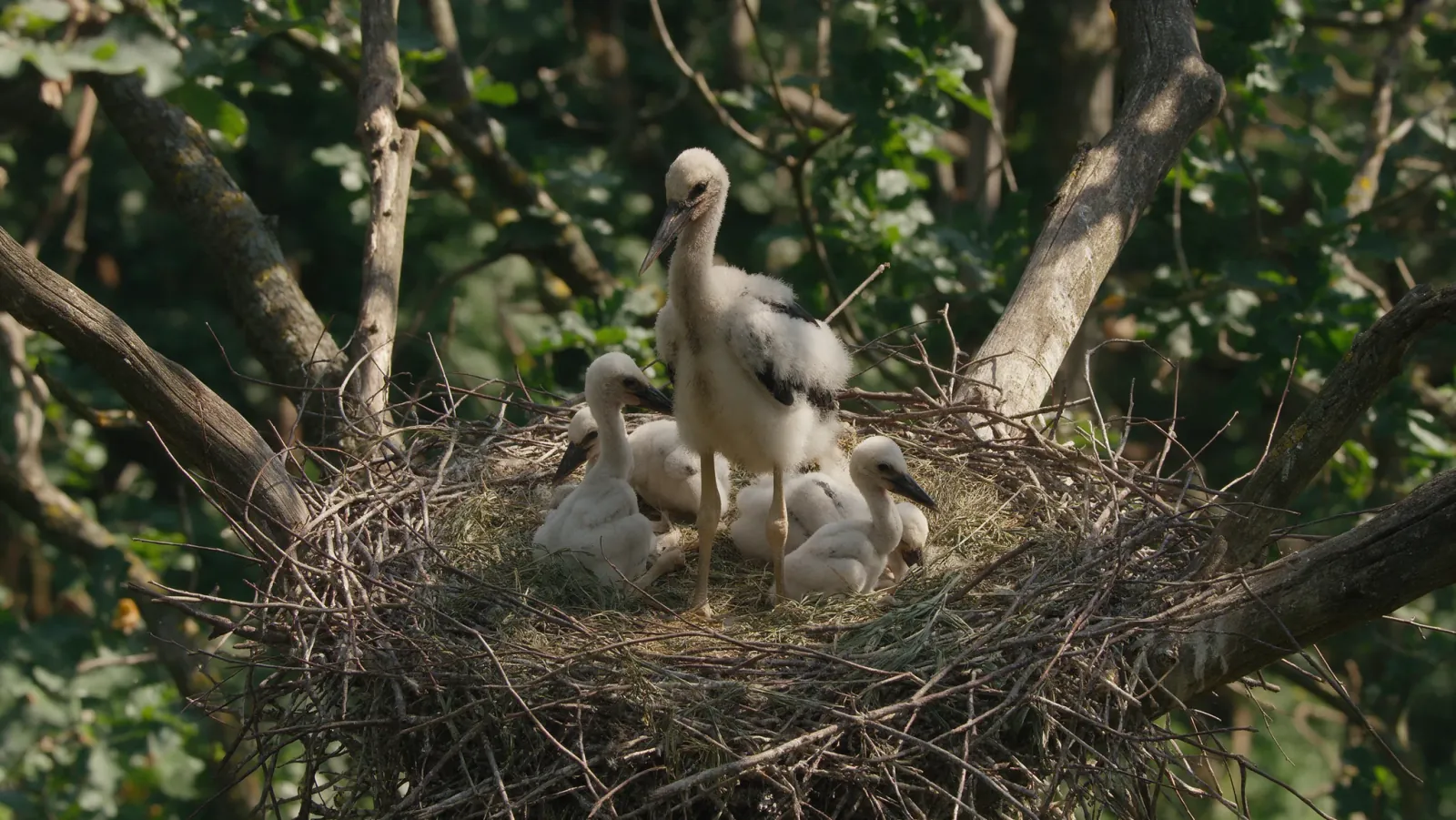
A stork can hold the pose for a long time, and the reason is a lock in the leg. The joint above the foot settles into a position where the bird's weight holds it closed, so the muscles do almost no work. Standing still costs a stork very little. That is why it can wait at the edge of a pool for an hour without shifting. The habit also keeps one leg warm against the body while the other stands in cold water, and the birds change legs without seeming to wake. The long legs carry it and the wide toes keep it steady, and the two together let the bird work the same shallows day after day. The bird is lighter than it looks, because its bones are hollow and its body is built around air. Still, it needs a run and a few strong beats to get off the ground. Size and wing area have to match, and the stork's proportions are the ones that let it travel so far on so little fuel. Chicks hatch small and helpless, covered in sparse down, and they grow fast. By the time they fly they can be close to the size of their parents, which is one reason a stork nest is so large.
Larger still elsewhere
Within the family the white stork sits in the middle of the size range. The marabou and the greater adjutant are taller and heavier, with massive bills, and the saddle-billed stork stands high on very long legs. Size depends on which stork you mean. The family runs from the modest to the enormous, all on the same plan of long legs, long neck and broad wing.
Explore the gift