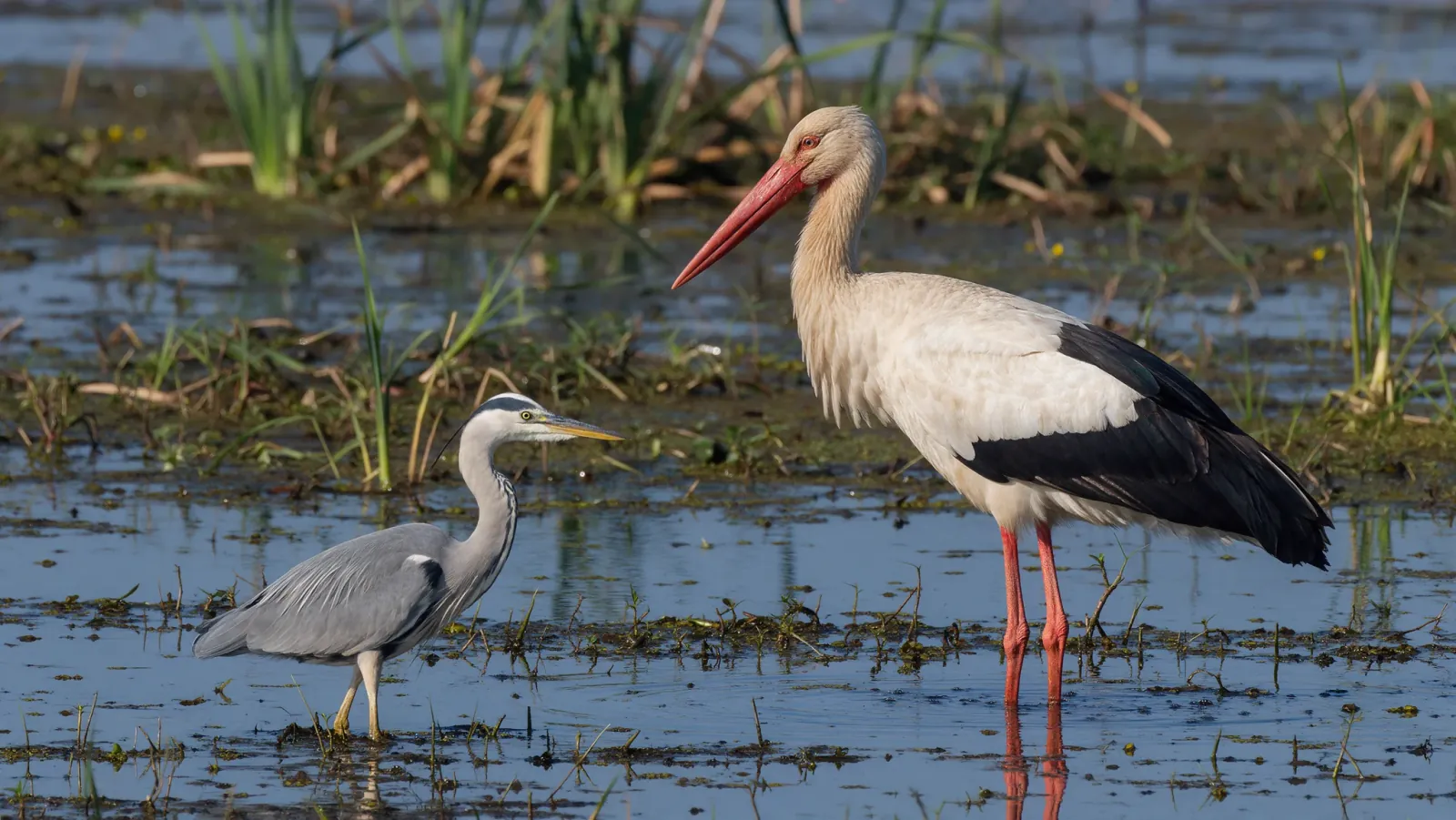
A white pelican and a white stork are both large, pale birds with long wings, and over water they can look like relatives. The bill separates them before anything else does. A pelican's bill is a scoop with a pouch. A stork's is a blade. Once you have seen the difference, you cannot unsee it.
The pouch is the giveaway
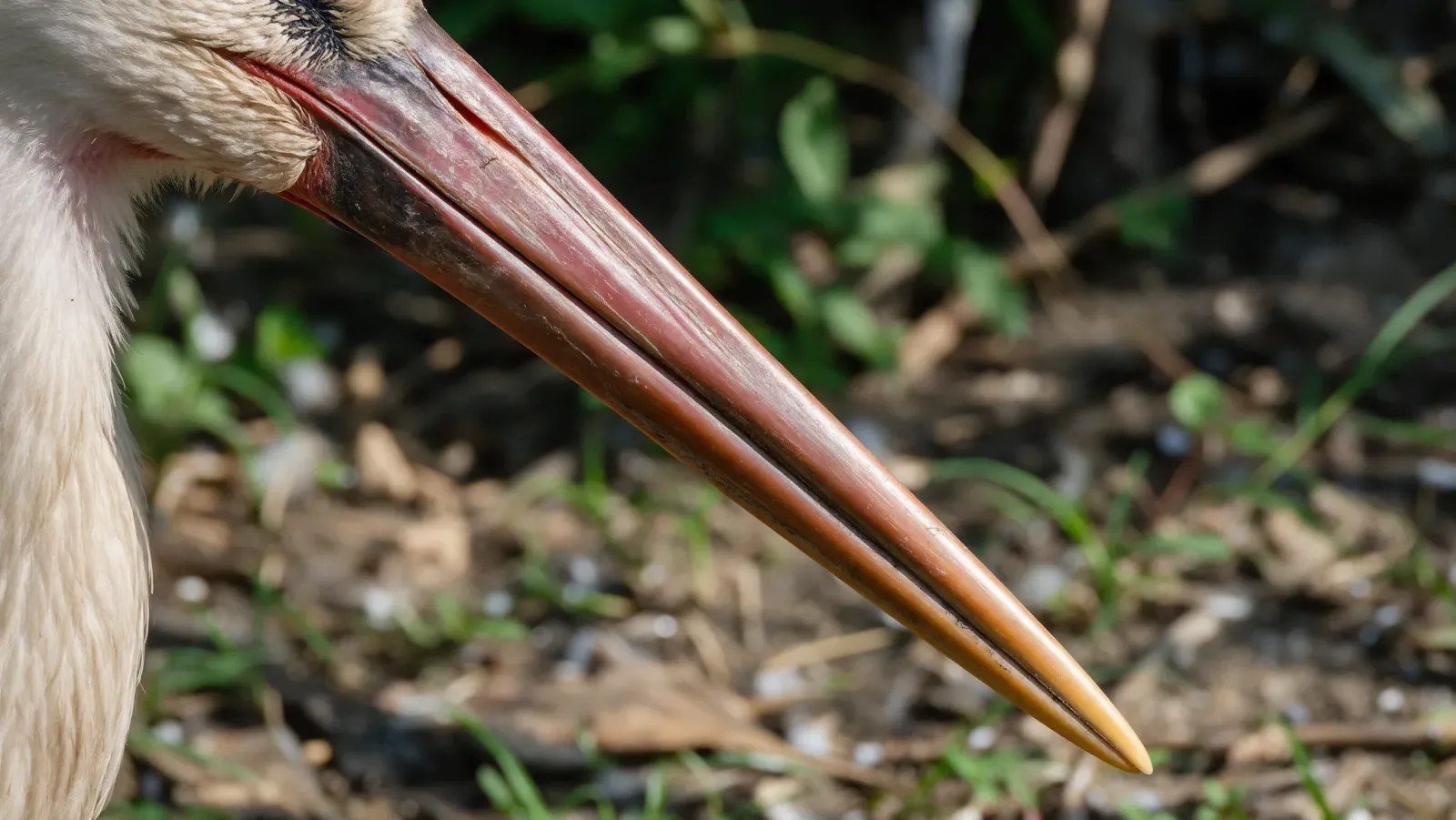
The lower half of a pelican's bill is a stretchy throat pouch, and the whole structure can hold litres of water and fish. The bird dips its head, opens the bill, and lets the pouch balloon as it scoops. Then it tips its head forward to drain the water and swallows what is left. A pelican fishes with a net; a stork fishes with a spear. The stork's bill is a straight, tapered dagger with no pouch at all, red in an adult white stork and used for quick strikes at prey on land or in shallow water. At rest the pelican's pouch hangs loose under the bill, which is often the first thing a beginner notices. On a standing bird it looks like a soft bag tied under the chin.
Neck and legs in flight
Pelicans fly with the neck pulled back and the head resting on the shoulders, the pouch tucked underneath. Storks fly with the neck extended straight ahead and the legs trailing. Pelicans often travel in a line or a V, flapping and gliding in unison. Storks gather in loose flocks and circle on rising air. In a pelican the legs are short and set far back, built for swimming. In a stork they are long and red, built for wading. On the water a pelican floats like a boat; a stork stands. The difference in the legs explains most of the difference in habit.
Two ways to make a living
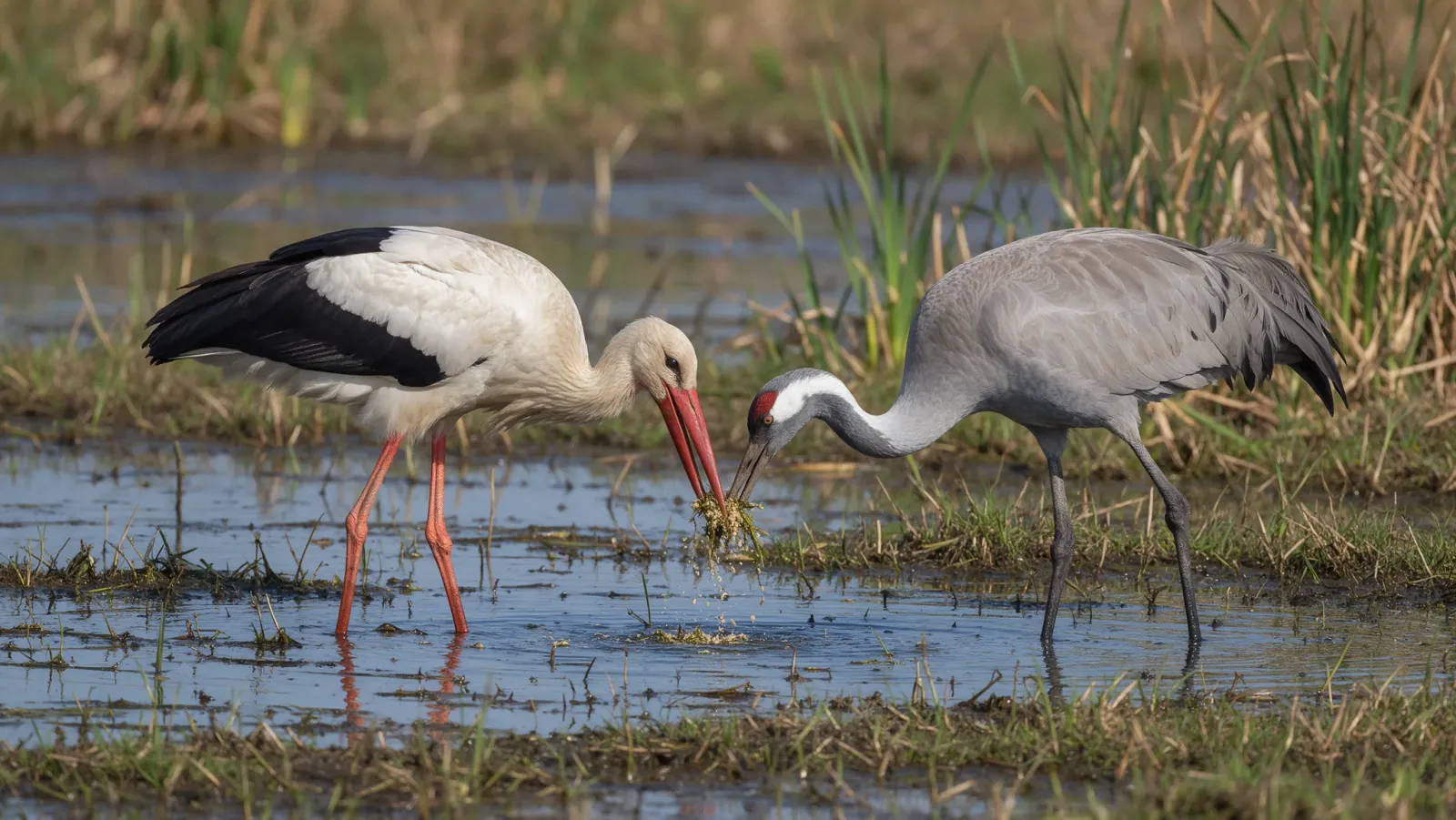
Pelicans often feed together, driving fish into a shallow bay and scooping as a group. Some species plunge from the air. Storks work alone or in loose pairs, walking wet grass and stabbing. The pelican's meal arrives in a crowd; the stork's arrives one frog at a time. Pelicans need open water and a steady supply of fish. Storks need wet ground and the small animals that live in it. A pelican that has fed well looks bulky and calm. A stork that has fed well still looks hungry, because it is always watching the grass. After a meal a pelican often sits on a post or a rock to digest, while a stork keeps moving until the light goes.
The walk and the stance
A pelican's walk is a waddle, with the body rocking from side to side and the bill held forward. A stork walks with measured steps, lifting each foot clear of the grass, and can stand still for a long time without shifting. The two birds also differ in voice: pelicans are mostly quiet away from the colony, while storks clatter their bills at the nest and are otherwise silent. Pelicans sit low and wide; storks stand tall and narrow. At a distance the stance is often enough, before you can see the bill at all.
Where they overlap
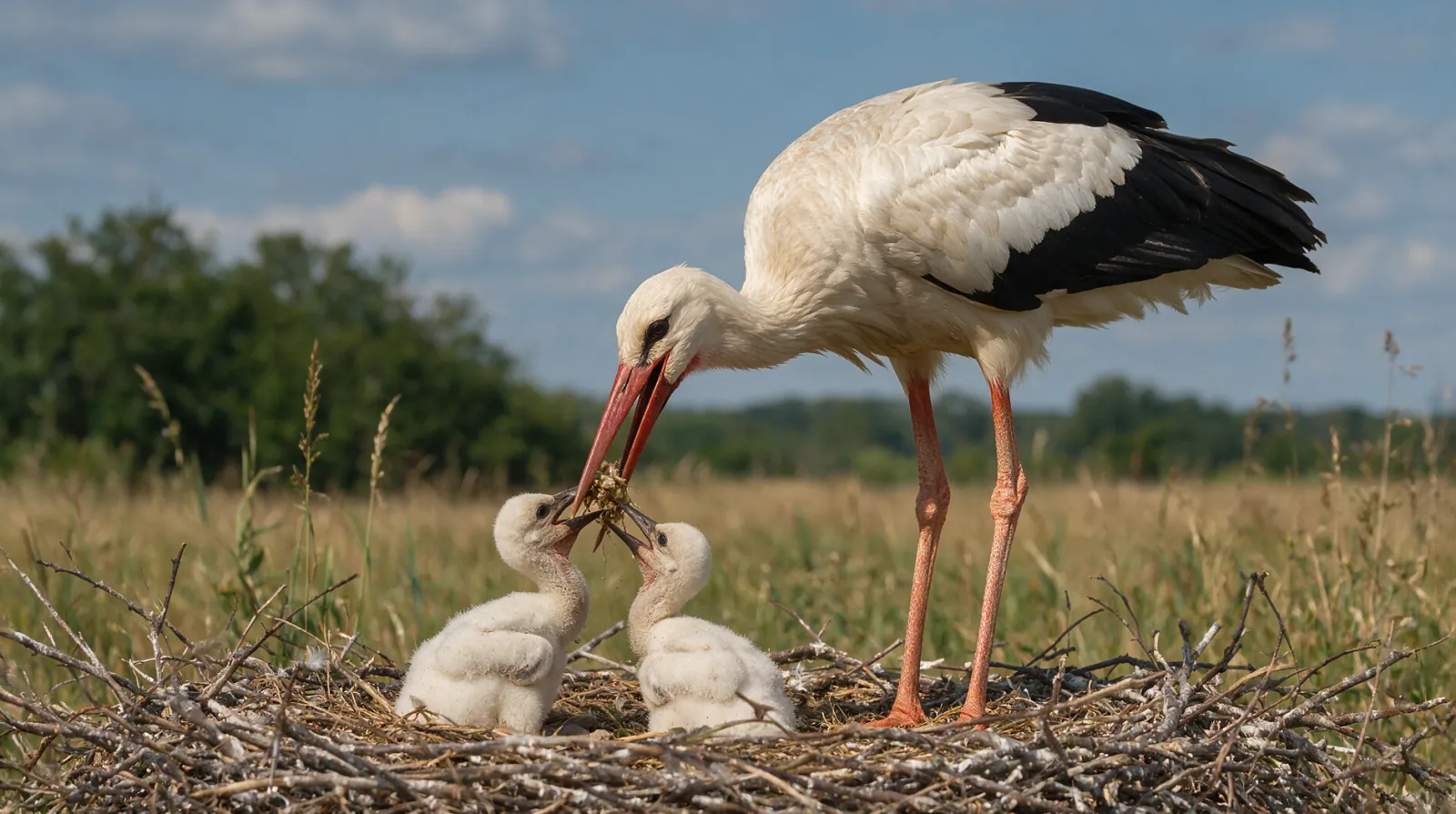
You can see both in the same wetland, especially in southern Europe and parts of Africa, but they use different parts of it. Pelicans take the open water. Storks take the margins: the flooded field, the ditch, the shallow pool left by rain. A pelican on a nest is usually on the ground or on a low platform near water. A stork on a nest is usually high, on a roof, a pole, or a chimney. If the bird is floating and scooping, it is a pelican. If it is striding through grass with its bill pointed down, it is a stork. The beak competition has no winner, because the two beaks are not playing the same game.
Explore the gift