A white stork crosses between Europe and sub-Saharan Africa twice a year, and the journey is built from ordinary heartbeats. Flight is the hardest work the bird does. The wing muscles demand more oxygen than any other tissue, and the heart is the pump that delivers it through climbs, glides and landings.
A pump matched to the wings
A flying bird carries a larger heart relative to its body than a bird that only walks or wades. In a stork the heart sits deep in the chest, behind the keel, with thick muscular walls. A larger heart moves more blood with each squeeze, and more blood means more oxygen reaching the flight muscles.
The heart and the wings grow as a matched pair. A bird built to cross a continent has the pump to pay for the crossing. The demand of the wings and the supply from the heart stay in step. A chick in the nest has a modest demand and a small pump. By the time the young bird flies south, the heart has caught up with the wings.
The position matters too. The heart sits close to the keel and the great flight muscles, so oxygenated blood reaches the hardest-working tissue after a short trip. A pump placed far from the work would need higher pressure and heavier vessels to do the same job.
At rest the same heart beats slowly and pushes blood through a large body without hurry. In the air it rises to the demand and holds there. The range of the bird is written into the range of its heart. A rooftop afternoon and a high crossing over open country ask for very different outputs from one small organ, and it answers both.
Four chambers, no mixing
The heart is divided into two upper and two lower compartments. Oxygen-rich blood returning from the lungs is kept separate from oxygen-poor blood coming back from the body. That separation means the muscles receive the freshest blood the bird can make.
The plan is the same as a mammal's, tuned for hard and steady work. Blood leaves the heart under pressure, travels out to the wing muscles, gives up its oxygen and returns for another load. The circuit repeats without pause for as long as the bird is in the air.
A four-chambered heart also keeps the pressures apart. The side that sends blood to the lungs runs at a lower pressure than the side that sends it around the body. Each side is built for its own distance, and the wall between them keeps the two streams from mixing. A stork in a hard climb depends on that division. Mixed blood would carry less oxygen to the wings just when the wings need more.
Air that crosses the lungs once
A stork's breathing works on a different plan from ours. Its lungs are small and stiff, and they do not expand and contract like a pair of balloons. The work of moving air is done by a set of thin-walled sacs spread through the chest and belly.
When a stork breathes in, air passes through the lungs and into sacs at the rear of the body. When it breathes out, that air moves forward through the lungs and leaves. Fresh air keeps crossing the lung tissue in a steady stream. A one-way system extracts more oxygen from each breath, and for a bird that burns fuel hard in flight that margin matters.
The arrangement also keeps air moving between breaths. Air is always somewhere in the circuit, travelling from the rear sacs through the lungs and out. The result is a steady supply of oxygen even during a long, hard climb.
Sacs inside the skeleton
Some of the air sacs send thin pockets into the hollow spaces of the bones, especially in the wing and chest. The skeleton becomes part of the respiratory system. Air the bird has already breathed fills spaces that would otherwise carry weight.
Two economies meet here. Hollow bones save weight, and the air inside them connects to the breath. The frame is lighter because it is full of air, and the air goes to use because the breathing system claims the same space.
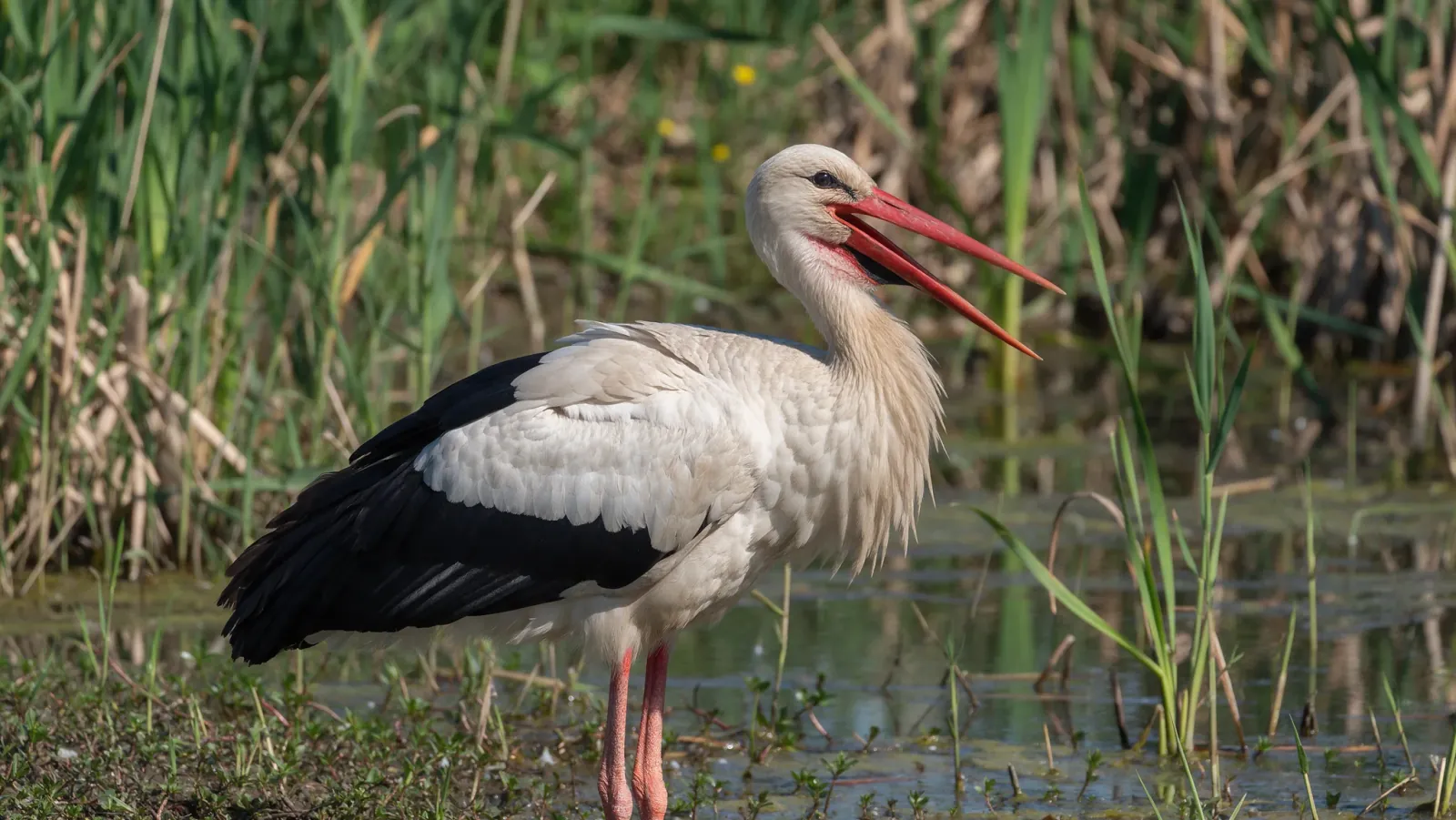
The sacs also lighten the body in a broader way. They lie among the organs and in the spaces of the chest, taking up room that would otherwise hold heavier tissue. A bird can be full of air in a useful sense.
The rhythm of climb and glide
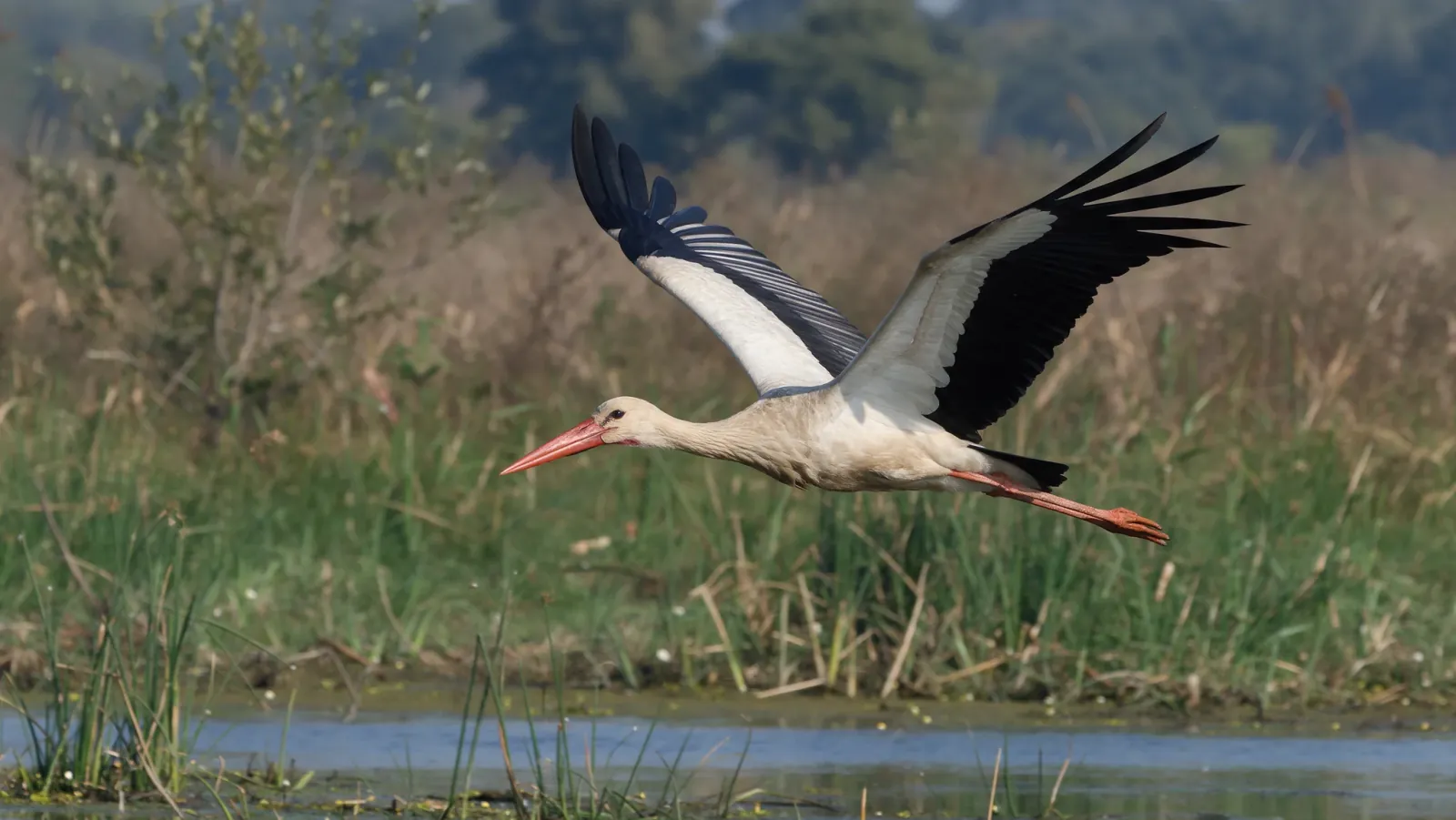
A stork's heartbeat changes with the work. During a hard climb the flight muscles burn oxygen quickly, and the heart speeds up to keep pace. When the bird levels off into a glide, the wings hold still and the demand falls. The heart eases into a slower, steadier stroke.
That alternation carries the long journey. The bird climbs with the heart working hard, then glides while the muscles rest. Soaring lets the muscles rest while the bird keeps moving, and the fat laid down before migration lasts longer. A stork that had to flap across the whole journey would burn its store far sooner.
The wings help the pump in one more way. As the chest moves with each beat, the air sacs are squeezed and released. The act of flying helps push the air that fuels the flight. Breathing and wingbeat fall into the same rhythm, and the bird gets some of the ventilation for free.
The same rising air that carries a stork through the thermal ladder keeps its heart from running at full effort all day. A bird that finds a column of warm air can climb without flapping, and the heart settles while the bird gains height.
Heat in the legs and the coat
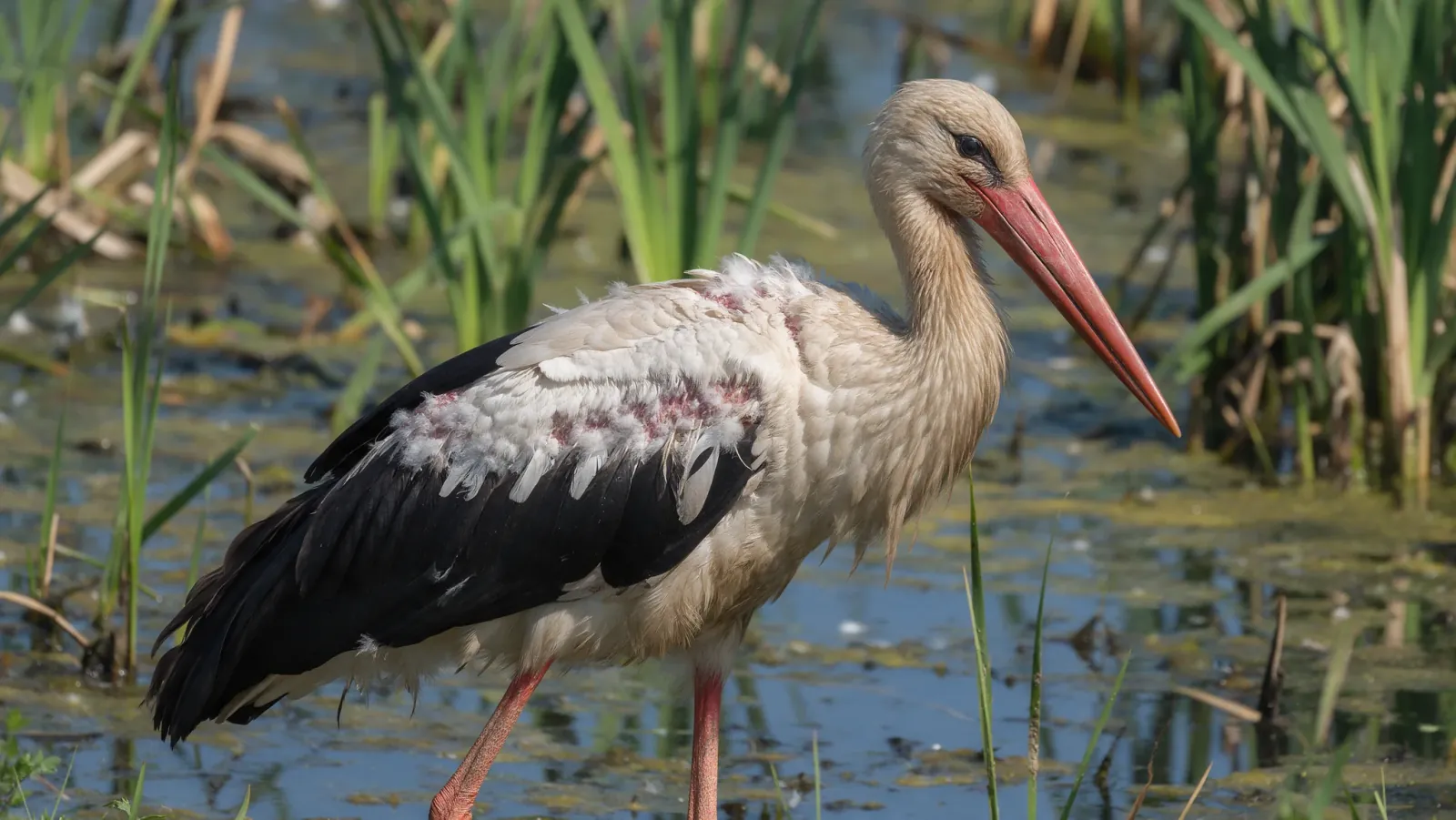
The heart moves oxygen, and the oxygen burns fuel, and both produce heat. A stork spends much of its life outdoors, so it has to hold that heat in. The first layer is the feathers. Air trapped between them keeps the body warm, and by fluffing the coat the bird thickens the layer when the cold deepens. The stork puts on a heavier coat without growing new feathers.
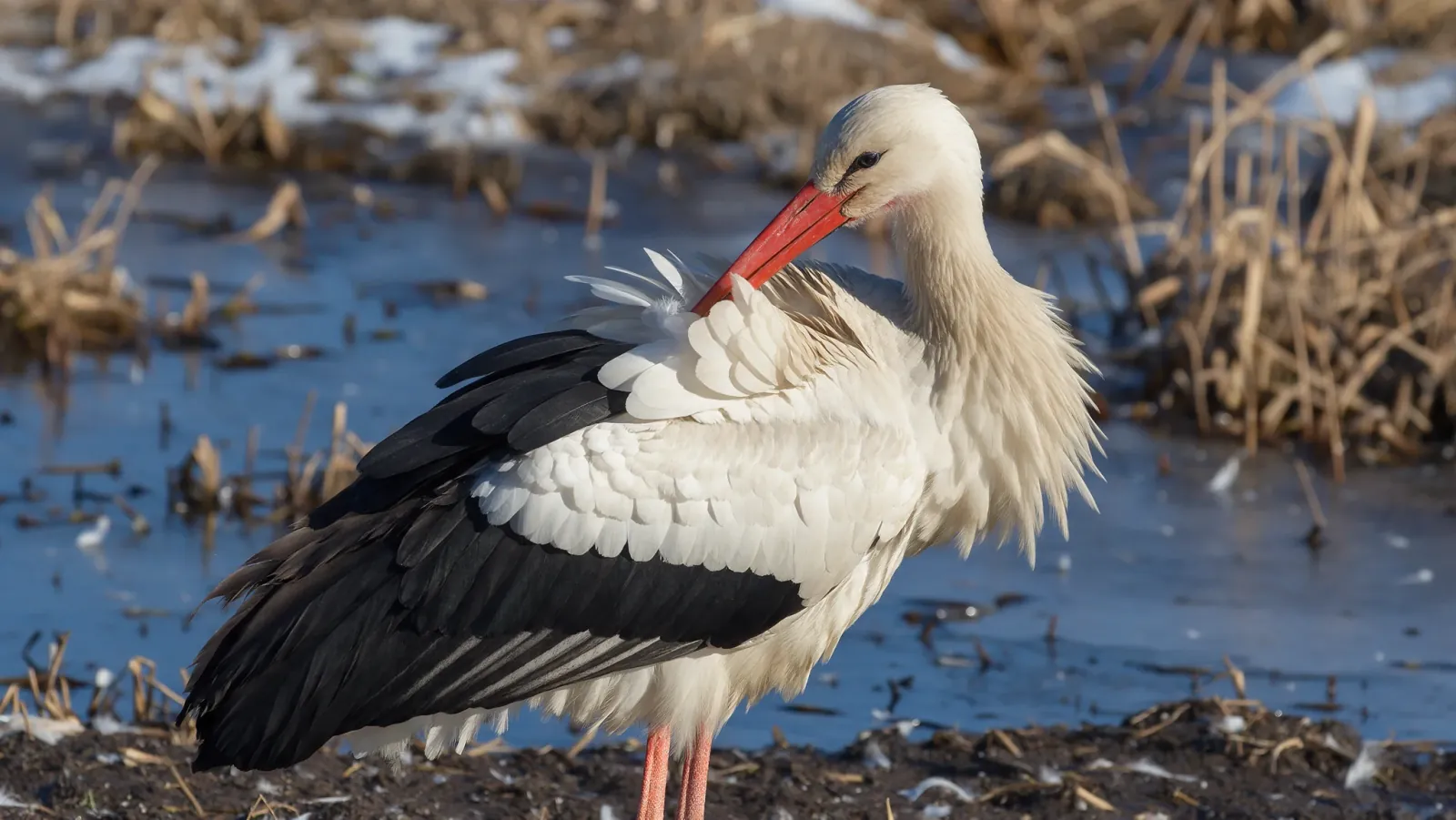
Heat leaves fastest where there is no coat. The long legs and the long bill have no feathers to hold warmth in. The stork tucks one leg into the belly feathers and turns its bill back near the shoulder. Standing on one leg is part of keeping warm as well as a matter of balance, and the bird switches sides so neither foot stays cold too long.
The legs hold another defence. The blood vessels running down the leg lie close to the vessels coming back up. Warm blood leaving the body passes beside cold blood returning from the foot, and heat moves from the outgoing stream to the returning one before it reaches the ground. The feet run cool while the body keeps its heat.
When the stork lands, the work drops at once. The wings fold, the muscles stop demanding blood, and the heart slows back toward its resting pace. The bird stands for a moment, then walks into the shallows to feed as if the flight had never happened. The recovery is quick because the heart never stopped. It moved through its range and came back, and the next takeoff finds it ready.
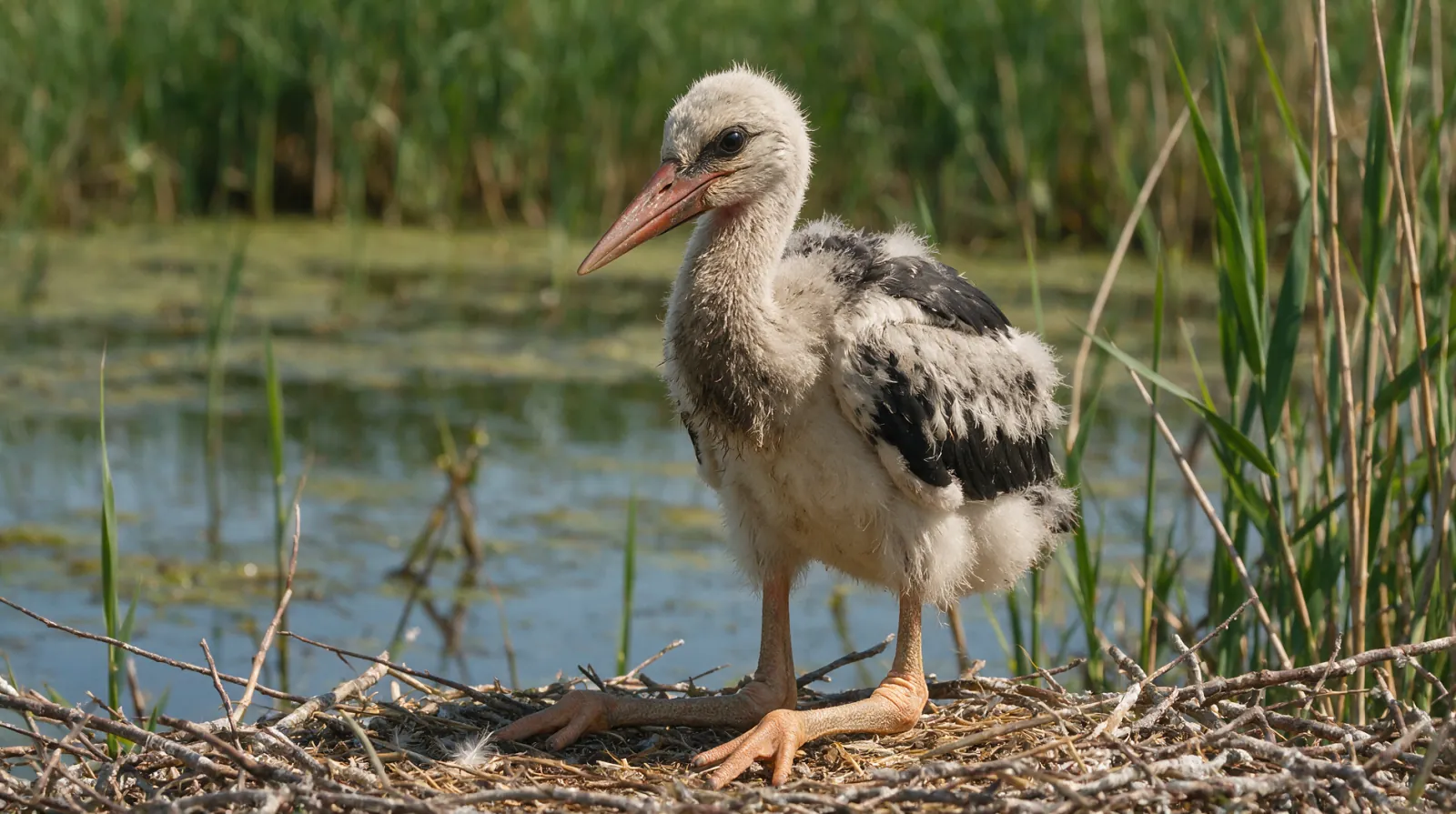
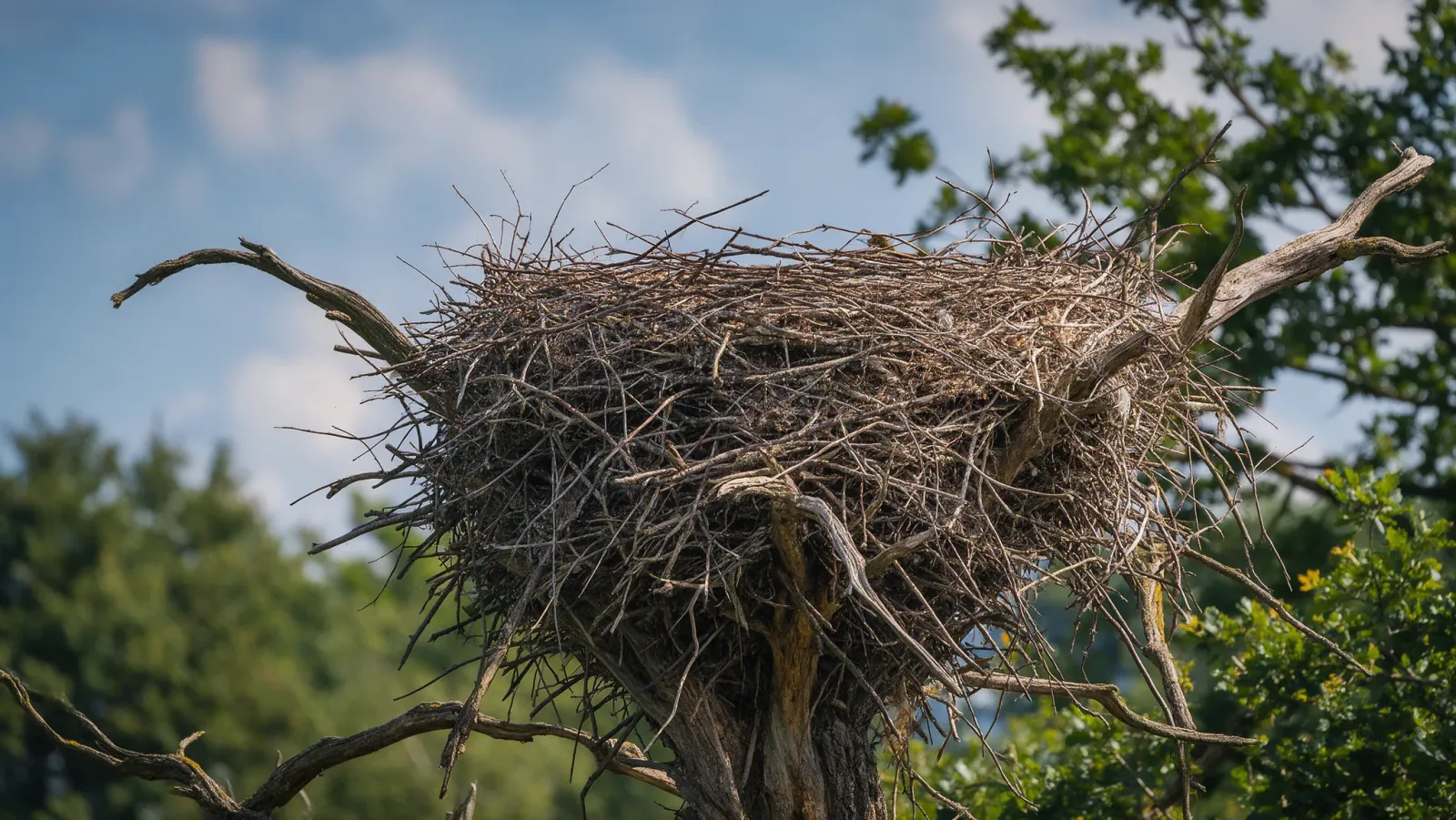
At night in early spring the sitting bird settles low over eggs or chicks, and its warmth spreads across the nest. Small chicks cannot manage their own heat at first, and the adult's body becomes the outer layer of the nest. The same pump that feeds a wingbeat also keeps a brood alive through a cold night.
Explore the gift