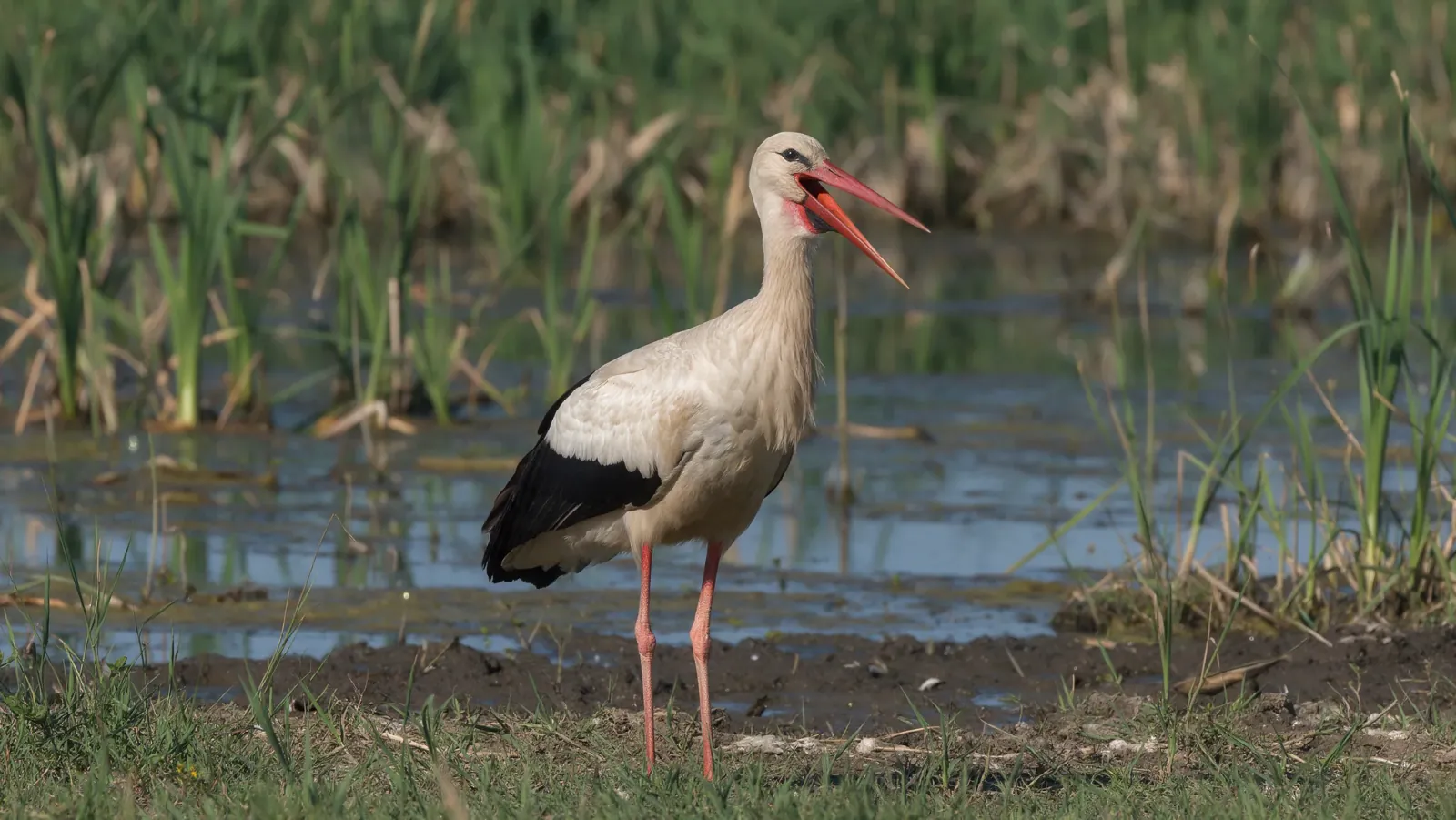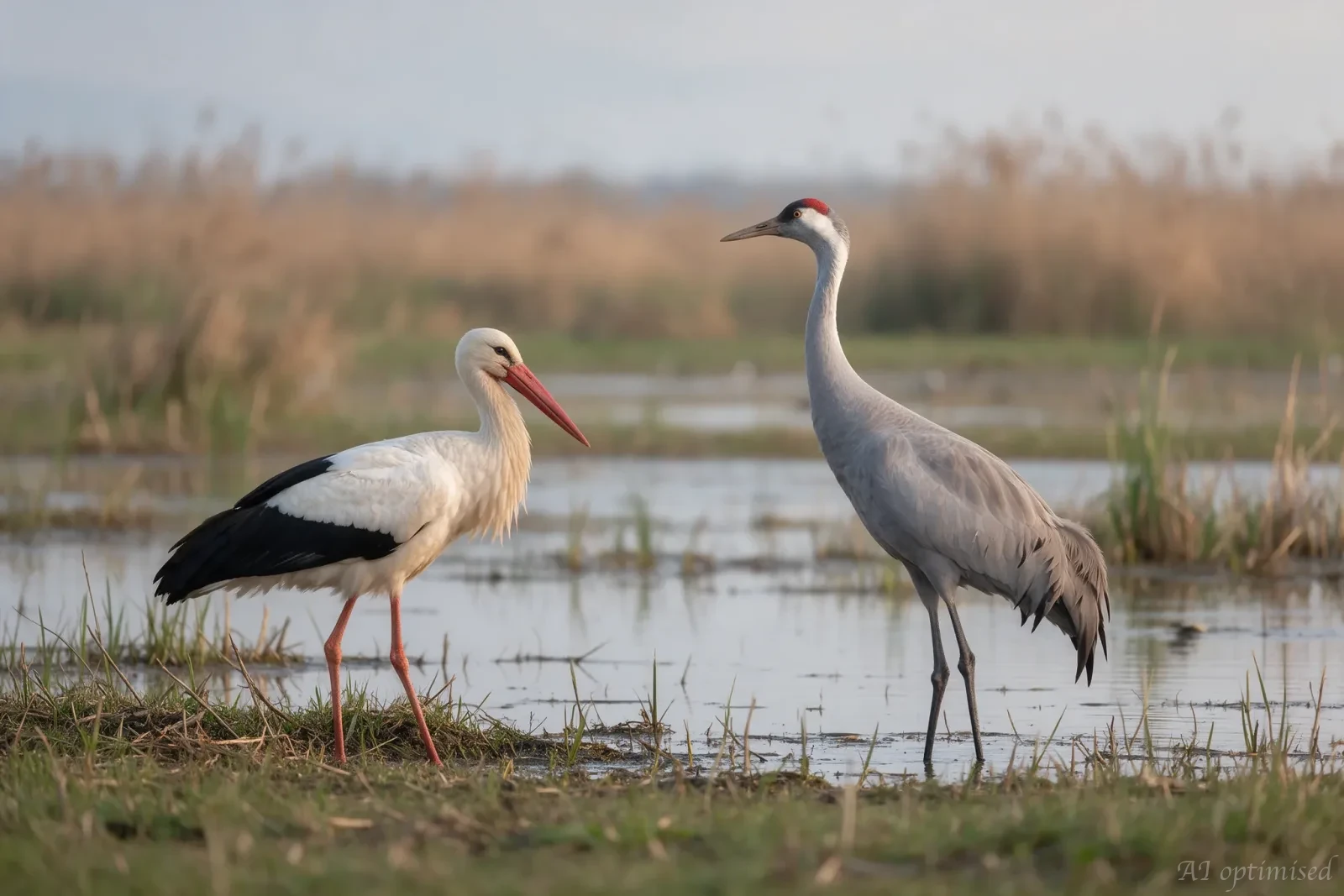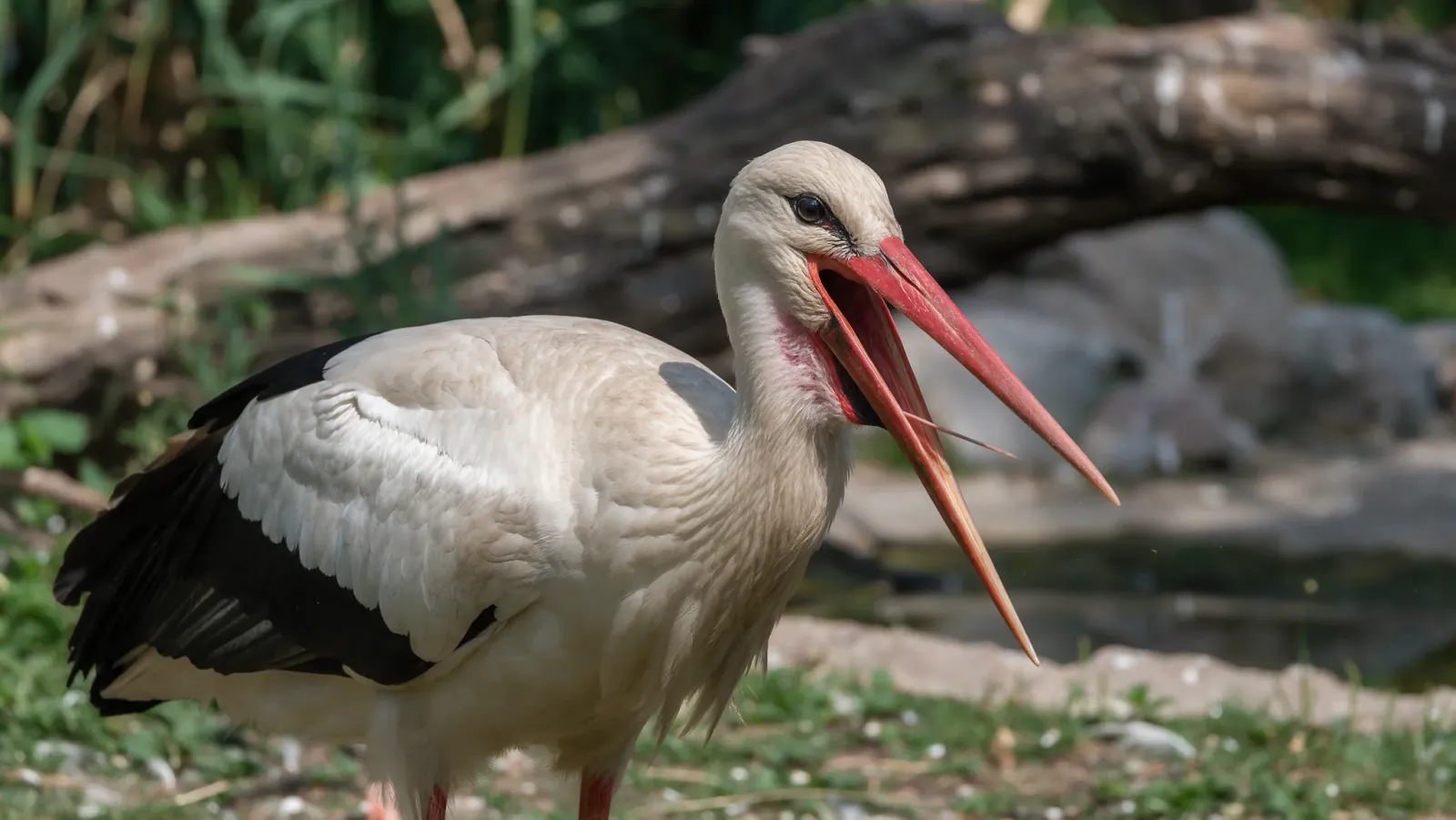
A white stork spends most of the year in near silence. It has the organ birds use for song, and the organ is small and weak. What comes out is a low hiss. The rest of its voice is a rattle, made when the two halves of its long bill strike each other at speed.
A throat built for a hiss
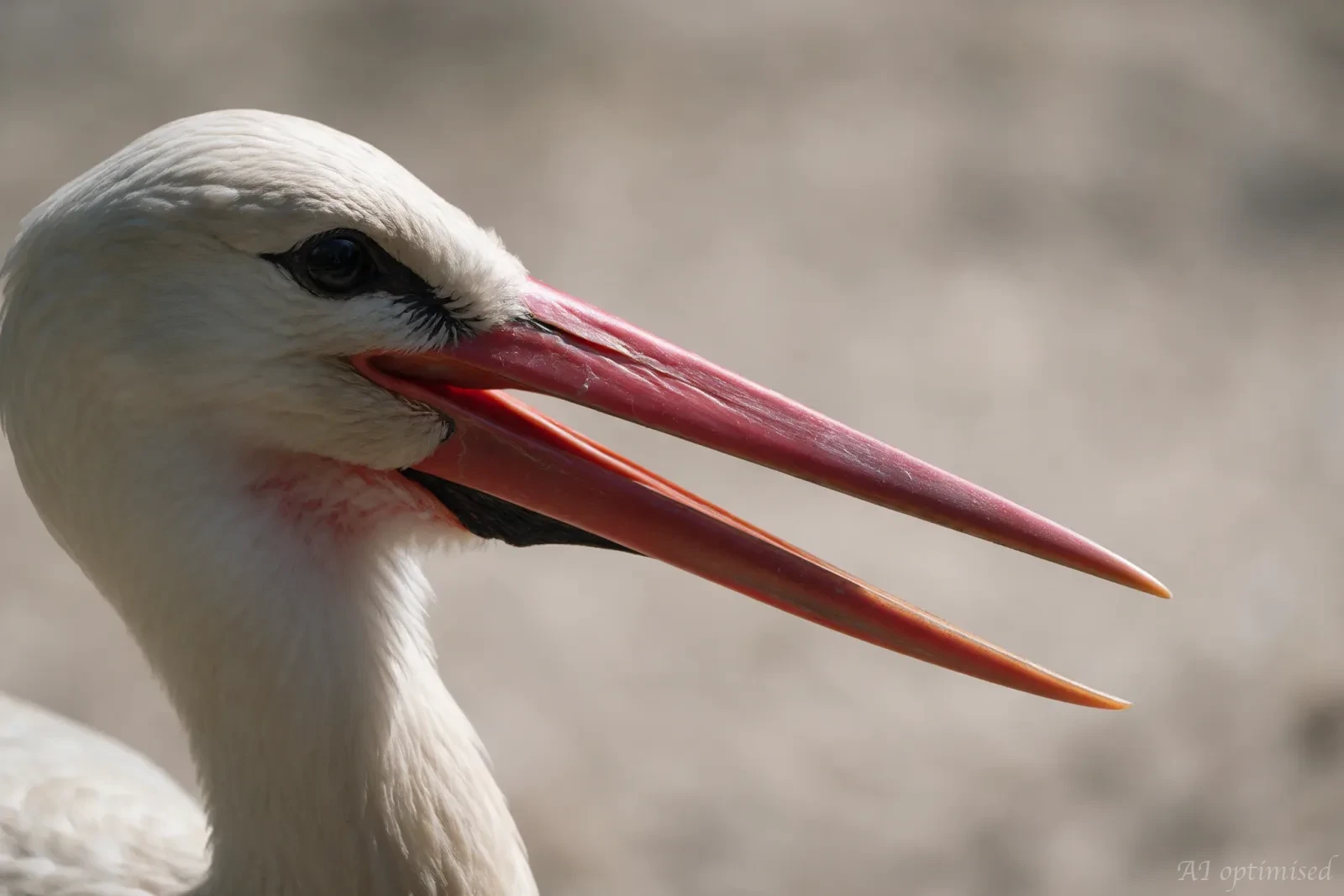
The syrinx sits deep in the throat where the windpipe divides. In a songbird it carries fine muscles and can shape fast, rising notes. In a stork it is simple, and the tongue is short and flat. The long straight bill has no part in shaping a melody.
When the bird is alarmed it pushes air through the open bill and lets out a low hiss. The sound is thin and it carries a warning. Nothing else comes from the throat. A stork can hiss, and that is the limit of its voice.
The bill is long and straight, made for seizing frogs and small fish, and it has no flexible parts to shape a note. A bird that sings needs a throat that can tighten and loosen quickly. The stork's throat stays loose and simple.
A song is a work of air, muscle and fine control. The stork has the air. The rest of the equipment stayed small, and the bird has lived with the result for a very long time.
A stork's syrinx can manage a low hiss and little else. The bird never learned to sing because the equipment for song was never part of it.
The bill as an instrument
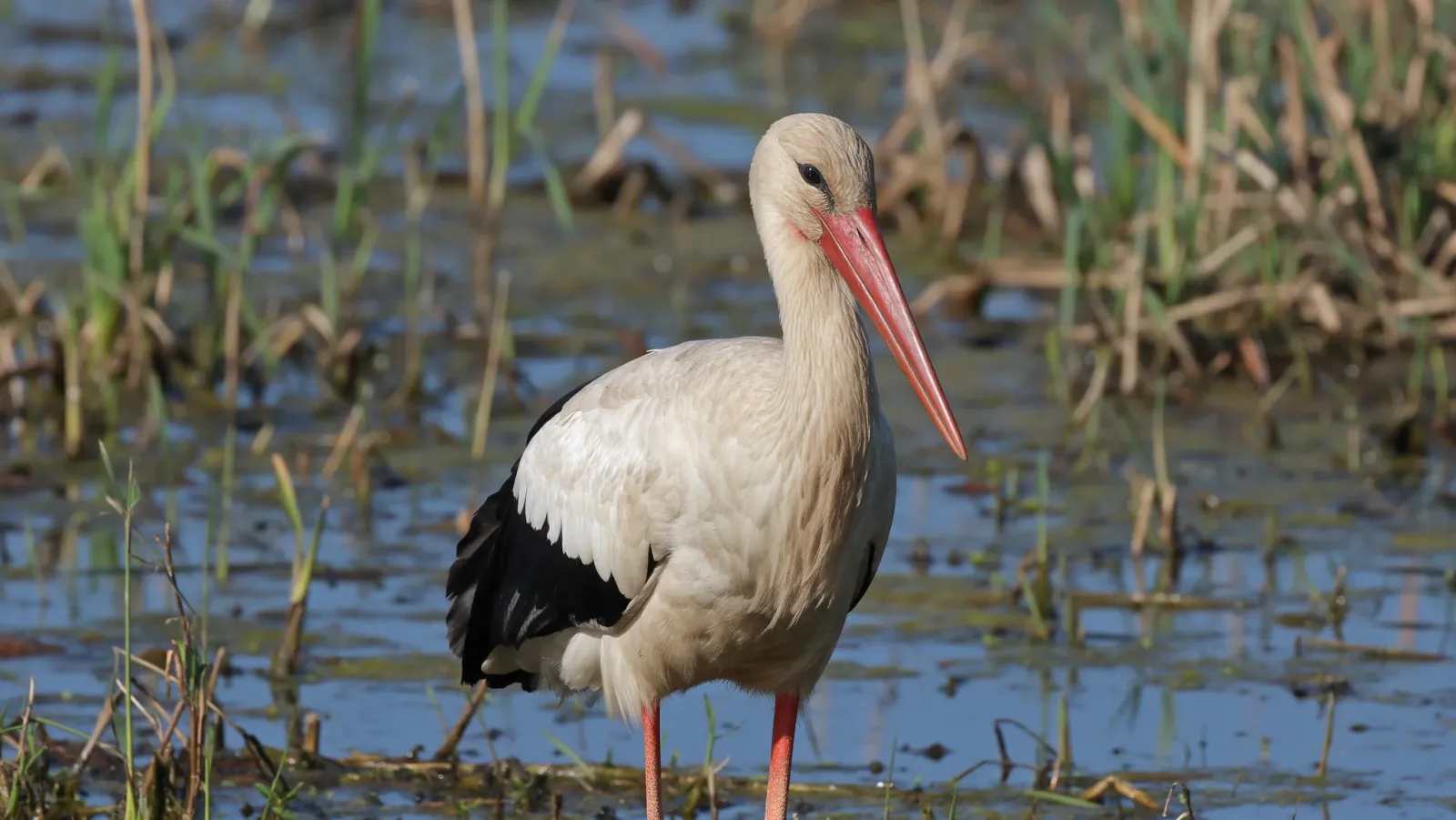
A stork clatters by throwing its head back and bringing the upper and lower bill together again and again. The two halves are long and hard, and the contact is quick. The sound starts abruptly and stops abruptly, which makes it easy to locate.
No soft tissue muffles it. The rattle carries across a village, farther than most songs, and it needs no voice box at all. A bird on one roof can be heard by birds on the next.
The sound is percussion. Two hard edges meet along their length, with no soft tissue to soften the blow. The bird carries its own drum.
A sharp sound carries better than a soft one. The stork's voice is built for distance, and the shape of the bill does the work. The sound arrives whole, and it stops whole.
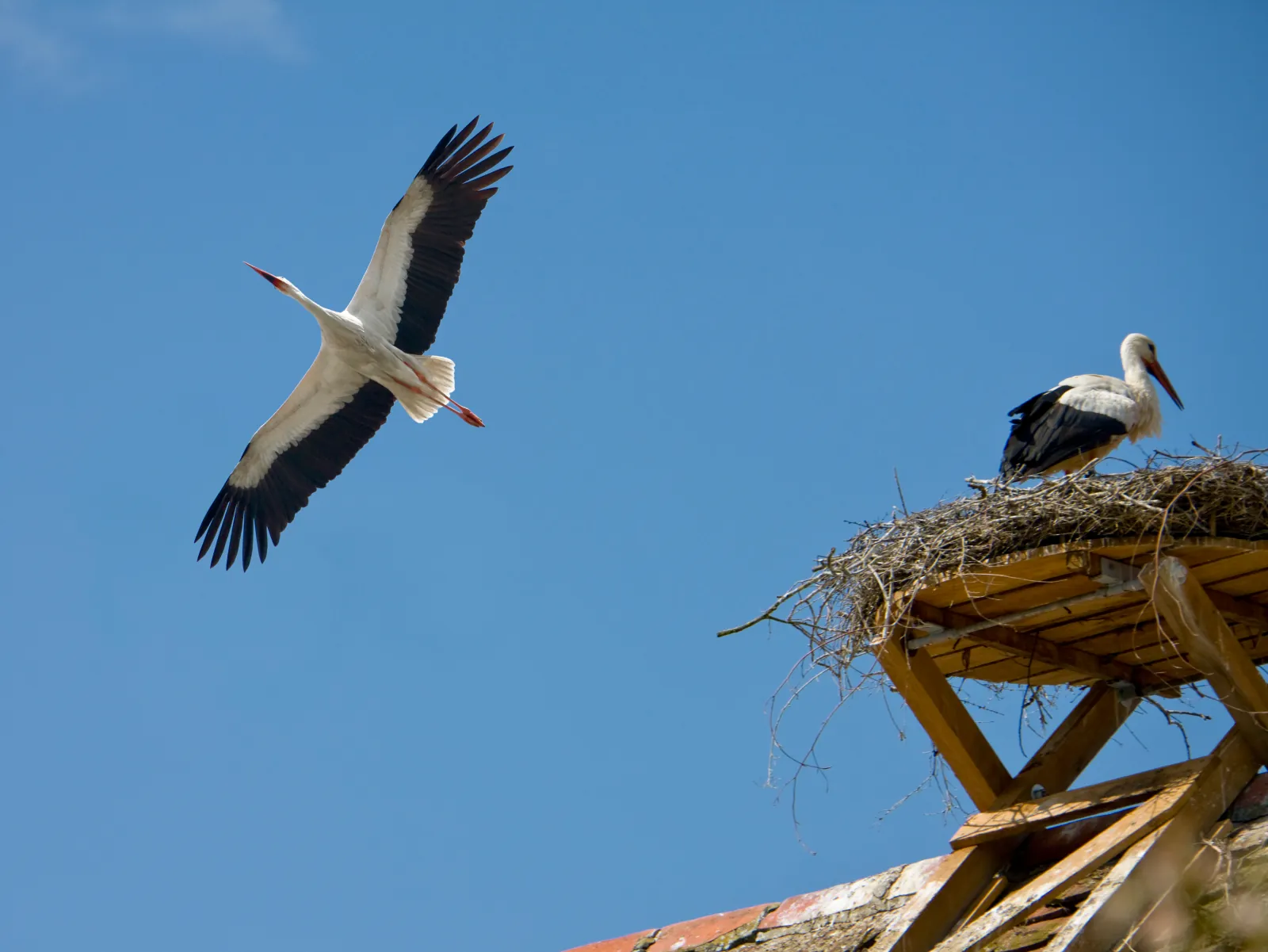
A quick motion of the beak, repeated, tells every stork within earshot that this roof is occupied.
What the clatter says
At the nest the sound does the work of a song. A stork that lands after a morning of feeding clatters to announce itself. Its mate answers, and the pair stands with heads thrown back and bills pointed at the sky.
The same rattle, used near a rival, is a warning. One sound carries welcome and warning, and the setting supplies the meaning. The noise itself is the same each time. The bird supplies the context, and the neighbours understand it.
Spring is the loudest season. Pairs meet again at the old nest after a winter apart, bow, toss their heads back, and rattle in a rhythm that binds them to each other and to the platform.
The same rattle marks the whole season. It greets a mate in April, warns an intruder in May and calls the chicks to feed in June. One instrument does the work of a whole vocabulary. The clatter has one word, and the setting gives it meaning.
A duet at the nest
Greetings often become a duet. One bird starts, the other joins, and the two rhythms fall into step until they sound like a single event. The pair repeats it at changeover, when one bird takes over incubation and the other leaves to feed.
The duet is part of the pair bond. It is repeated through the season, at greeting, at changeover and when a rival comes near. The birds say a great deal without a tune.
A pair clattering together is one of the clearest signs that spring has reached a village. The birds bow to each other, heads back, bills to the sky, and the noise rolls out over the rooftops.
A voice that arrives complete
The clatter needs no learning. A chick can rattle its bill within days of hatching, and the rhythm is the same across the species. A songbird must hear its song and practise it. The young stork has the whole sound from the start.
There is no tune to pass down and no phrase to improve. The clatter is given, and it does all the work.
That is why the sound carries across a village unchanged, season after season. The rhythm is the same across the species, and a chick needs no teacher. The birds do not invent it, and they do not forget it. A parent greets the chicks with the clatter, and the small bills answer.
A sound tied to a place
People who live near a nest grow used to the rattle the way they grow used to church bells. On a still evening it carries over fields and streets. In spring it arrives before the birds are seen: the noise comes first, and the birds follow.
A pair will clatter together for a long while after a separation, heads back, bills to the sky. The sound is rough and simple, and it does everything a song would do for a bird that never learned to sing.
In autumn the nests empty and the sound goes. A village without it has lost the noise of its summer, and the absence is one of the quietest signs that winter is coming.
The clatter belongs to the nest. Away from it the bird stays quiet. The sound marks a platform as occupied, and the neighbours hear it and keep their distance. A nest can be held by sound as well as by sticks. The nest is never truly silent, even when no bird is singing.
Why a song never grew
A songbird uses song to claim a territory and attract a mate, and it learns the song it sings. A stork claims a nest instead. It returns to the same roof, meets the same mate, and announces both with a rattle.
A song is something a bird uses to be heard across open country. The stork found a louder way. The clatter carries further than most songs and needs no voice box at all.
The nest is the territory. The bird needs no tune to hold it. Over long generations the voice stayed small while the clatter did the work. The bird is quiet away from the nest, and the clatter is saved for the place where it matters.
Nothing about the arrangement looks like a loss. The bird has a voice that carries, a nest that answers to it, and a season that begins with a noise over the roofs. The whole of the bird's voice is tied to one place, and it is enough. The world has room for birds that sing and birds that clatter. The first clatter of March is how a village knows the storks are home.