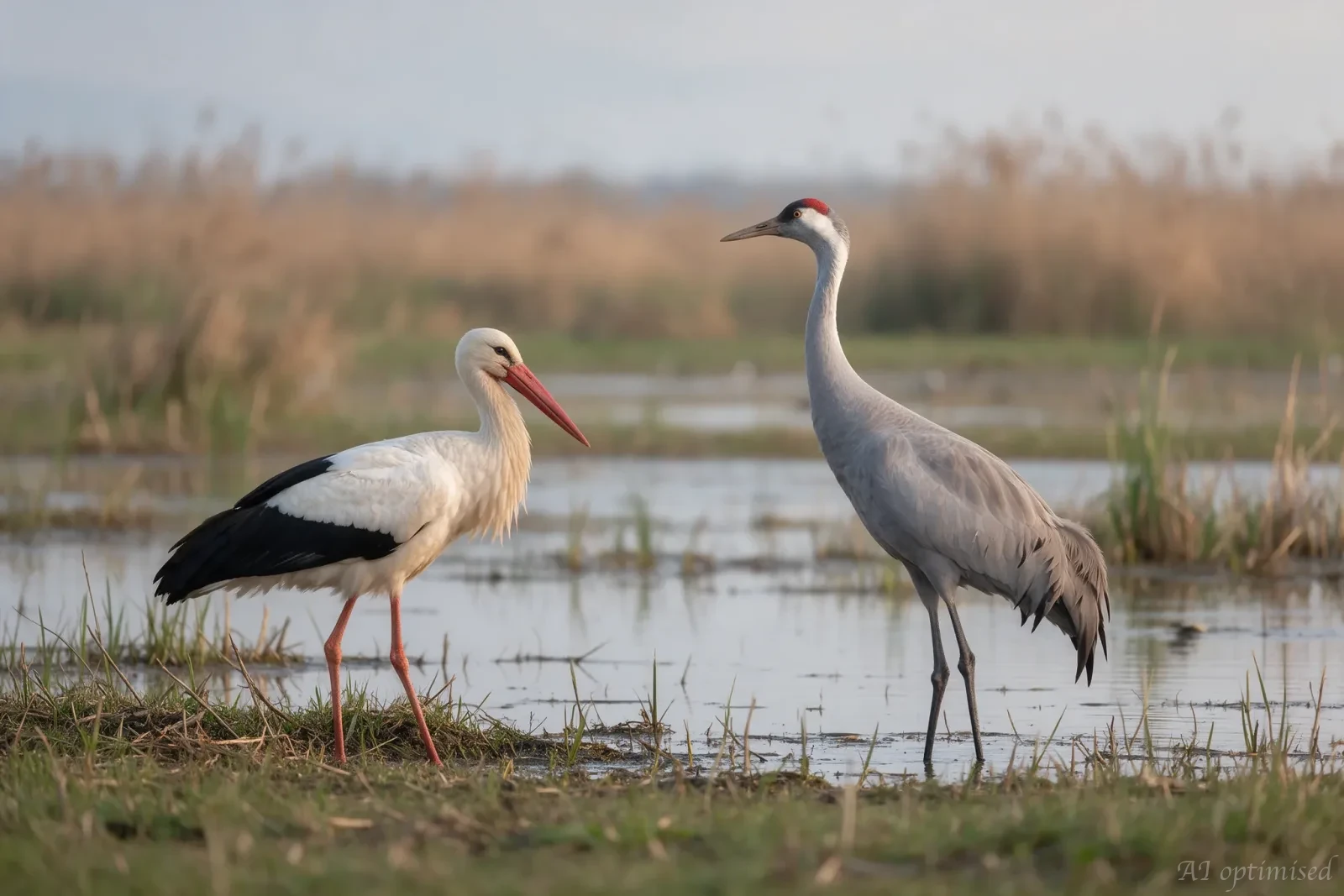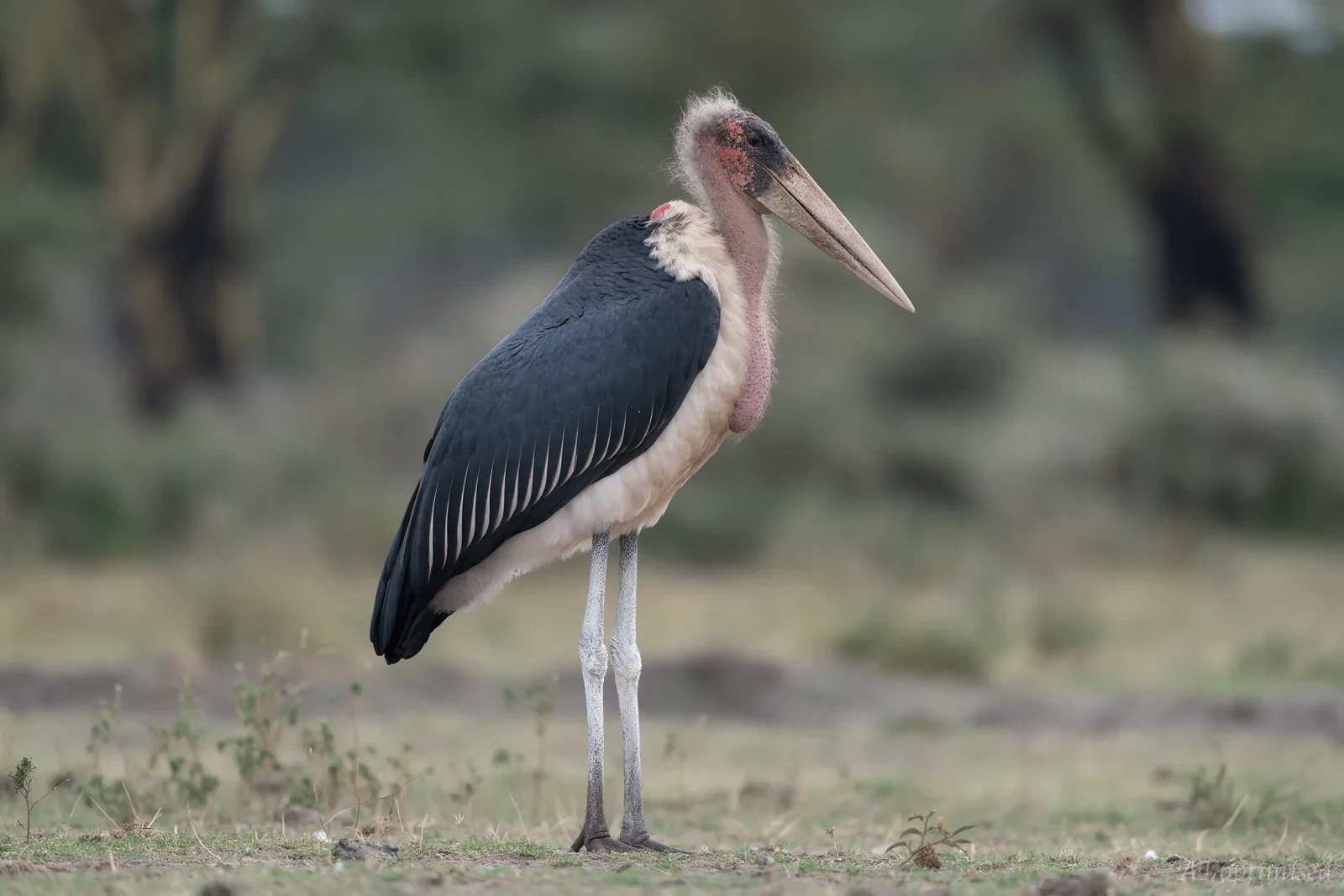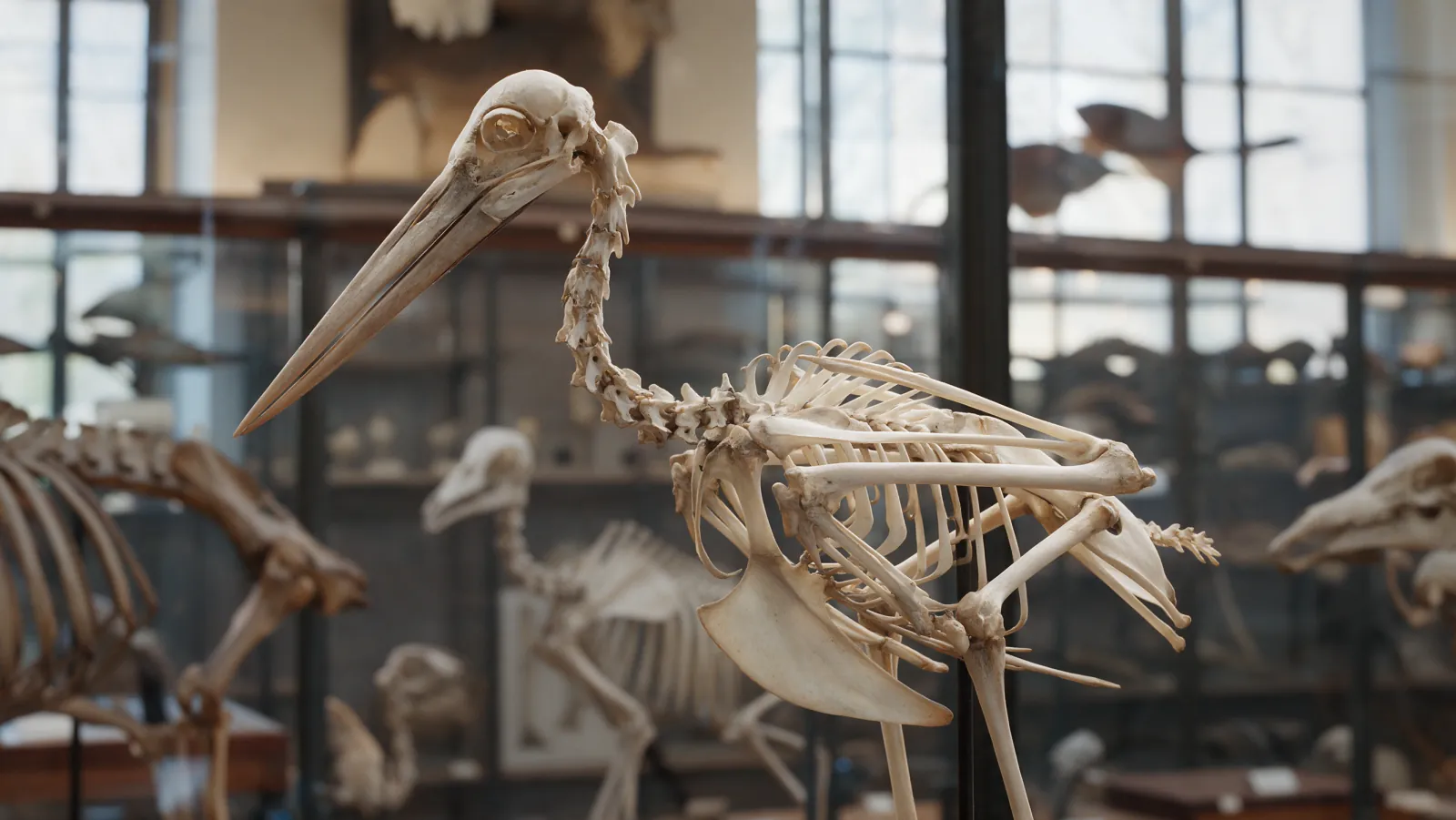
A white stork stands about a metre tall and flies on wings that stretch close to two metres. Between those two facts sits a problem of engineering. The skeleton has to lift a body through a summer of wading and a winter of soaring, stay stiff enough to anchor every wingbeat and stay solid enough to survive a landing on a heap of sticks. The answers are written into the bones.
A frame with two jobs
Flight rewards lightness. Wading rewards length and strength. The stork's skeleton leans toward both, with long thin leg bones beneath and a compact, braced body above. Nothing in the frame is decorative. Every ridge and fusion answers a force the bird meets in the air or on the ground.
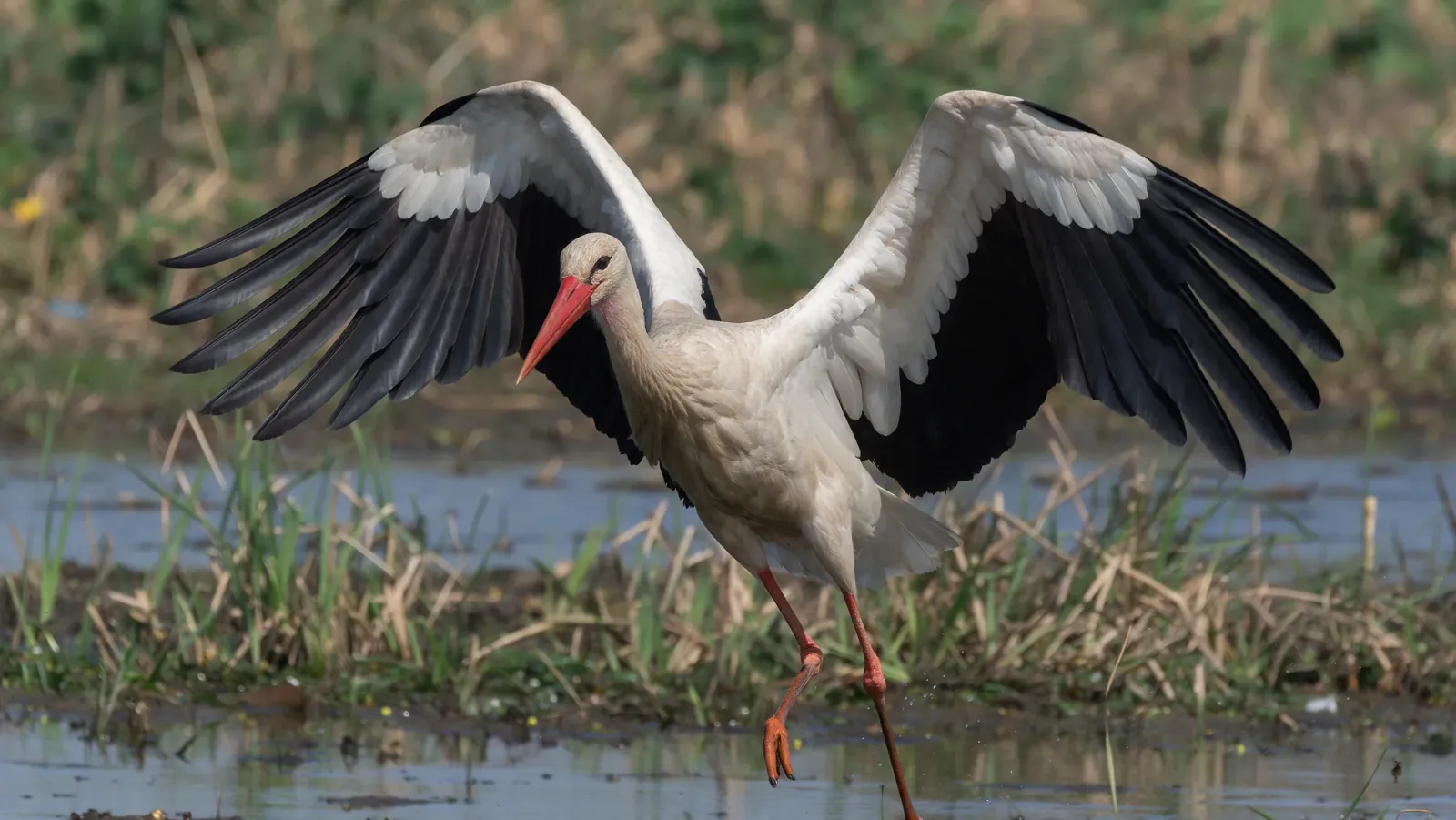
A stork standing in shallow water shows the arrangement plainly. A small body rides high on two stilts, the neck folds back and the bill stays level with the water. The shape lets the bird feed without getting wet and keeps the eye high enough to watch the reeds. On land the same frame has to carry the bird across soft mud without sinking, and in the air it has to hold a wing out straight for long glides. A stork's skeleton answers the loads of two different lives at once.
The wings are long and the body compact, so the bird carries its mass near the centre and reaches wide on either side. The legs are the longest bones in the frame, and they lift the body clear of grass and water. A short-legged bird of the same weight could not feed in the places a stork uses.
Air where the marrow would be
Most of a stork's larger bones are hollow. In a mammal the marrow space holds tissue that makes blood cells. In a bird much of that space holds air, and some of the hollows connect with the breathing system. The bone becomes a light tube crossed by thin internal braces.
The saving adds up across a whole skeleton. A lighter frame means less work for the flight muscles on every beat and less fuel burned on a journey that runs for weeks. Air inside the bones is weight the bird does not carry across a continent. A stork crossing from Europe to sub-Saharan Africa lifts itself thousands of times, and each of those lifts is cheaper when the frame is light.
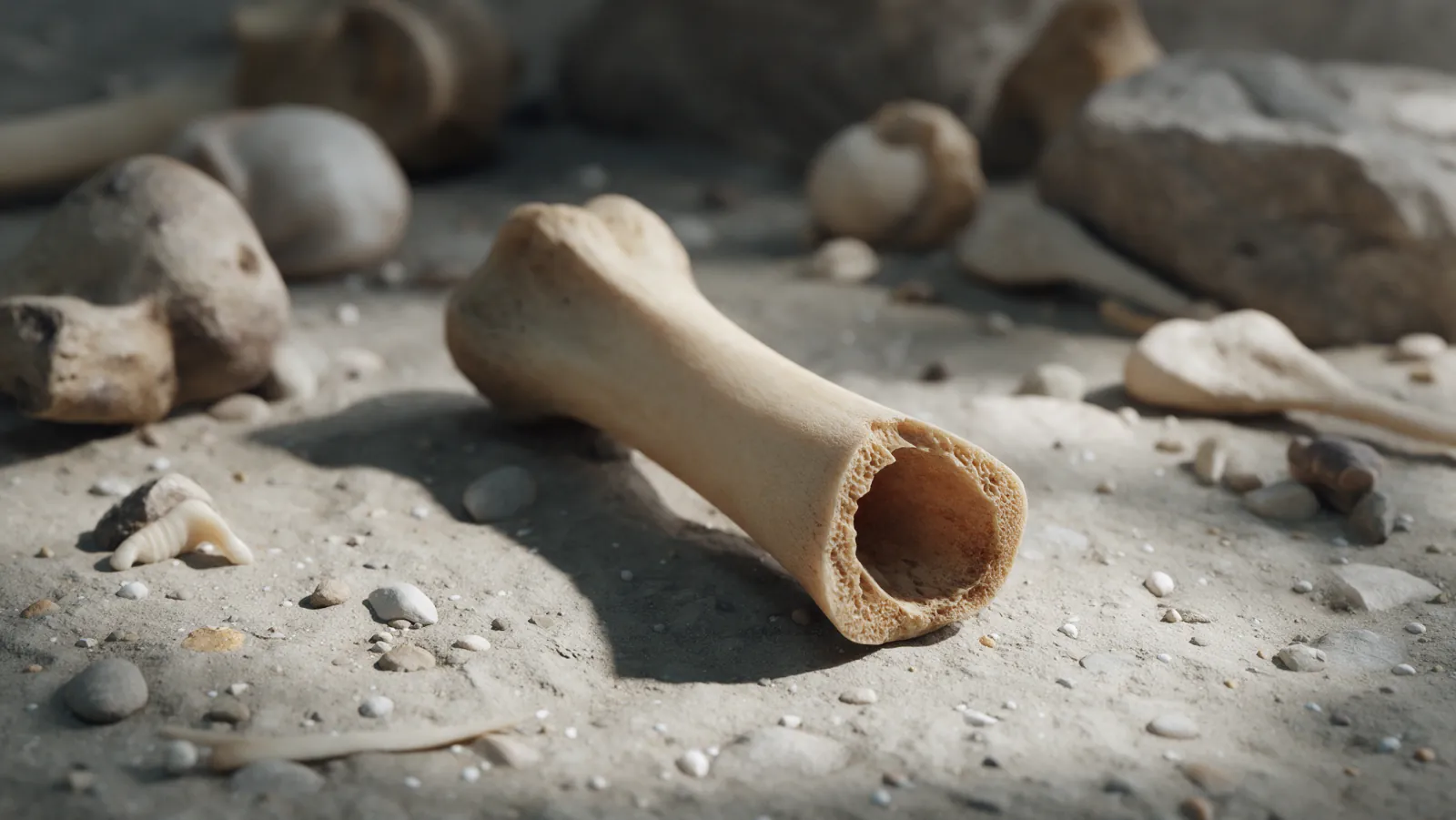
Lightness alone would be a poor bargain if the bone became fragile. The same tube that saves weight has to meet the jolt of a nest platform and the pull of a wingbeat. The bracing inside the tube covers both jobs, and it is the part of the design a hand would notice first.
Struts inside the tube
Look inside a stork's bone and you find a braced tube. Thin plates and struts cross the open space, holding one wall against the other. They work like the ribs inside a boat hull or the braces inside a crane, stopping the tube from buckling when it bends.
A hollow tube with internal bracing is stiffer for its weight than a solid rod. The bone resists the twisting and bending of flight, and a hard landing spreads its force through the braced walls instead of gathering at one point. The hollow is a structure, with material placed where the bending is worst and empty space where it is not needed.
Some bones stay solid. The legs that take the impact of landing and the long hours of standing are stouter and denser than the bones of the wing. Strength sits where the ground meets the bird, and air sits where the load is light. The skeleton spends weight where it buys the most strength. That division lets the bird rise on a thermal and then drop onto a nest of sticks without breaking anything.
The keel and the locked chest
A wing needs something solid to pull against. In the stork the vertebrae of the chest region fuse into a stiff platform, and the breastbone grows a deep ridge called the keel. The flight muscles anchor to that ridge. Without it a downstroke would have nothing to push from.
The chest is the fixed point in a moving machine. The wing itself is mostly feather and tendon, light and flexible. All of its power comes from the braced cage at the centre of the body. When you watch a stork take off, the effort you see in the wings begins in that locked chest.
A fused chest also holds the body steady in flight. The wingbeat pulls hard on the front of the body, and a loose set of bones would waste part of that pull. The fusion turns the chest into one piece, so the muscle has a firm base and the air sacs inside it keep their shape while the wings work.
A neck of many small bones
Between the chest and the bill runs a chain of vertebrae, each joint small enough to give the bird a flexible reach. The arrangement lets the stork dip into grass, probe mud and strike without moving the body. It also lets the neck fold back neatly in flight.
A heron flies with its neck folded into an S. A stork flies with its neck stretched straight ahead, and the many small bones let it hold that line without strain. The same neck that reaches for a frog can hold the head steady through hours of gliding.
Many small joints also spread the work of a strike. The neck draws back, then the whole chain unfolds at once, and the bill arrives at the point the eye has chosen. A shorter neck with fewer bones would be stronger in one place and less flexible along its length. The stork's version trades stiffness for reach, which suits a bird that feeds by watching the ground and stabbing at small prey.
Legs that lock and toes that spread
Under the body the skeleton changes character. The leg bones are long, thin and strong, holding the belly clear of the water. The toes spread wide to carry the bird's weight on soft mud. When a stork settles onto one leg, a tendon pulls tight over the joint and holds it straight with almost no muscular effort.
The legs carry the bird's hunting posture as well as its weight. A stork walks with a slow, high step, lifting each foot clear of the grass before setting it down. The long bones give it the height to see over reeds and the reach to stand in deeper water than a smaller wader could use.
That lock is why a stork can stand motionless at the edge of a ditch until something moves. The frame does the standing, and the bird saves its strength for the strike. A bird that had to hold itself up with muscle would spend the morning tiring and the afternoon hungry.
The frame also has to fold. A stork in flight tucks its legs back along the body, and the long bones that work as stilts on the ground become a compact trailer in the air. The joints that lock for standing release as soon as the bird bends its leg. The same mechanism that keeps the bird upright lets it walk into the shallows a moment later.
From the outside a stork looks like a simple shape: a white body on two long legs. Inside, every part of that shape has a reason. Light bones carry the bird, braced walls keep them stiff, a fused chest anchors the wings, a long neck reaches for food and a locking leg makes stillness cheap. A stork can stand in cold shallows for an hour on that frame, and then fly.
Explore the gift