A shoebill can stand in a papyrus swamp for half an hour without moving, and it can go days without making a sound. Then it lifts its head, opens the huge bill and clatters out a rattle that people who hear it once describe the same way: like a machine gun.
The bird is Balaeniceps rex, the only member of its family, and it lives in the freshwater swamps of central and east Africa. Birders travel to Uganda and Zambia to find it. The sound is part of the reason.
A bird that mostly keeps quiet
Most of the time a shoebill is silent. It hunts by standing still at the edge of open water, waiting for a fish to come close, and a noisy bird would spoil that. On a quiet morning the swamp gives you frogs, insects, the wind in papyrus, and a shoebill that has not moved for twenty minutes.
That stillness is why the clatter lands so hard when it comes. A bird that has been part of the scenery suddenly sounds like machinery.
The machine-gun rattle
The noise comes from the bill. The shoebill snaps the two halves together again and again, fast, and the hollow space inside works a little like a drum. The result is a burst of dry, wooden knocks that carries across open water and sounds nothing like a bird.
People reach for the same comparisons. A machine gun. A stick dragged along a fence. A wooden clapper. The rattle usually comes in a series, stops, then starts again.
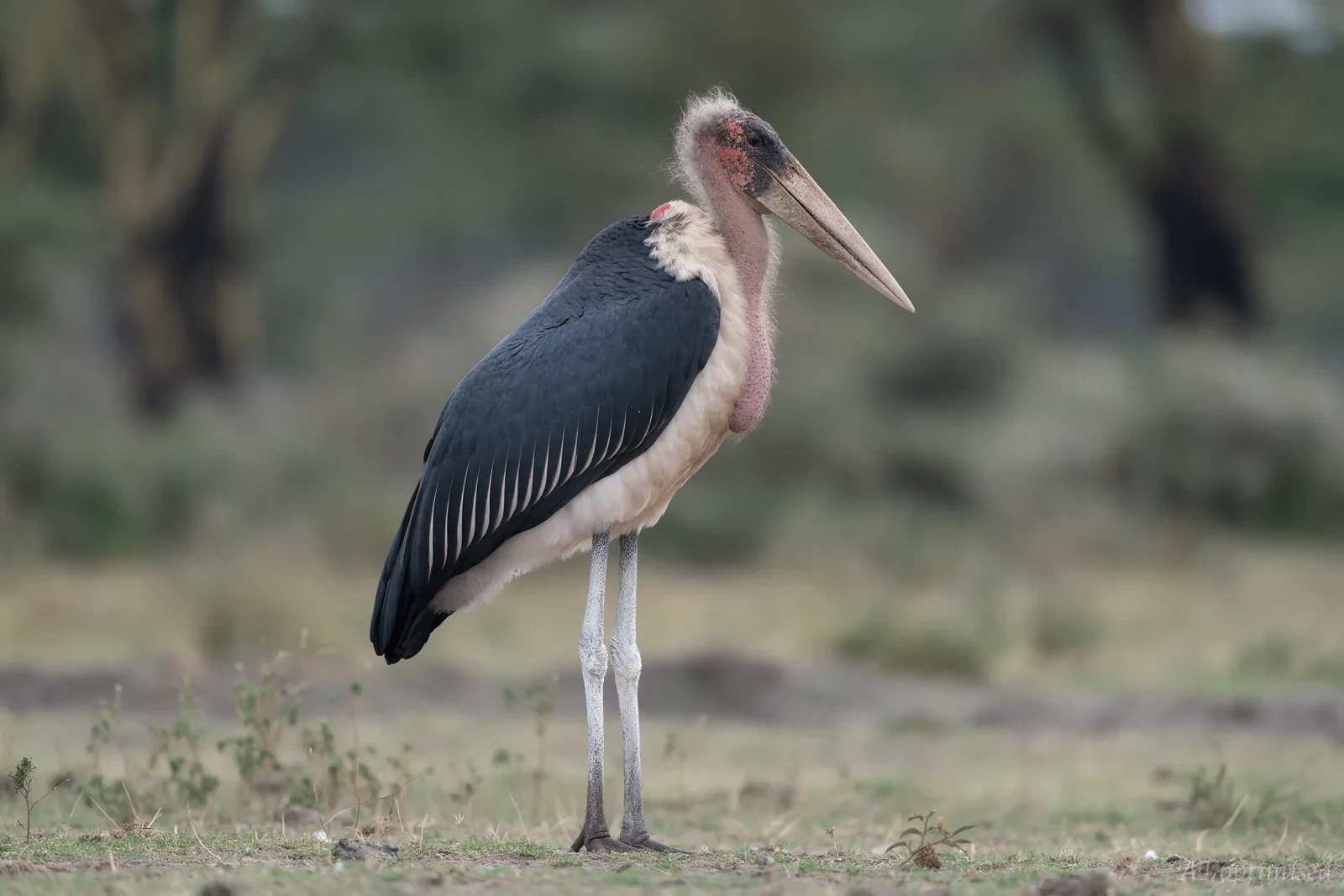
The bill is a strange instrument to begin with. It is broad, deep and hooked at the tip, the shape of a wooden shoe, and it makes up a good part of the bird's fame. Two flat surfaces that size, brought together quickly, make a lot of noise.
What the clatter is for
Shoebills clatter at each other, and pairs clatter at the nest. The sound works as a greeting and as a way of staying in contact in thick vegetation where the birds cannot see far. A pair will often clatter together, heads lifted and bills open, in a kind of duet.
Chicks clatter too, and adults answer. At the nest the noise carries information: who is here, who is coming, whether a bird is settled or alarmed. In a swamp of tall reeds, sound does work that sight cannot.
A small piece of theatre goes with it. Shoebills often bob their heads while they clatter, and the movement and the noise arrive together, which makes the display easier to notice from a distance.
The quieter sounds
The rattle is the famous one, and the bird has others. A shoebill can give a low, booming call that sounds more like a cow or a foghorn than a bird, and it can hiss when it feels threatened. A startled bird may snap the bill once, hard, without the long series.
Wings make noise too. A shoebill is heavy, with broad wings, and the first few beats after takeoff produce a low whoomph that carries over still water. It does not fly often. When it does, the sound announces it.
A bird moving through reeds makes a softer noise: the rustle of a big body pushing stems aside, then silence, then the snap of a bill. Recordings of shoebill swamps often catch the rattle first and the bird last.
Where the sound belongs
The clatter is a swamp sound. It comes from papyrus and reed beds in the wetlands of the Nile basin and the marshes around Lake Victoria, usually early in the morning when the air is still and sound travels.
You will not hear it in Florida, and you will not hear it in a city park. The shoebill needs fresh water, tall reeds and fish it can ambush, and it keeps to places where people rarely stand. That is part of why the rattle holds on to the people who do hear it.
Explore the gift