A baby hears the house before it can see it. The ears work before birth, and in the first weeks they carry more of the world than the eyes do. A kettle, a stair, a door, the washing machine clicking into its final spin: each sound has a fixed place in the day, and a baby learns them in the order they arrive.
The voice arrives first
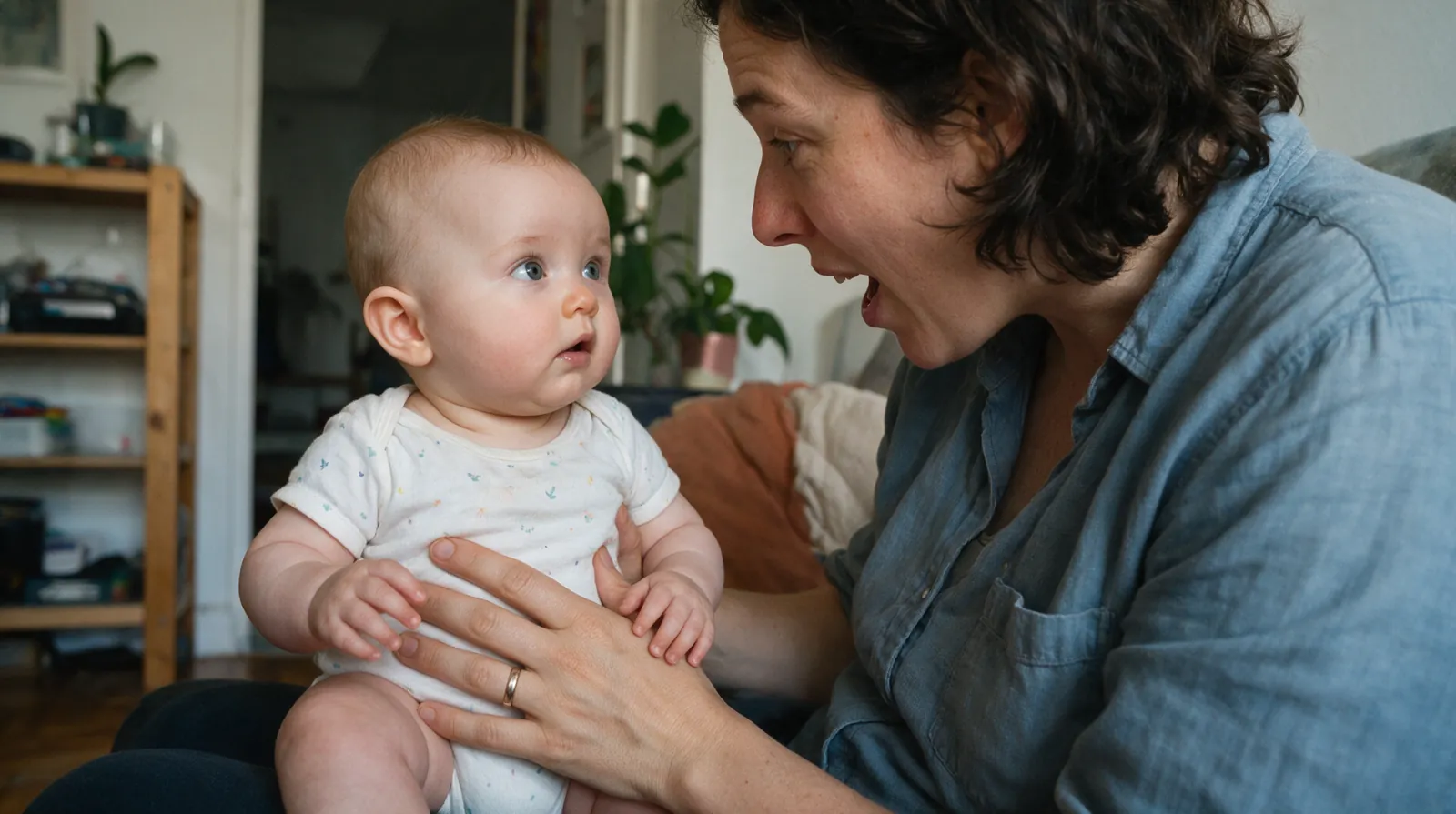
Within days a newborn prefers its mother's voice to a stranger's, and it turns toward a familiar voice sooner than toward a new one. The recognition is older than language, and it is the beginning of company. Talk, sing, murmur. The baby is waiting for the sound that means someone is here.
You do not need a special voice. The one you use to narrate a nappy change is already the one the baby wants. Say what you are doing: now the vest, now the other arm, here is the hat. The words attach to the actions, and the actions repeat, and repetition is how a sound becomes a fact.
Visitors will hold the baby and speak in a voice you have never heard them use. That is fine. The baby is collecting voices the way it collects faces, and the family register widens with every person who comes through the door.
Record a minute of your own voice on a phone, if you like, and keep it. You will not recognise it in ten years. The baby does not need the file. The recording will outlast the pram.
A house has a soundtrack
Sit still for a minute and listen to your own kitchen. The fridge hums, a pipe ticks, a clock in the hall keeps its small argument with the afternoon. Most of it disappears from your hearing after a week. A newborn has no such filter, and every sound arrives at full strength.
That is why a quiet house can soothe and a loud one can overwhelm. Both are information. The baby is taking notes on which noises come with a hand on the back and which arrive alone.
Narrate the sounds when you can. There is the kettle. Here comes the water. It gives the noise a name and gives the baby a map. You can make a small game of it: pause before the kettle boils, and say the word when it clicks.
A baby learns the shape of a day through its sounds before it learns the words for any of them. The bath running means warmth is coming. The front door means a person is home. The bin lorry means the street is awake.
Sound means safety
A baby's nervous system is learning which sounds predict care. Your footsteps in the hall, the click of a lamp, the rustle of a wrap. These small noises do the same work as a hand on the back. That is why a sudden noise startles and a repeated one does not. The second time the door closes, the baby has a memory of the first.
You cannot remove the noise of the world. You can decide which noises repeat. The bath running at the same hour, the same song at the same nappy change, the front door at six. Repetition is the whole trick, and it happens without a plan.
A house with a few reliable sounds in it gives a baby something to lean on. The leaning starts long before words.
Why steady noise works
A newborn sleeps in short cycles, often forty to sixty minutes, with long stretches of light sleep. A baby in light sleep stirs at the smallest change, and a baby in deep sleep sleeps through almost anything. The vacuum works through timing.
A steady noise becomes invisible within minutes. A new noise gets attention. That is why the washing machine soothes and the doorbell does not, and why the same dropped spoon can be ignored at noon and startle at midnight.
Do not tip-toe around the house. Tip-toeing teaches a baby to wake at the sound of a footstep. Run the tap, put the washing on, let people talk in the next room. The baby is learning to sleep in a world that makes noise, which is the only world there is.
If you need help covering the sharp edges, a fan or a low white noise track can do it. Keep the volume low and the speaker away from the cot. Keep it as background.
Rain on the glass
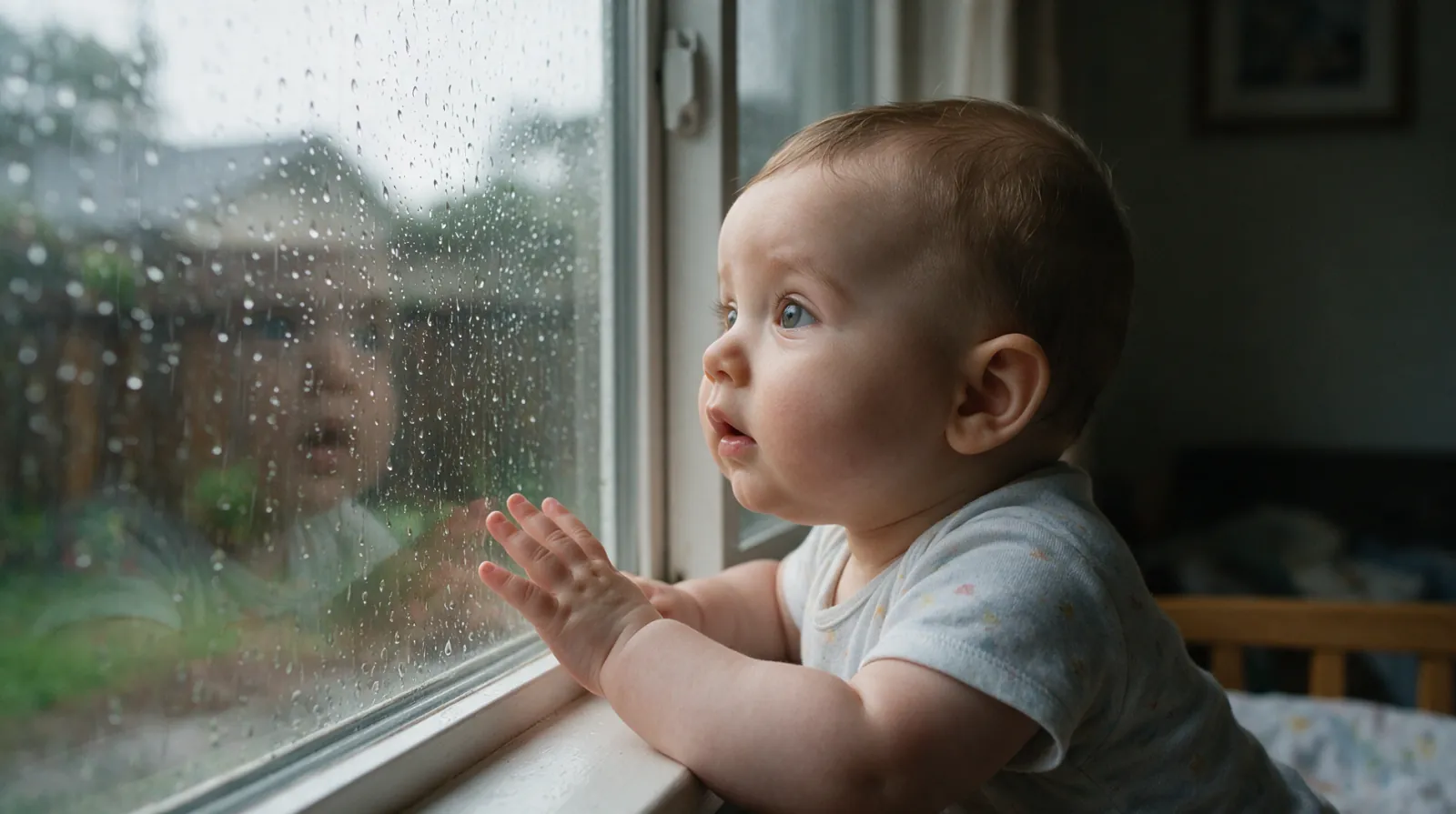
Rain is broadband noise: many frequencies at once, with no sudden edges. A baby settles to sound that does not change abruptly. The drumming on a roof, the hiss on glass, the gutter running: all of it is steady.
This is why a recording of rain works as white noise. Rain on a real window beats any recording, because it comes with a change in the light. The room dims, the air cools, and the baby has two reasons to settle instead of one.
Rain also makes the room feel smaller and safer. The weather outside gives the inside a job: to be dry. A baby held by a rainy window is learning the difference between out there and in here.
Thunder is different. A sudden crack will startle a baby, and that is normal. Hold the baby through it and the startle passes. If you open a window a few centimetres, keep the cot away from the draught and let the air come across the room instead of over the baby.
Rain has a smell, too. Petrichor, the smell of rain on dry ground, arrives before the rain and stays after. Hold the baby at the open door and let it smell the wet street. Wet. Cold. Rain. The words will attach to the smell eventually.
The stork that clatters
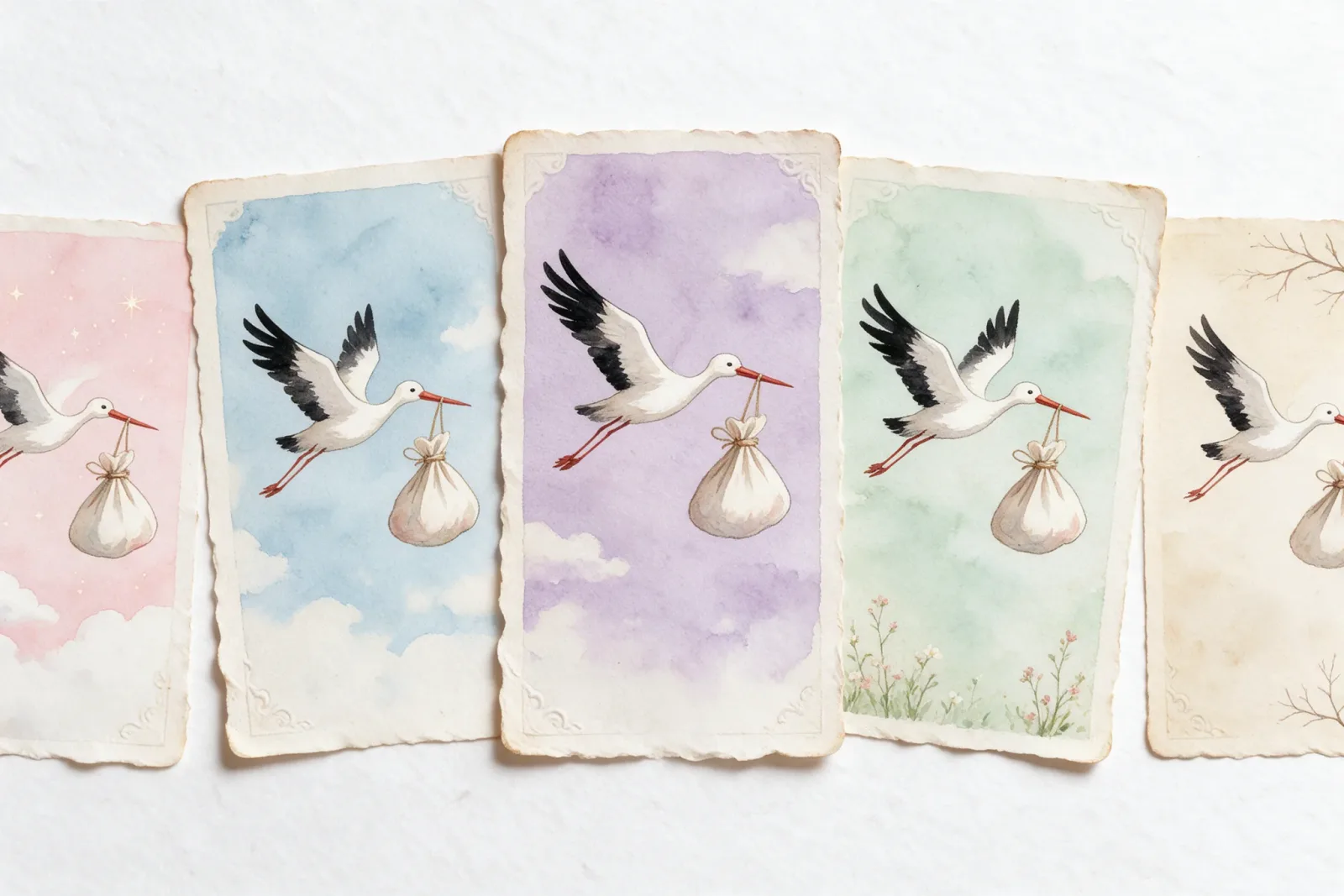
White storks have no song. They throw their heads back and clatter their bills, a rapid rattle that carries across a village and sounds like applause made of wood. It is one of the few bird sounds a baby can learn to recognise from a window. The rattle is a greeting, exchanged at the nest, head tipped back and beak open.
Where storks nest, the sound arrives in spring and stops when they leave. A child who hears it every year will know the season by it. Chicks in the nest hear the clatter early and answer it, and the nest is loud long before any of them can fly.
The comparison to your own house is close enough. Both of you are teaching a small creature which sounds mean home. A kettle, a door, a bill over the roof: the list is short and it does the work.
What to keep
You cannot control what the world sounds like. You can control what the baby hears most, and for the first year that is mostly you, a house, and the weather.
Some families record the ordinary sounds of the first house. The fridge, the stair, a voice in the next room saying something ordinary. The recording is easy to make and strange to hear later. The kettle will outlast the pram, and the sound of it will keep bringing back the year.
If you keep a notebook, list three sounds of the house. It will read like a poem in twenty years. If you want one object to hold the season, adopt a stork and write the date on the base. The sounds will fade faster than you think. Write the date on the base, and the kettle will still sound like that house.
Explore the gift