Little beginnings. Wild journeys. Notes on a world worth growing up in.
A hedge holds the food chain a stork hunts, a wet corner brings frogs back, and spent lead in the soil poisons the birds that find it.
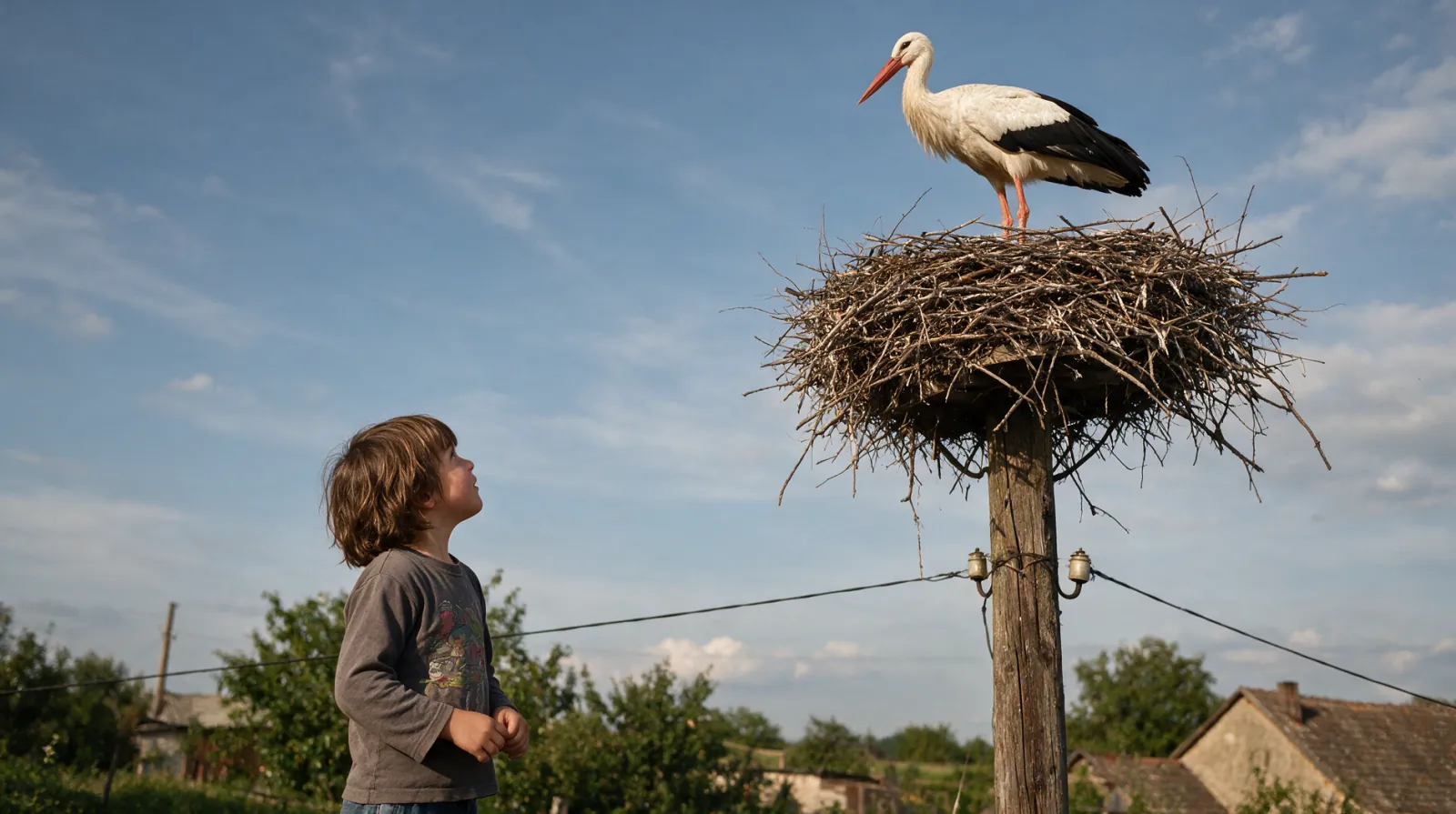
A class adopted a drained field, a loop of twine can cost a chick its leg, and the stork above the street is a decision made decades earlier.
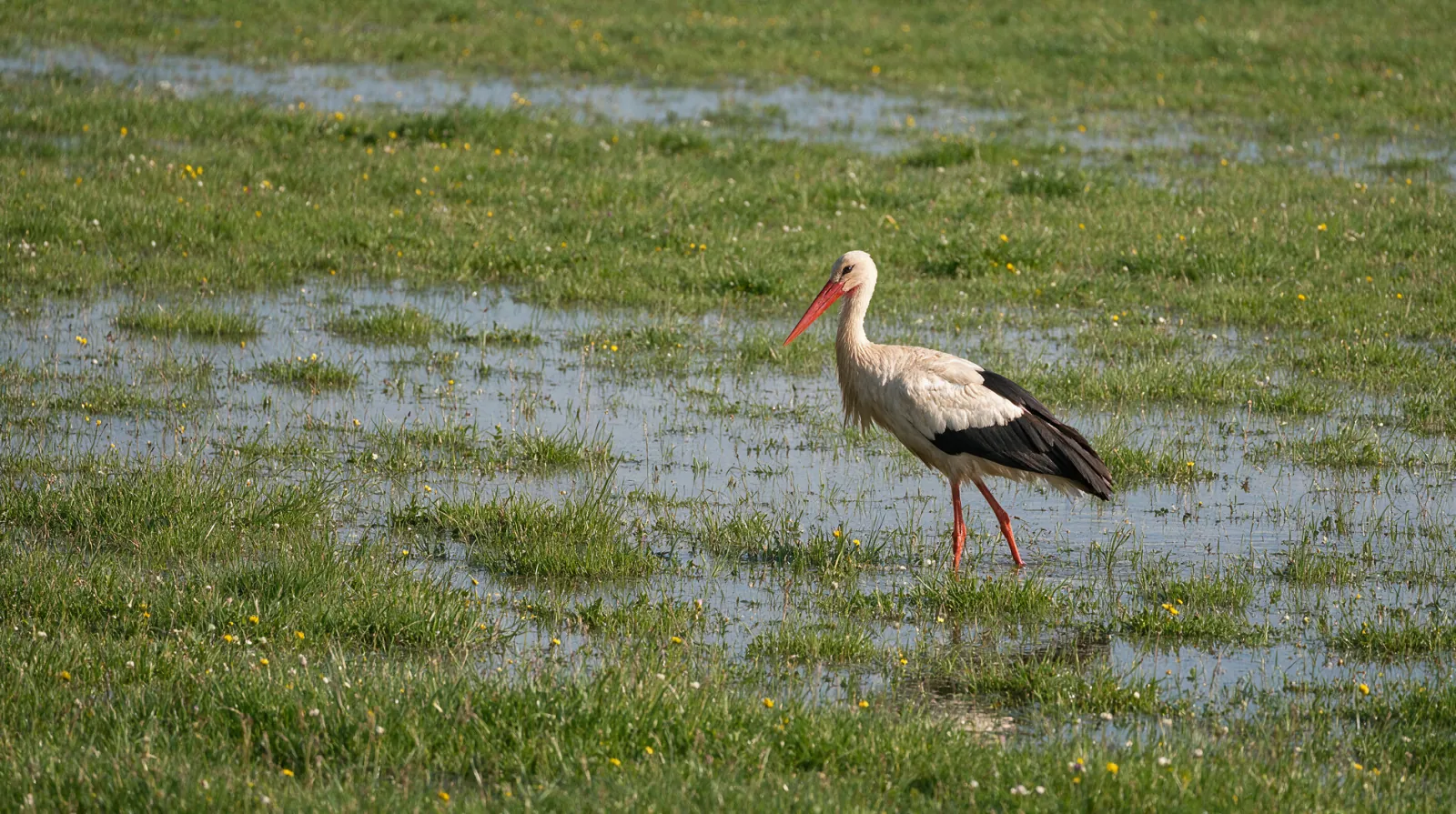
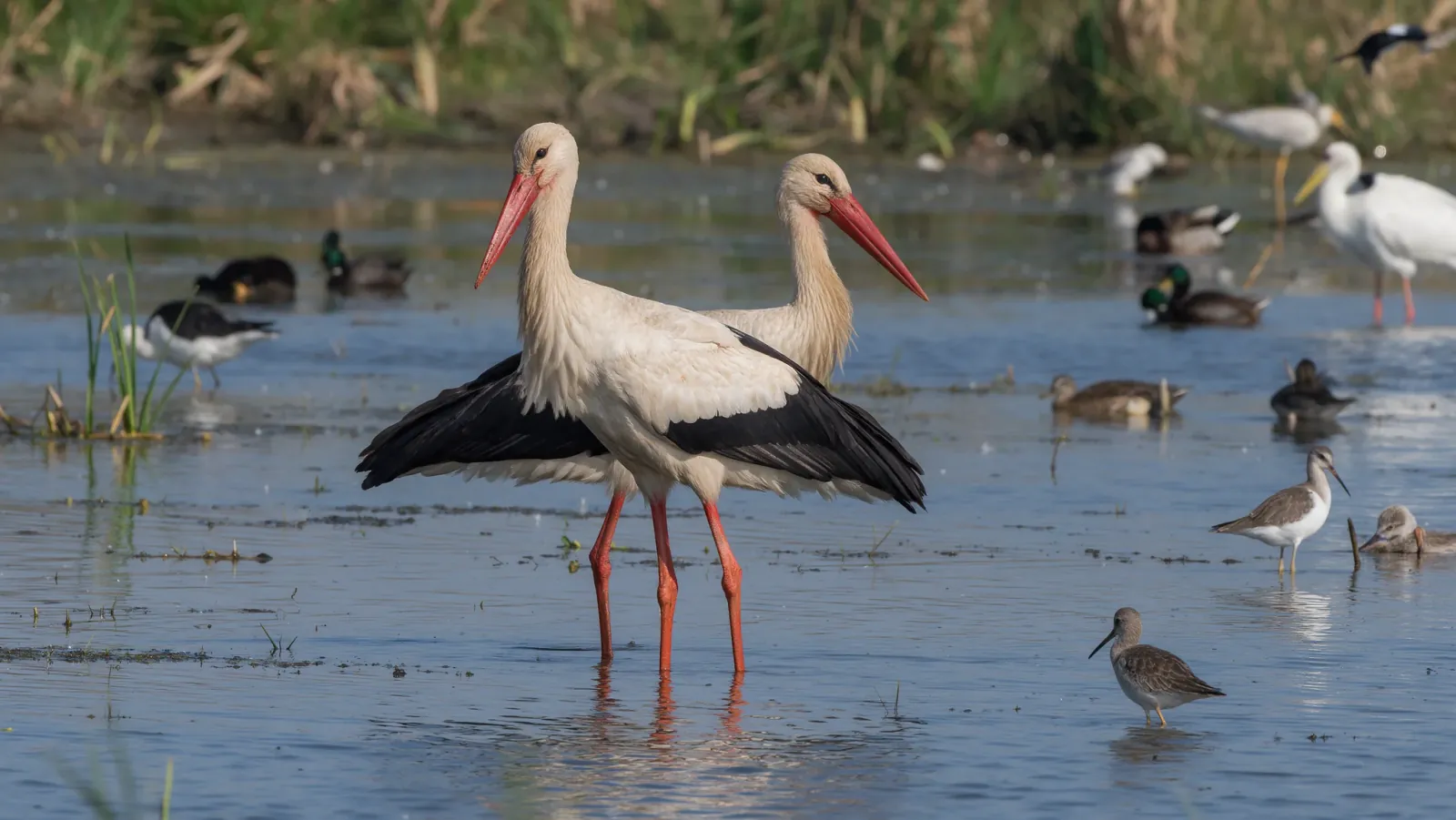
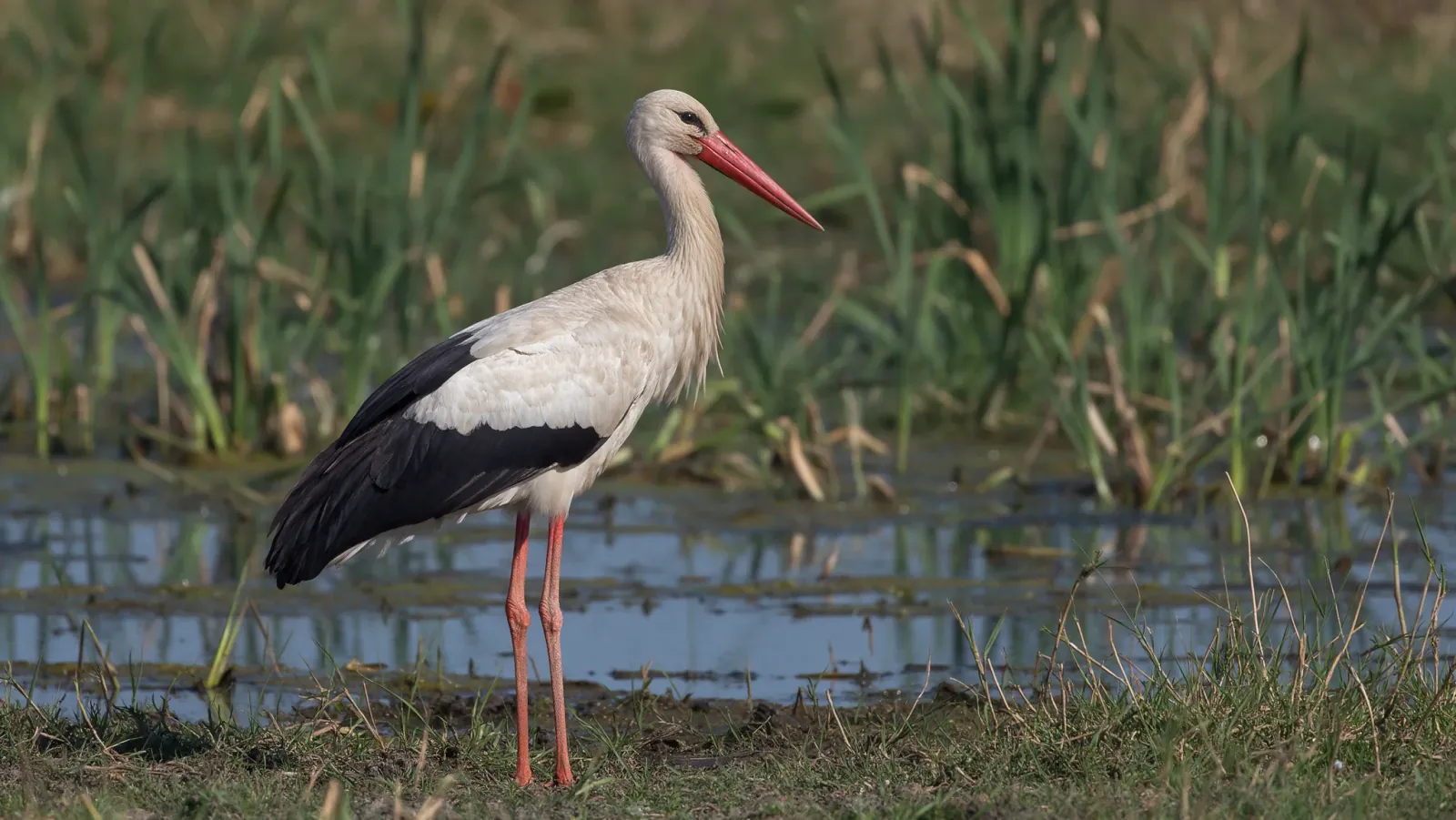
Grey herons wait, little egrets shuffle and storks walk, and the same shallow marsh feeds all three at different depths.
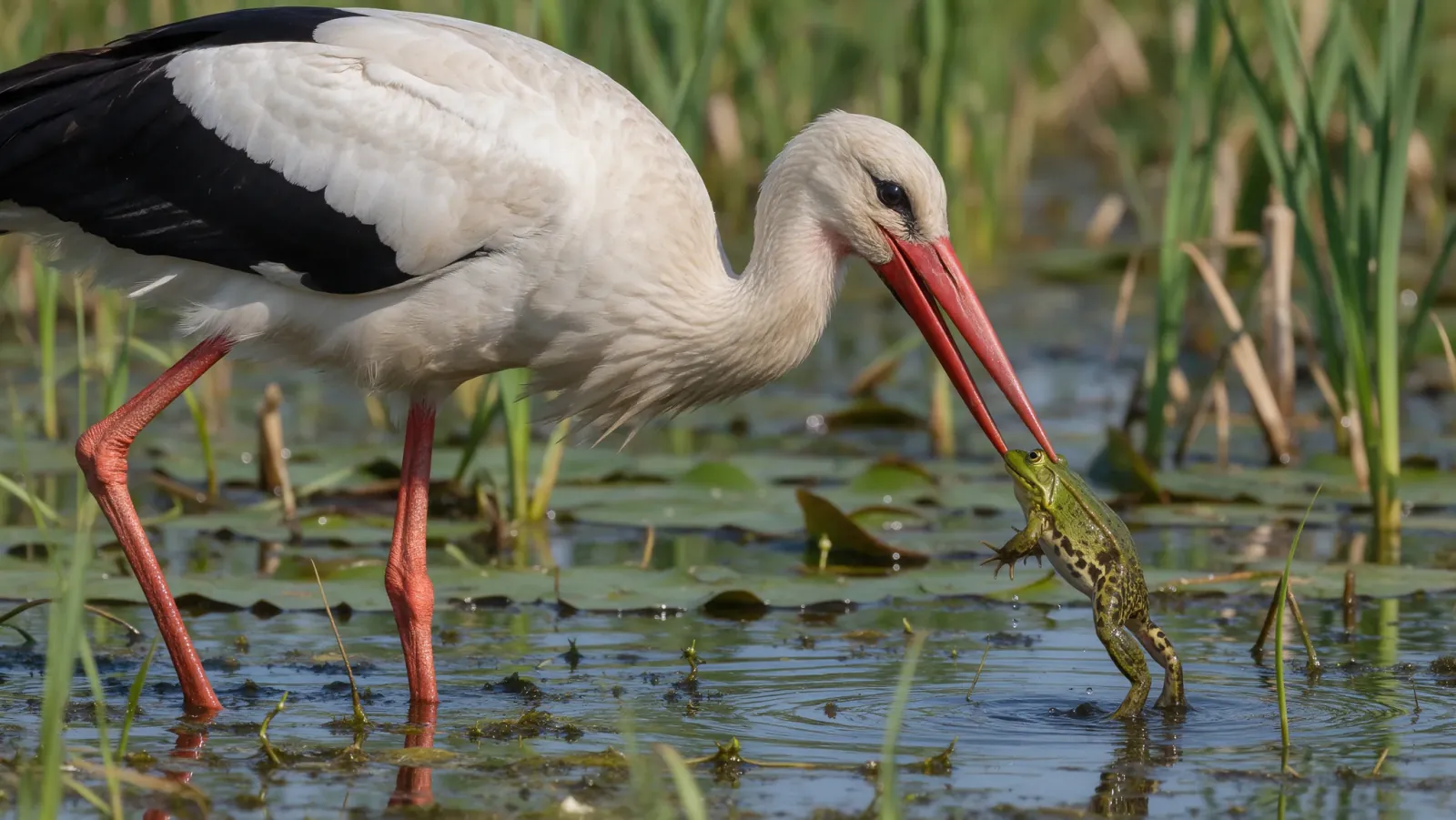
Frogs come first in spring, grasshoppers carry the chicks through summer, and voles fill the gap when the ditches shrink.
An adult stork has almost no predators, but eggs, chicks and young birds on their first migration face foxes, eagles and wires.
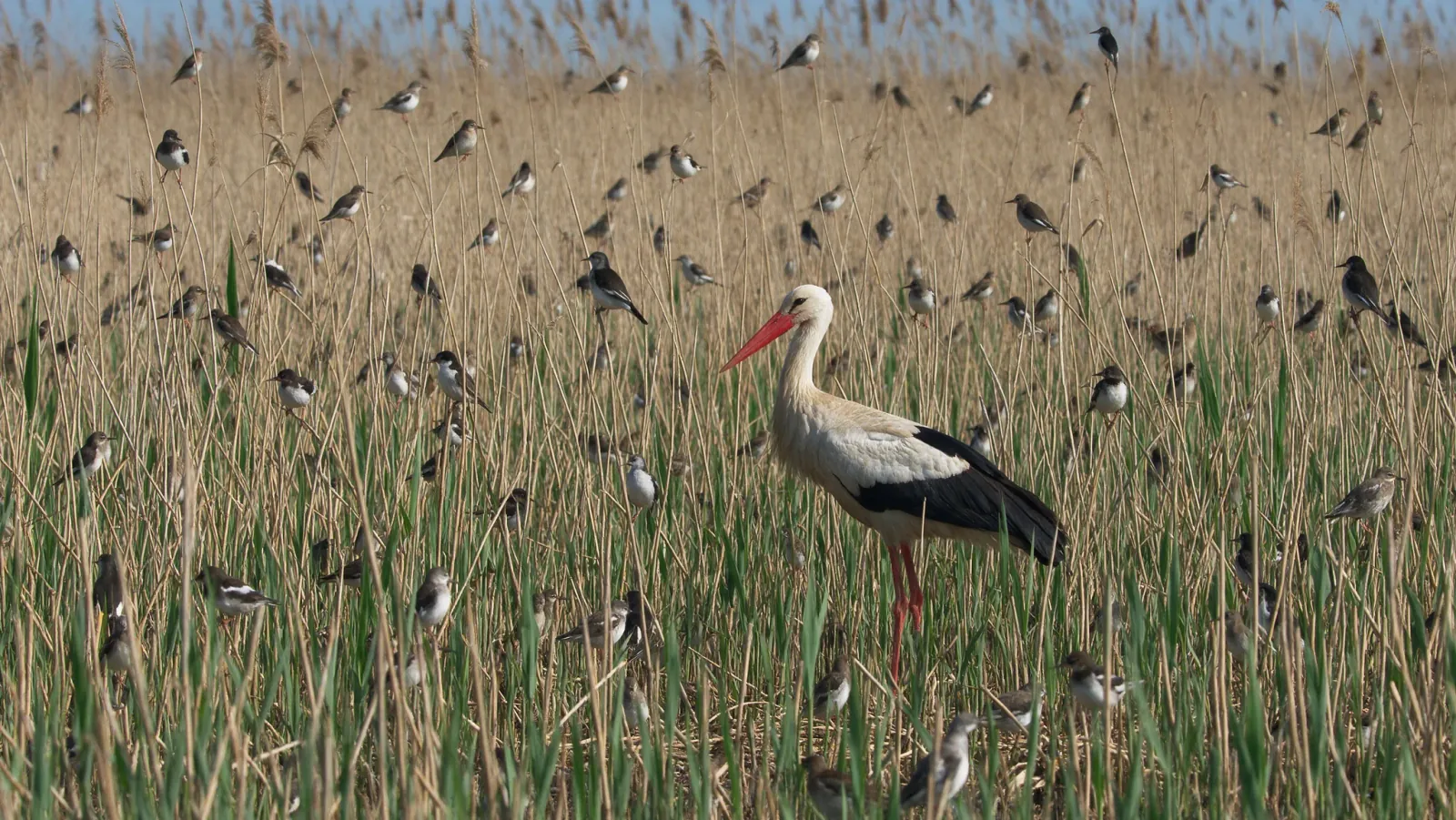
A reed bed holds warblers, bitterns, water voles and hunting harriers, and most of its residents are heard before they are seen.
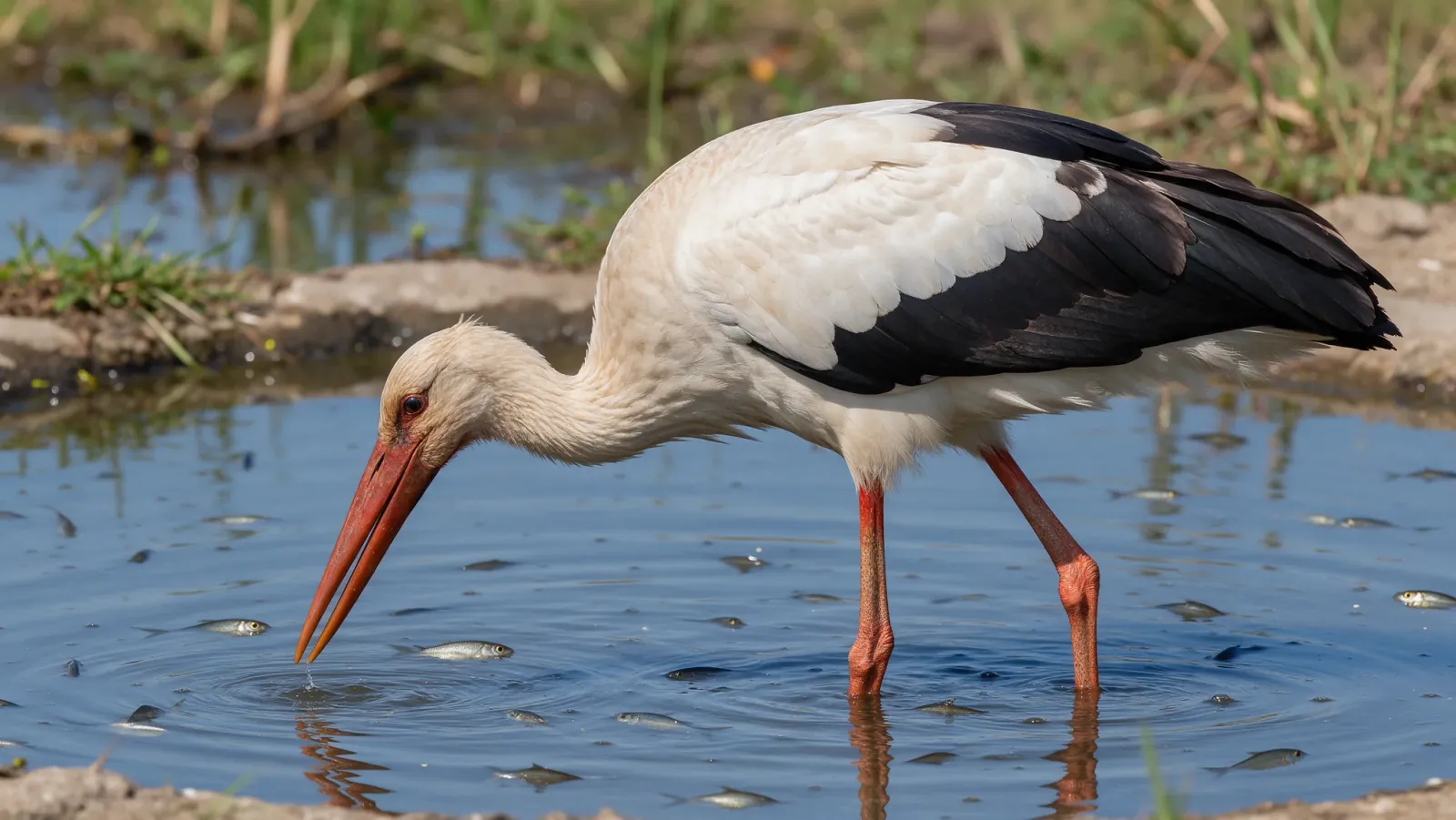
Eels, minnows and tadpoles crowd shallow pools that shrink through summer, and a stork returns to each one as it fails.
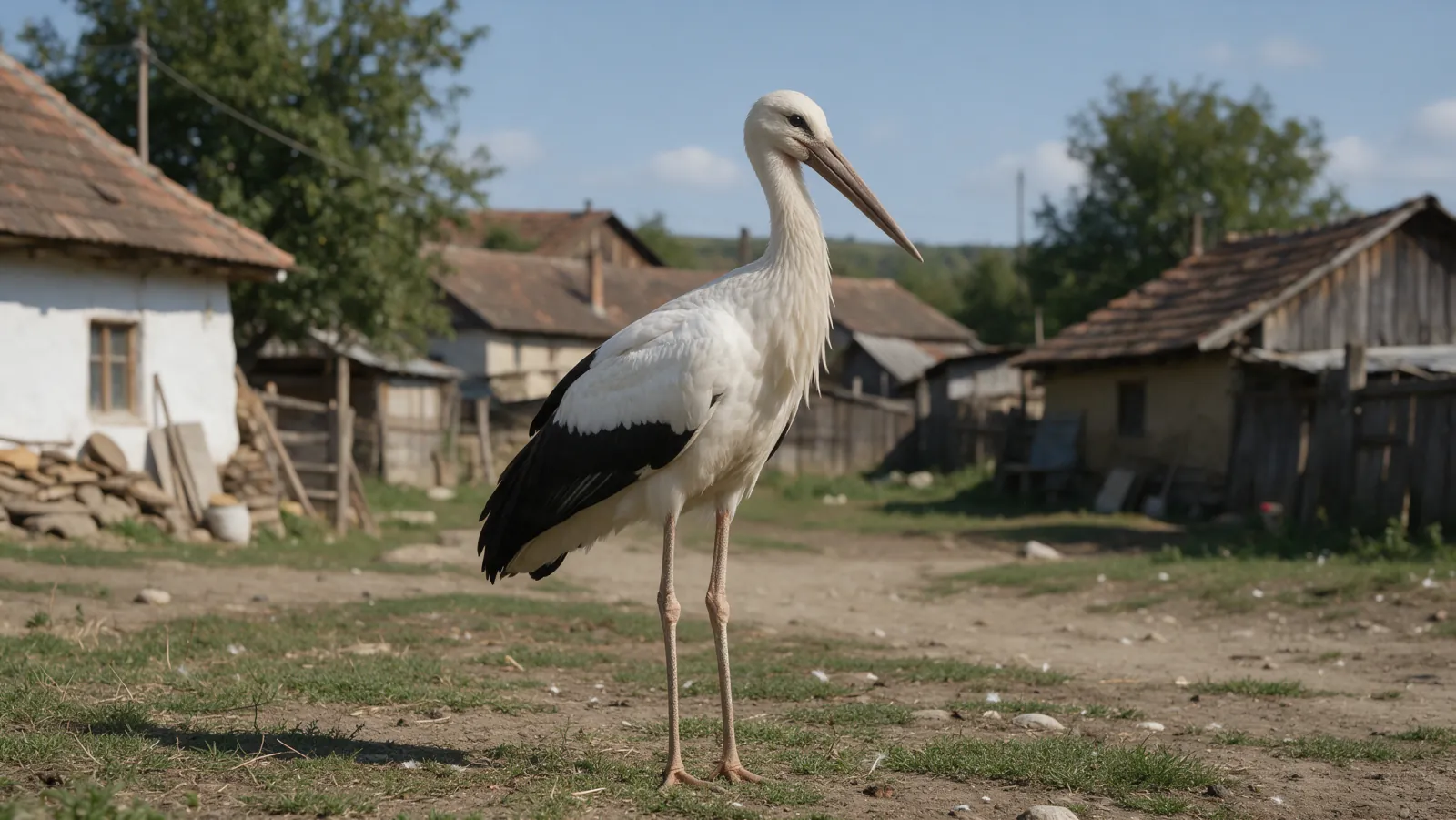
A village with storks on its roofs also keeps sparrows, swallows, bats and old trees, because the same land use supports them.