A hedge is usually older than the fields around it. It marks a boundary and does more than divide: its base is a dry corridor, its branches shelter nests, and its flowers feed the insects that pollinate the crop beside it.
A route, not a fence
A single hedge is a refuge. Bramble at the base, nesting birds in the branches, insects in the flowers. Joined to the next hedge and the next, it becomes a route that wildlife can travel without crossing open ploughland.
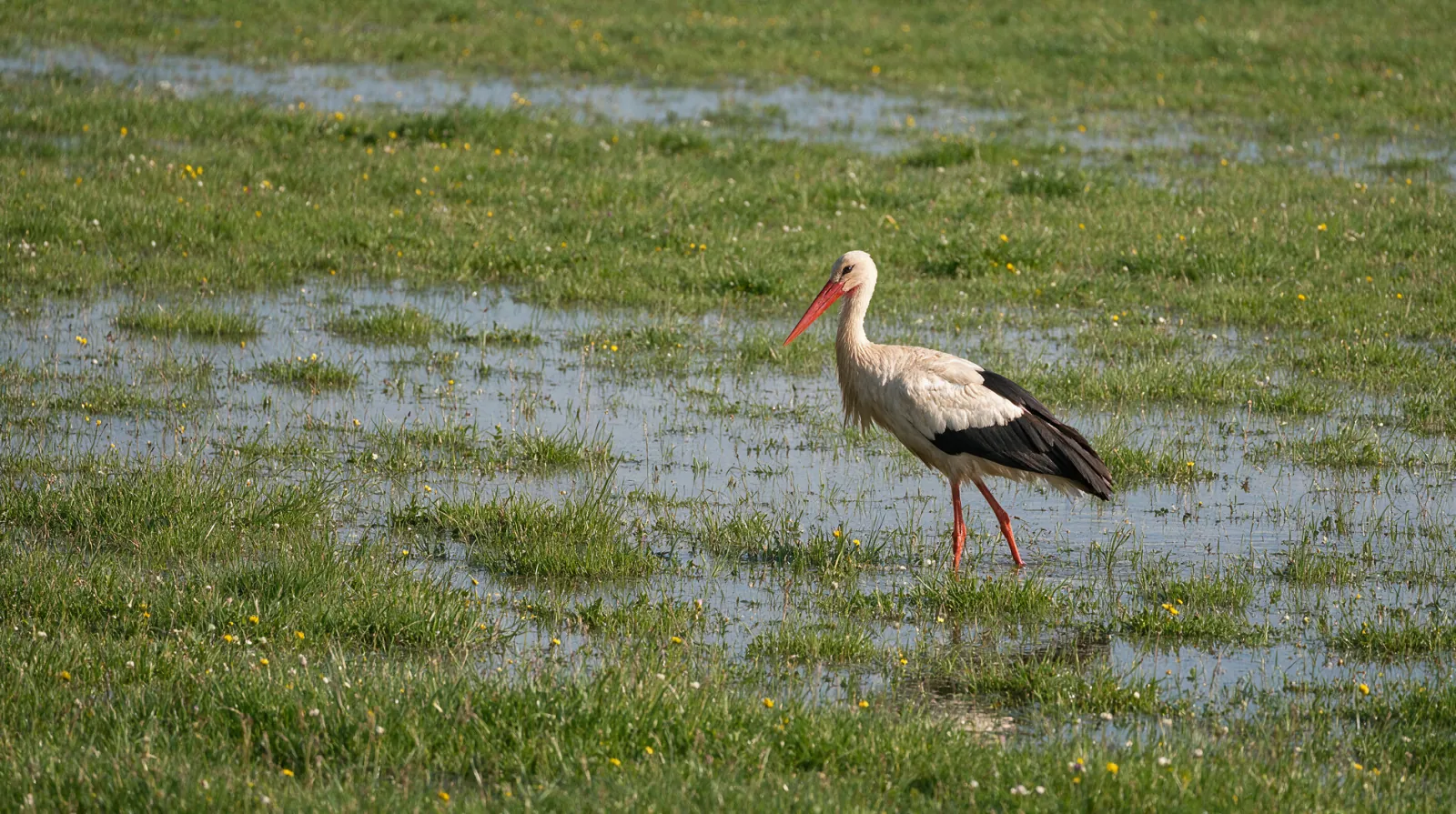
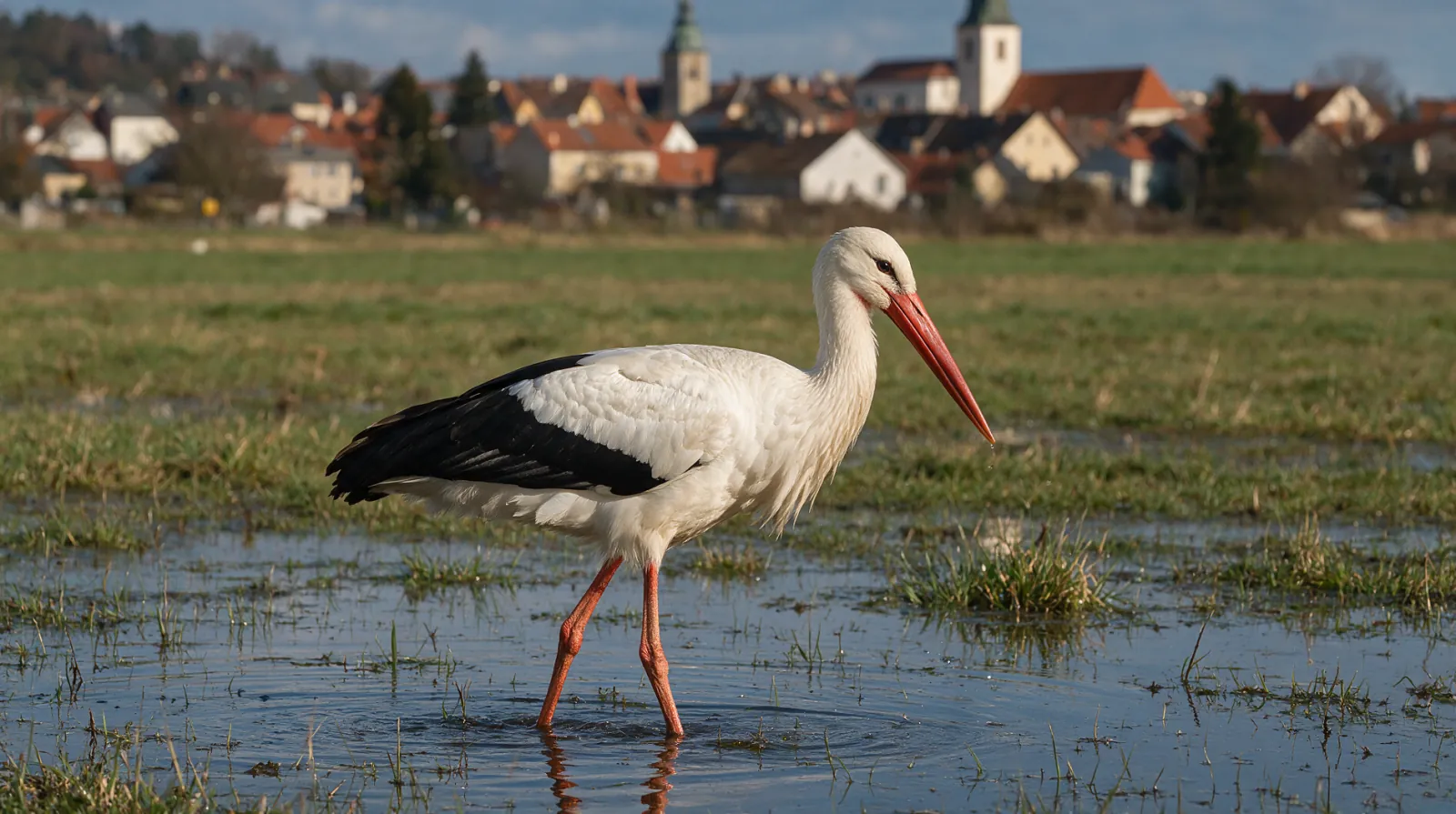
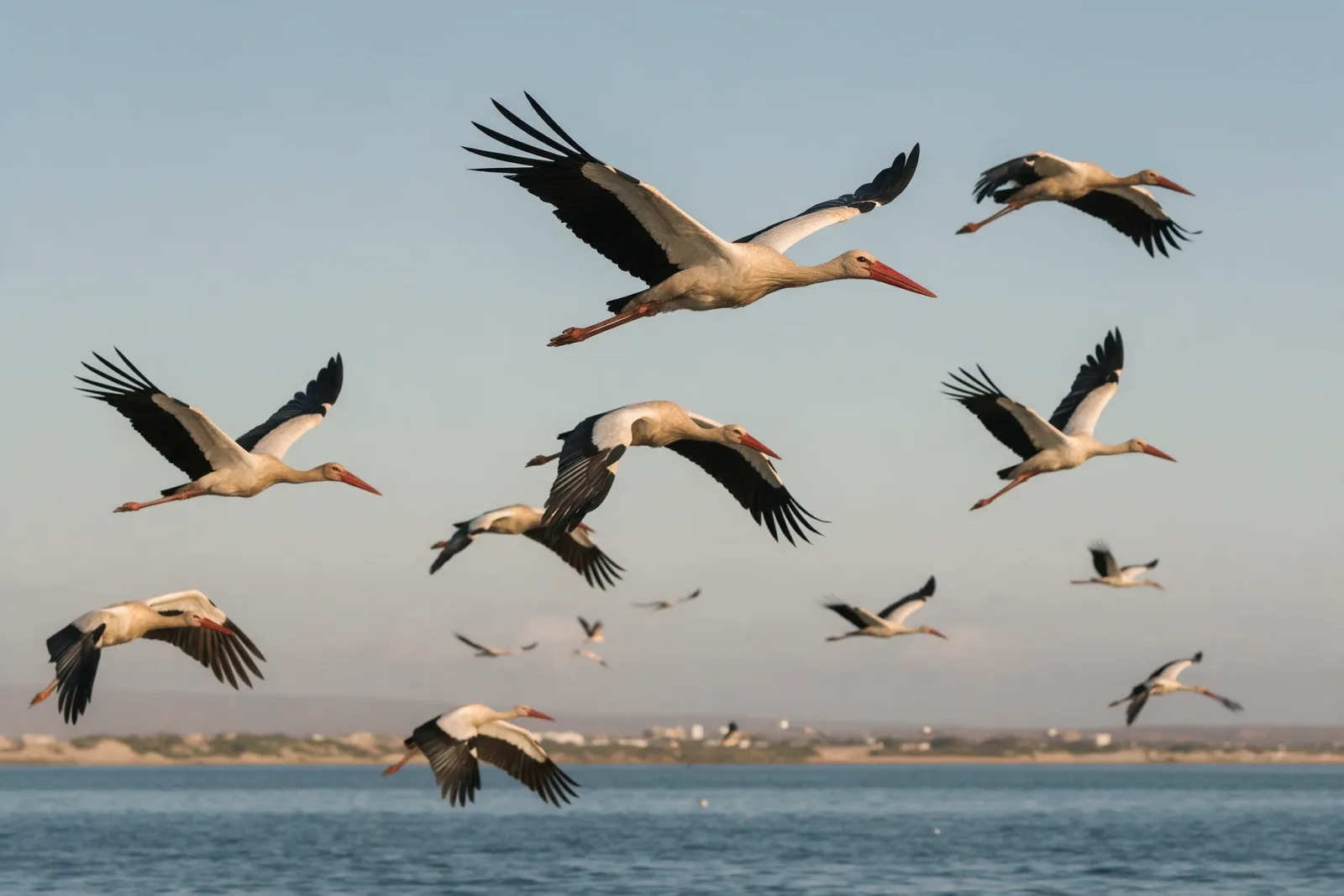
A white stork does not nest in a hedge and does not eat its berries. It depends on what the hedge holds: the frogs in the damp ditch at its foot, the beetles in the leaf litter, the insects that drift out over the wet grass. A hedge that ends in the middle of a field is a cul-de-sac, and a cul-de-sac cannot be colonised.
The important parts are easy to overlook: the corner where two hedges meet, the gap left for a badger, the hedgerow tree that lifts the line above the surrounding crop. Each surviving join keeps the whole net working. Restoring a hedge is slow. Young whips go in along a line, are protected from grazing, and are left alone. In a few years they form a barrier. In a decade they are a hedge. A hedge planted this winter will be doing its job when the person who planted it is old.
Cutting it well
A hedge can be cut and still be a habitat. The damage comes from cutting every year, at the same height, in the season when the buds are setting. A rotation of two or three years, a cut that leaves some tall growth, and a blade raised in late winter instead of high summer make the difference between a fence and a living hedge. Letting a hedge flower for a season costs a farmer a little tidiness and returns a food chain.
The hedgerow network records the shape of the countryside. A sunken lane, an old boundary, a single oak at a corner: the lines are a history of how the land was farmed before the fields were enlarged. Keeping them keeps that history legible and keeps the land alive. An old hedge carries species that a new one will not hold for decades, which is why the oldest lines are worth the most and are usually the easiest to remove. The stork feeding in the wet corner at the end of a hedge is one part of the web, and the hedge is what holds the web together.
The wet corner
Organic fields bring the frogs back first, and the frogs bring the storks. When a farmer stops spraying and leaves the lower, wetter corners alone, the small life returns before anything else. Beetles move through the grass, worms work the soil, and frogs gather in the pools that form after rain.
A field sprayed several times a year becomes a very clean place. Frogs are sensitive to what is in the water: their skin absorbs it directly, so a frog in a sprayed ditch is a frog under pressure. When the frogs go, the stork loses one of its most reliable meals.
Frogs breed fast and travel along wet ground, so a pond edge can fill with spawn within a season or two of the spraying stopping. On a warm evening the call carries across the field, and the number of voices is a rough measure of how the water and soil are doing. A tidy field is a poor larder; an untidy wet edge is a good one.
The change does not happen evenly across a farm. It happens in the low corner that floods, the ditch that stays damp, the strip beside the hedge where the sprayer does not quite reach. Keeping one wet corner wet can do more for storks than converting a whole hillside. The bird needs a larder more than a certificate.
What else returns
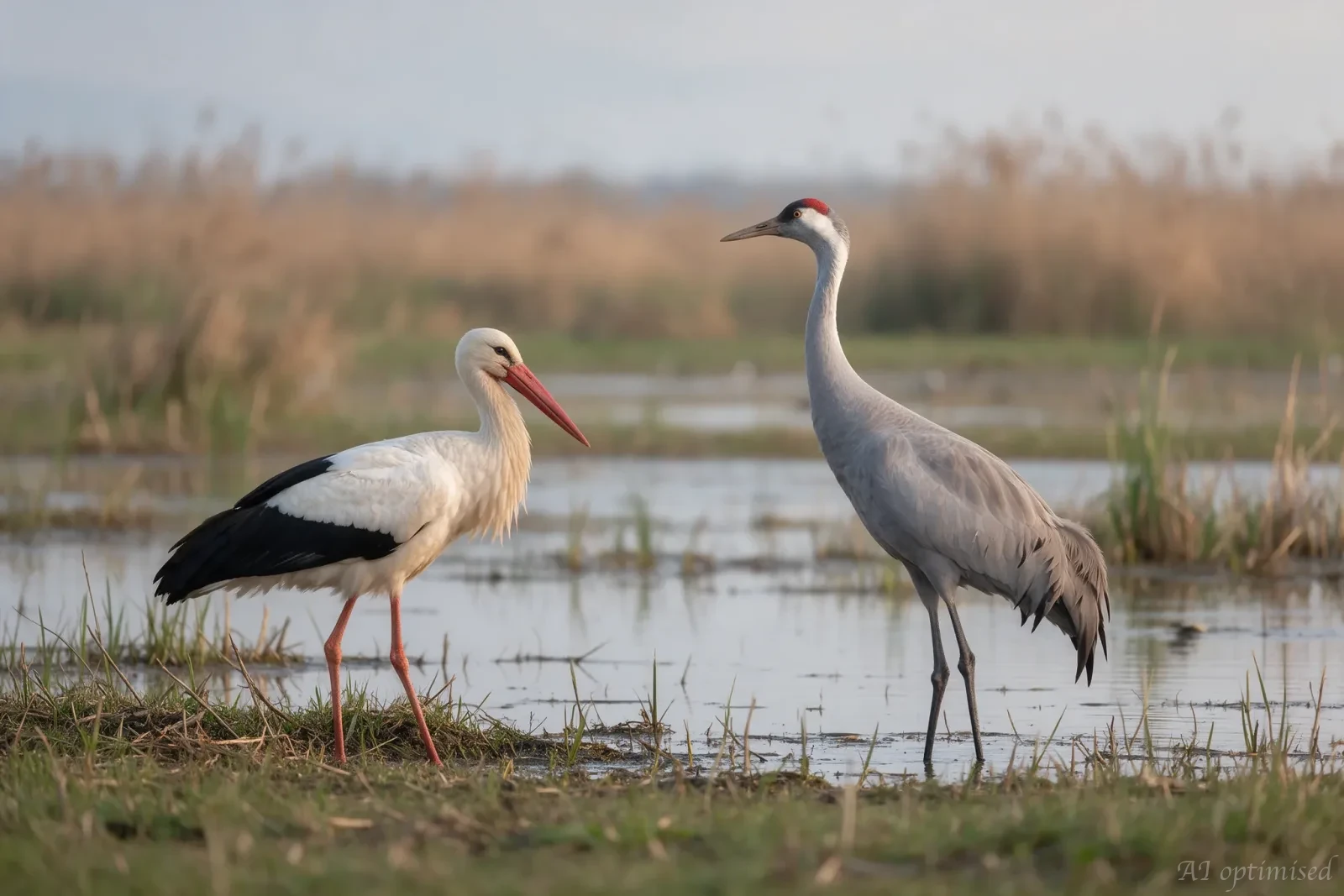
Frogs rarely come alone. Dragonflies and damselflies appear over the wet grass, beetles rise in clouds when you walk through, and meadow birds nest in the longer growth. A kestrel may hover over the headland where the voles have returned. The stork is the most visible arrival because it is large and white and hard to miss. It comes as part of a crowd that was waiting at the edge of the field all along.
The stork does not know the field is organic. It knows the pools are full and the hunting is good. During the nesting weeks a pair needs a steady supply of food, and a wet field full of frogs is the difference between three healthy chicks and one.
Lead mistaken for grit
Lead shot from hunting lies in the soil of many fields, and a stork that feeds on the ground can swallow it without ever seeing it. White storks eat frogs and insects, and they also pick over stubble and ploughed earth for beetles, worms and grain. Small round pellets lie among that food, the same size and weight as the grit the bird needs.
Spent shot does not disappear. Each pellet falls where the gun was fired and is worked into the soil by rain and ploughing, and it remains there for years. The lead outlives the season, the crop and the gun that fired it. Storks eat grit on purpose. Small hard objects in the stomach help grind food, so a bird foraging in a field swallows pebbles as a matter of course. Lead shot looks and weighs like a stone and goes down the same way.
Stomach acid works on the metal, and lead passes into the blood. There is no safe dose. A few pellets can weaken a bird, and a weakened stork feeds its chicks less, flies badly and may die far from the field where it fed. The death is rarely dramatic. The bird grows dull, loses condition and fades over weeks. What looks like a natural decline can be the long shadow of one pellet swallowed months earlier.
The switch to steel
The answer is known and in use in many places: shoot something harmless instead. Steel pellets do the same job in a cartridge and do not poison the ground or the birds that feed on it. Where the change is made, the effect appears slowly, in the condition of the birds that come through the autumn.
A ban is only as good as its enforcement, and old stock of lead persists. Still, the direction is clear, and it costs a shooter almost nothing to change. A stork feeding in a clean field is an ordinary sight, easy to walk past. It is also a measure of how carefully the ground is kept.
The change is slow because the soil is slow. Lead already in a field stays there, and a bird can pick it up years after the last shot was fired. Steel stops the addition. It does not clean the ground, and that is why the effect takes a while to show in the birds.
The return is never the work of a single act. It is a season of small choices, a hedge left uncut, a ditch left wet, a corner given back. Together they rebuild a chain that ends with a white stork standing still in the shallows, a frog in its bill.