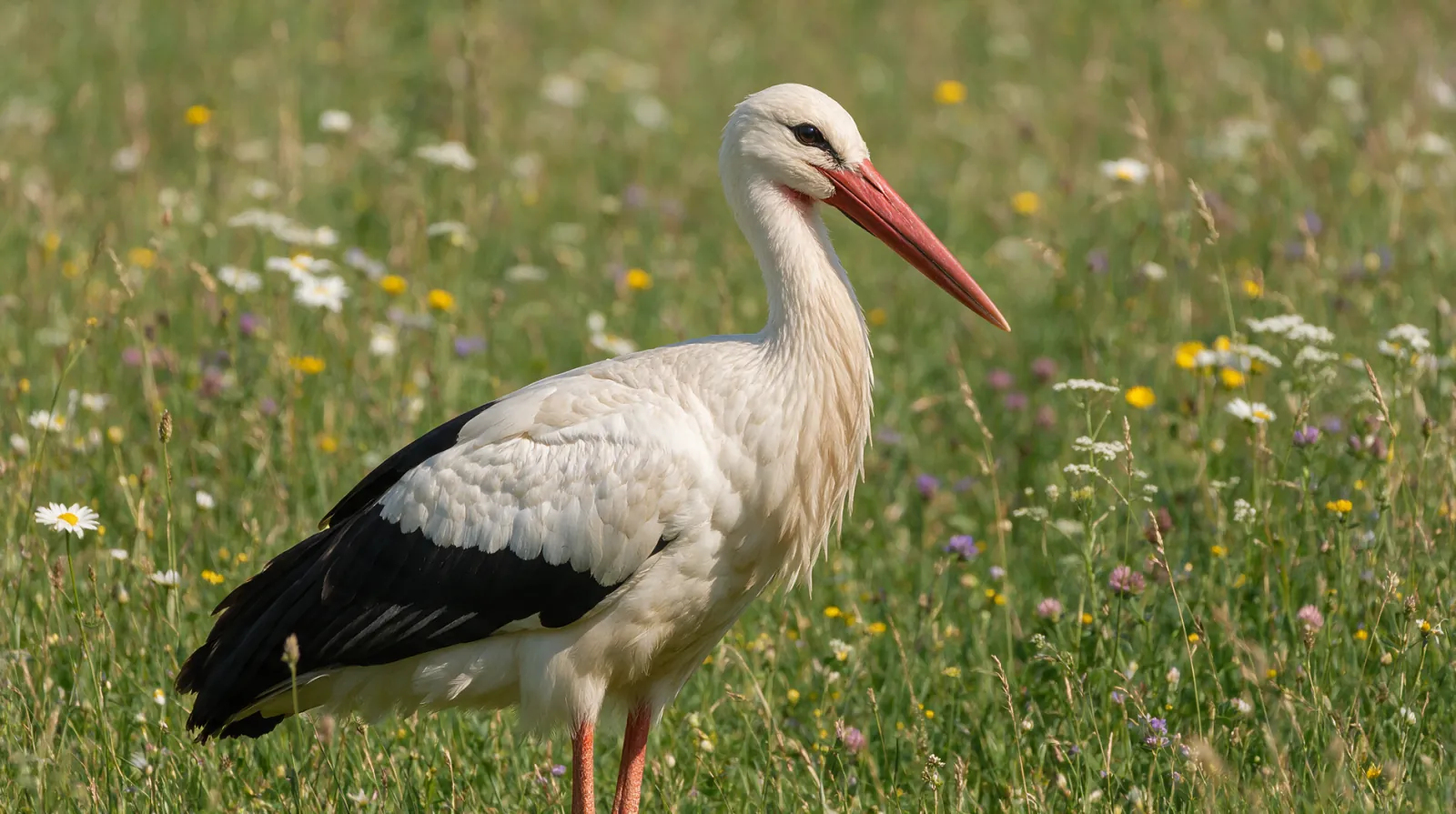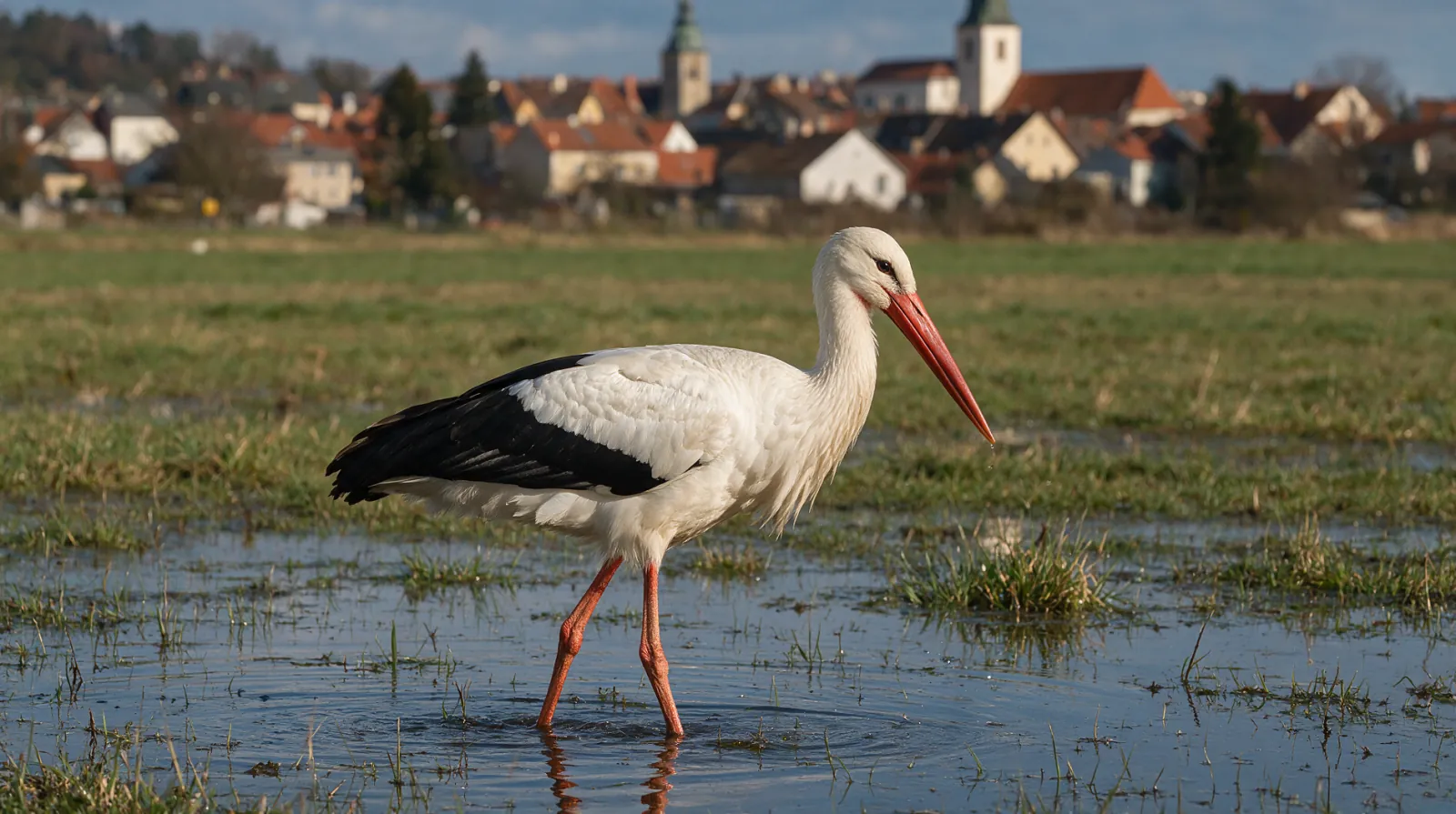
The meadow at the edge of town is the field nobody names, and in April it feeds more storks than the nature reserve three valleys over. Water sits in its hollows, the grass stays tussocked where the ground never quite dries, and a white stork can walk the whole length of it with its bill down. Most towns still have a place like this. It survives on neglect, and neglect is getting harder to find.
Ground too wet to plough
The meadow at the edge of town usually sits on the awkward acre: the dip that floods after rain, the strip between the last house and the first crop, the corner where a tractor would bog down. Farmers left it because working it cost more than it returned, and builders passed it over for the same reason. What is left is a wet field with an unbroken history, one of the few pieces of ground in the parish that has never been drained, levelled, or turned over.
That history is the value. A wet meadow takes centuries to make and an afternoon to destroy. The seed bank in the soil, the hollows where water gathers, the tussocks that stand through winter, all of it built slowly, and none of it can be ordered from a catalogue. Draining it is a morning's work with a machine. It is the cheapest land in the parish and the richest for a stork.
What a stork finds in the grass
A white stork is a bird of shallow, open ground. It stands about a metre tall on long red legs, and it feeds by walking slowly and striking at whatever moves: frogs, grasshoppers, beetles, worms, the occasional vole. The bird needs density more than size, which is why wet grass beats a dry field. Water pulls small lives into a small area and holds them there.
Watch one feed and the patience is what stays with you. It crosses at the pace of a person strolling, head tilted, bill a little open, then stabs without appearing to look. The strike is over before you have followed it. A pair with a full brood will make that walk through the grass again and again between May and July, and the meadow has to keep producing through all of it. The bird needs a field with water in it and prey close enough to catch.
The flood it swallows
A meadow earns its keep in wet weather as well. Rough grass and soft ground hold rainwater and let it go slowly into the ditch instead of all at once. The same field that feeds a stork keeps water out of the houses downstream. That argument has nothing to do with birds, and it is usually the one that saves the meadow, because flooding is expensive and storks are not.
A drained meadow loses both jobs at once. The water runs off fast, the soil compacts, the frogs have nowhere to spawn, and the stork walks over a field that looks much the same from the road and holds almost nothing. The meadow also slows the wind and holds soil that would otherwise wash into the ditch. None of that is measured when the field is sold.
The hedge cut to a fence
For decades the habit was to cut hedges hard and often, keeping them low and boxy. The boundary stayed neat and the hedge stopped flowering, because the buds were removed before they opened. A hedge treated that way shelters little, feeds little, and holds almost no berries into winter.
It still marks the field, and it still keeps a cow in. It has stopped being a habitat. The difference between those two things is a single pass of the flail, repeated every year at the wrong time.
Leave the blade off for one season and the hedge answers. Hawthorn breaks into white, blackthorn follows, wild rose and honeysuckle climb into the light. Insects arrive for the nectar and stay for the leaves. A hedge has been trying to flower every spring; the mower was the only thing stopping it. By midsummer the whole line hums. By autumn it is hung with haws and sloes, and the first redwings and fieldfares arrive to strip them.
The chain runs in a straight line. Nectar feeds bees, hoverflies, and moths. Caterpillars feed blue tits and sparrows. Berries feed thrushes through the cold. Underneath, the leaf litter and damp shade hold beetles, worms, and frogs. The hedge makes the stork's food indirectly, through the frogs and large insects that live at its base and along the damp ditch beside it.
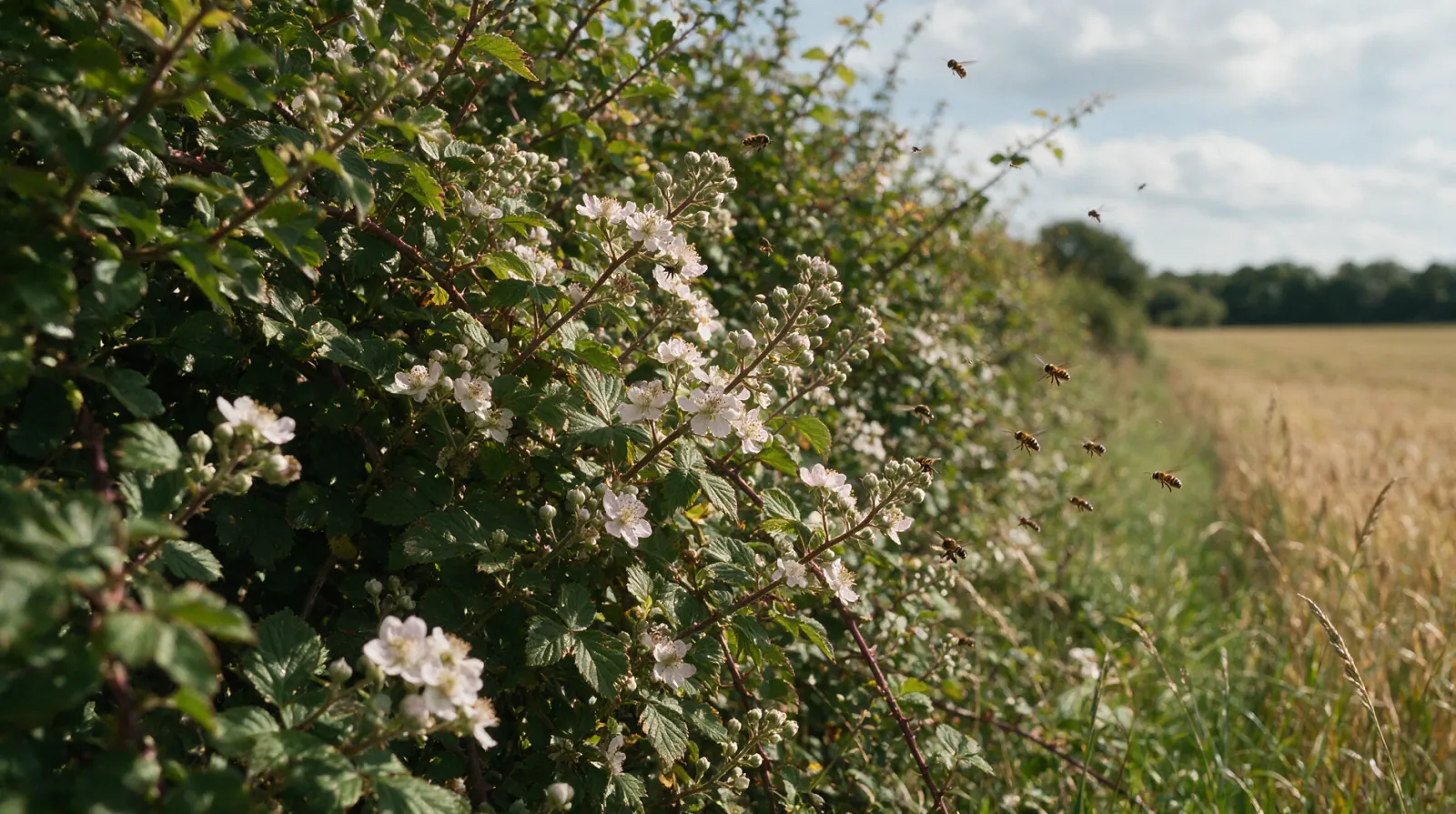
A hedge does its best work when there is a wet ditch beside it. The roots hold the bank, the shade keeps the water cool, and the leaf fall feeds the insects in the mud. Frogs use the ditch and the tangle together, moving between them as the water rises and falls. Take the hedge away and the ditch silts up and dries. Take the ditch away and the hedge loses the damp ground where its insects breed. The pair is the habitat; either one alone is a thin copy.
Small acts that add up
Most people will never manage a reserve or sit on a planning committee, and the work does not depend on them doing so. It depends on thousands of people making small choices in ordinary weeks. A street where several gardens are a little rougher is a street with more life in it. A pond left undrained at the end of a garden becomes a feeding stop. A hedge allowed to flower becomes a road for insects. A balloon kept on the ground instead of released, because it comes down somewhere as rubbish.
Each one changes almost nothing on its own, and a stretch of country is made of thousands of them. Twine loops cut before the string is binned, so a bird cannot be caught. Fishing line picked up from a bank where a wader might stand. These cost nothing and take seconds.
Not everyone can plant a reed or guard a marsh. Supporting the people who do is a small act with a long reach. The nest counts, the tracking, the platforms, the marked wires: all of it needs money and attention from people who will never see the result. A membership, a donation, a local group that meets on a Saturday, or adopt a stork and give a newborn a bird to follow.
A hundred hedges across a valley change what the valley is, because each one is a narrow strip of wildness running through cultivated ground. A farmer gives up a metre of field edge and gets back a boundary that flowers, shelters livestock, holds soil, and slows the wind. The storks get the insects and frogs that follow. The scale of the problem does not excuse anyone. A flyway is too big for one person to fix, and small enough to be helped by many. You do not need a marsh. Start with the patch you have: a balcony, a garden, a walk to school. Leave a corner untidy. Put water out. Pick up the line. Then look up.
Explore the gift