Little beginnings. Wild journeys. Notes on a world worth growing up in.
About twenty storks share one body plan, the white stork crosses three continents each year, and a ringed bird can live past thirty.
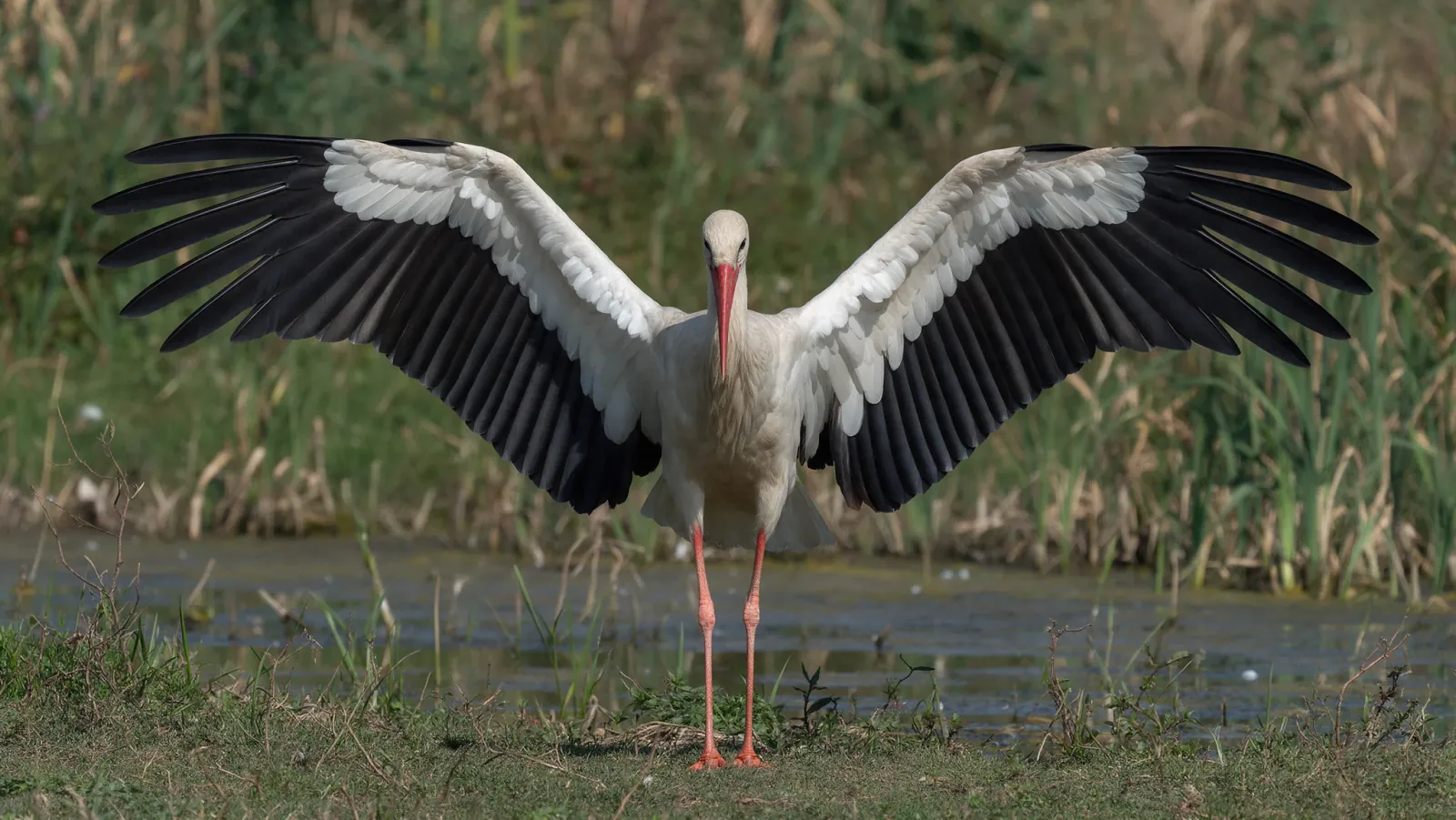
A white stork stands about a metre tall and opens nearly two metres of wing, and every part of that frame is built for wading and soaring.
A white stork has no song, a throat that flushes red when it greets, and black flight feathers that stay hidden until it opens its wings.
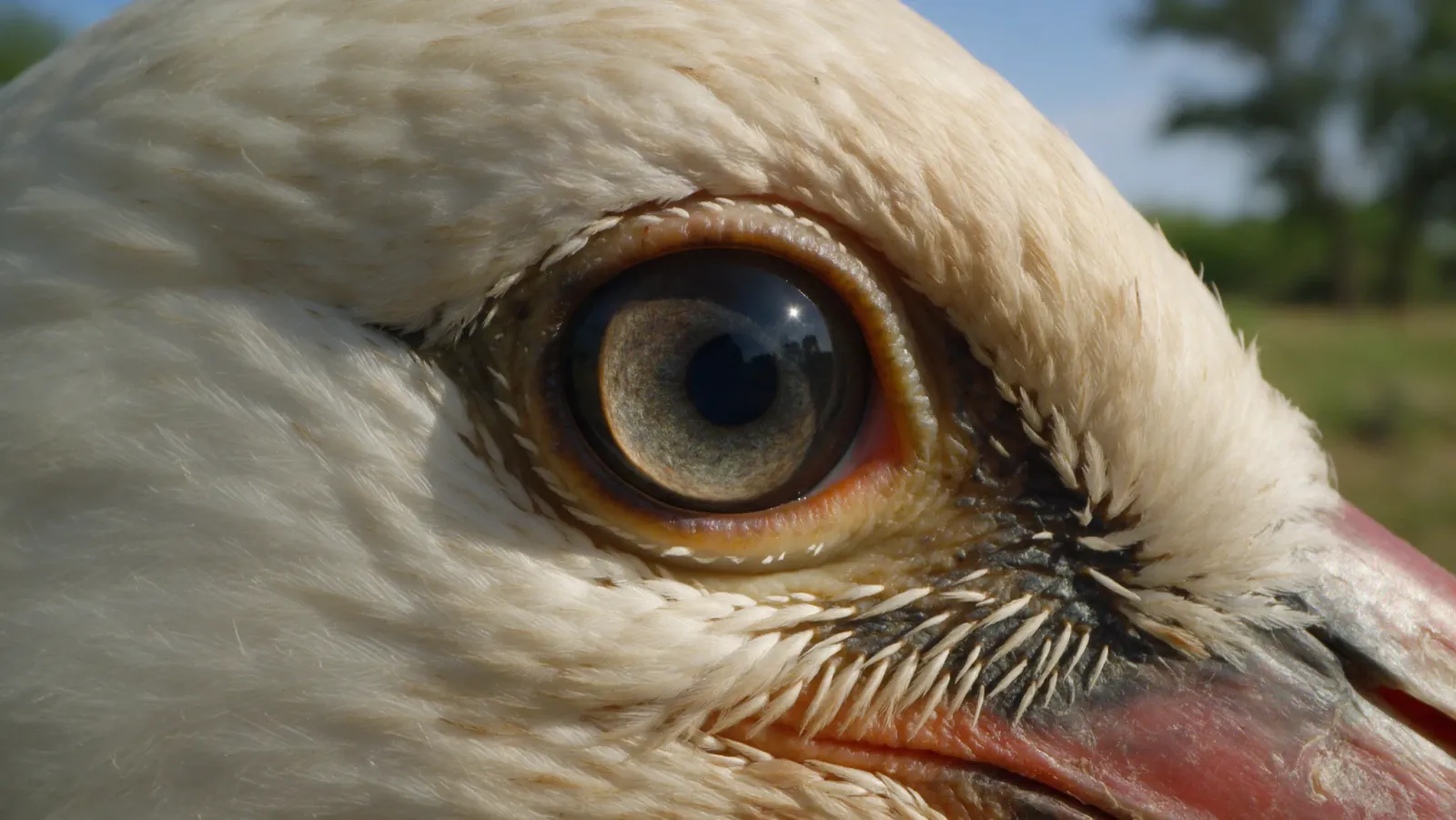
A stork's eye catches a frog's twitch, its footprint records where it fed, and a coded leg ring turns one bird into a known individual.
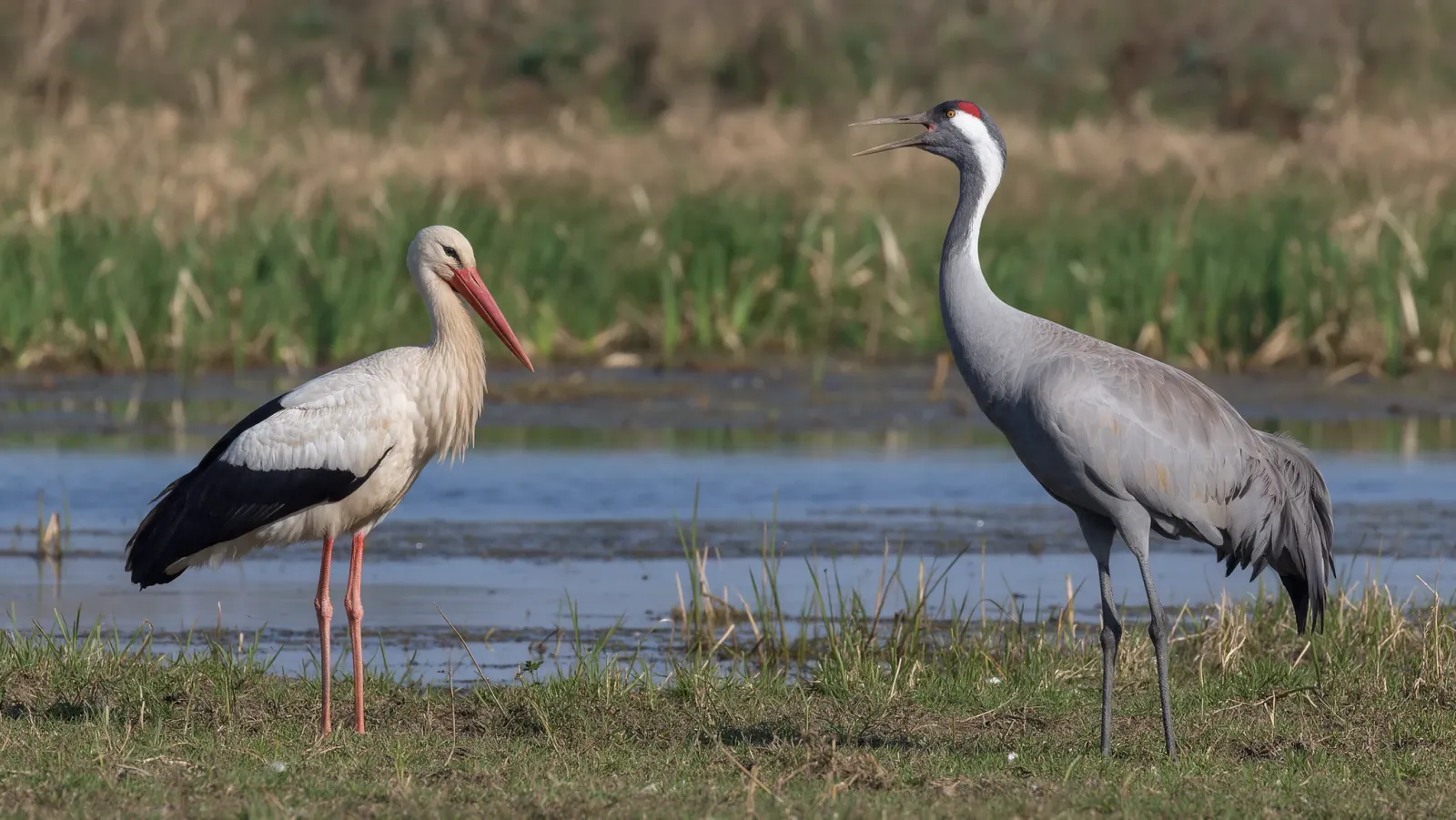
A stork clatters at the nest and wades in silence, while a crane calls across the marsh and dances to choose a mate.
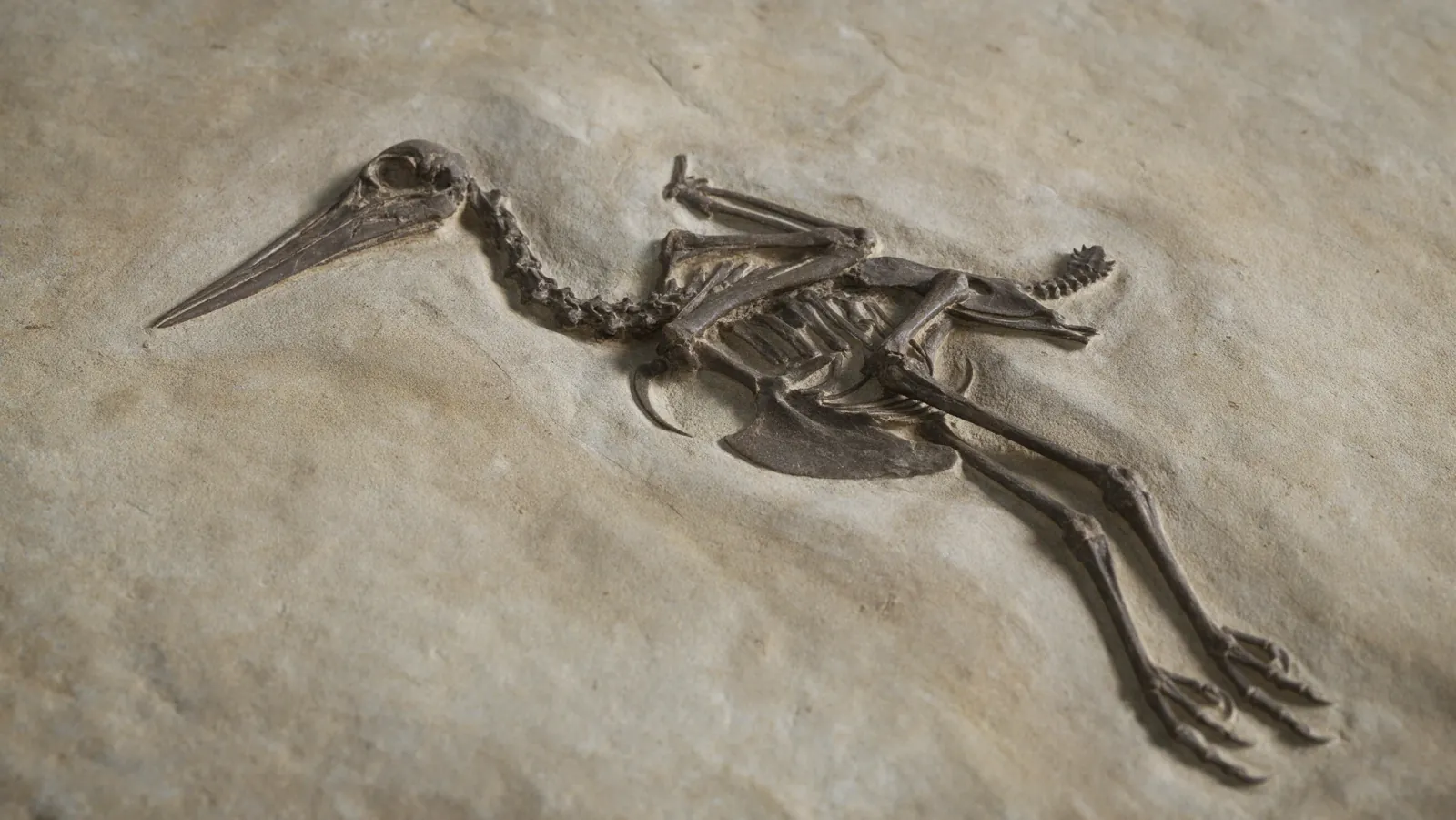
Stork bones lie in ancient mud, the English name means stiff-legged, and heraldry put the bird on shields long before it carried babies.
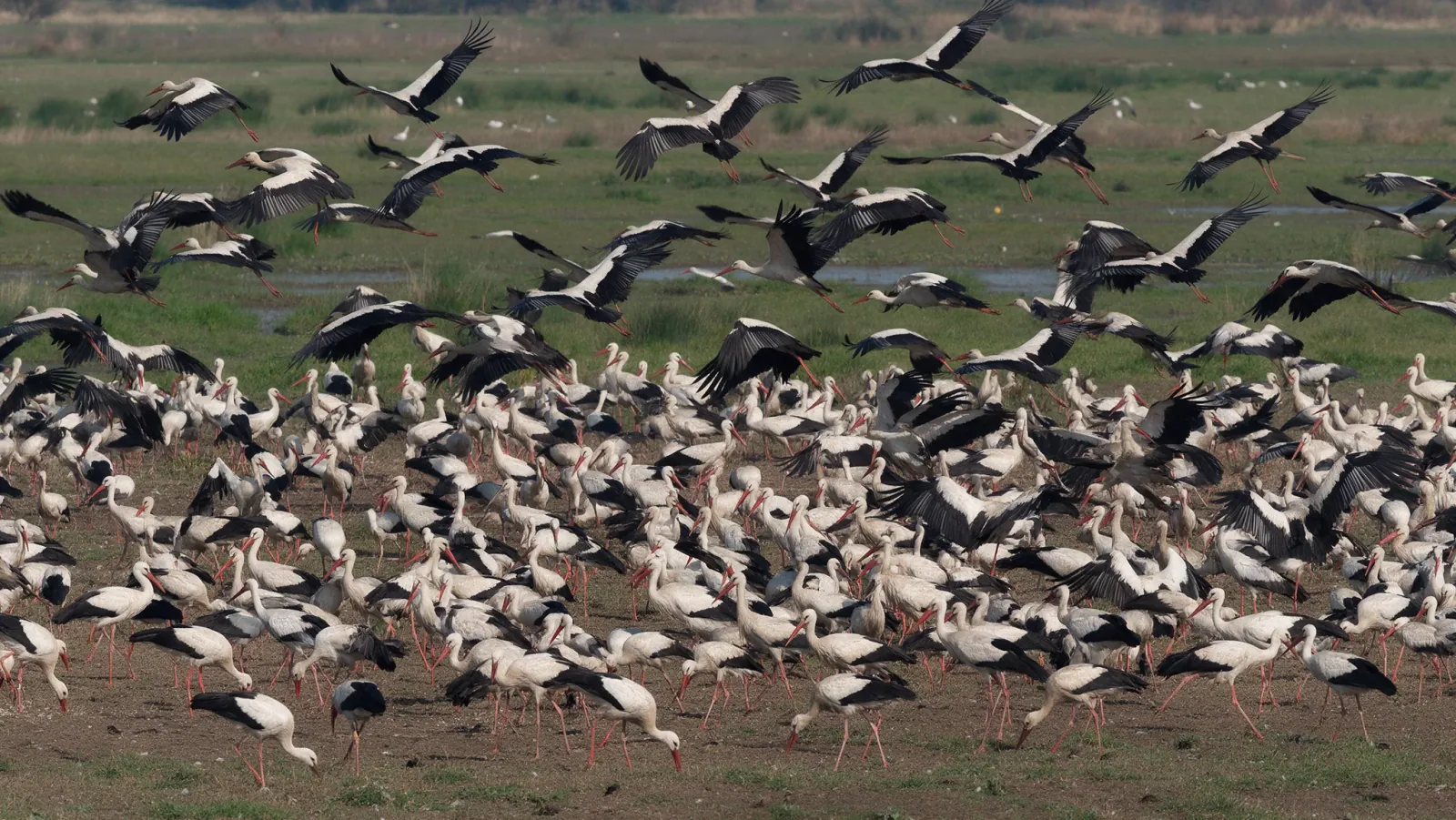
Nest surveys and winter roost counts put the white stork in the hundreds of thousands, with Poland, Spain and Ukraine holding most of the breeding birds.
A flat pink mark at the back of the neck, harmless and present from birth: what the name means and what the skin is really doing.