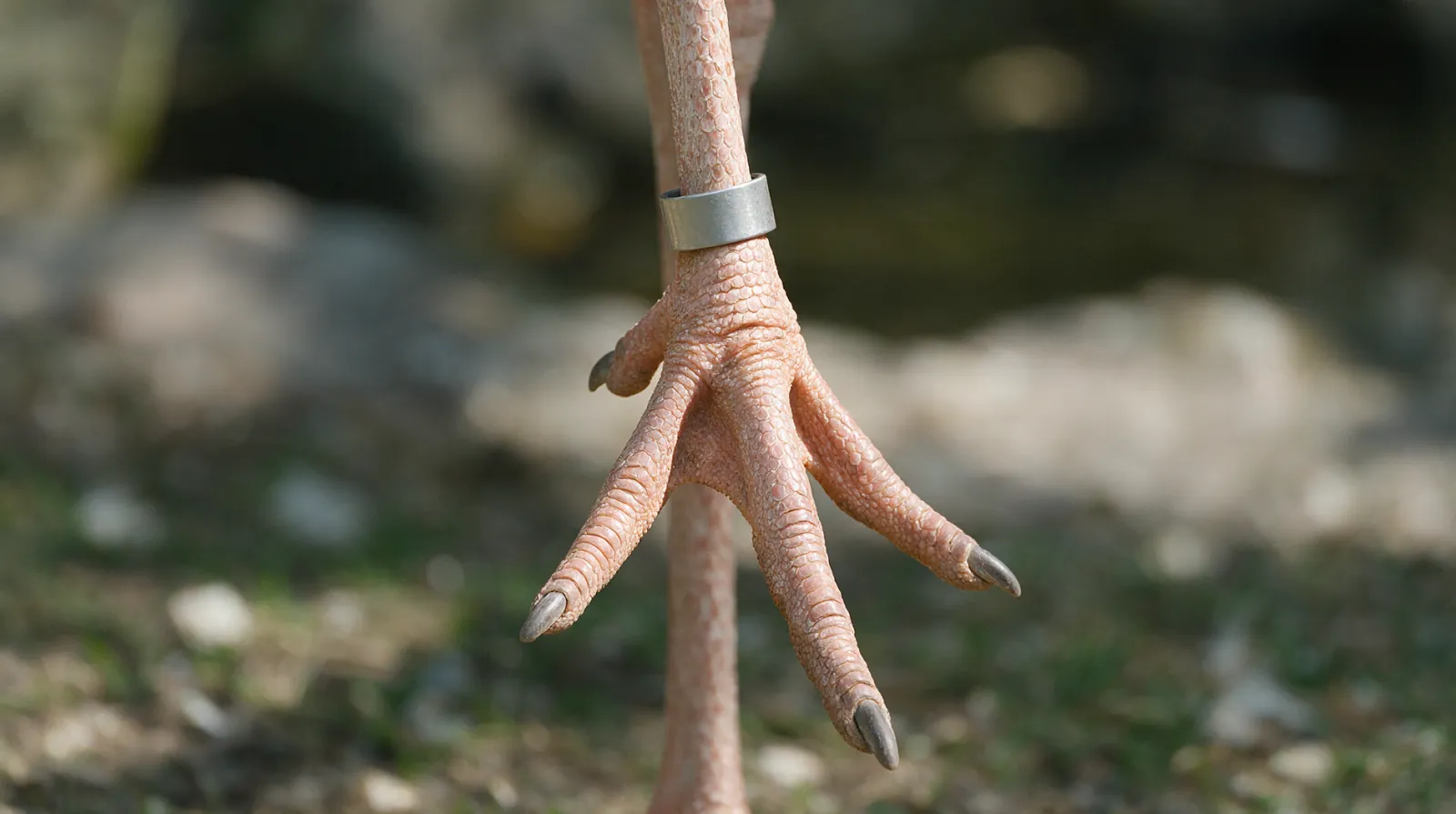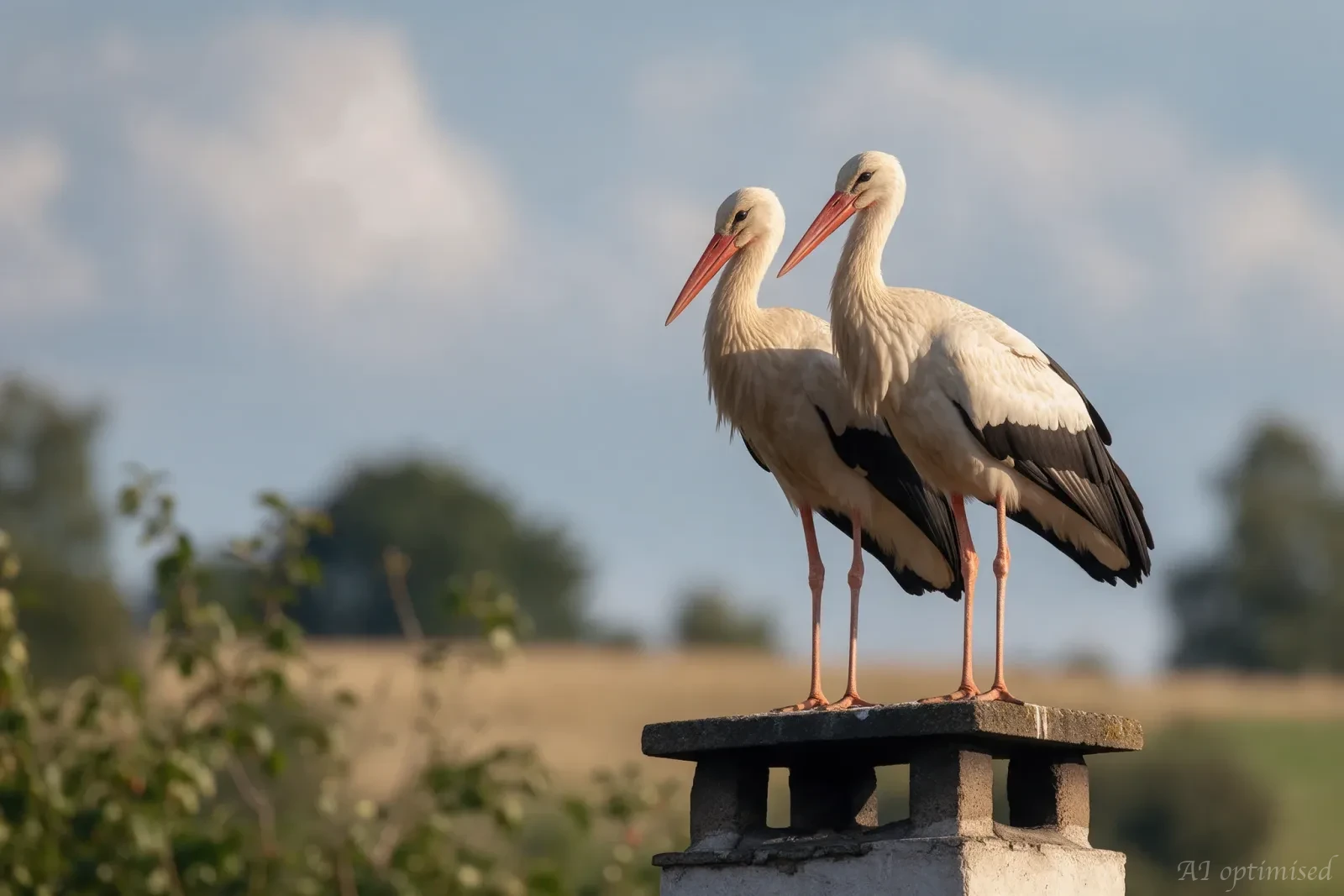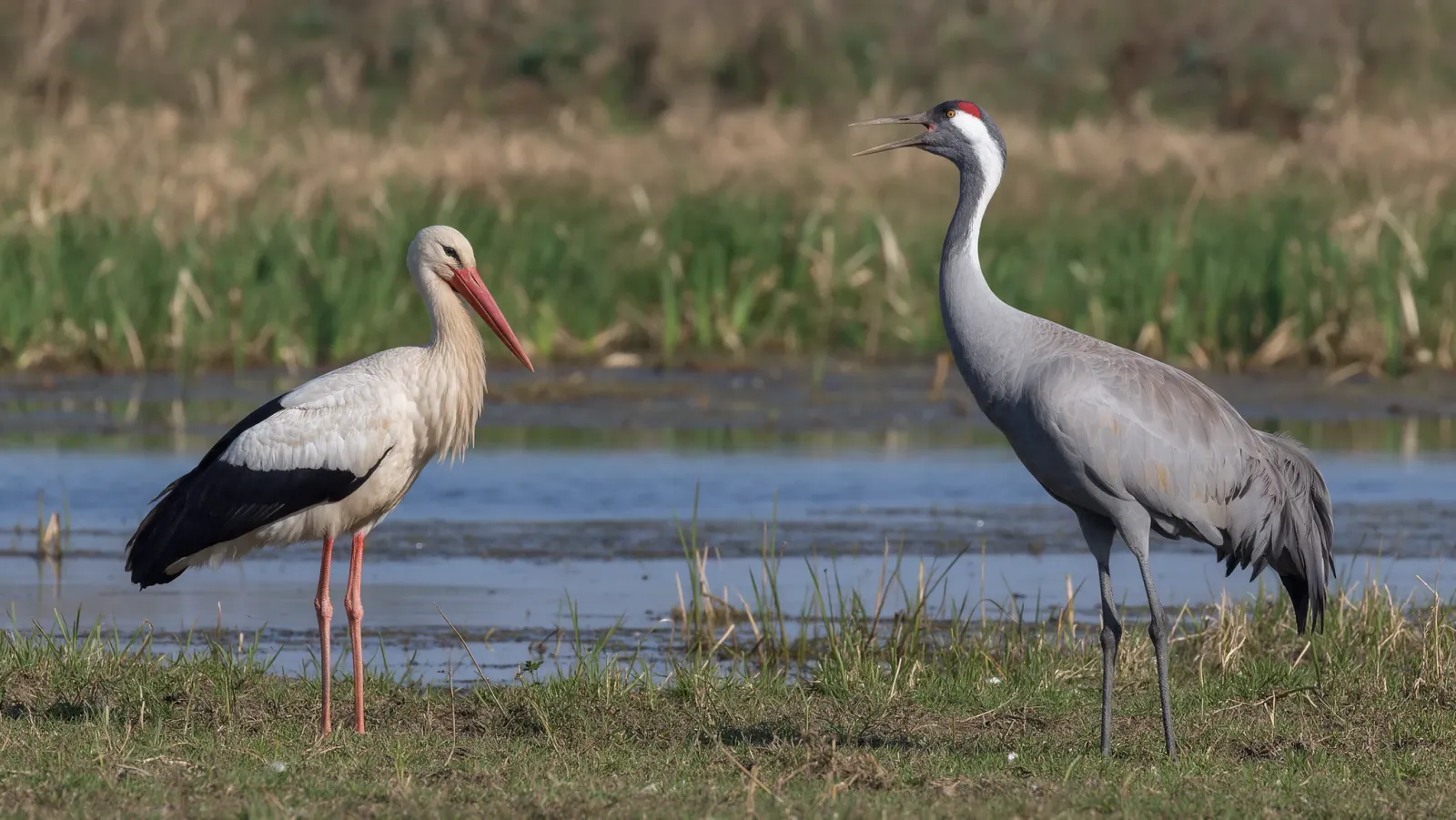
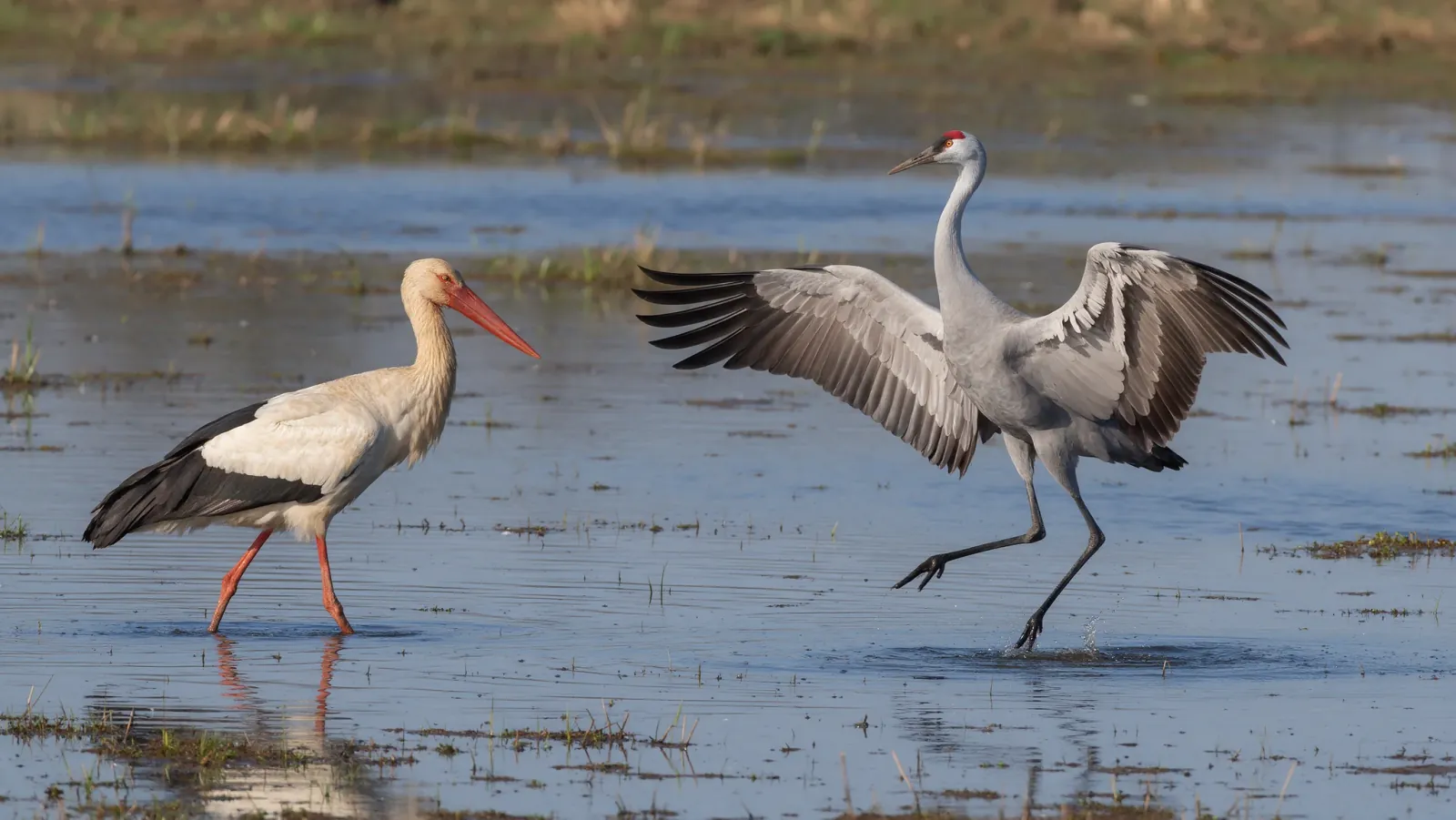
A stork and a crane can stand in the same wet field, both tall, both long-legged, both flying with the neck straight out. Their lives run on different tracks. One works in silence and clatters at the nest. The other calls across the marsh and dances in the open.
The silence and the song
The clearest difference is the voice. A stork has no true song. The parts of a bird's throat that produce a true call are small in a stork, so it cannot sing or cry the way other birds do. The only sound it makes is the clatter of its bill. The crane has a long, coiled windpipe that works like a horn, and its call rolls across the marsh. A tall bird that calls over the water is a crane; one that works in silence is a stork. The two stand in the same shallows and occupy different worlds of sound. A crane's call is a long-range signal, and it carries across open country to a family group in tall grass or a flock on the wing. A stork's clatter is a close-range signal, meant for a mate on the nest or a neighbour on the next roof. A stork's bill is a percussion instrument, and it works because the bill is long, hard and hollow. The body of each bird decides how it speaks. At a colony the clatters overlap until the place sounds like a workshop.
The dancer and the walker
The crane is famous for its dances: bows, leaps, wing-spreading and turns, performed by a pair in the breeding season and by young birds practising long before they need it. The stork has no such dance. Its courtship is quieter, a matter of clattering and posture at the nest. The crane's body is an instrument of display; the stork's is a tool for hunting. Cranes also dance outside the breeding season, and young birds join in with clumsy leaps of their own. A stork steps and stops, watching the water, and its grace is the grace of patience rather than movement. The dance says that the dancer is strong and worth choosing. It has nothing to do with food, and when it ends the birds go back to feeding. The same pair may dance again on later days, and the bond is renewed each spring.
Two ways to travel
In the air the two keep their own manners. A crane often travels in a V or a long line, each bird beating in a steady rhythm, while a stork is more likely to circle alone or in a loose group, rising on a thermal with its wings held still. The calling, disciplined line is the crane; the silent, soaring knot is the stork. A marsh that holds both holds two orders of life at once. Storks often gather at a good feeding patch in loose, silent numbers, while cranes arrive in family groups, calling as they come. The two never need to compete for the same air. A flock of cranes together makes a noise that fills the sky. The sound carries for miles, and on a quiet evening it is one of the great sounds of a wetland. A crane's voice matters to its kind: the birds live and travel in family groups, and the call keeps them in touch across long distances. A pair flying together calls in duet, and the two notes fit into one.
The patient wade
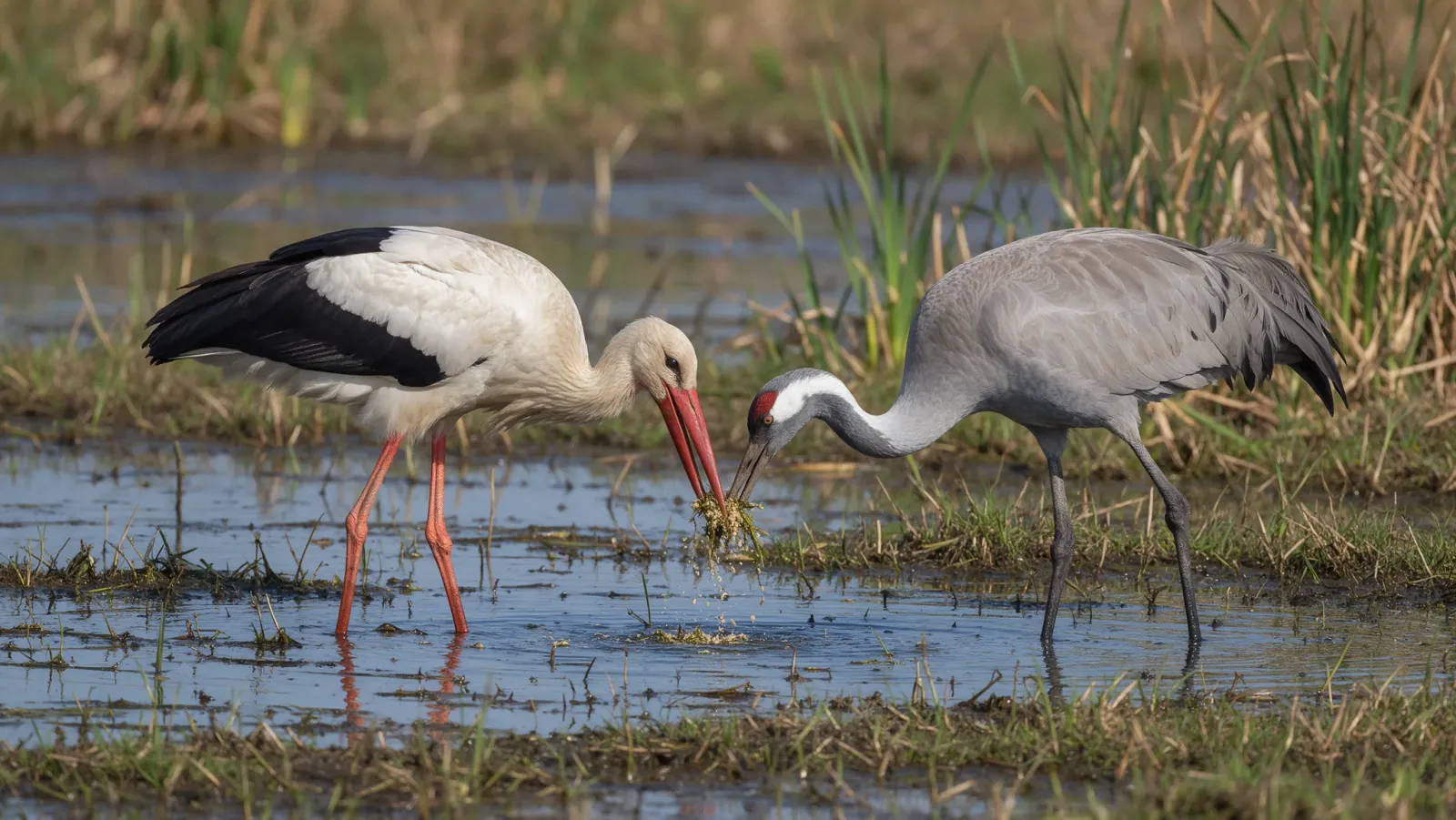
A stork feeds by walking slowly through shallow water, one careful step after another. It holds its head low and still, watching the surface and the soft mud, and when something moves it strikes. A stork that moves too fast sees nothing. The wade also hides the bird from its food: the long legs carry it through with little splash, and the white body is slow to alarm the frogs below. Step, pause, look. The method is patience. The bird may take a hundred steps to cross a pool the size of a room. The wade is slow work, and it is the whole of the bird's day. Young storks learn to wade by following their parents, and by their first autumn they are already slow and deliberate at the water's edge. A young bird that grows up near cranes will see the dance often, and one near storks will see only the slow walk.
Two bodies, two motions
The wade and the dance suit the two builds. A stork is tall and still, made to hold a pose over the water. A crane is a leaper, lighter on its feet, quick to spring and turn. The stork's movement is a matter of inches, the crane's of whole leaps. Put them in the same marsh and the difference is plain: one bird is at work, the other is courting. Even in the air the difference holds: the stork soars, the crane beats a steady line. A dance takes energy, and a crane in full display is not feeding. The birds dance most in the weeks before nesting, when they can afford the time and when a mate matters most. The display is short, and the feeding is long. A stork, with no dance to perform, spends those same weeks feeding and repairing the nest. The marsh holds both because it offers both things: food in the shallows and open ground for a display. A stork at the water and a crane in the field are using the same wet ground for different purposes, and neither gets in the other's way.
Two families, one water
They share the marsh the way two trades share a street. They eat some of the same things from the same shallows, but they go about it differently, and there is room for both. The crane may take more grain and plant matter, the stork more frogs, insects and small fish, so the pool feeds them both. A stork's diet is mostly animal, and its long straight bill is made for stabbing. A crane's bill is shorter and stronger, made for digging and pulling roots, and its diet holds more plant matter. The two bills suit two diets, and that is part of why the birds can share a marsh. At a feeding flock the difference is easy to see: the storks strike, the cranes dig. They feed at different depths and take different sizes of prey, so a busy marsh can hold both without either going short. Neither bird is a threat to the other, and neither pays the other much attention. In spring the cranes call and dance at one end of the field while the storks clatter on a nest at the other, and the marsh holds both sounds at once.
Why the difference exists
The throat decides how the bird speaks. A crane's long windpipe is an instrument. A stork's throat has no such instrument, so its bill takes the place of a voice. Neither method is better; each is suited to the life the bird leads. The crane needs to be heard across open country. The stork needs to reach a mate on the nest and a neighbour on the next roof.
Explore the gift