The last feed of the night has its own weather. The baby has stopped crying, the heating has clicked off, and the house is doing the small noises it saves for the dark. You did not imagine this hour when you thought about having a baby. You imagined the announcement, the first hold, the pram. The hour after the last feed is the one you remember with strange clarity.
The hour nobody plans for
The baby is asleep or nearly, your partner is asleep, and the flat is running its baseline. The fridge. A pipe. A car two streets away. If you live in a city, the night has traffic in it. If you live somewhere quiet, the night has weather. Either way your ears adjust within a week.
The last feed often takes longer than the others. The baby is tired and fussy, and you are both ready for the day to be over. Let the hour have its own pace. Hurrying only makes it longer.
This is the hour when the work feels biggest and least witnessed. Both are true. The work is large, and nobody is going to hand you a certificate at the end of it. The baby is not grading your performance. It is collecting evidence that someone comes back.
Stand still for a minute. The house has a sound at night that it does not have in the day, and a baby sleeping in it changes the sound. Silence with a baby in it is not empty.
What the window offers
On a clear night, from a city window, you might see the moon, a planet, a handful of stars, the red light of a crane. The sky at night is smaller than the day sky and more personal. You do not need to know the names of anything. Looking up is enough.
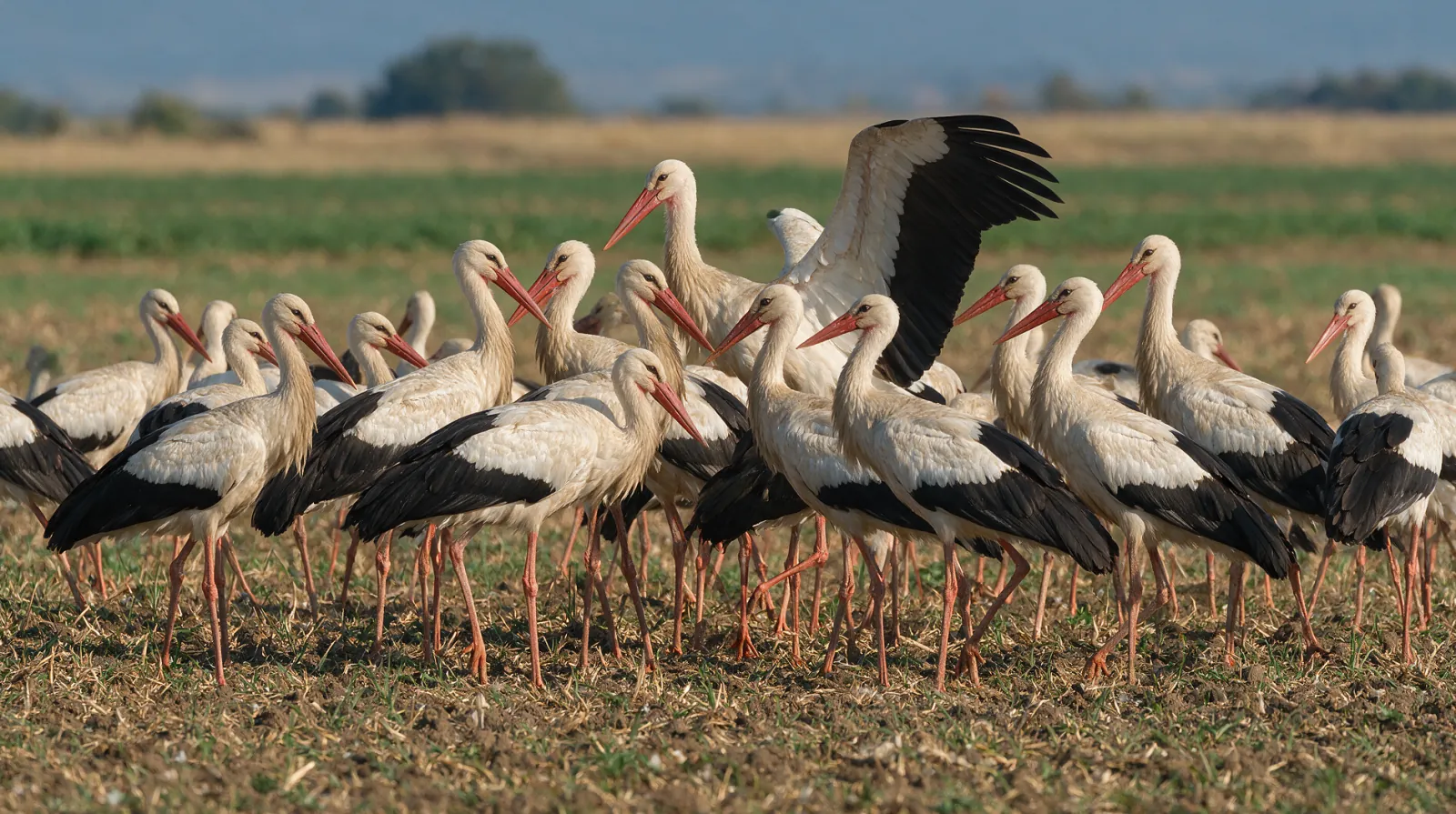
If there is a stork nest nearby, you may see the bird standing on it, awake or asleep, a dark shape against the dark. White storks rest standing, often on one leg, on the nest or the chimney they will use again next spring. They do not seem to mind the dark.
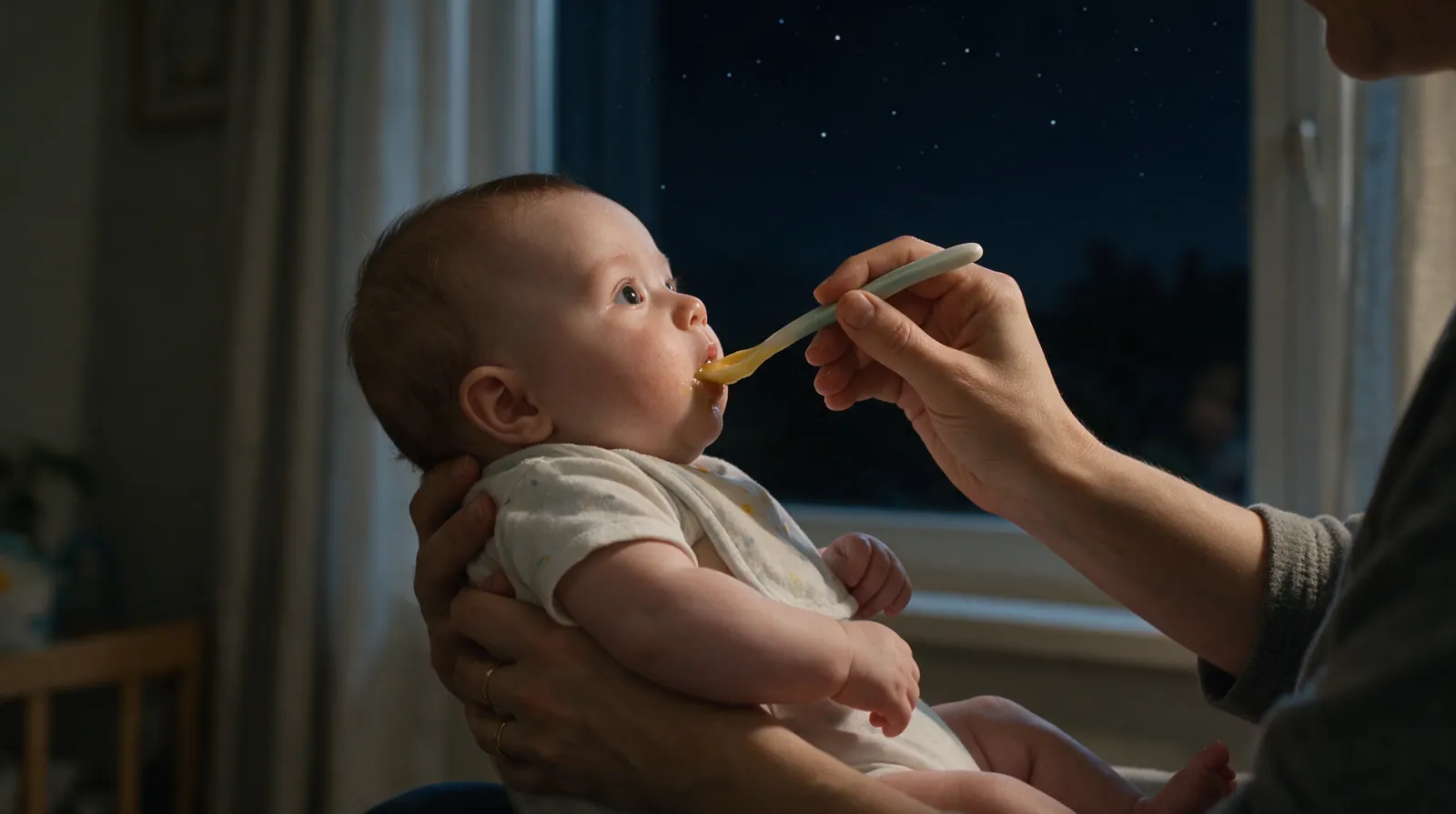
Feed by the window if you can. A view, even a dark one, gives the hour somewhere to go. The baby gets something to look at, and you get somewhere to rest your eyes that is not the wall. A blanket over your knees, a glass of water on the sill, and the night doing its slow work outside.
The arithmetic at three
At three in the morning the pride is harder to find. The night feeds are the part of the job with no audience at all. You are awake, the baby is awake, and the rest of the world is asleep and ungrateful.
Do it anyway. The baby will not remember, and your body will. The nights are building something in you: patience, competence, the knowledge that you can do a hard thing while tired. The list is short and it fills the whole day: feed, burp, change, settle. There is no project plan, no meeting, no one to say you did it well.
You will start to take pride in strange things. A nappy changed without waking the baby. A burp on the first try. A vest that went on the right way round. These are the victories of the first months, and they are worth noticing. Nobody else will notice them, so say it out loud, to your partner or to the room: that went well.
Keep the light low
Use the smallest light you can. A lamp on the floor, a phone screen turned low, the light from the hall. Bright light at night tells both of you that it is morning, and the feed gets longer. Keep the room warm. A night feed in a cold room is a race, and a race is the opposite of what the night needs.
If you need to see, point a torch at the ceiling. Bounced light is softer and keeps the room a room. Put your phone face down if you can. The feed is easier without a screen, and the dark is easier to go back to sleep in.
If you are awake anyway, keep the lights low and the screen dim. The next feed is coming, and you want to meet it with a nervous system that has not been shouted at. A cushion behind your back and a blanket you can reach without standing make a long night feed shorter.
If sleep will not come after the feed, rest is still worth having. Lie down in the dark with your eyes closed and let your body be horizontal. A twenty-minute lie-down at nine can carry you to two. The advice to sleep when the baby sleeps assumes you can switch off in ninety seconds, and most people cannot.
If you are breastfeeding and the baby feeds often, the night is broken into shifts rather than hours. Sleep in the gaps, even the tiny ones. Keep a glass of water by the chair before you sit down. The small preparations are how you look after yourself at an hour when nobody else will.
Keep the light low enough that you can find the nappy without turning on the ceiling light. A small torch with a warm beam, a lamp behind a chair, the hall light with the door half closed. The room stays a room, and the baby stays half asleep.
Do not fill the hour with messages and washing up. Some nights that is fine. Most nights the quiet is worth more than the productivity. Ten minutes of doing nothing is not wasted time. It is the only part of the day that belongs to no one else.
A bird that stands still
Somewhere outside, a white stork is standing on one leg on a nest built on a chimney or a pole. Its head is tucked, its bill hidden, and it is waiting through the same dark you are. A bird that stands still for hours is a good model at three in the morning.
You will not see one from most windows. You can still borrow the posture: upright, unhurried, waiting for the light. The bird will be back in March, and the nest will be bigger. Seasons are doing their slow work outside the window while you are doing yours inside.
In summer the sky may already be changing by four, and you will see the first sign that the night is ending. The stars will be there whether you sleep or not. The night is long, and you are in it with a baby.
One morning you will realise the baby slept a longer stretch, and you will not be able to say when it started. The room was doing its quiet work all along, and the big world kept turning outside the window without asking anything of you.
The pride that has no audience
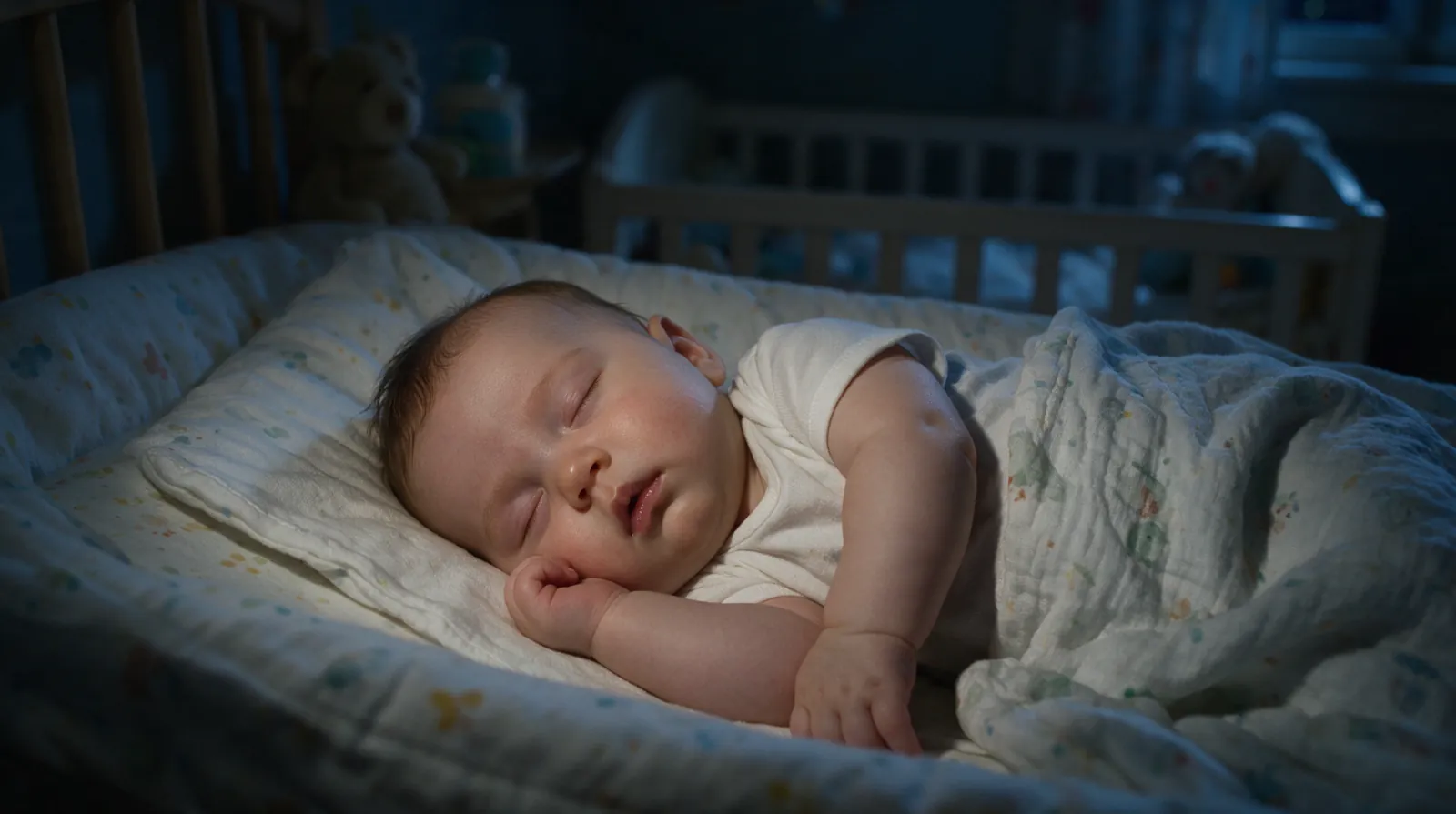
The quiet pride of keeping them alive arrives after an ordinary day of feeding and changing, when the baby is asleep and the house is still. It is a feeling you will not be able to explain without sounding strange.
The work is real even when it leaves no trace. A clean baby, a full baby, a sleeping baby: all of it is the result of decisions nobody saw you make. Write the list down if the day feels like nothing. Four lines on paper can make an invisible day visible.
Tell someone. A sentence to a friend is enough: "I kept a person alive today." It sounds dramatic, and it is also literally true. If nobody is around, write it in the notes app. The record will matter later, when the days blur.
The pride changes shape as the baby grows. It becomes the quiet confidence of a person who has done a difficult thing and knows it. You will carry it into the next stage. Some days it will feel like luck. It is repetition.
If you want a marker for these invisible days, adopt a stork in the baby's name and keep it where you can see it during the night feeds.
Explore the gift