A count at a strait, a metal band on a leg and a small transmitter on a back are three ways of turning a bird that moves into a fact that stays. Each method answers a different question, and each has limits the people who use it know well.
The bottleneck census
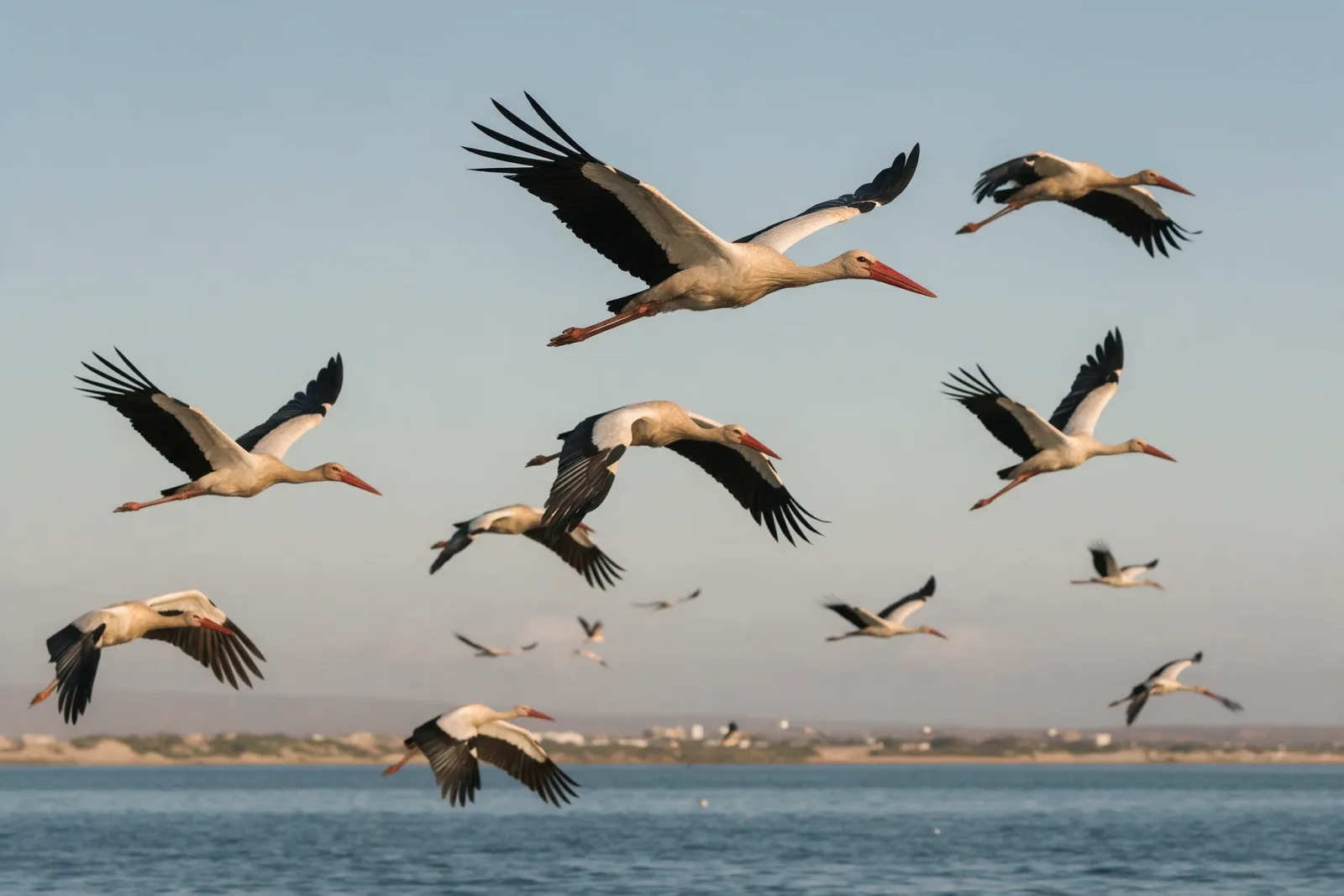
Storks need thermals, and thermals form over land. Open water gives them nothing to climb on, so rather than strike out across a sea they follow the coast to the shortest crossing and funnel through it. At Gibraltar and the Bosphorus, birds from a whole region are squeezed into a few kilometres.
A bottleneck is a gift to a counter. For a few weeks, a single team in one place can see more storks in a day than a month of searching farmland would turn up. Twice a year, volunteers and researchers tally the birds that pass. It is cold, slow work, and it produces the closest thing a wild stork population has to a census.
How a count is run
Counting a flock sounds easy until the flock arrives in layers, some high, some low, some behind the ridge. Teams spread along the crossing, each watching a slice of sky, calling numbers to a note-taker who keeps the running total. The count starts at first light and continues while the birds move.
Everything depends on the method staying the same. The same positions, the same hours, the same way of splitting the sky. A count is only worth something if next year's count can be laid beside it. The weather decides how much of the job gets done. A clear day with a steady south wind can push thousands through in a few hours. Rain, low cloud or a dead calm can hold the birds down for days, and the counters wait with them.
A single bad season says little; weather can hold birds back or push them through early. A run of poor years says a great deal. If the tally at a strait falls for several autumns, something on the flyway is failing, and the numbers give researchers a place to start looking. A tally records the birds that pass. It cannot tell you how many pairs bred, how many chicks fledged, or how many birds died on a wintering ground months later. The figures are shared across borders, so a drop at one crossing can be set against a rise at another, and the picture becomes the route rather than one stretch of coast.
The code on a leg
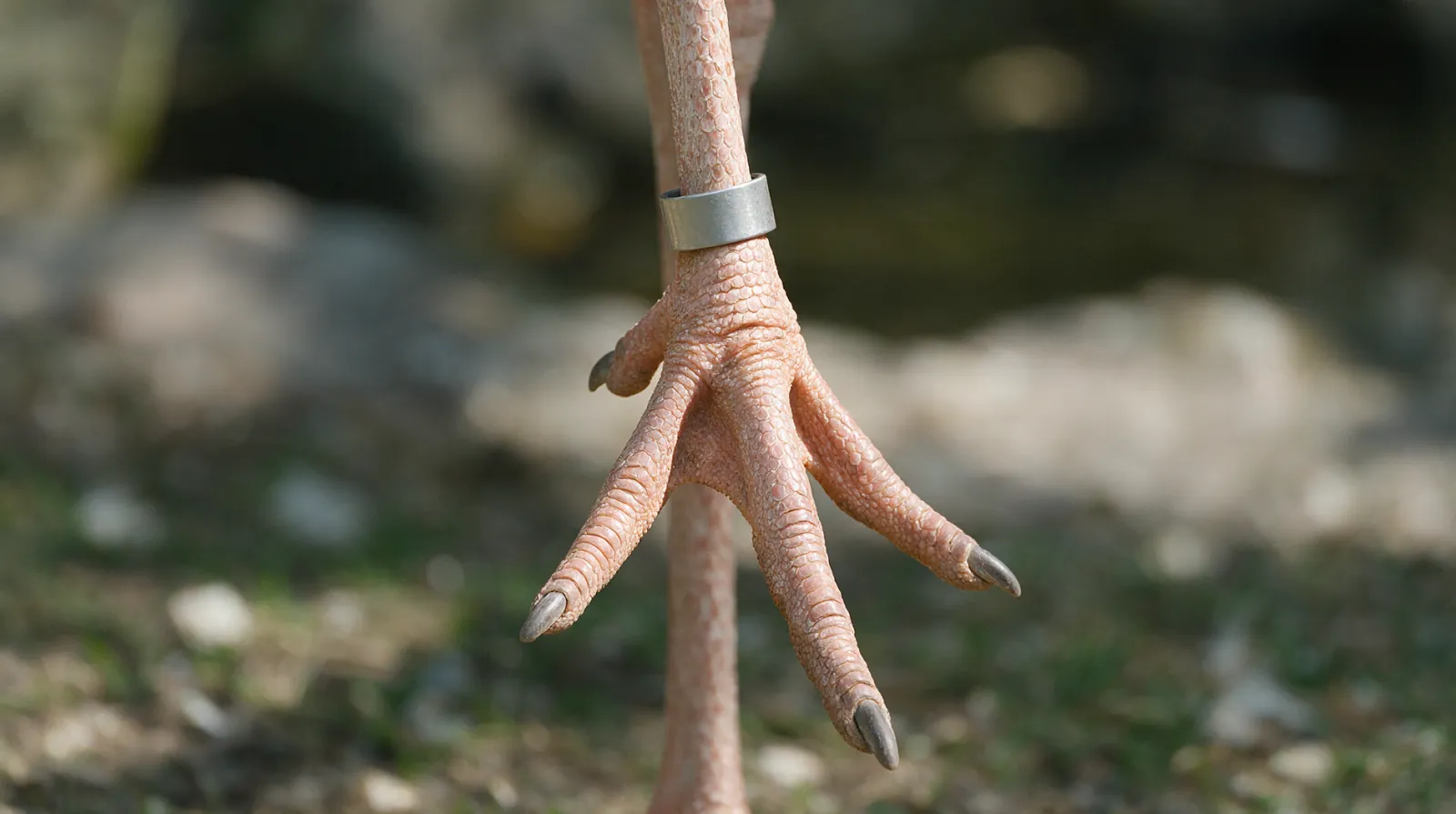
A ring on a stork's leg carries a code the bird cannot tell you itself. The band is fitted while the chick is still in the nest, and every time someone reads it through a telescope the sighting joins a file that may run for a decade. It is the closest thing a stork has to a written life.
The ring is light, a thin band that sits loose above the foot and does no harm. The code is a few letters and numbers, large enough to read at a distance and unique to that bird. One code, one bird, one file. A stork ringed in a northern village and read on a Spanish marsh two winters later turns a vague idea about migration into a line on a map.
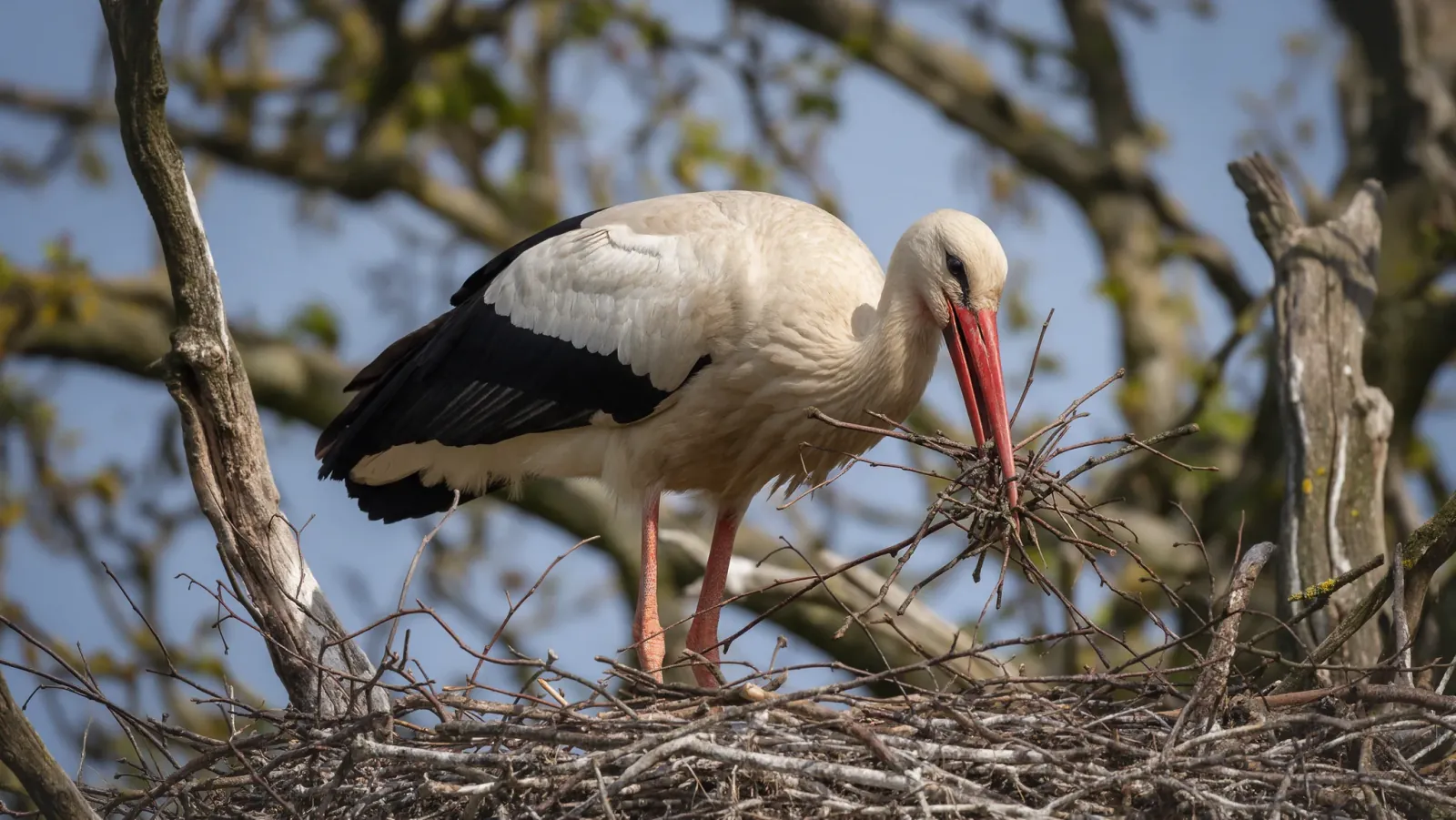
Ringing happens in the nest, before the bird can fly. A trained ringer climbs or lowers the nest carefully, fits the band, measures the chick, weighs it, and puts it back beside its siblings. The whole visit takes minutes and is over before the bird has time to be troubled by it.
What a sighting adds
Each reading recovers a small fact. A bird seen at a wetland in autumn, then on a rooftop the following spring, traces a route. A bird that vanished is photographed somewhere else, and a gap closes. Over years the sightings answer questions no other method can. How long do storks live? Do they return to the nest they were born in? How far do young birds settle from the place they hatched?
A colour ring is read with a telescope and patience. The bird has to stand at the right angle, in good light, with the leg visible, and the observer has to get the sequence right before the bird shifts. It is a skill learned slowly and shared between strangers across a continent. The ringer and the observer never meet, and together they write the bird's file.
Most ringed storks are never reported. Their lives stay partly known, and the map is built from the ones that are read and written down. A bird can carry a band for twenty years and be seen twice, and those two sightings still count.
A ring also answers the small questions that a population count cannot. Whether a bird returns to the nest it was born in, and how far a young bird settles from the place it hatched, are details of habit. They matter when a village wants to know whether its storks are its own.
The tag
A satellite tag on a white stork sends back a position every few hours, and a bird that would have vanished over the horizon becomes a line on a screen. The tag is small, fitted to the back on a light harness, and it asks nothing of the stork except that it keep flying.
Tags go on when the bird is already in the hand, at a ringing station or during a nest survey. The transmitter sits flat against the feathers on a light harness that does not block the wings or catch on branches. The harness is designed to fail. It lasts a season or a few years and then wears through or comes loose, so the bird does not carry the tag for life. A tag is a loan, and the bird is meant to outlast it.
Each transmission carries a position, and often a little more: height, speed, the temperature around the bird. The data arrives as short bursts, and somewhere a map updates with a new point. A stork that left a village in Spain appears days later at the Strait of Gibraltar. The same bird turns up in a field in Morocco and then over the desert.
The limits of looking
Tagged birds redrew the map of migration. The routes are narrower than people assumed, the stopovers more specific, the timing more variable than a calendar suggests. Young birds wander further than adults. Adults hurry back to the same nest. A storm can pin a whole flock at a crossing for days.
That knowledge has a use beyond curiosity. When a wind farm, a power line or a road is planned, the routes drawn from tag data show where the birds will actually fly. A signal that began as a way of watching becomes a way of avoiding a collision.
A tag is not a window into everything. It can fail, lose power, or transmit from a bird that is never seen again. The sample is small: a few dozen birds can stand for a population of thousands, and the birds that get tagged are not always typical. The map shows where one bird went, and the careful work is in knowing how much of that to generalise. A tag that stops sending is not proof of death. The bird may have lost the harness, moved out of range or settled somewhere with poor reception. The file closes, and the bird goes on flying.