Little beginnings. Wild journeys. Notes on a world worth growing up in.
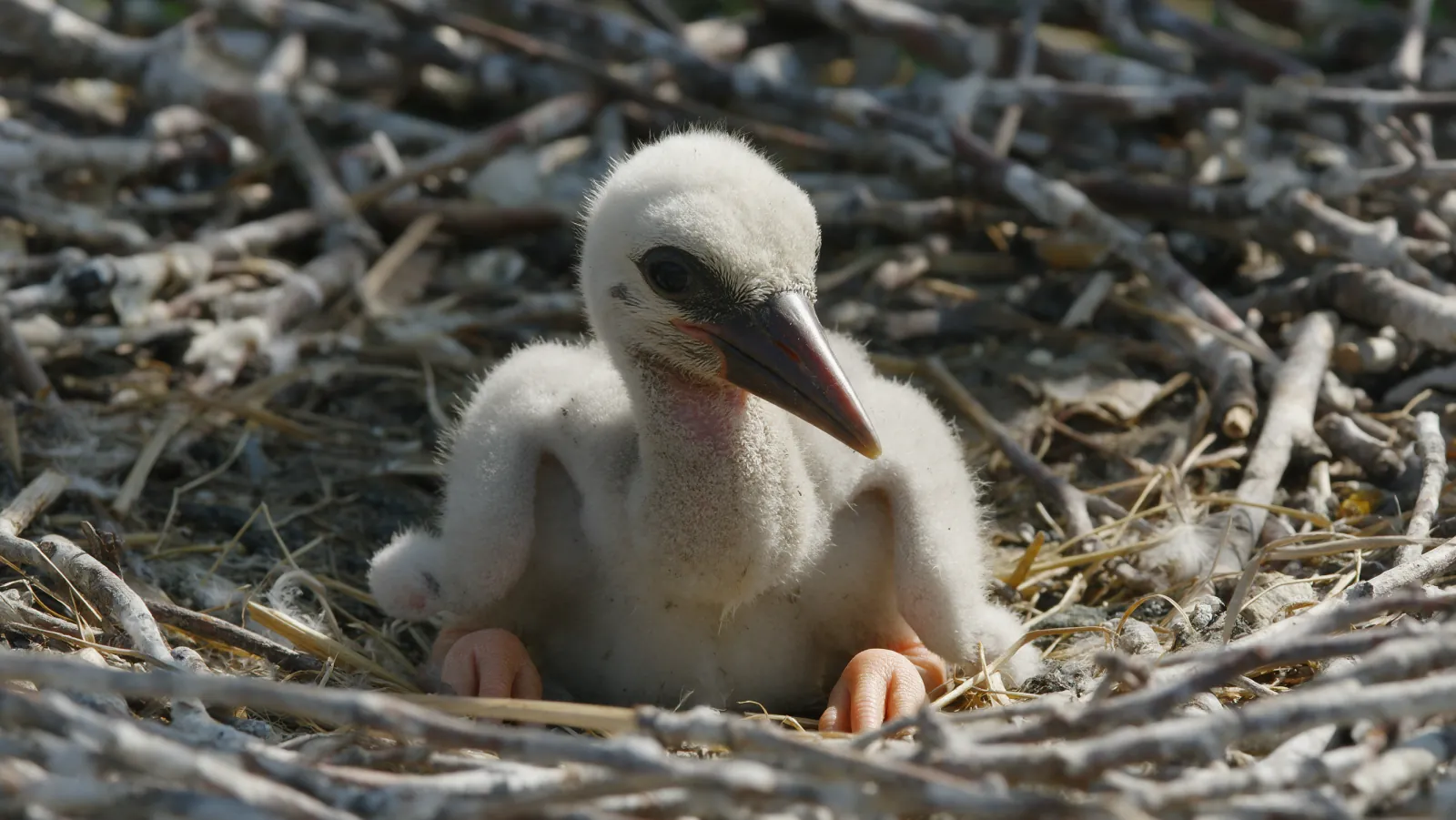
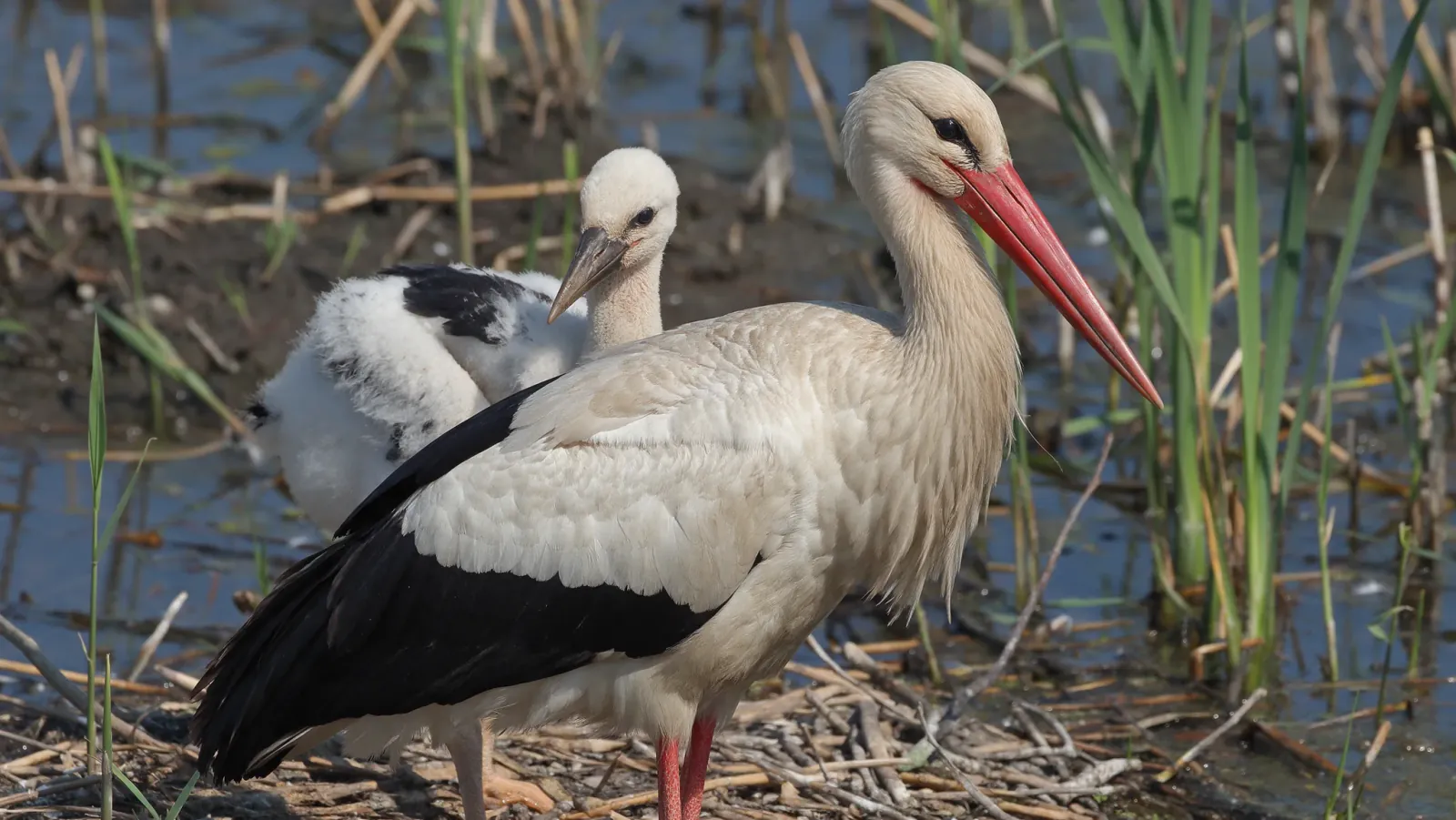
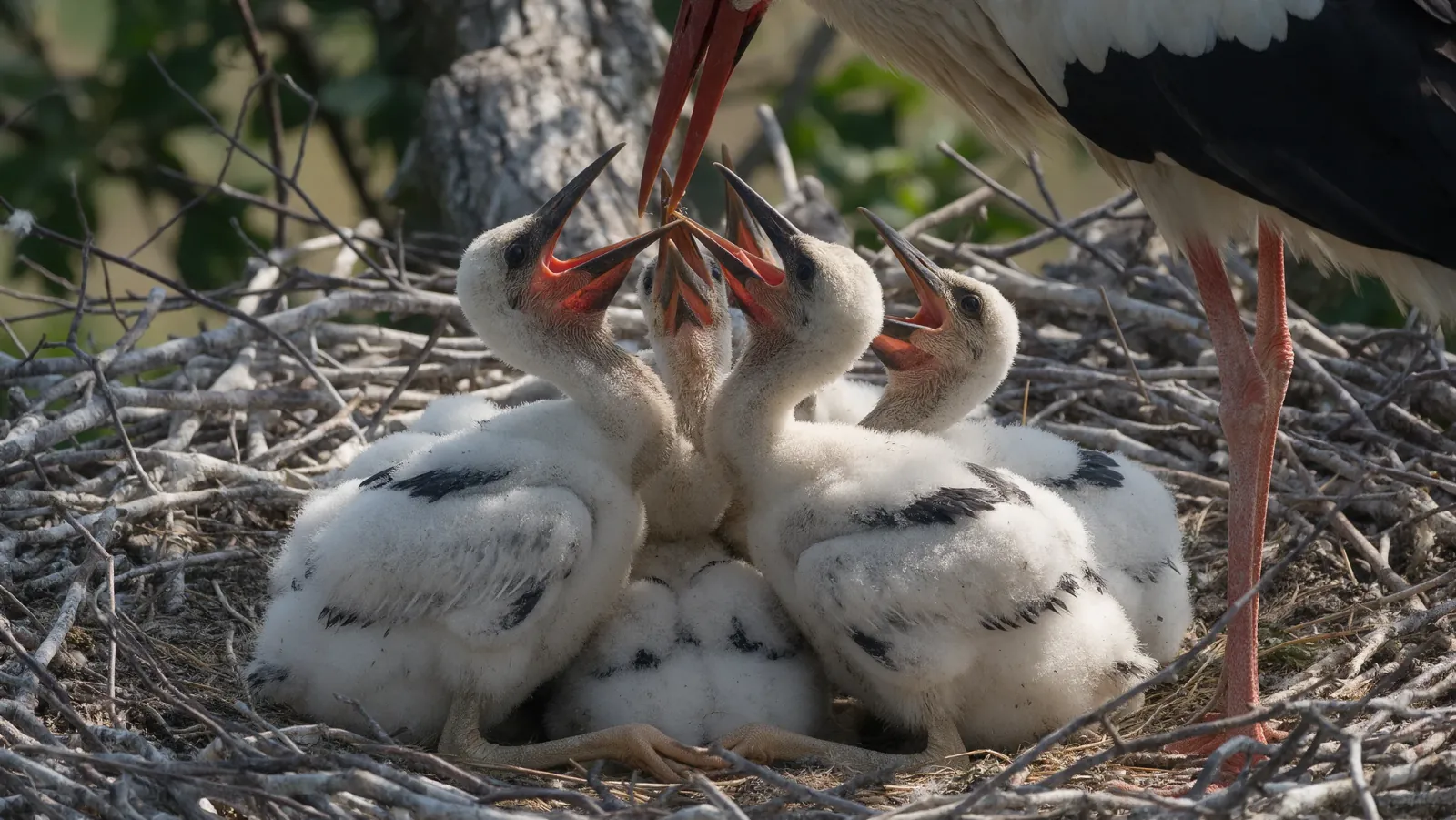
A chick that hatches nearly bare needs two parents and about two months to reach the size of the birds that feed it.
A young stork can cross a continent it has never seen using an internal clock, the sun's arc and a sense of the earth's field.
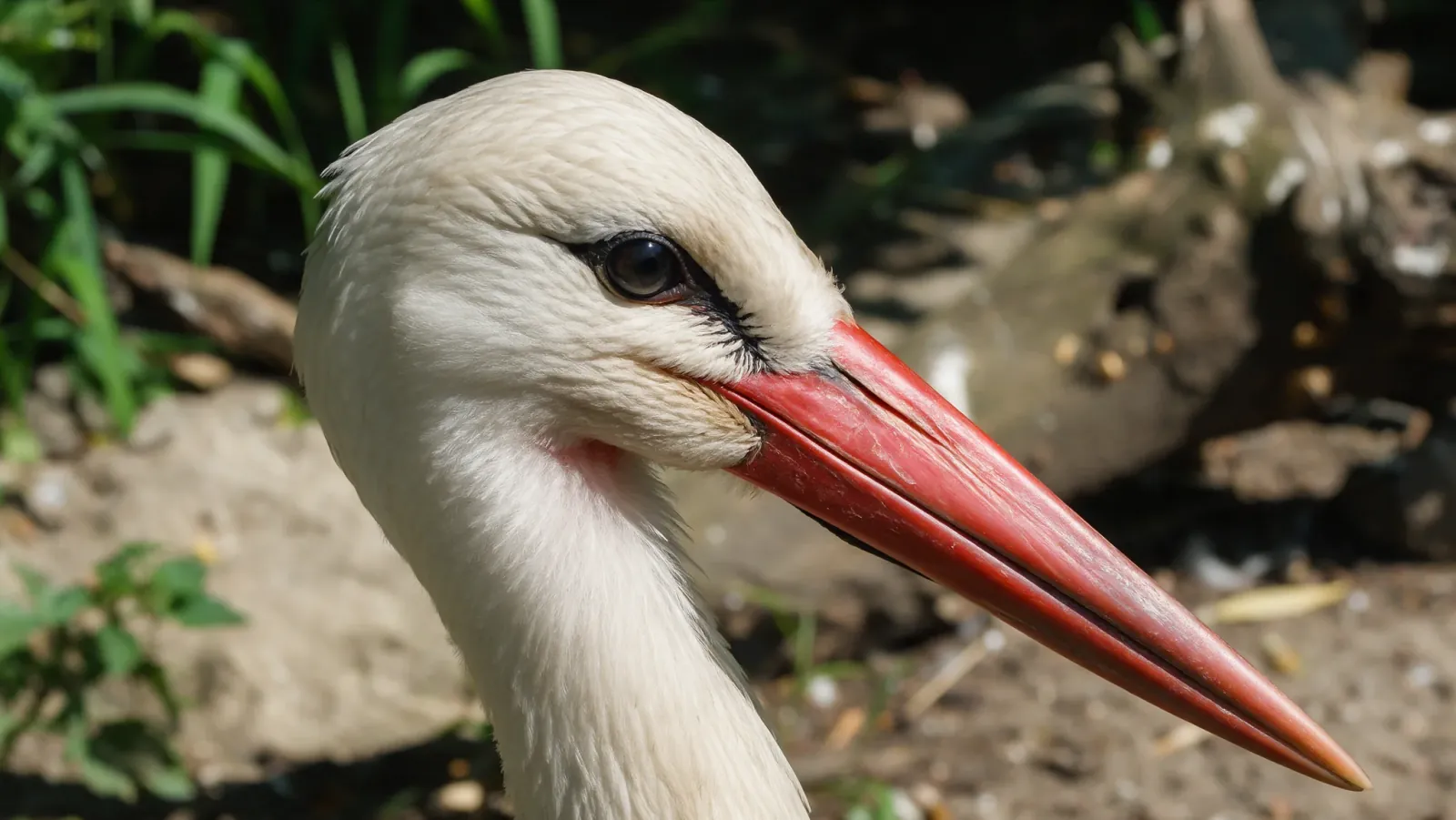
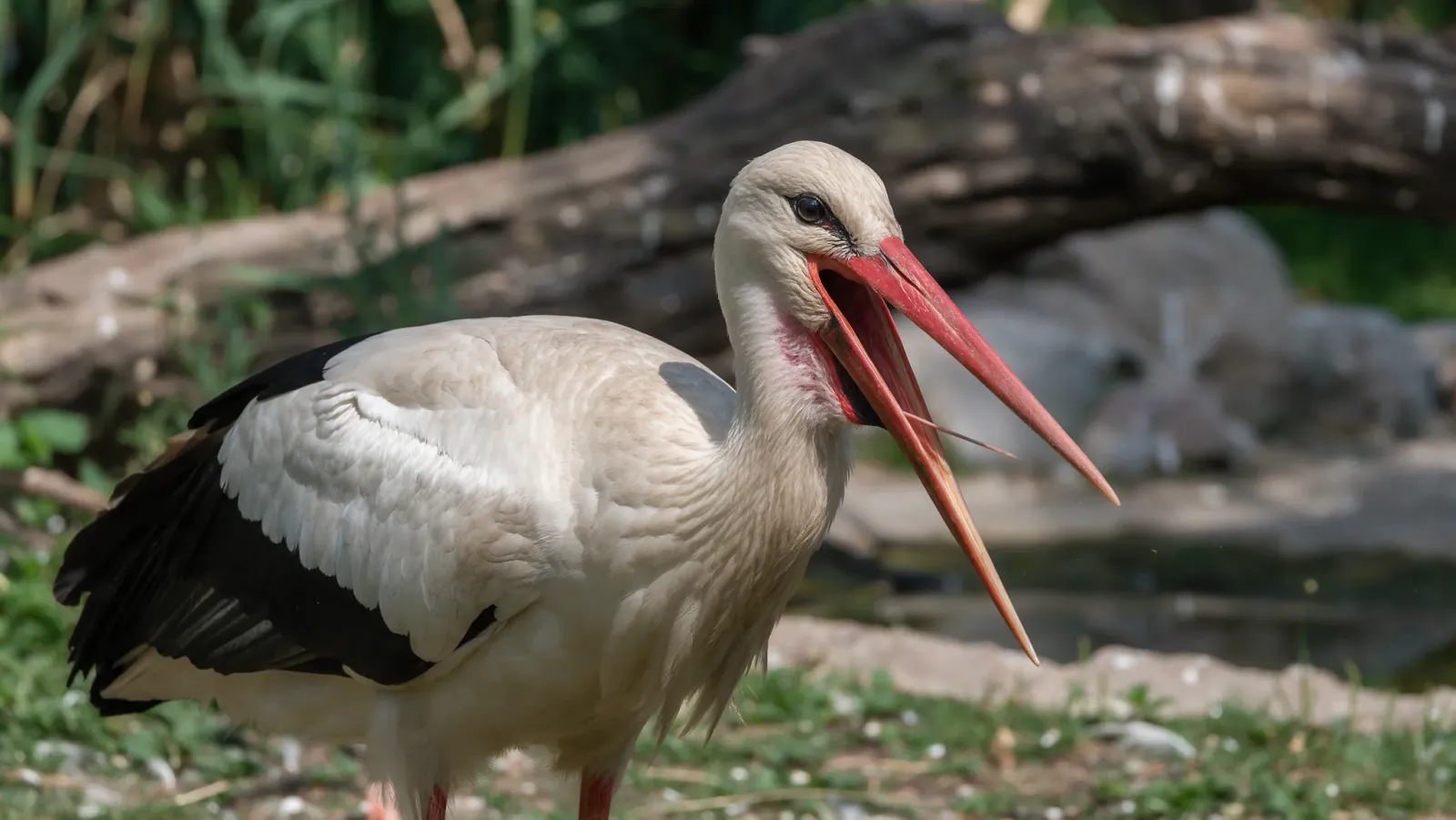
A stork's syrinx can manage a hiss at best, so the bird drums its two long bills together to greet a mate and warn a rival.
Inheritance sets a ceiling, a wet summer decides how close a chick gets to it, and fresh feathers hide the years underneath.
A male white stork reaches the nest days before his mate, then greets her with a bill-clatter that carries across the village.
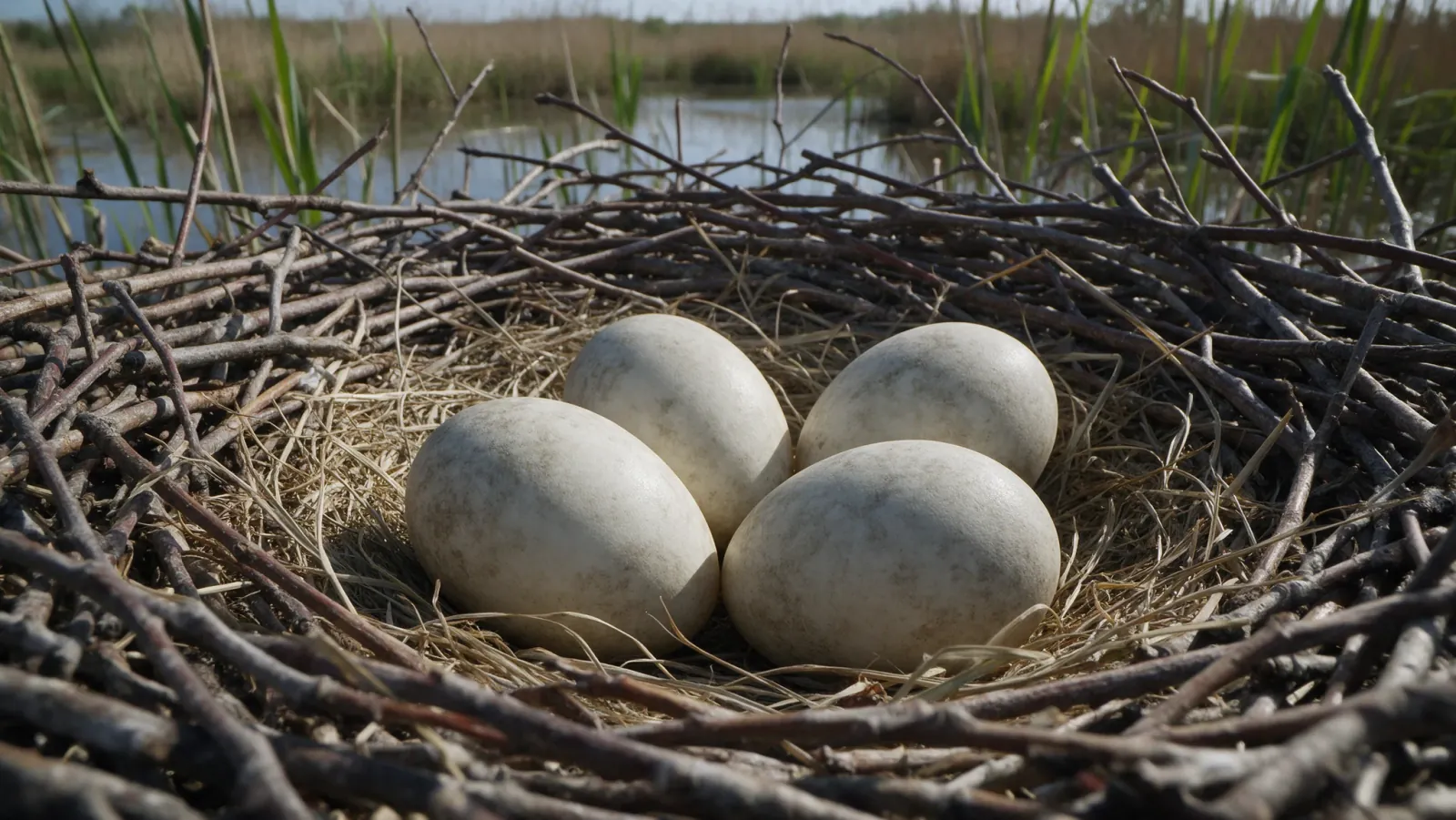
A white stork lays three or four chalk-white eggs a day or two apart, then shares about 33 days of turning and waiting.
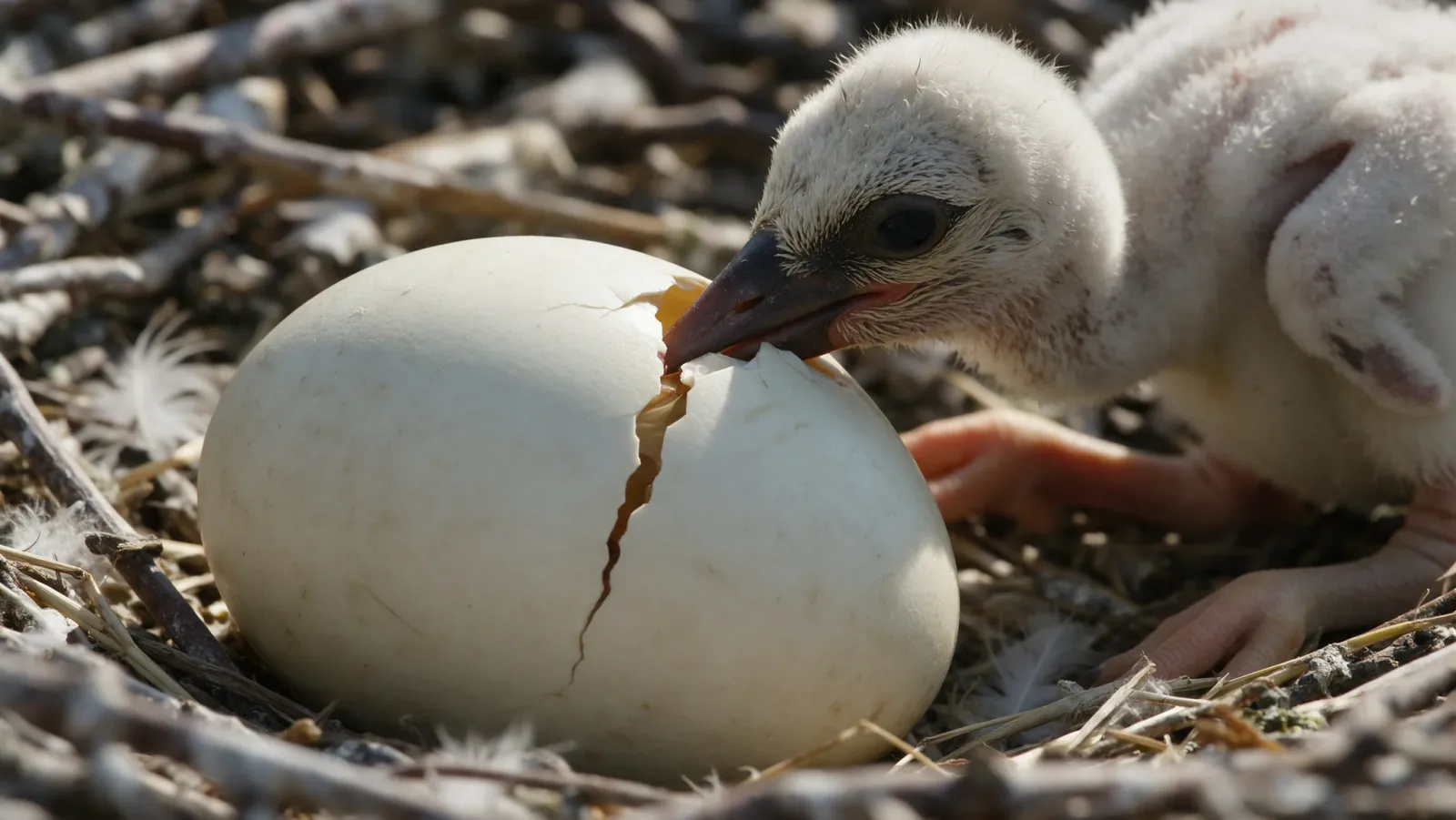
A stork chick taps into the air cell, then through the shell, and can take a full day to leave the egg.
Four chicks open pale mouths at once, and the oldest usually eats first; in a wet spring that order decides who fledges.