Little beginnings. Wild journeys. Notes on a world worth growing up in.
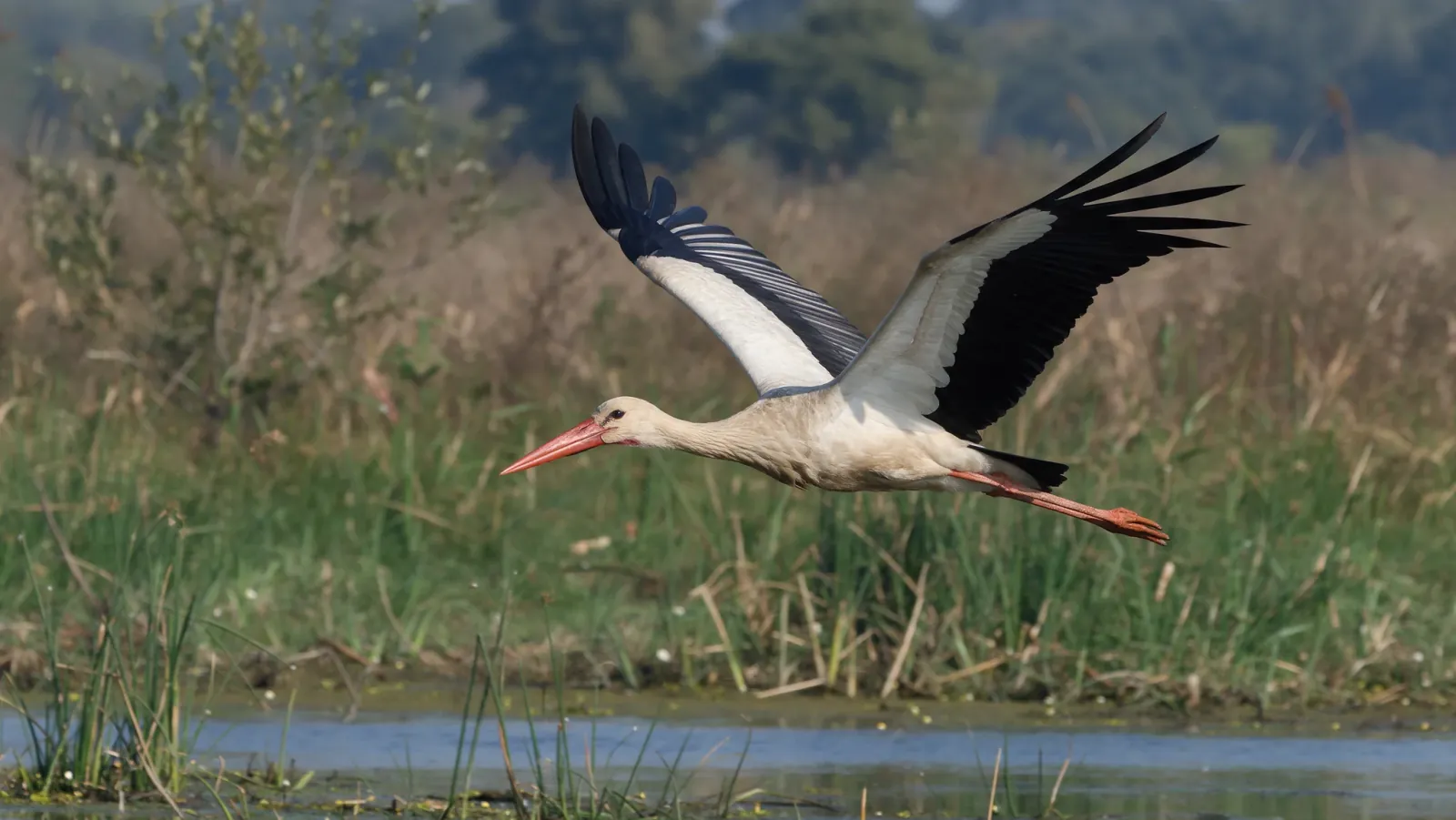
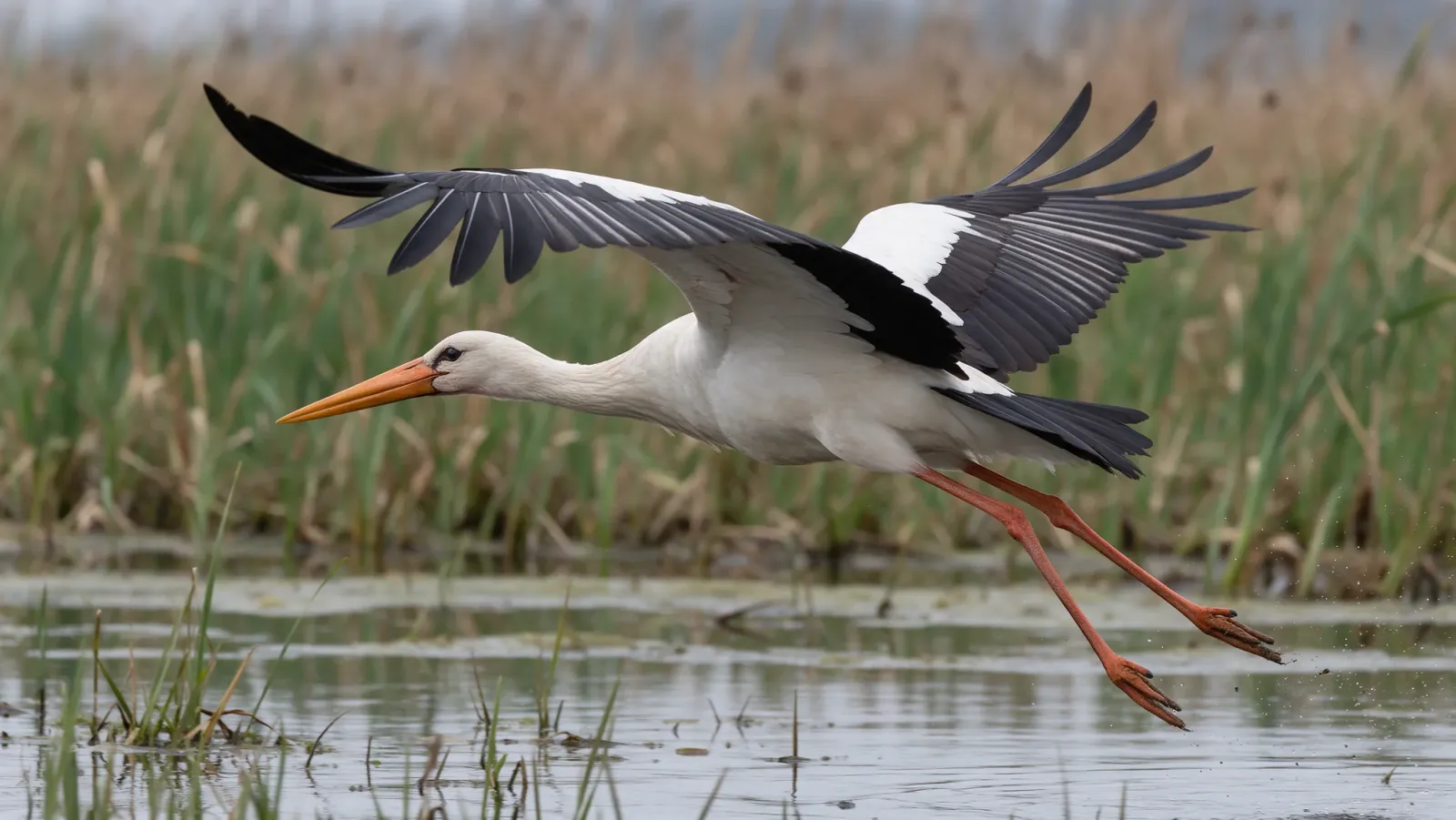
Flight is the hardest work a stork does. A four-chambered heart and one-way air sacs keep the wing muscles supplied through hours of gliding.
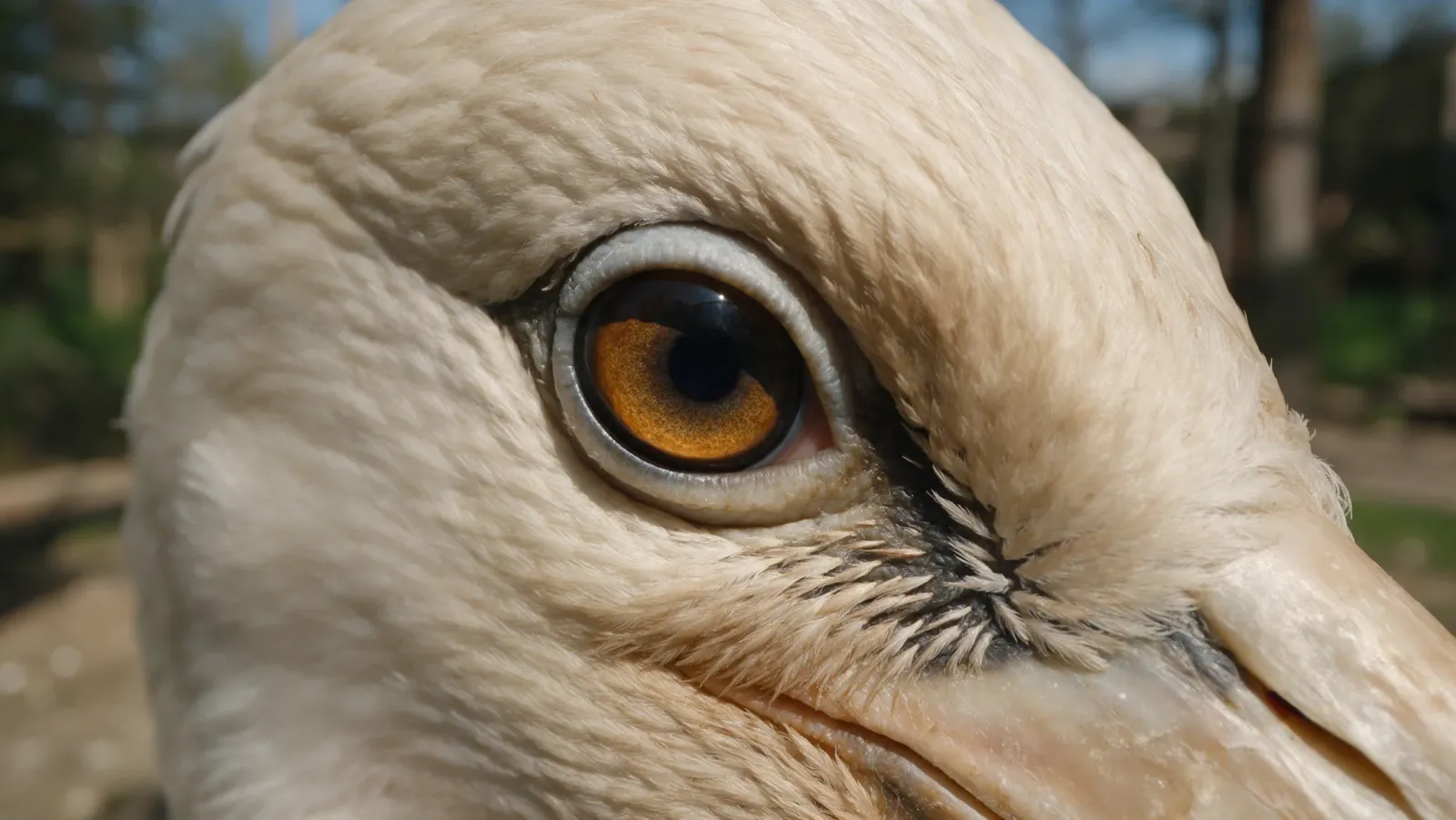
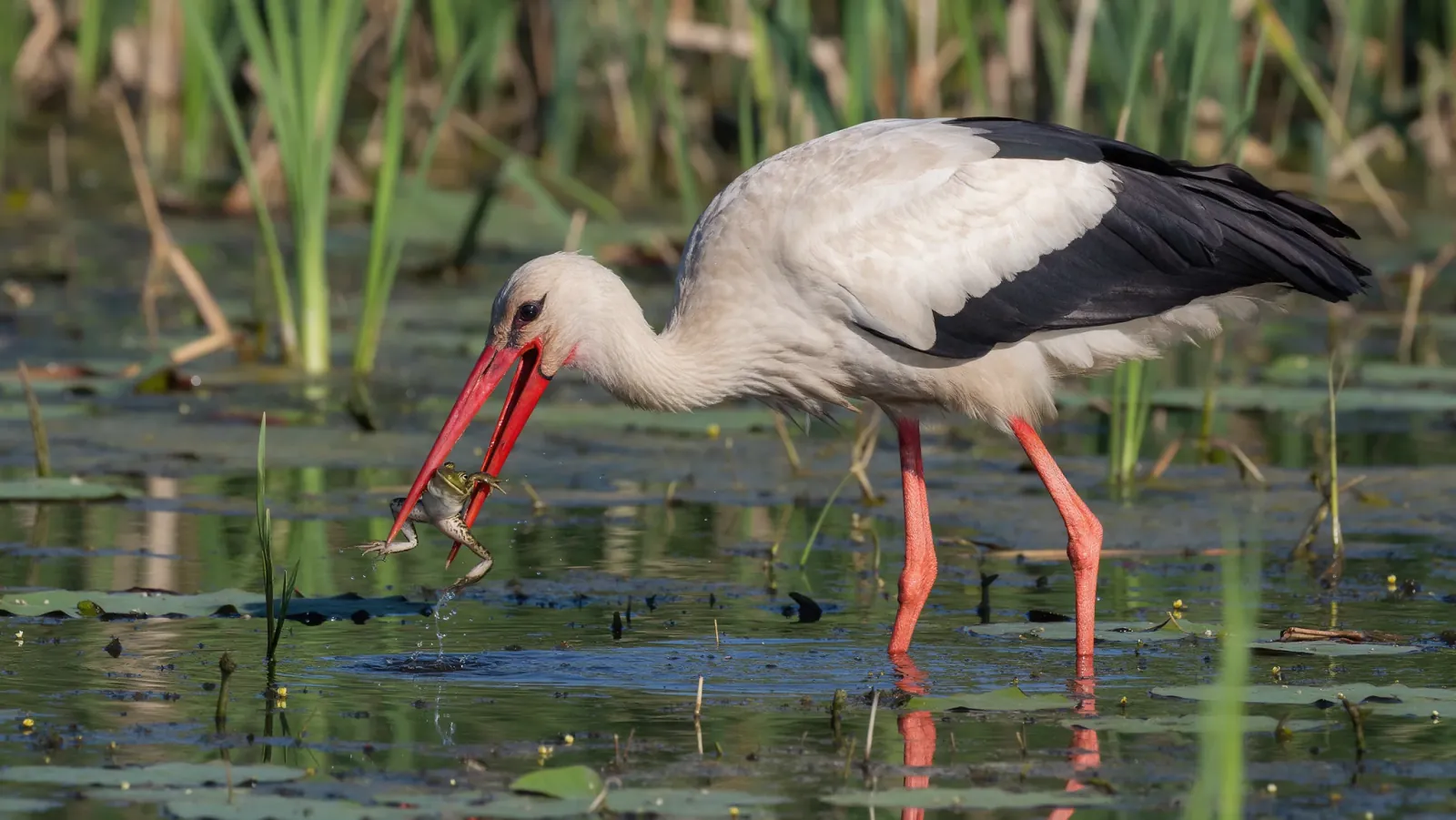
A stork feeds by sight, spotting a frog's twitch before the bill moves. Four kinds of colour cell let it read a meadow we cannot see.
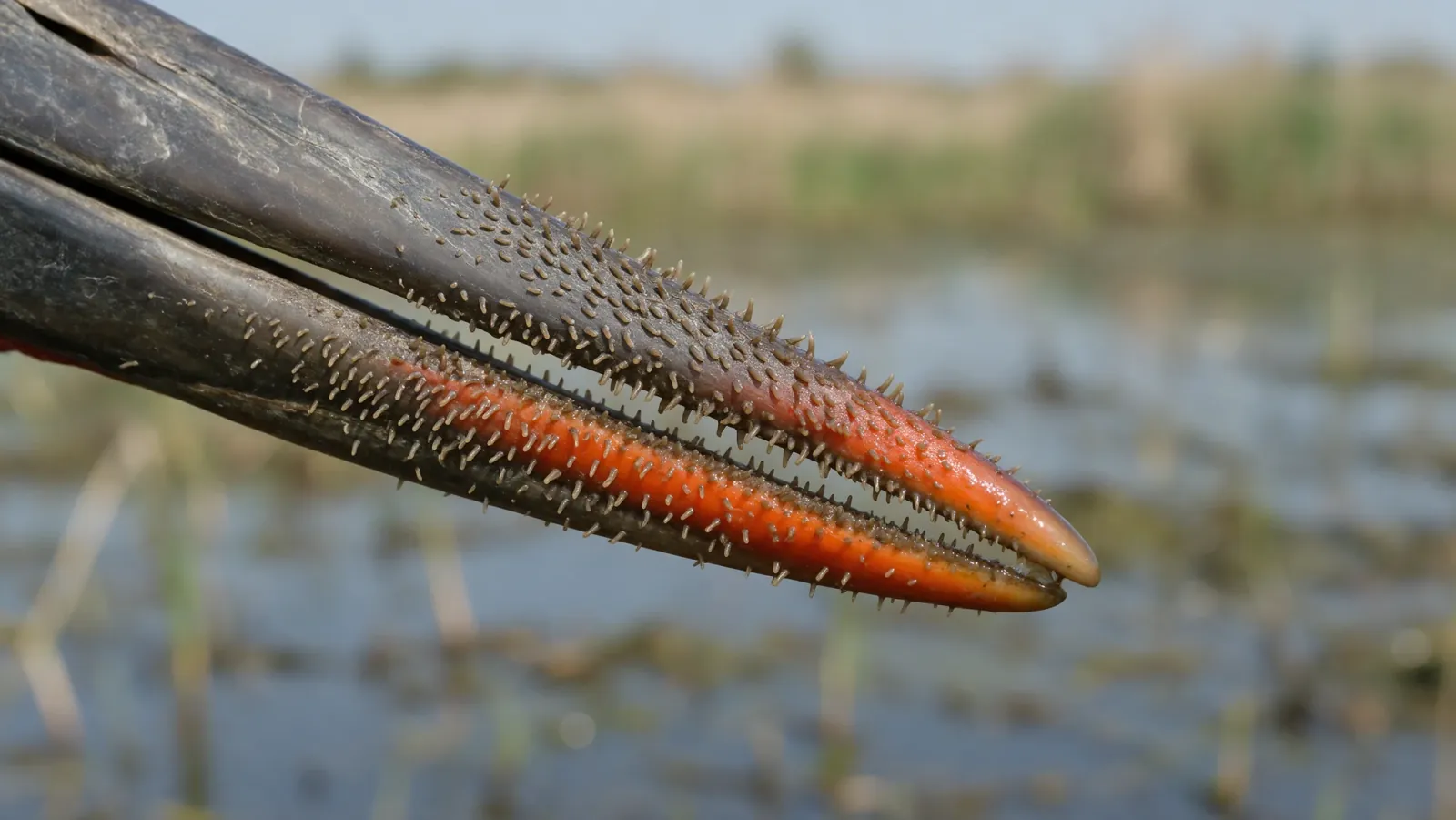
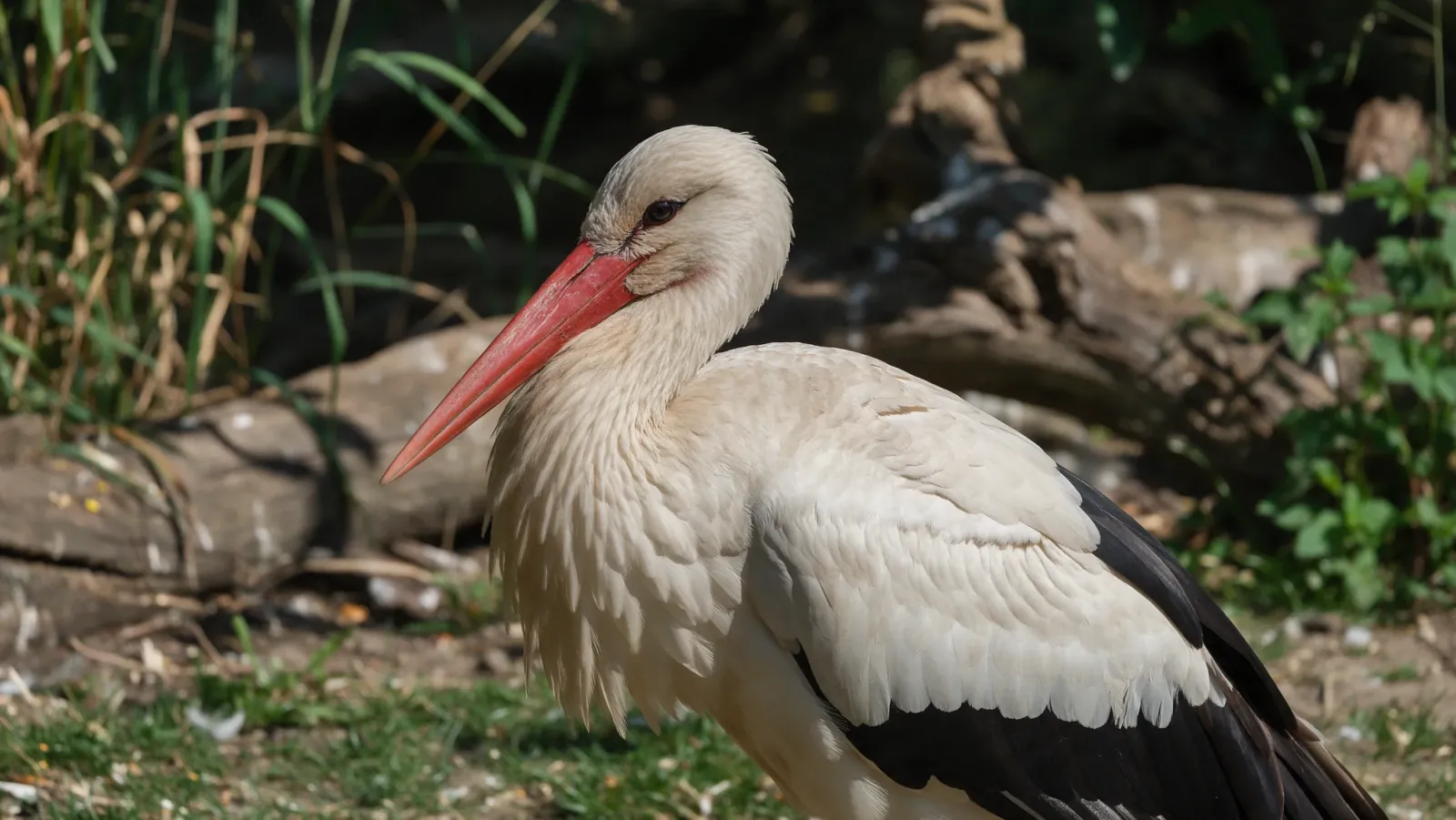
The long red bill carries touch sensors near the tip, then spreads oil from the tail gland through the feathers that shed rain.
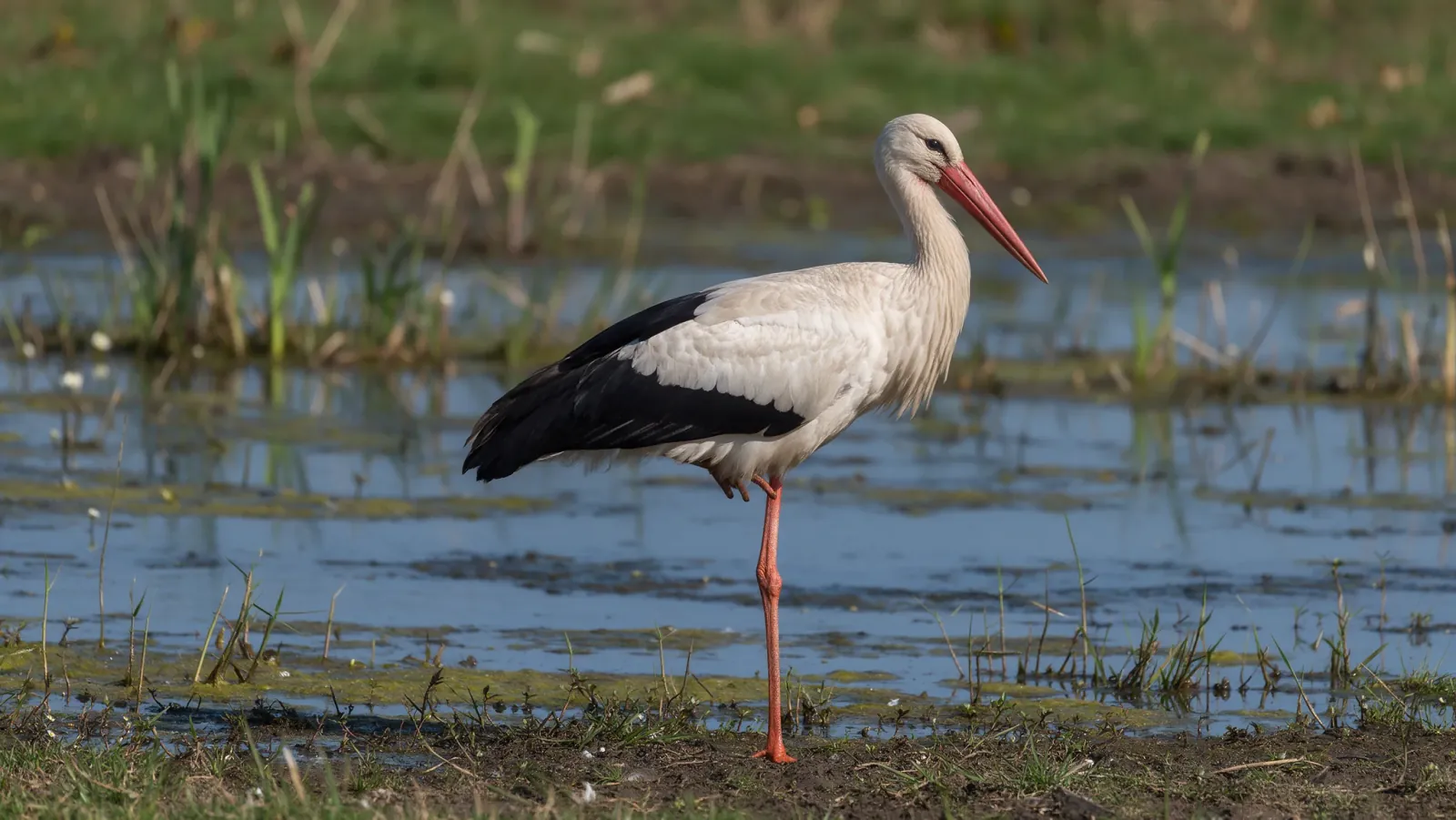
A tendon tightens as the bird settles its weight, so the joint holds straight with almost no muscle work. Standing still costs a stork very little.
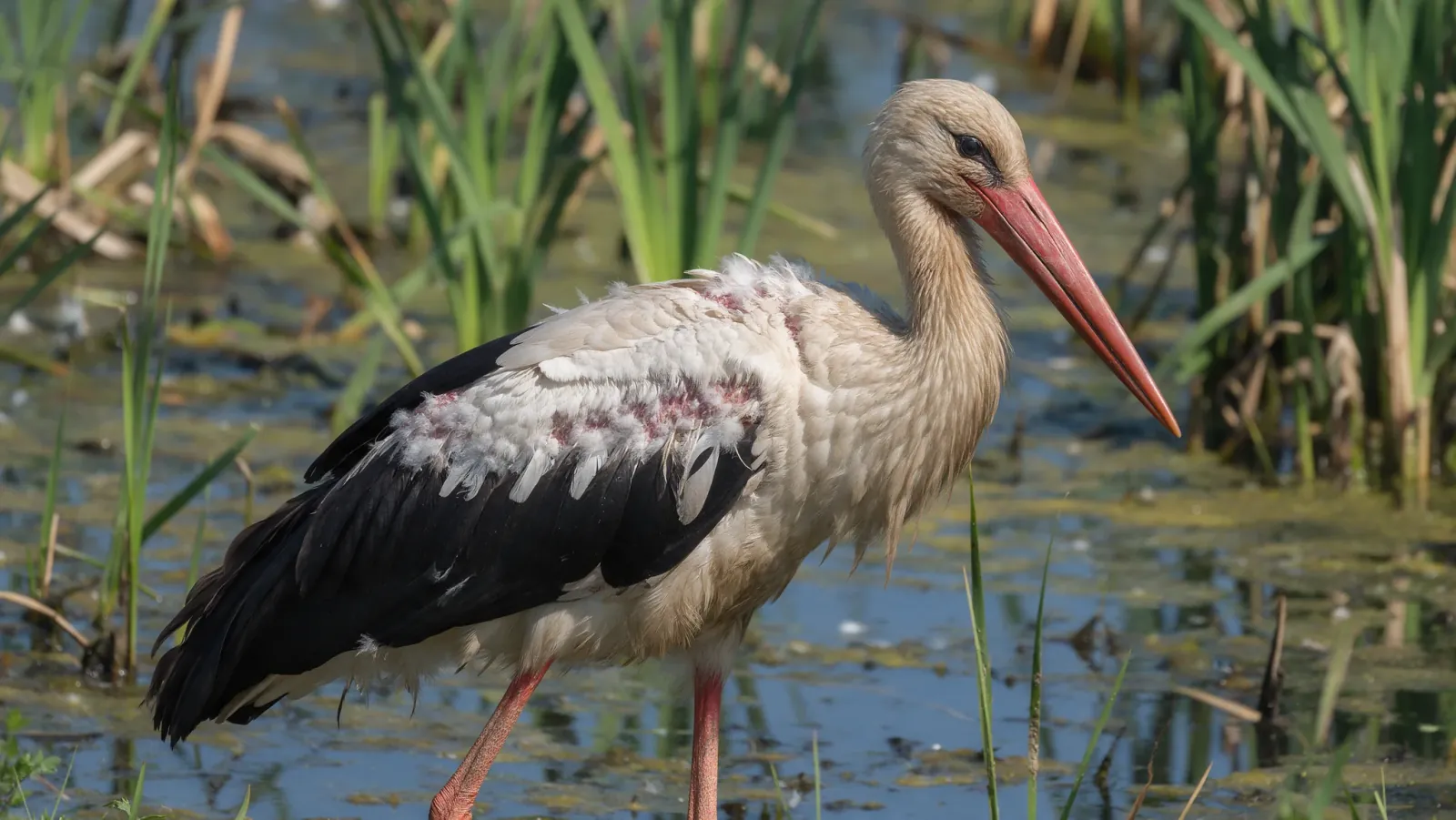
Storks drop feathers a few at a time, so the wing always works. The black flight feathers are the strongest, and melanin is why.
A white stork swallows frogs, beetles and voles whole. Strong acid and a muscular stomach do the work teeth would do, then a pellet comes back up.
A curved wing, hollow bones and a heart that quickens on takeoff carry a bird of about a metre tall onto rising air.
Gliding on thermals and resting for long stretches let a stork travel on fat laid down before it left, with water taken at pools.