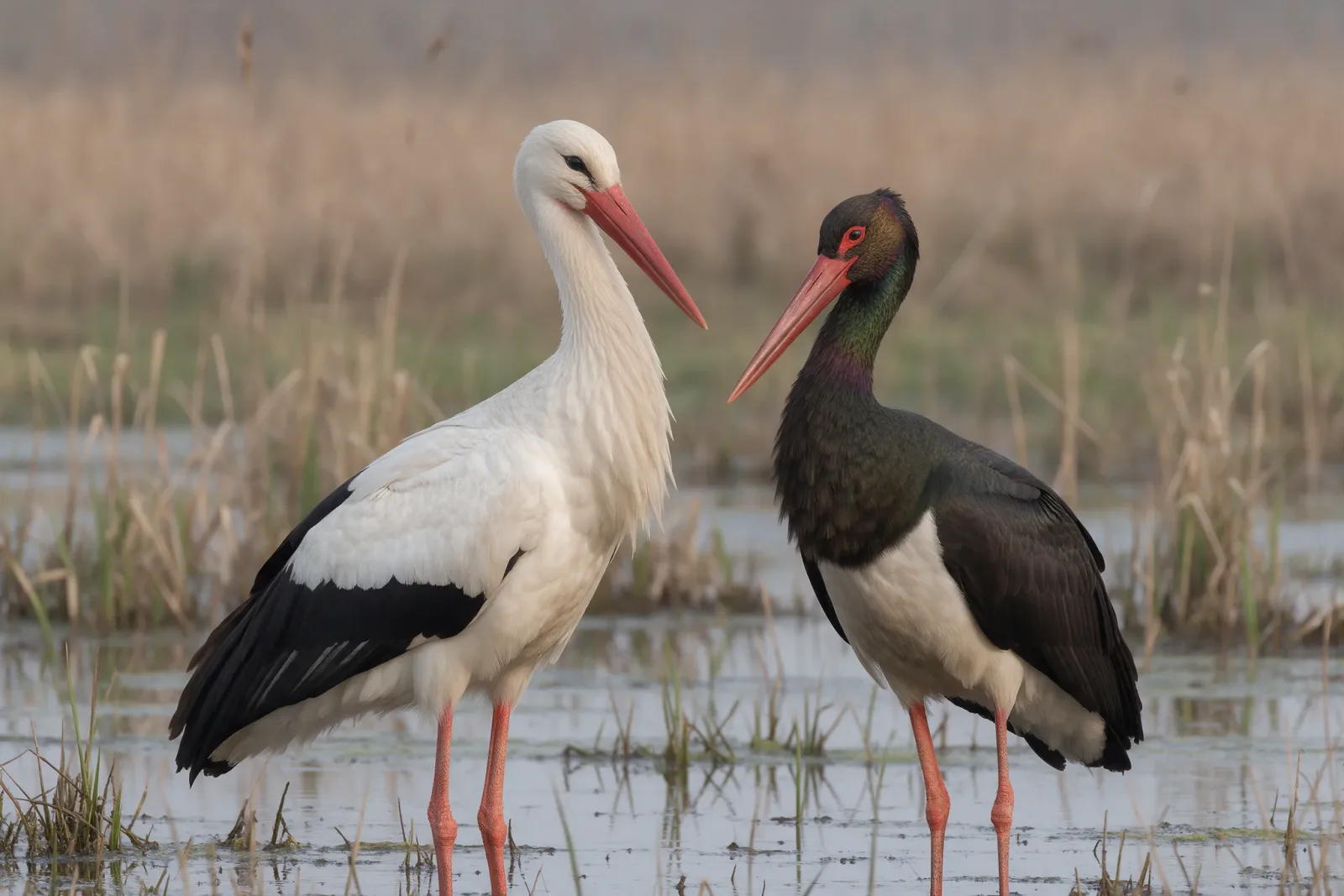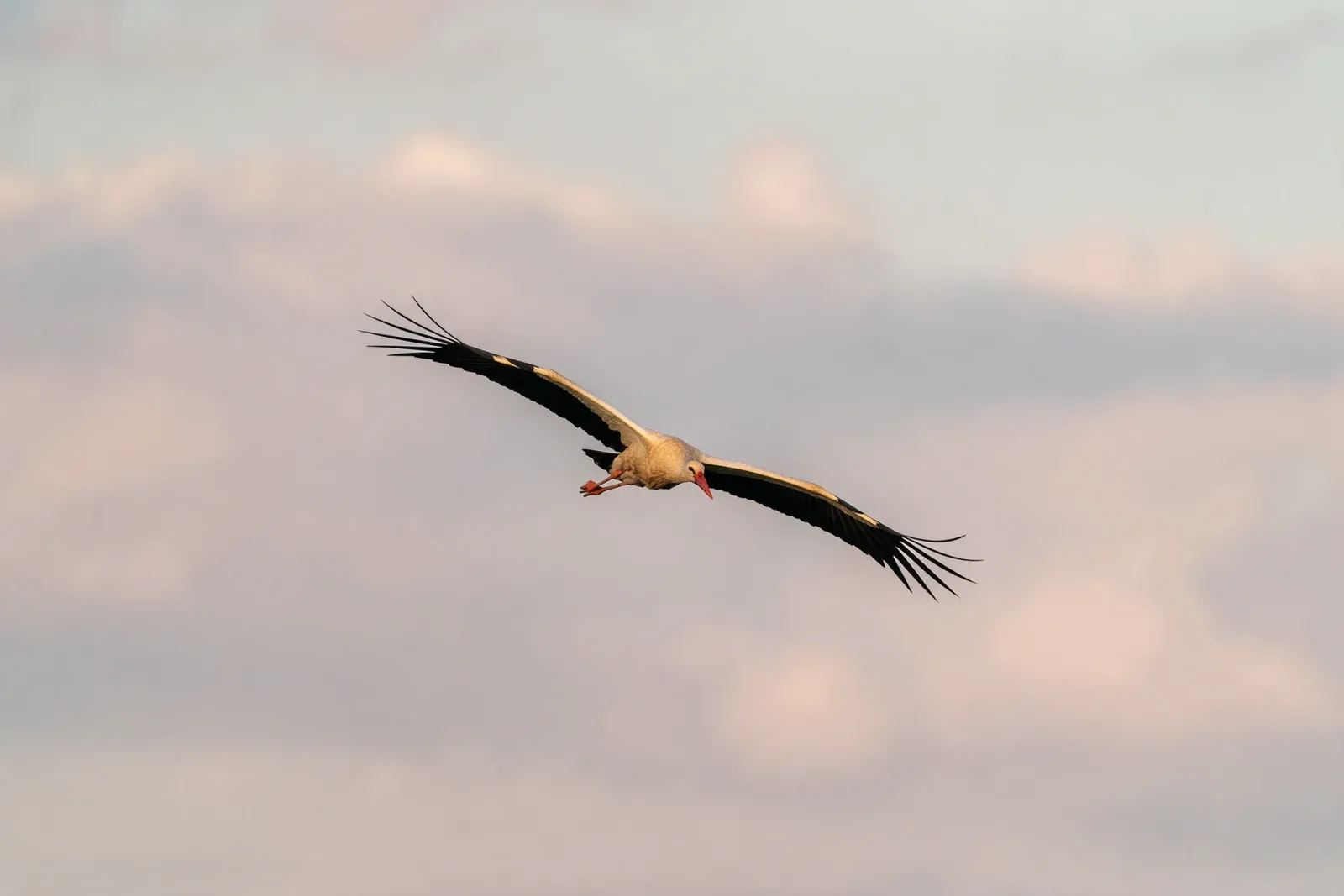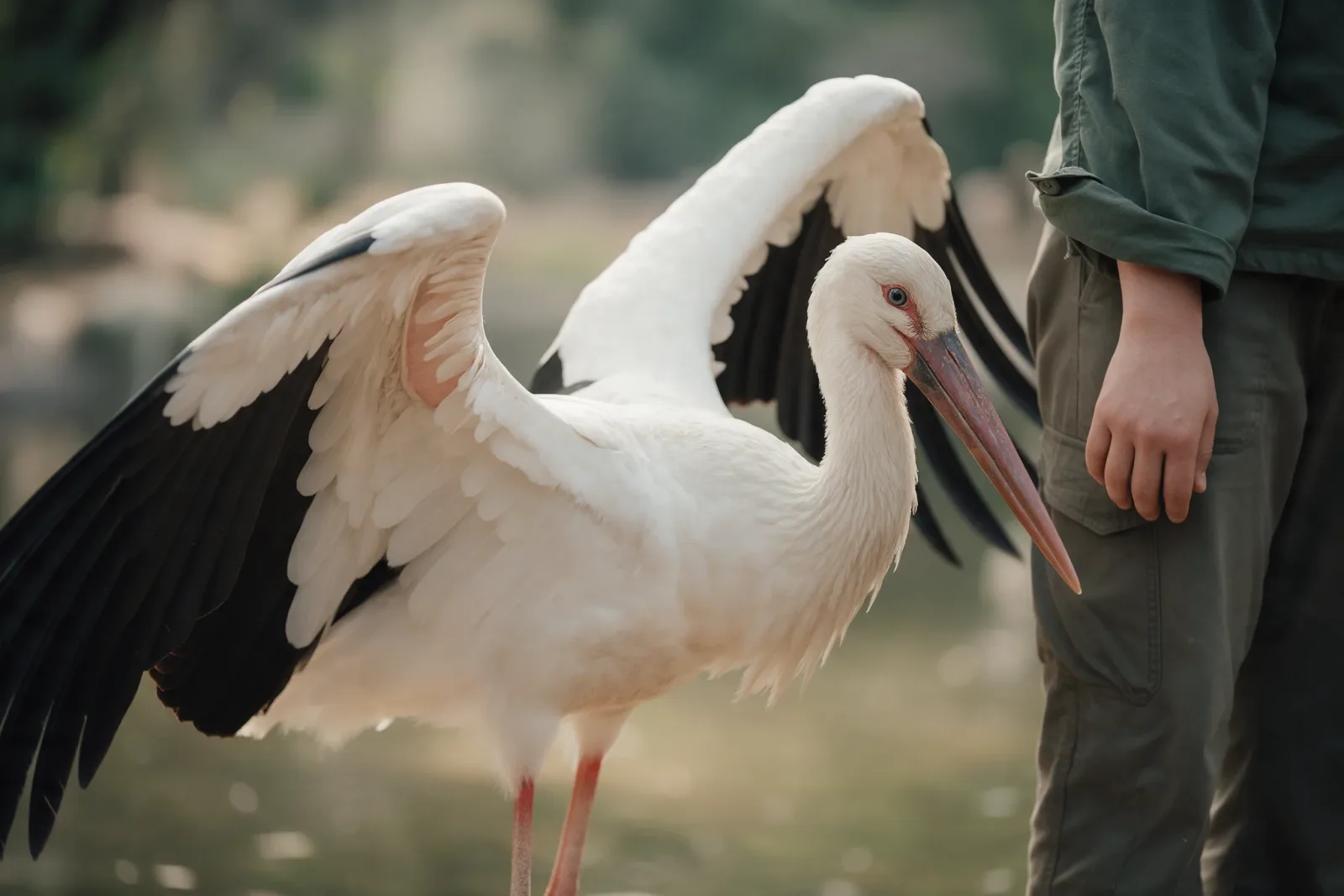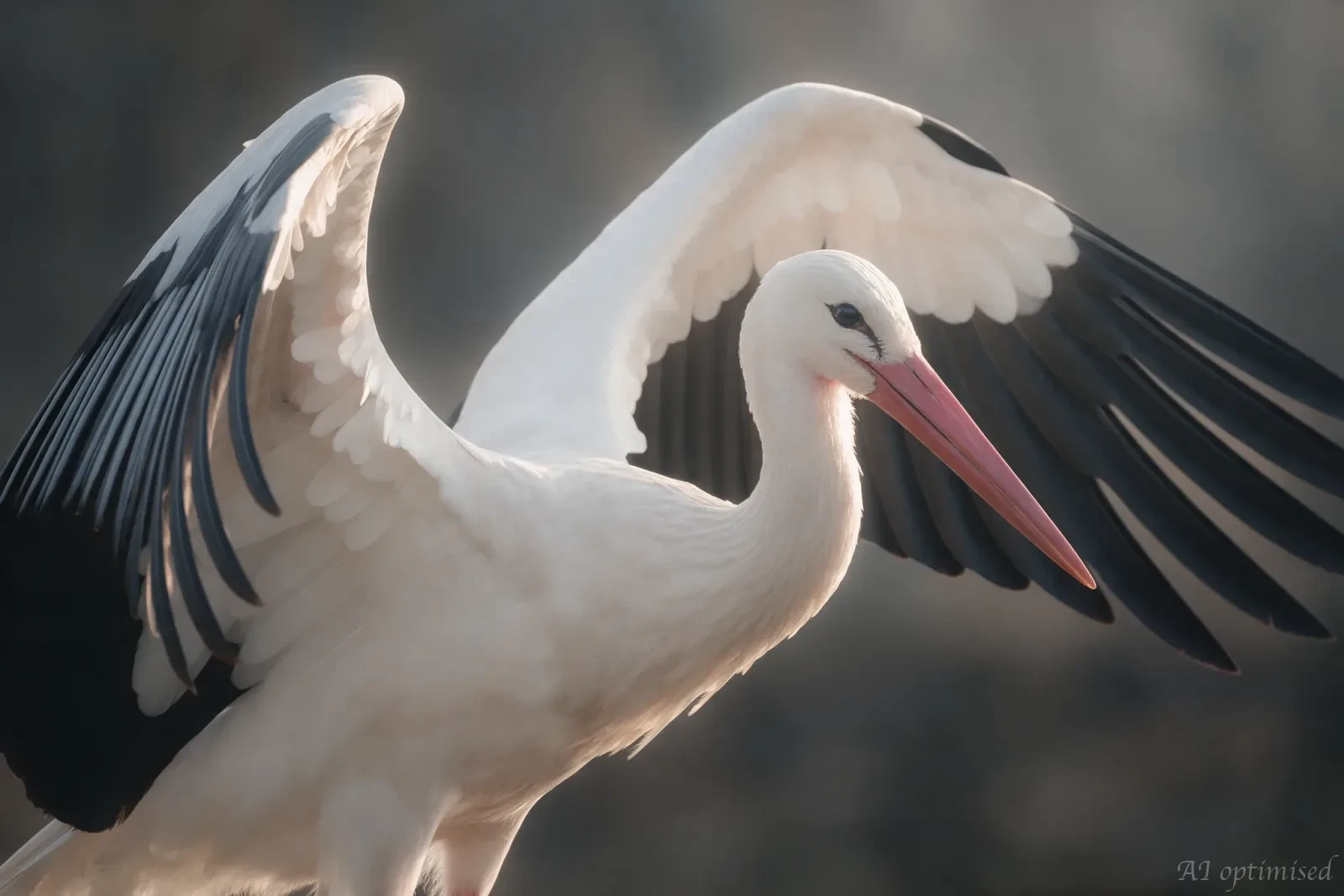
The white stork wears its name on its feathers. Its body is almost entirely white, broken only by the black flight feathers at the edge of its wings and the red of its bill and legs. It is a striking bird, and the question of why it is white has more than one answer. In nature, a colour is rarely just a colour, and the white of a stork is doing several quiet jobs at once, most of them invisible at a glance. A stork's whiteness is easy to take for granted, but it is one of the quiet wonders of the bird. The same feather that keeps the bird cool under the sun also helps it vanish against the glare, and the same colour that makes it beloved has also kept it safe for centuries. Whiteness is doing more work than any of us give it credit for. The bird wears its whiteness the way a tool wears its shape, for use rather than for show.
Light and heat
One simple reason for white plumage is the sun. White feathers reflect more light than dark ones, and a bird that spends long hours in open, sunlit country benefits from staying cooler. A white stork gliding for hours under a hot sky carries less heat in its feathers than a dark bird would, and over the sun-baked plains of its migration route that matters. The white is not decoration. It is a kind of shade the bird wears, a shield against the glare of the countries it crosses each spring and autumn.
The black that matters
The white is not the whole story. The black flight feathers at the wingtips are there for a practical reason too. Black feathers are stronger and more resistant to wear than white ones, and the feathers that do the hardest work, the long primaries that push against the air, are the ones tinted dark. A stork's wings are white where they do not strain and black where they do. The two colours are a working partnership, not a fashion, and the dark tips are the load-bearing part of the wing.
Standing out and blending in
A white bird on a green meadow should be easy to spot, and in some ways it is. But from below, against a bright sky, a white belly can hide a bird from a predator looking up. And on the ground, the white body against pale grass and light water can be less obvious than it seems, especially when the bird stands still. Whiteness is not always visibility. Sometimes it is exactly the opposite, a colour that lets a bird disappear into the glare and the pale water.
A colour with a reputation
There is a human reason too, though it is ours rather than the bird's. White has always read to people as clean, calm, and gentle, and the white stork has inherited that meaning. A white bird on a rooftop is welcome. A white bird carrying a child is a legend. The colour itself has shaped how we treat the species, and how warmly we remember it, and that reputation has in turn protected the bird for centuries. Whiteness has made the stork a friend in a way that a duller colour might not have.
The full picture
None of these reasons is the whole answer, and all of them together begin to explain the bird. The white stork is white because white keeps it cool, because its black tips do the hardest work, because white can hide as well as show, and because white has won it our affection. A single colour, carrying heat, strength, concealment, and meaning all at once, is a reminder that in the natural world nothing is ever just one thing. The white stork is white for the simplest of reasons, and for many reasons at once, and the more we look the more reasons appear.
So the white of a stork is many things at once: a shield from heat, a working surface for its strongest feathers, a form of camouflage, and a reason for our own affection. A colour is never just a colour, and the white stork wears its many meanings on every feather.
Explore the gift