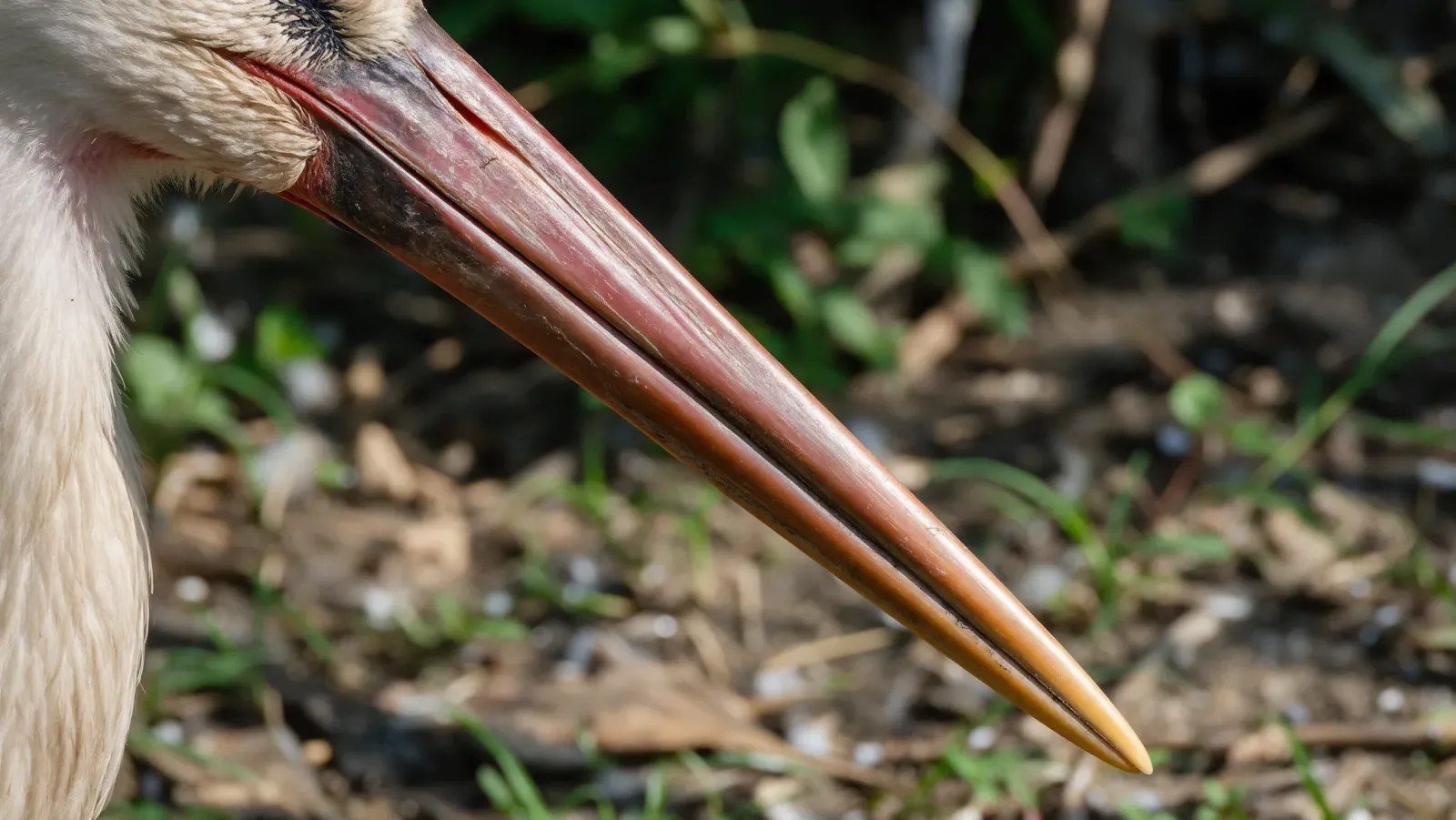
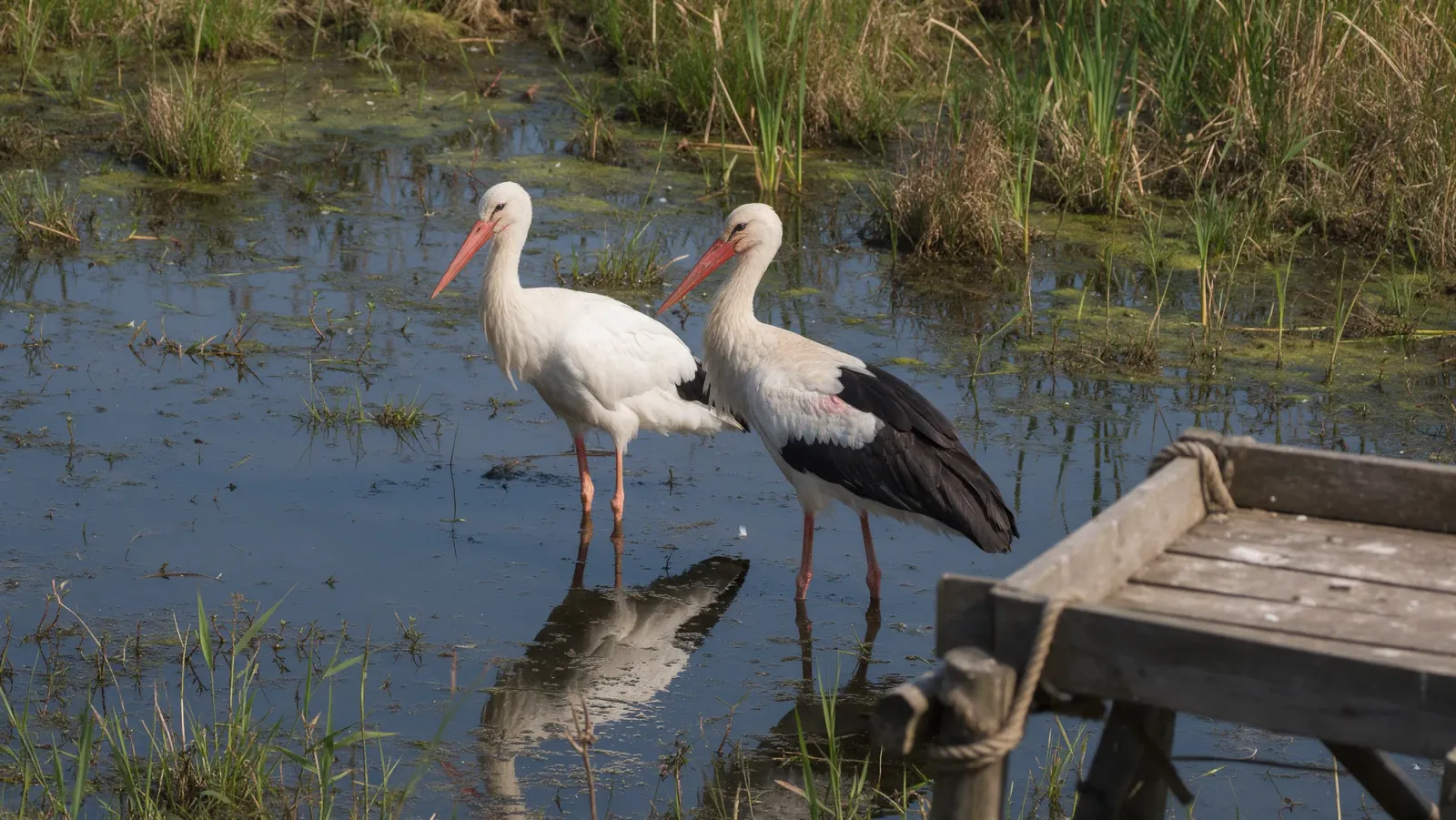
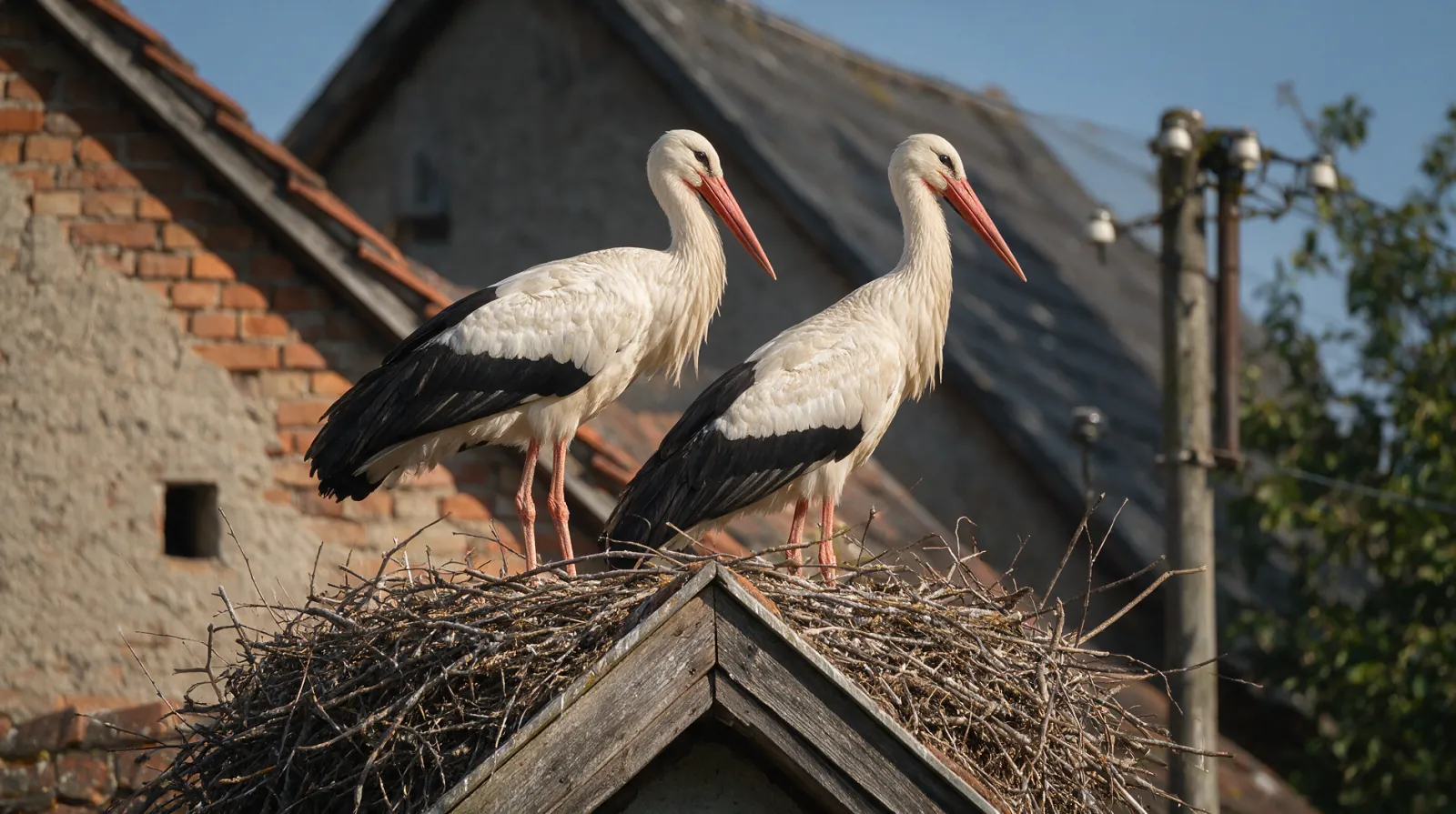
Every spring the village watches for Taran, and every spring he comes back to the same roof. He is a white stork, ringed on the leg as a chick, and the people below have followed his returns for years. The map that follows him is a drawing of that life, made from records and sightings.
A ring and a date
Taran does not know that anyone is watching. He returns because the roof is the place he knows, because the nest is there, and because the season has turned. White storks are faithful to a nest site, and a bird that has bred on a chimney will come back to it year after year if it survives the journey.
The ring on his leg is the only proof that this Taran is last year's Taran, and someone reads it through a telescope from the street. A ring is a small thing to carry across two continents. It is light, it does not snag, and it lasts. When someone reads the number and sends it in, the bird stops being a white stork on a roof and becomes a date and a place. That is how the village knows Taran is Taran, and how the years get counted. The reports are small, and they add up to a life.
The nest sits empty through the winter, a dark pile of sticks against a grey sky. It has grown wide over the years, and the snow takes the top off it most winters. Storks add to a nest each spring, and this one is now deep enough to hide a bird up to its shoulders. Someone glances up on the way to work. A child asks whether he is back yet. Then one morning there is a white shape on the chimney, and the question is answered.
When Taran lands, he does not rest at once. He walks the rim, nudges a stick back into place, and clatters his bill the way storks do when a season begins. The sound carries down into the street, and to the people below it is the true first sign of spring. A second stork arrives within the week. They bow to each other, clatter together, and get on with the work of the nest. By evening Taran is settled, and the village below turns out its lights.
The map is a drawing
What follows Taran on the tracked map is a reconstruction. It is drawn from records and sightings, and it shows the shape of a stork's year in a way that is easy to read. It is not a live feed, and no satellite is sending his position as he flies.
A ringed stork gives a point when someone reads the ring and reports it. Between those points, the bird is simply gone, doing what storks do out of sight. The line on the map is a careful drawing of the truth, and the truth is a bird somewhere over a field. A map of tracked birds is a map of the birds that were caught, and it is not a map of the species.
The untagged bird
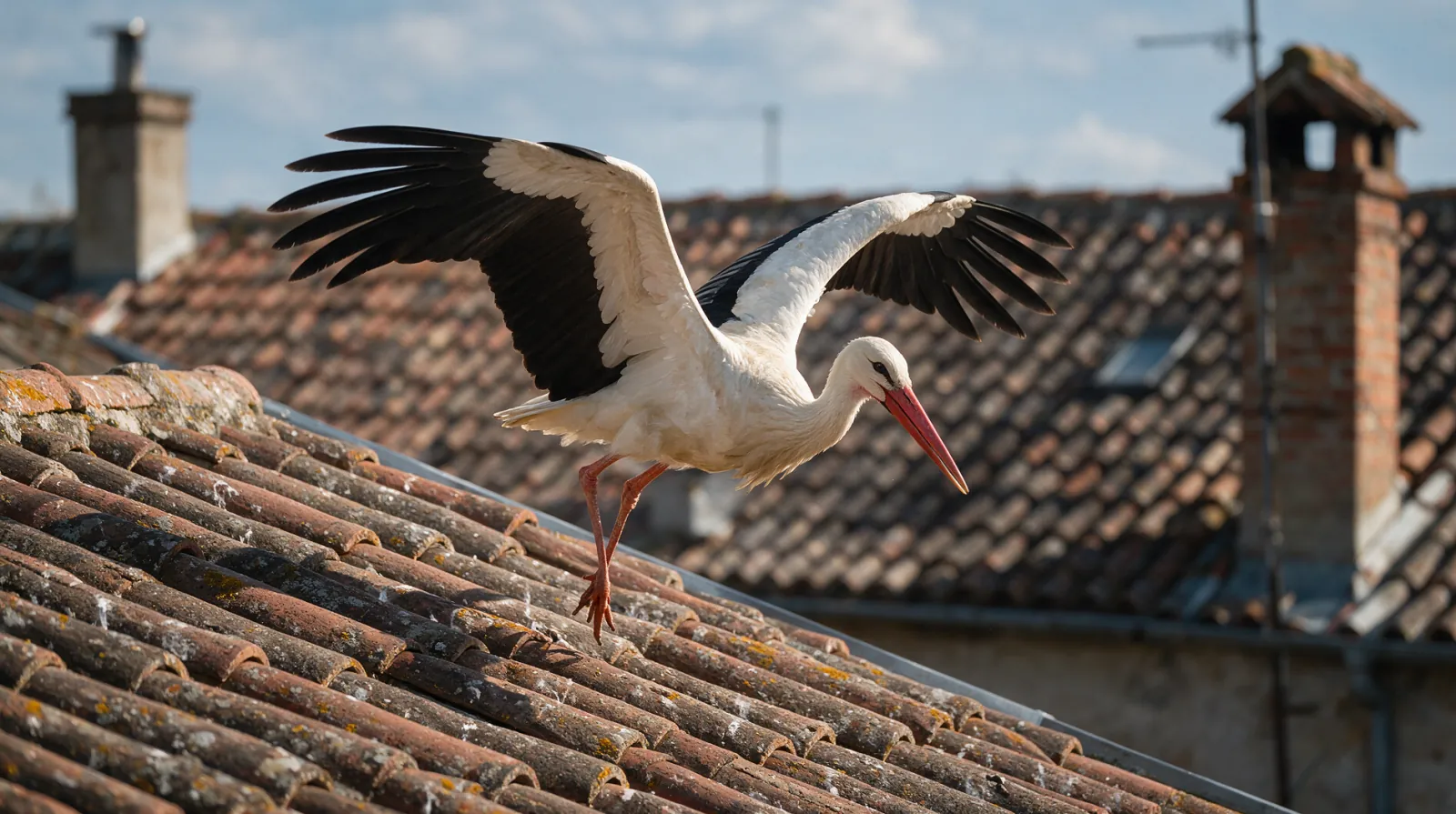
One bird carries nothing, and the study cannot follow him. Most of the white storks the project watches carry a small transmitter and a ring, and their movements become dots on a map. This bird carries nothing. He appears in a field, feeds, and vanishes.
He is not hard to recognise once you know him. He has no ring on either leg, and he keeps to the far side of the field. He is uninterested in people. A ringed stork can be read through a telescope and reported, and that report becomes a fact. The untagged stork gives nothing. He is a white shape in a wet field, and then the field is empty.
The untagged stork is most visible at dawn. He comes out of the roost before the light is strong and walks the wet grass with his head down, and if you are quiet and downwind you can watch him for an hour. He does not perform. He feeds, rests, preens, and feeds again, and the whole of his life is in that field until he lifts and leaves. Then he lifts without warning and is gone over the hedge.
There is a temptation to catch him, ring him, fit a transmitter, and turn the blank into a line. The people who watch have decided to leave him unmarked. A wild bird that cannot be followed is a reminder that the tracking is a sample and the sky is larger than the sample.
The wrong turn
Wyn bent away from the flock somewhere over open country, and for a while it looked like the end of him. He was a young white stork on his first migration, ringed as a chick, and he had risen with the flock on a warm morning in late summer. Then his line bent away from the rest.
No one saw it happen. The flock was strung out over a wide valley, and the birds were drifting apart and together the way flocks do. Wyn was flying at the edge. Something moved him: a change in the air, a shadow on the ground, a thermal that pulled him sideways. He turned, and the flock went on without him. A young stork on its first migration has no map, only an instinct and the birds around it. When the birds around it are gone, the instinct has to do all the work.
For an hour he flew in the wrong direction. Then he corrected, or the instinct corrected him, and he turned south again. The flock was out of sight. He was alone over a country he had never seen, with the sun moving west and no river he recognised. He flew until evening. He roosted in a lone tree in a field, and the night was long. In the morning he rose and flew south again, and the instinct held.
His route became a wandering thing. He followed a river for two days, then lost it. He crossed a range of low hills and found a plain full of wet fields. He joined a small group of storks for a week and left them at a crossing. None of it was the route he had been shown, and all of it went south. He reached the wintering ground later than the flock. The best pools were taken, and he fed on the edges. He was thin, and his first moult came late, and he survived. By the end of the winter he had learned the shape of the place, and he had a route of his own.
What the blank holds
Ordinary bird life fills the spaces between the dots: feeding, roosting, sheltering from weather, avoiding people. The untagged stork is doing all of it somewhere, and the fact that no one records it does not make it less real. If anything, the unrecorded life is the larger part of the species.
He is not the only one. Every year some chicks are missed, some rings fall off, and some birds are simply never caught. The tracked storks make a bright line on a screen, and behind the line is a much larger number of birds that no one is following.
Wyn came home the next spring with a flock he had joined on the wintering ground. The route was the ordinary one this time, coast and strait and river, and he followed it without thinking. Somewhere over the last valley he recognised the shape of the hills, and then the village, and then the nest. The wrong turn had given him a country the flock never saw. He learned rivers and hills that are not on the usual route, and by then the detour was only a line in a notebook.
The return
Taran comes back for plain reasons, and the plainness is what the village treasures. The map shows a line because people watched and wrote things down. It shows the shape of a year, and it leaves the rest alone.
The untagged bird is out in the wet grass, and no line follows it.
Explore the gift