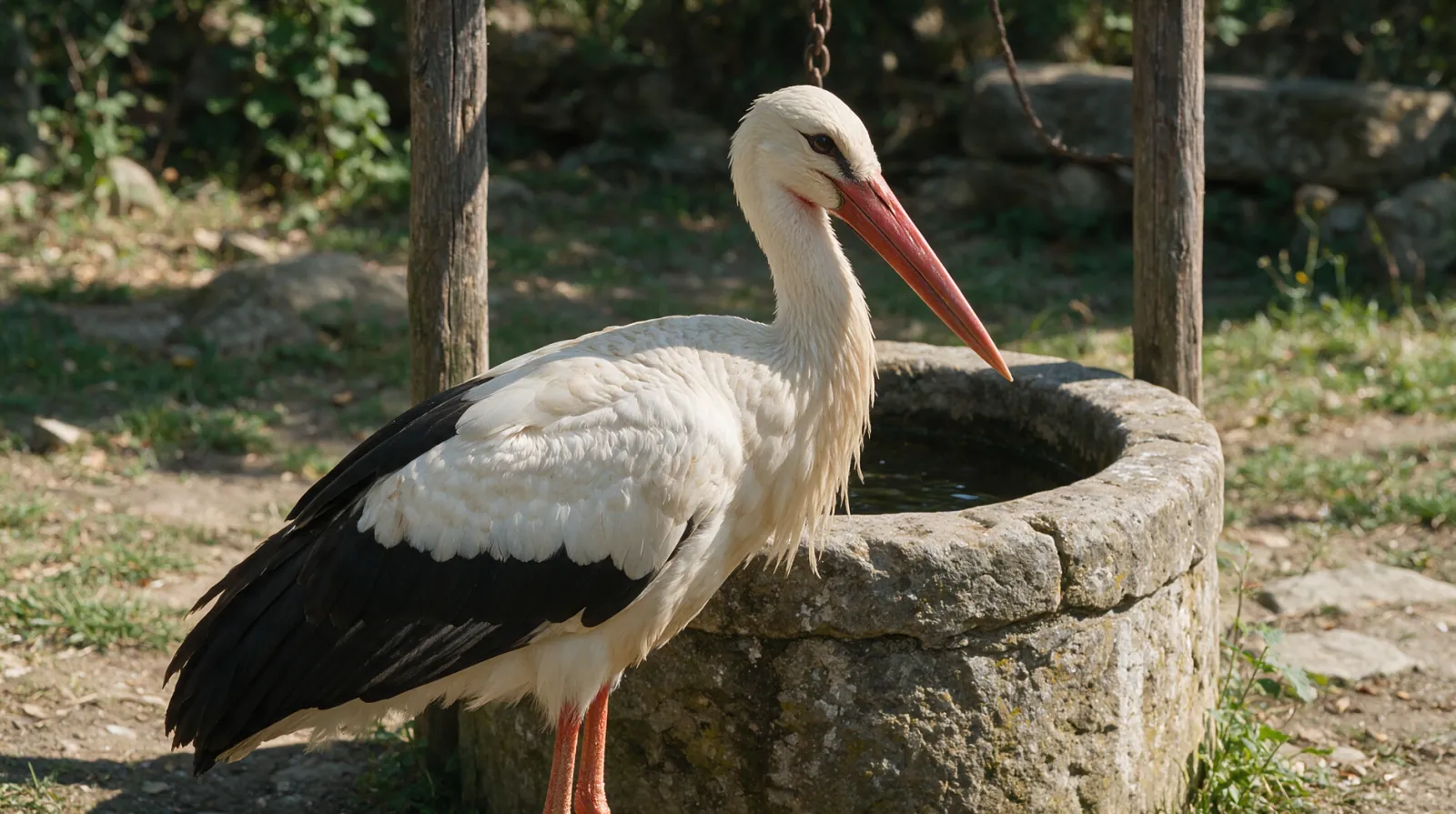
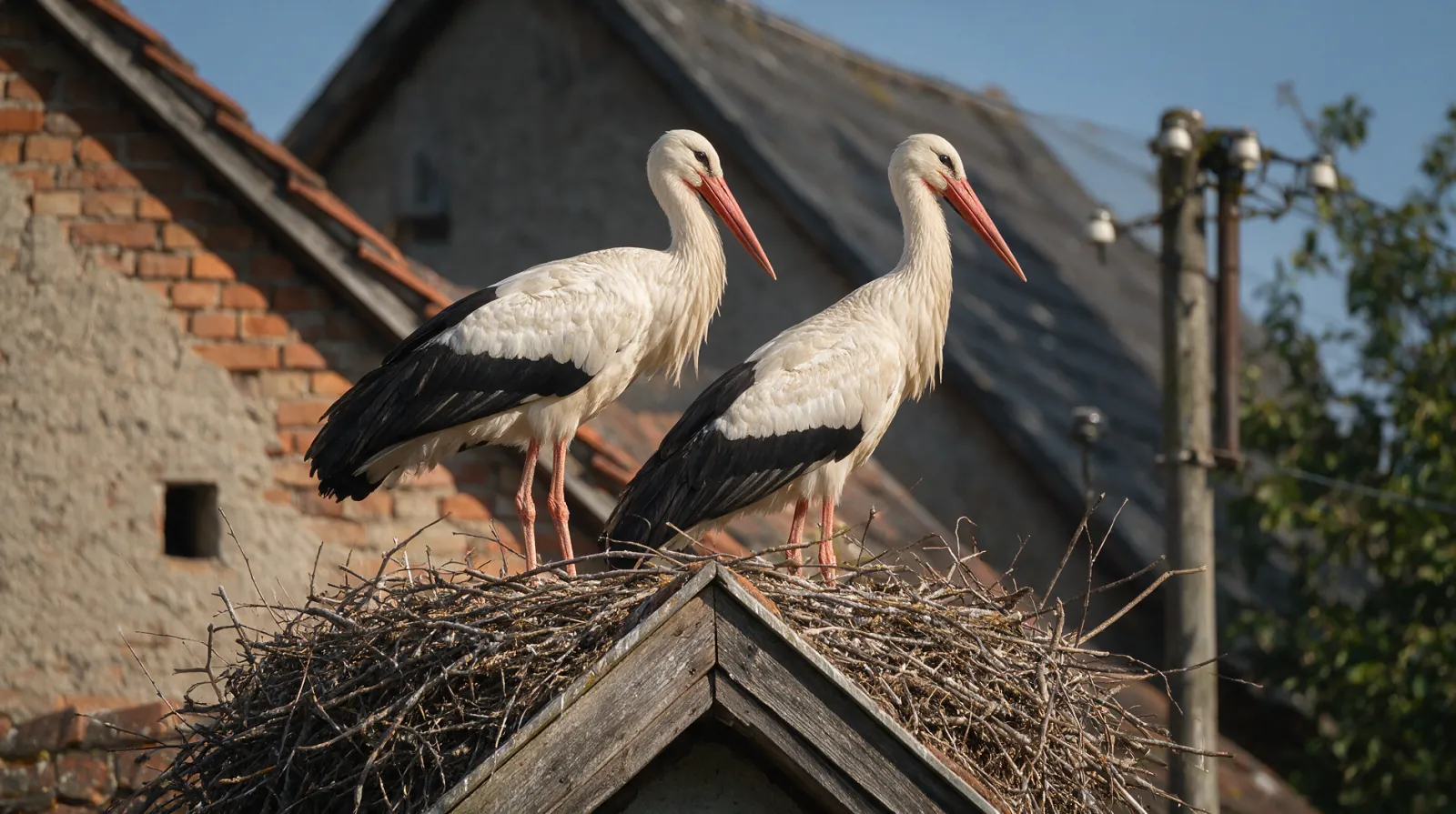
Two storks on a roof were read across rural Europe as a picture of a bond that holds. The birds arrive as a pair, repair the same nest, and raise their young side by side, and villagers saw in that routine a model for marriage and for love that survives absence. The image is simple, two white shapes above a gable, and it carried a full set of hopes about loyalty, children, and return.
Why the gable
The triangular wall at the end of a pitched roof was high, sheltered, and easy for a stork to reach. Storks choose open, raised places for their nests, and the gable offered both a wide view and a windbreak. Because the birds nested there freely, people came to see the gable as the natural seat of the house's luck. A pair on the gable marked a home the wild world had approved.
The height mattered. A nest on the gable sat above the yard, above the door, and above the daily work. It was the first thing a visitor saw and the last thing the family saw at night. The gable gave the nest a clean edge against the sky, and the white birds stood out from the roof tiles. A traveller on the lane could judge the house by the white bird at its peak, and the family below could look up from the table and see the nest against the sky.
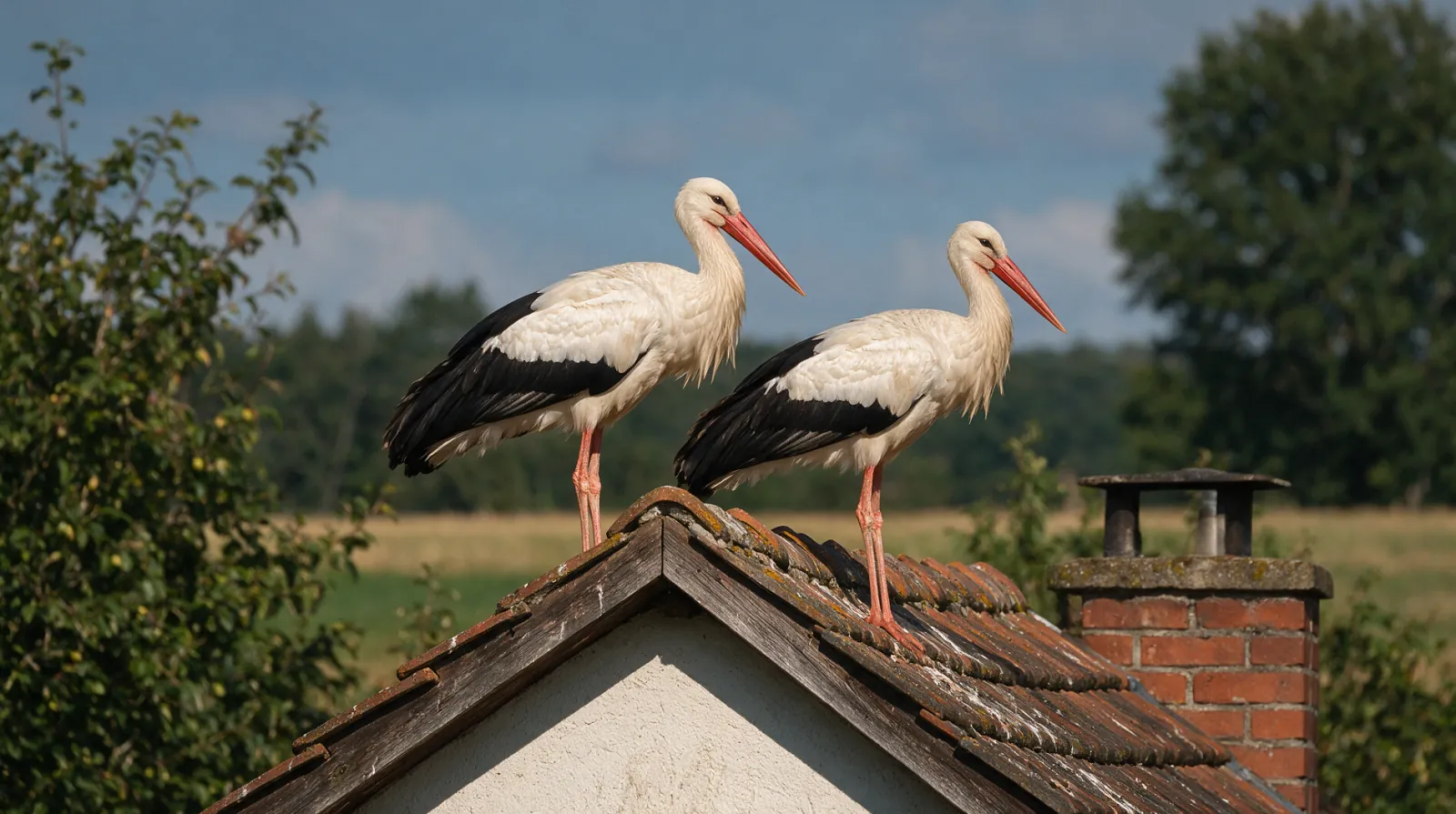
A single stork on a roof was a visitor. Two storks meant a mated pair, and a mated pair meant continuity. Storks are faithful to one nest and often to one partner, returning each spring to rebuild and raise young. The old stories read that loyalty straight back into the household below. Two storks on the gable were said to promise a faithful marriage and children. The bird's own life was offered to the family as a wish, and the wish was renewed every spring when the pair came home.
The pair that returns
The omen grew stronger each year the same two birds came back. A pair that nested on the same gable year after year became part of the household's calendar. When they came back in spring, the house knew winter was over. When they left in autumn, the house began to close in on itself.
The storks were a repeating sign, and a repeating sign is the oldest kind of comfort a person can have. Whatever else changed, the pair would come again. The family could count on it in a way it could not count on the weather. A neighbour might envy a good harvest or a fine horse, and a pair of storks was a blessing nobody could buy or borrow. It had to choose the roof.
The first pair was remembered. People knew the year the birds settled, and dated the luck of the house from it. After that the nest was treated as part of the household. The birds were spoken of almost as relatives, returning kin who spent the summer under the family's own roof.
The nest as a marriage
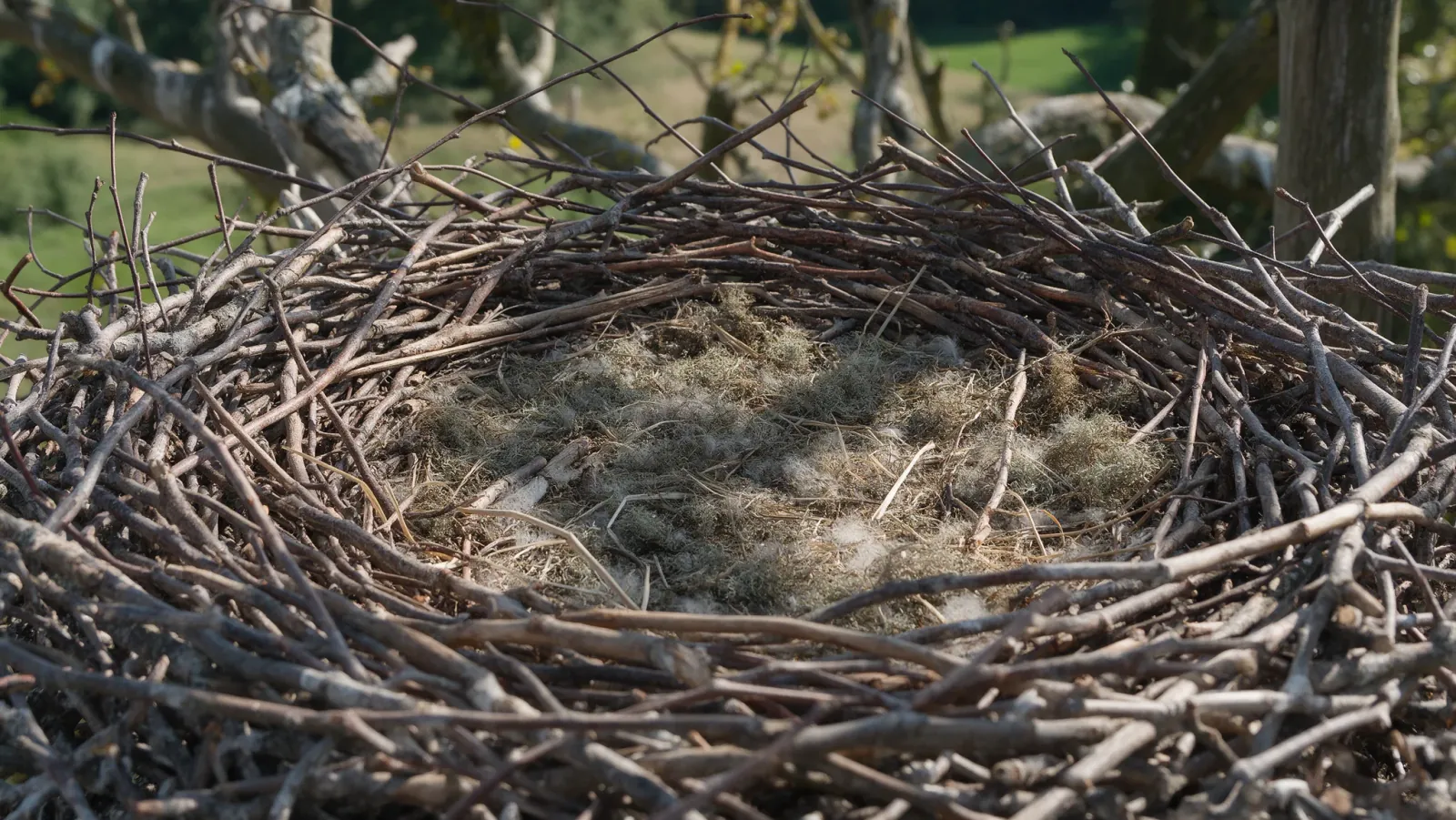
A stork's nest is a working thing, added to and repaired every spring, and the village watched that labour with approval. Two birds carrying sticks to the gable, one after the other, looked like a couple building a life. The old stories made much of this.
A nest is built for two. One bird stands guard while the other feeds. They trade places on the eggs, clatter a greeting when they meet, and repair the same platform year after year. The nest was a household in miniature, raised above the household below. A couple could look at the roof and see the work they had promised each other, done by birds with no promises at all.
The nest grew heavier each year, and so did the meaning. A platform that survived many winters was a record of patience. A storm could take the top of the nest, and the pair would build it back. The household watched that repair as closely as it watched its own. The pair had come back to the same sticks, added to them, and raised another brood above the same door. The house below was invited to do the same.
The crown and the wish for children
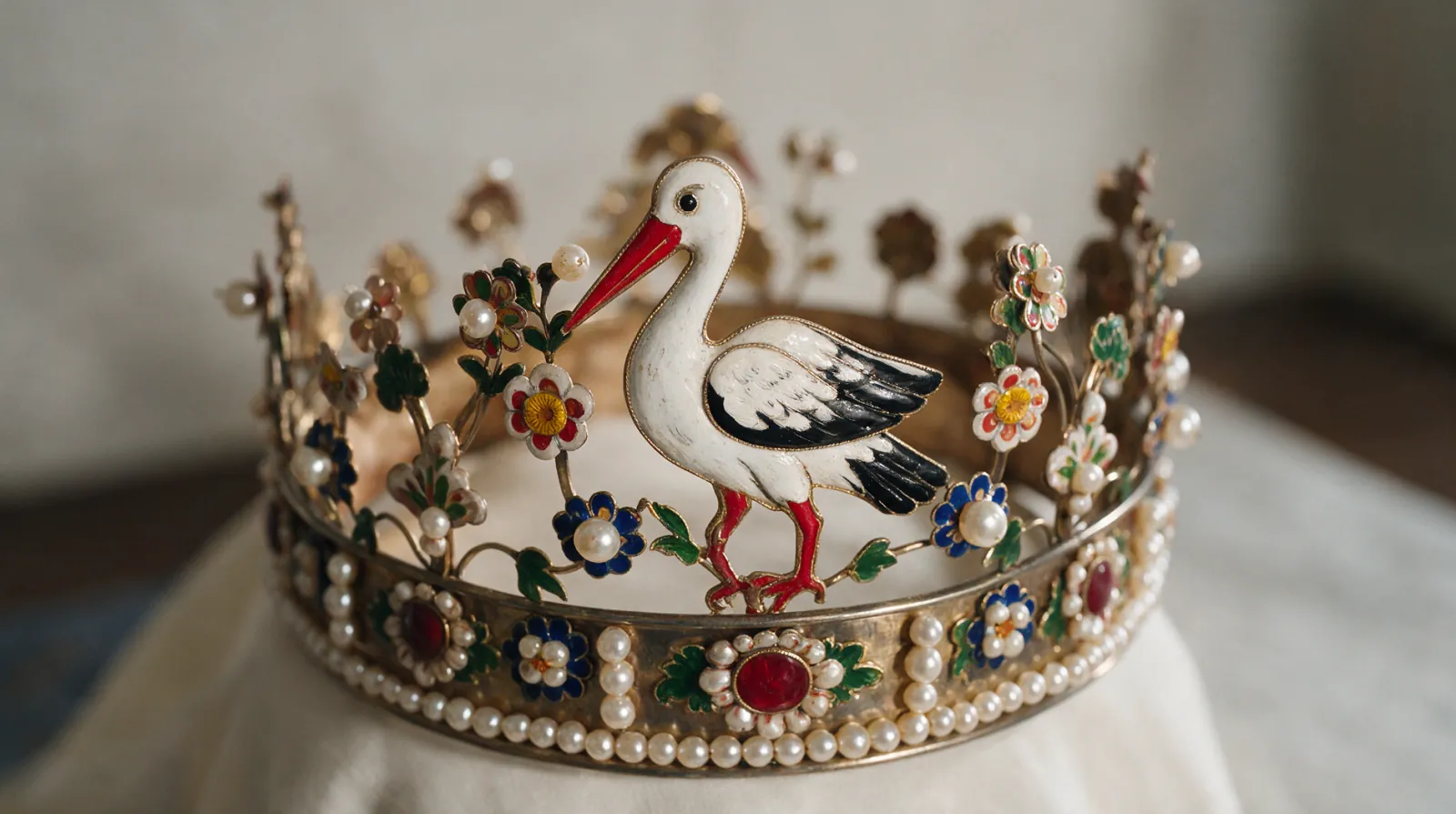
In some parts of Europe the ornament worn by the bride or held above the couple was decorated with a stork. The crown was already a symbol of the new life beginning, the home the couple would build together. To set a stork upon it was to name what that home would need.
The bird nests on the roof, keeps one mate, and comes back to the same house year after year. The crown gathered these hopes into one small ornament. Where a modern couple might carry a bouquet or exchange rings, the old crown held the wishes for the marriage in a shape the whole village could read.
The stork's deepest meaning at a wedding was fertility. The bird that was said to carry the new babies was a prayer that children would follow the marriage, and soon. A stork on the wedding crown was a way of asking, in public and without words, for the house to fill. The couple stood under the sign of the stork so that everyone present understood what was being wished for them. The guests joined in wishing it too.
The loved ones
The gentlest version of the tale said that when two people loved each other, and one of them died, the one left behind could look up and see them both still, in the form of the two storks on the roof. The bird did not have to be one soul or the other. It was simply the pair, kept together, proof that love had a shape that outlasted a lifetime.
The myth is tender. There is no ghost in it, no warning. The pair stands where the beloved once stood. A widowed person looked up at the pair and felt a small comfort. A couple about to marry counted the birds as a blessing.
A single stork, seen alone, was a gentler sign, a reminder of someone absent, and the story urged the watcher to remember that the other would return. At weddings, the bird appeared on crowns and cloth and painted chests, always in pairs. The wish it carried was for company, for the ordinary miracle of having one other person who always comes home. The image never needed a speech.
A symbol that returns
The twin storks still fly in spring, and they still arrive as a pair. Whatever we believe, the image works because it is true to the bird and true to the wish. Two creatures, one nest, one return after another.
Some of the oldest love stories are quiet. Sometimes they are two white shapes on a rooftop, close together, waiting out the weather side by side. They come home to each other every year, and the village reads the roof as a promise. The pair still arrives in spring, and the nest on the gable is repaired again.
Explore the gift