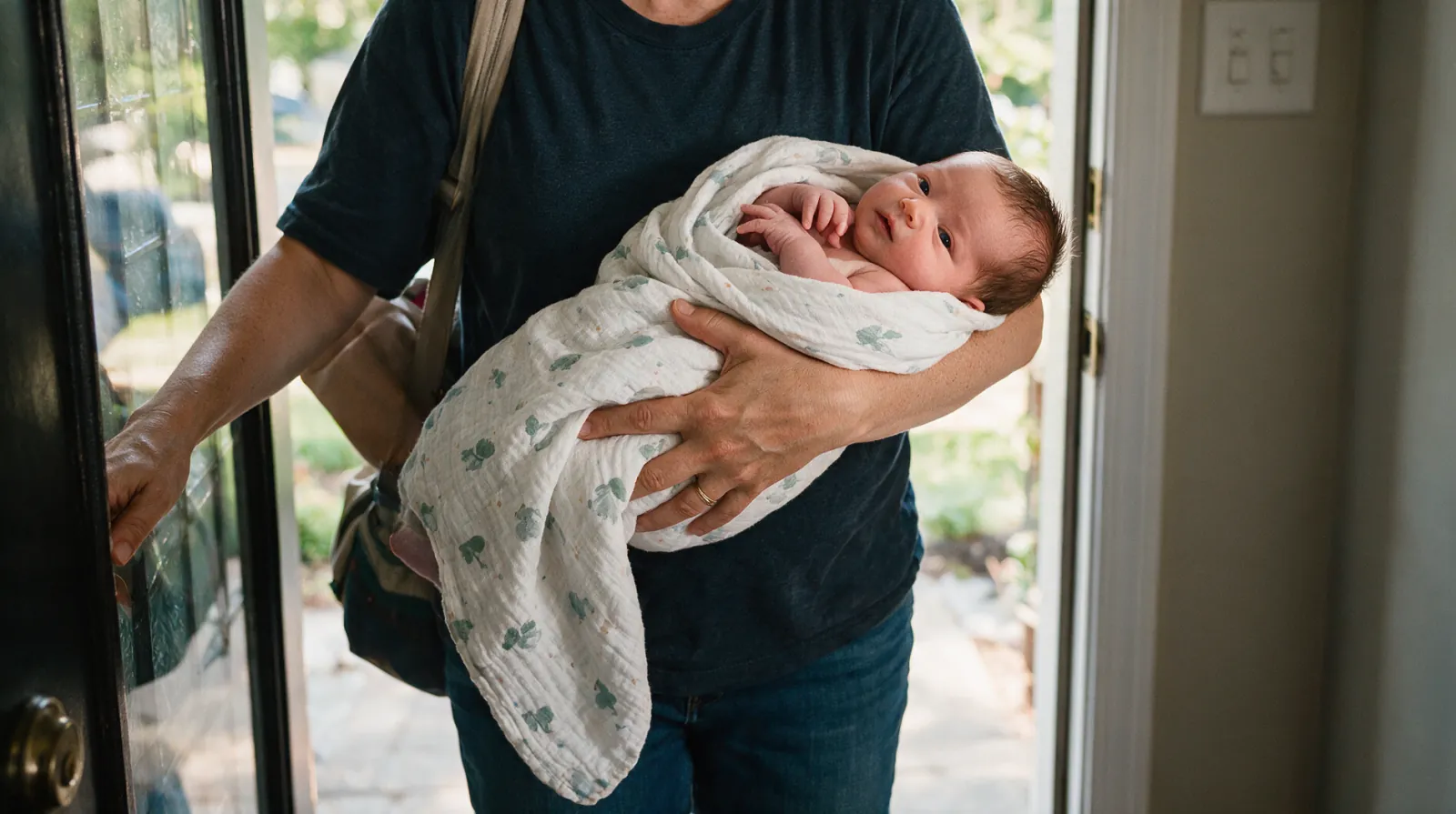
The smallest arrival in a family is usually the quietest. A newborn comes through the front door in a car seat or a pair of arms, wrapped in a blanket, weighing about as much as a bag of flour, and the house that waited for weeks has to rearrange itself around a person who sleeps most of the day.
The ride home
The drive from the hospital is short and slow. The driver takes corners as if carrying a full cup. The baby sleeps through most of it, or cries through all of it, and neither changes the mood in the car. A parent sits in the back with one hand on the seat beside the carrier, watching the small face for signs of anything.
Streets that were ordinary yesterday look different. The bakery, the bus stop, the corner where the dog always barks. The person in the back has never seen any of it, and the parent sees it through those new eyes for the length of one car ride, which is all the attention the outside world gets for a while.
A baby needs a cot, a blanket, milk, and arms. That is nearly the whole list. The smallness is what surprises people. A newborn's whole outfit fits in a shoebox, and the nappy bag is larger than the baby.
The house notices
Something happens at the door. The rooms feel different with the baby inside them. The cot that waited under a sheet is occupied. The chair finds its use. The kitchen, where the kettle used to be the loudest thing in the morning, now carries the small sounds of a feed.
For the first few days the family walks on the balls of its feet. Doors close with both hands. Voices drop without anyone asking. A dropped spoon sounds like a dropped pan. The house has been reorganised around a person who cannot lift their own head, and nobody minds the inconvenience.
Visitors come expecting to be overwhelmed by the new arrival and find themselves whispering over a bundle the size of a cat, asleep in a room that has gone quiet around it. The nappy bag stays by the door. The pram stays in the hall.
The first outing is short. A walk to the end of the road, a pause at the corner, a return. The pram is heavier than it looked in the shop, and the pavement has more cracks than anyone remembered.
The quiet that comes first
A newborn arrives without a fanfare, in a room with the curtains drawn, and the house that waited for months grows quieter still. Voices drop. Doors close with two hands. The television stays off. A life starts at a volume that asks everyone nearby to lean in.
Most beginnings make less noise than people expect. A seed does not crack the soil open. It pushes through over days, and no one hears the first leaf arrive. A baby's first day passes in whispers and soft footsteps. A midwife's shoes on a hospital floor. A curtain pulled around a bed. The click of a car seat handle in a hallway.
Quiet comes first because a beginning needs time to hold together. A loud room scatters attention. The stillness around a new baby is a kind of protection, a wall between the cot and a world that has not yet learned to be gentle. The household joins in without being asked. Someone closes a door and then opens it more slowly.
The quiet is not a rule anyone writes down. It happens because the people in the house are listening. A loud room would cover the small sounds they are trying to hear.
Room for one more
A family is a circle of a certain size. Two people, or three, or more, held steady for years. The chairs stay where they have always been. Then a due date arrives on a calendar, and the circle starts to imagine one more place.
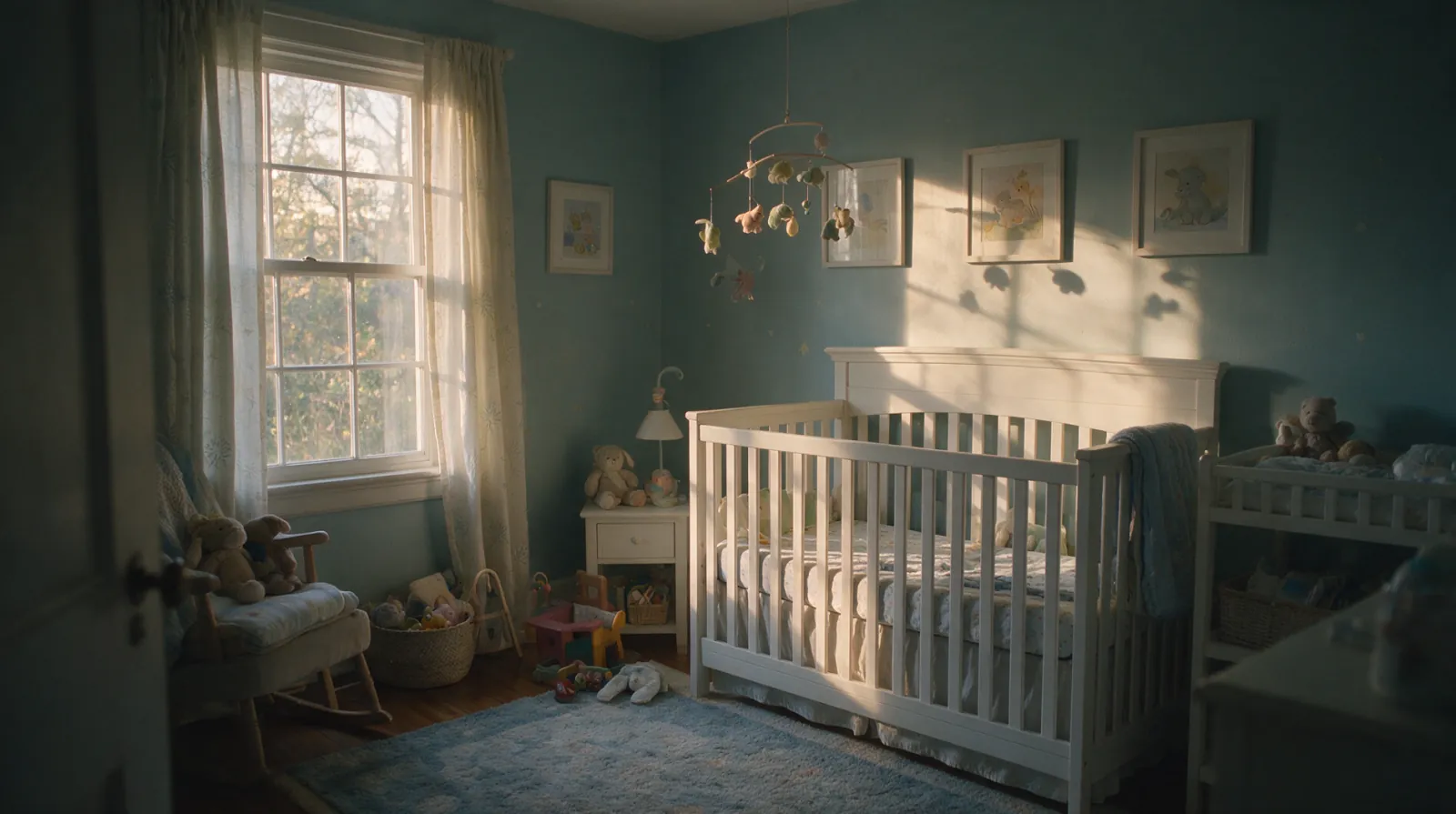
Nobody can picture it properly. The new person is a name, a folded pile of clothes, a car seat on the floor. A study becomes a box room. A wardrobe is emptied. Someone measures a corner with a tape and writes the number on a receipt. A place is prepared for a person whose face nobody has seen.
When the baby arrives, the whole set of positions shifts. The youngest becomes the older. A child becomes a sibling. A parent becomes a grandparent. A grandmother discovers she is a grandmother by hearing the word said about her. A father discovers that his own father was once this tired. Meals move to make space. A coat hook gets lowered.
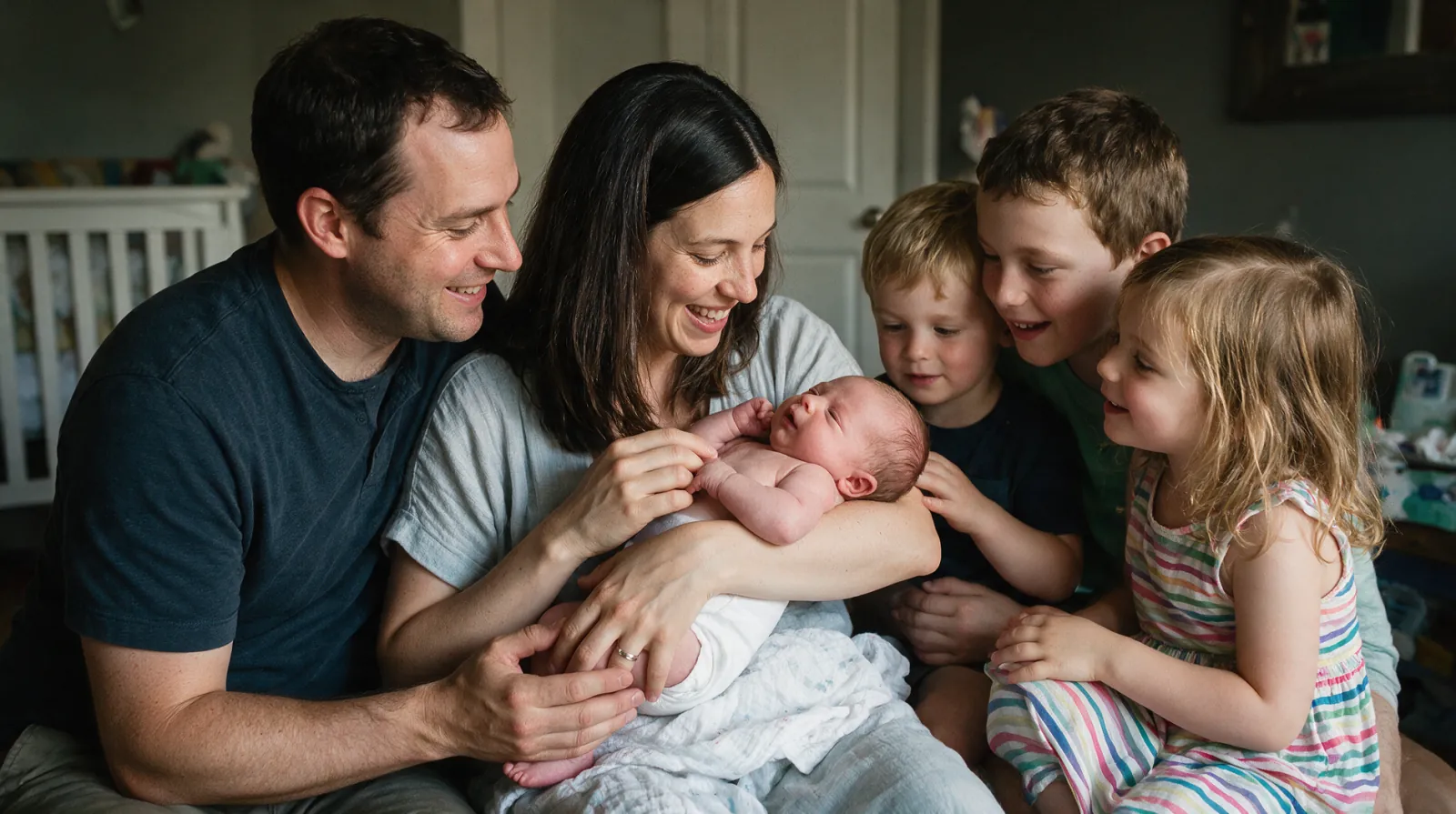
Visitors arrive in ones and twos. Some cry. Some laugh too loudly. Some look for a long time without saying anything. Underneath the noise is the same recognition: this person is ours now, and the arrangement has changed.
The first ordinary day
Then comes a day with no visitors and no appointments, and the family finds out what the new shape is. It is mostly feeding and waiting and a little sleeping. It is dull and enormous at the same time.
The first night is the long one. The baby wakes, feeds, settles, wakes again. Parents trade turns in the low light, one asleep on the sofa while the other walks the length of the landing. By morning somebody has done the first night and survived it. The kettle goes on. A slice of toast is eaten standing at the counter.
The bins go out on a day that used to be obvious. The calendar on the kitchen wall still shows the month of the birth. Nobody has torn the page.
By the time the baby can sit up, the high chair is part of the furniture. The chair kept in the shed comes back inside. Someone wipes it down, and the legs are the wrong height until a cushion is found. The family that seemed full a year ago has room for one more bowl, one more cup, one more voice interrupting the others.
When the noise arrives
Laughter, shouting, toys dropped on the floor, a child running down a hallway. The quiet beginning makes room for all of it. The stillness is the soil, and the noise is what grows out of it.
A second baby arrives into a house already full of sound. The older child sings at the cot, drops a spoon, asks a question at full volume. They want to show the baby a toy, a drawing, a loud song learned at nursery. The baby sleeps through some of it and startles at the rest. The quiet changes shape, and the beginning still happens underneath it.
A little of the quiet stays. Long after the house fills with noise, there is a memory of the first dawn, the feel of a baby breathing in a dark room, the sound of a door closing softly because someone was asleep behind it.
Some families mark the week with a small object for the door, a stork carrying the name and date, because the days blur and the date should not. Adopt a stork if you want that marker, and set it where the morning light reaches. The house will get louder, and the date will stay.
Explore the gift