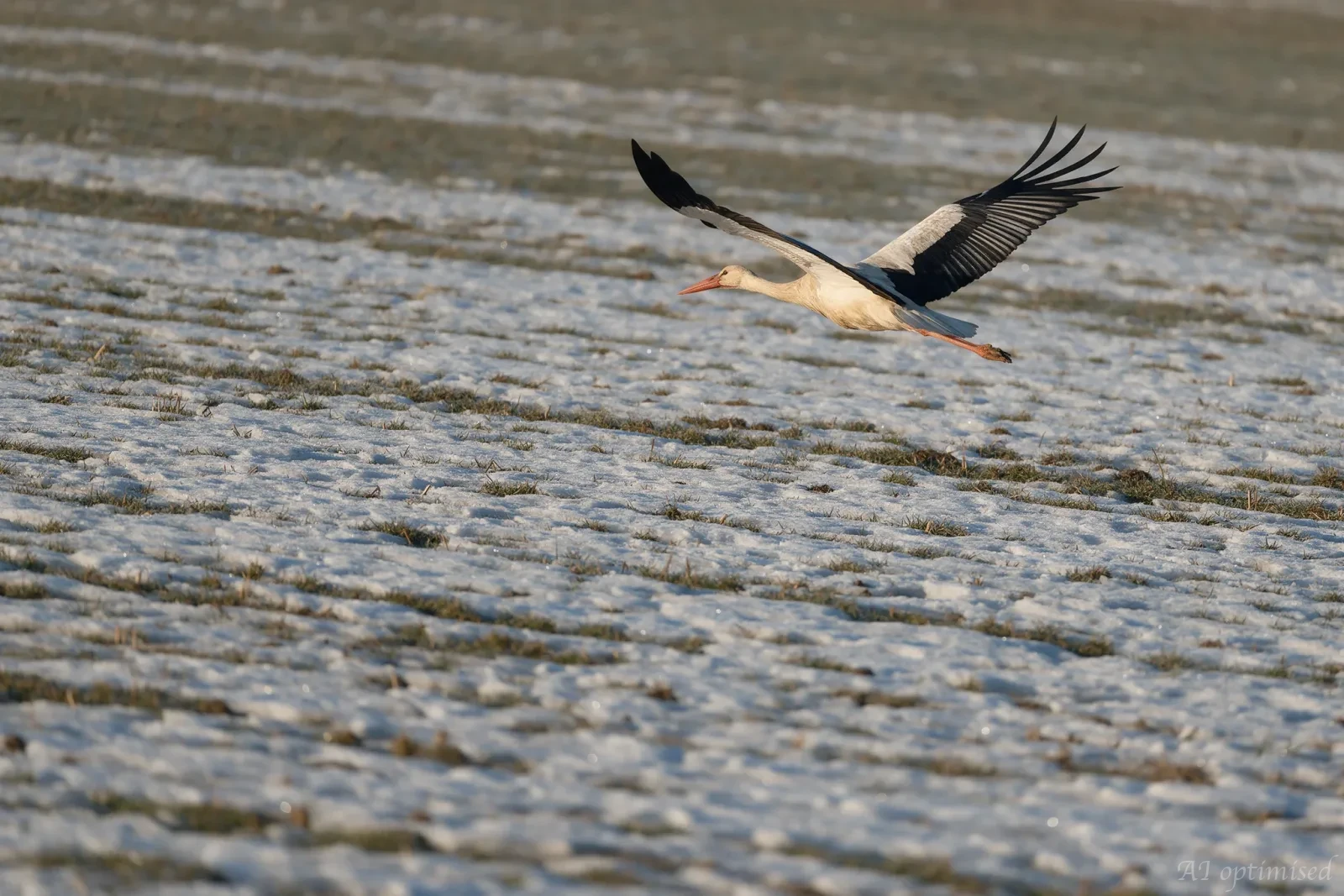
The first stork of the year was the most watched bird in the village, and its date went into the calendar beside the first swallow and the first cuckoo. People noted it because the return marked something they could use: the ground was opening, the frogs were moving, and the season had a witness.
A date worth remembering
Diaries, almanacs, and school notebooks often carry a line for the first stork, sometimes with the weather written next to it. The note was small and practical, and it built a record over years. A village could compare one spring with another by the date on that line. The habit belongs with the first frost and the first hay cut, the ordinary markers of a year that people kept without calling it data. A late first stork was read as a cold April, and an early one as a warm season ahead. The note was a small piece of forecasting, and it cost nothing to keep.
The bird as a sign
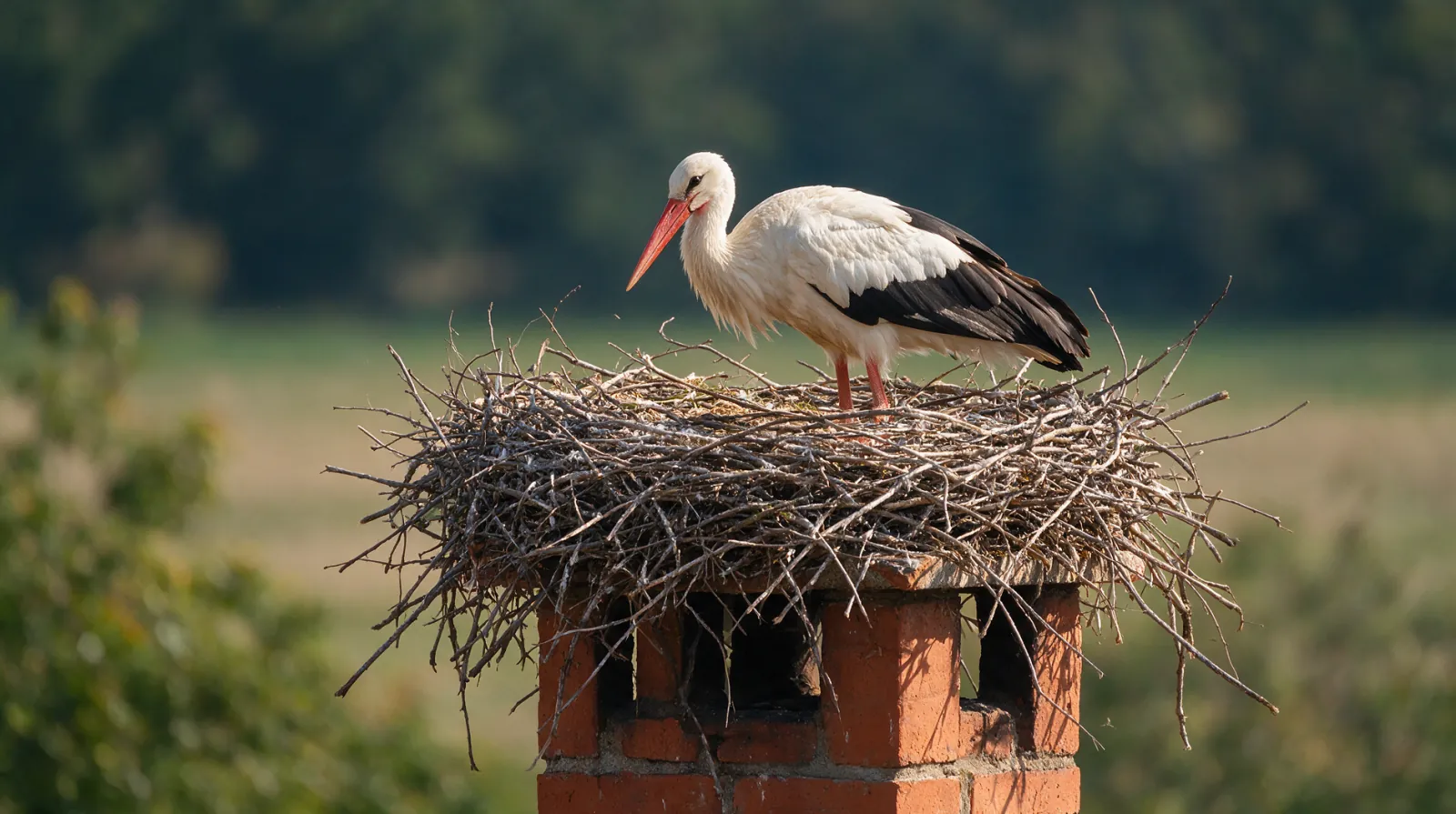
A stork in a wet meadow was a sign that the ground had woken up. The bird fed on frogs, insects, and small mammals, and its presence meant water and mud and life in the grass. Farmers read the return as the start of the working season. A stork in the meadow meant the wet ground had come back to life. The reading was practical before it was poetic, and it stayed accurate often enough to be trusted.
Wishes and small rituals
Children ran out to see the first one, and in some villages the first person to spot it claimed a small piece of luck or the right to a wish. The customs were local and modest, and they varied from parish to parish. Seeing one first was a piece of luck worth claiming. The bird did not have to grant anything for the ritual to work. The running and shouting did the rest.
The feast days nearby
The return often falls near the old spring feasts of late March, and the two calendars were read side by side. A bird that appeared around a feast day could be folded into the sermon, the procession, or the family meal. The church calendar and the bird calendar overlapped, and people let them. The coincidence gave the arrival a second meaning without taking away the first. The stork was a sign of spring before it was a sign of anything else. A feast day gave the arrival a name, and a name made it easier to talk about at the table.
Why the first bird mattered
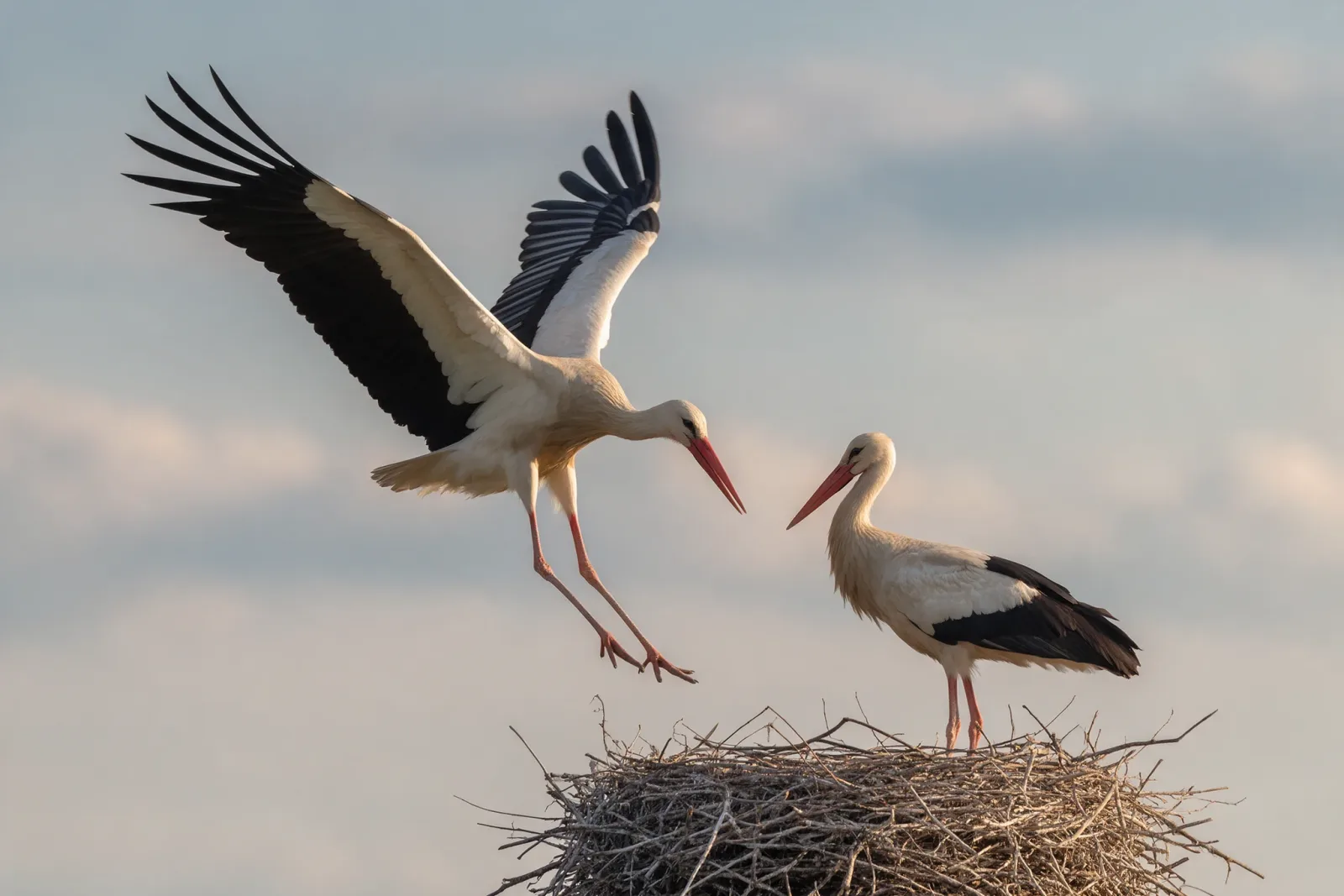
One bird was enough to start the watching. People knew the flocks would follow, and they knew a single stork on a nest meant a pair was settling in. A bird on the nest in March usually meant eggs by the end of April. The first sighting set the household's expectations for the months ahead: chicks on the platform, food in the fields, and a summer with the bird in it.
What the custom leaves
Birders still record the first stork of the year, and the dates go into notebooks and local records. The old habit survives in a smaller, quieter form. Someone stops on a road in late March, counts the white shapes in a field, and writes the day down. The notebook is the same kind, and the date still goes in it. The bird has not changed, and the pleasure of being the first to see it has not changed either.
The first bird is usually a male, and the nest he lands on is often the one he left the year before. The village looks up anyway.
Explore the gift