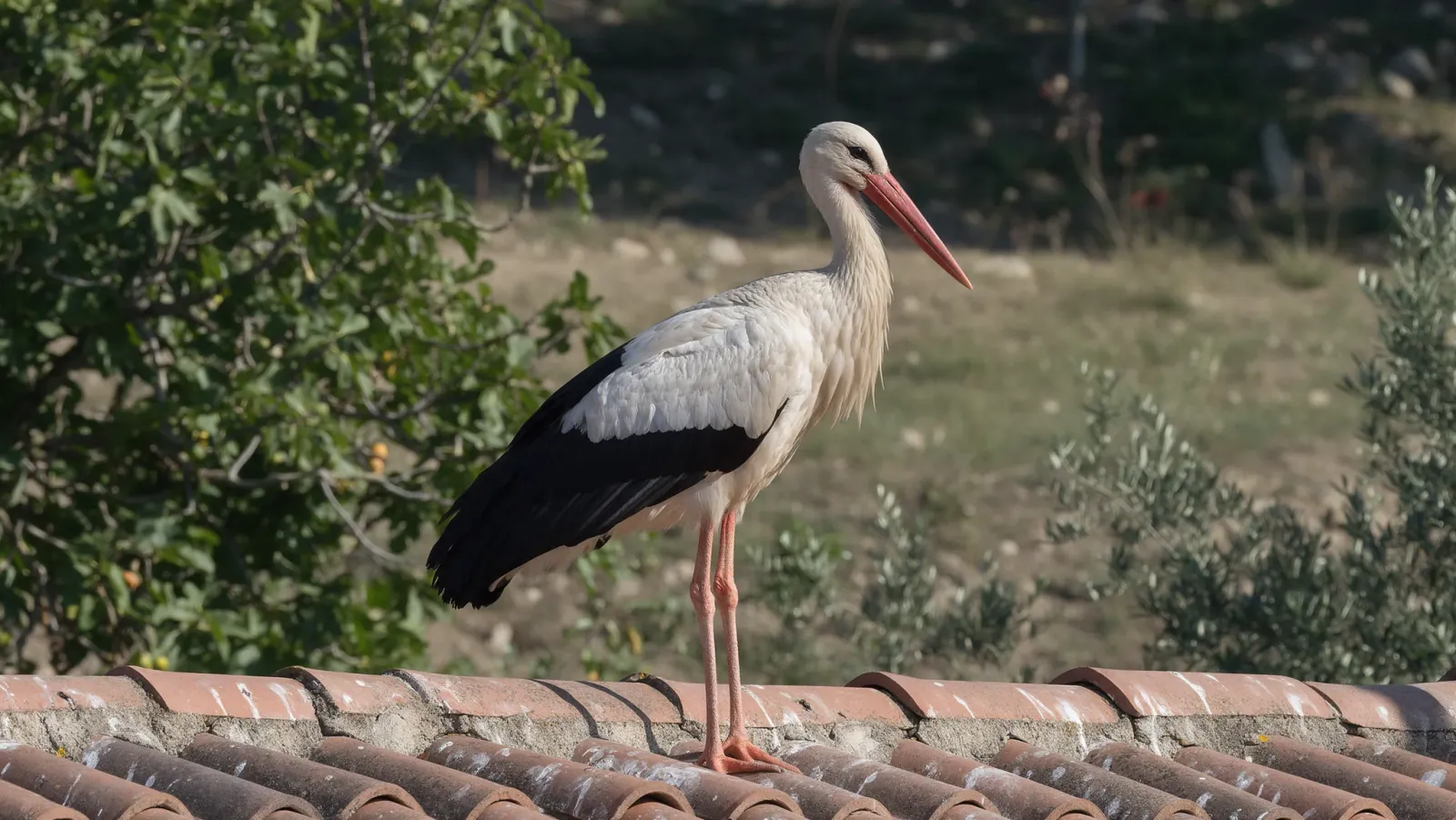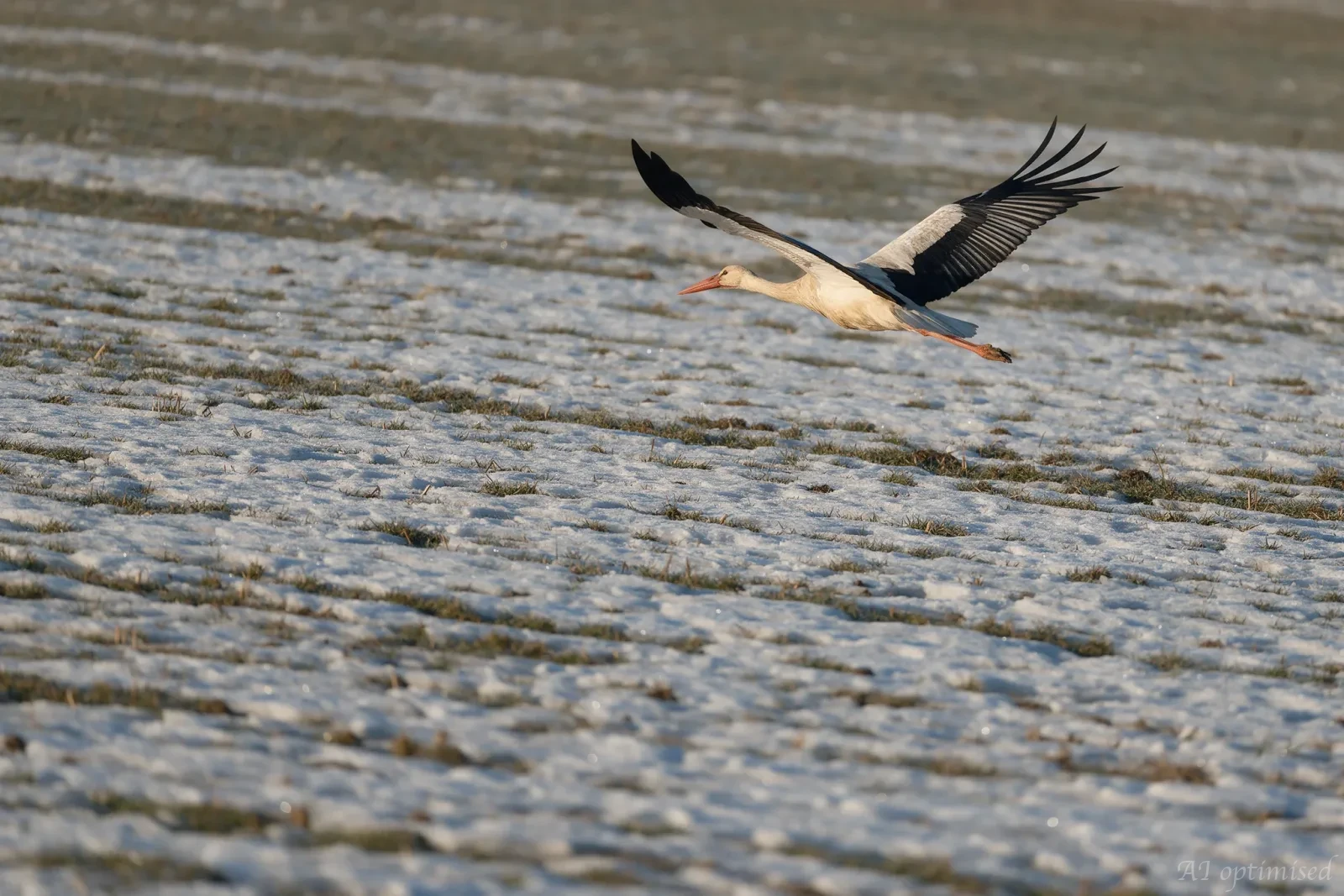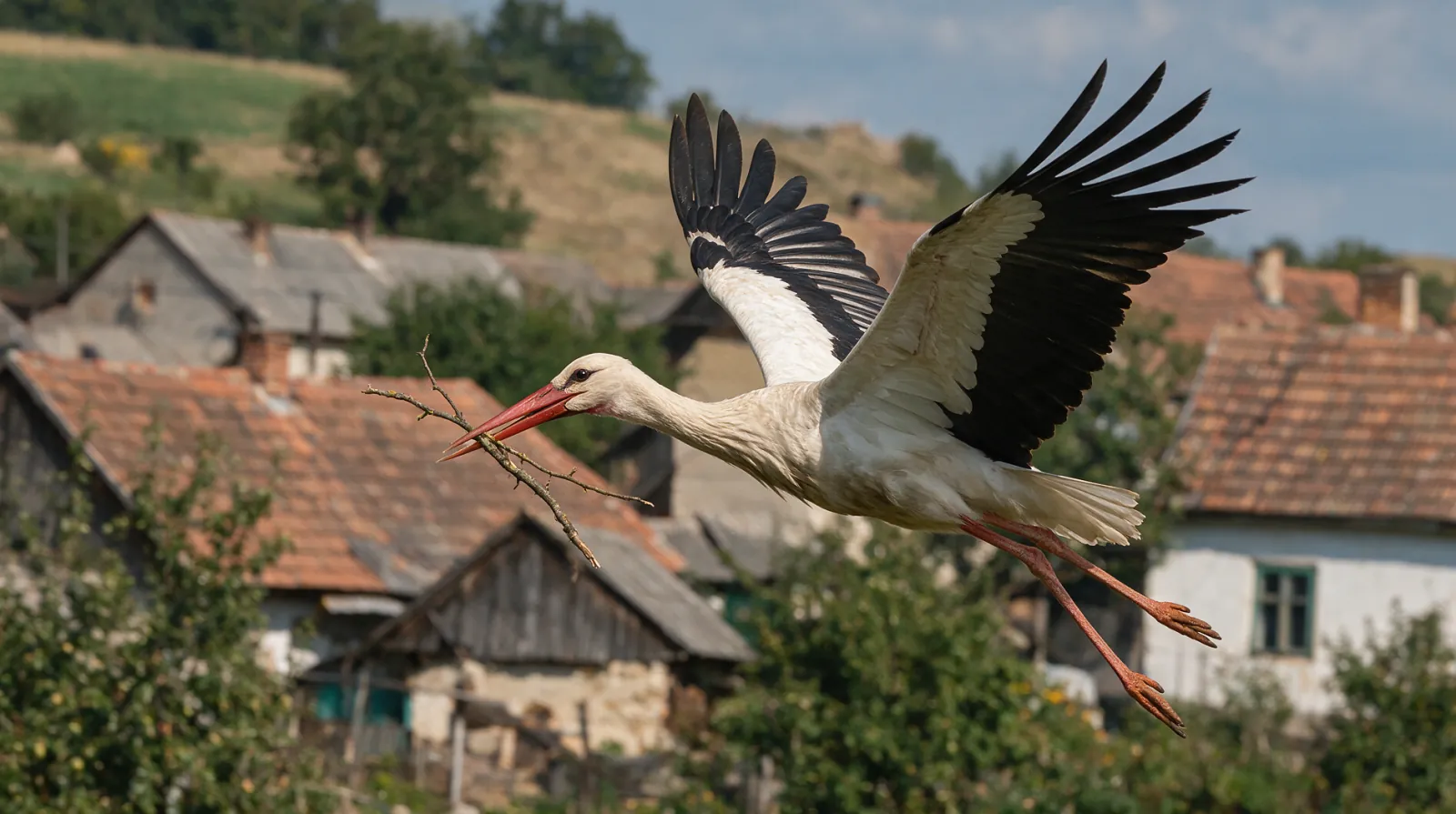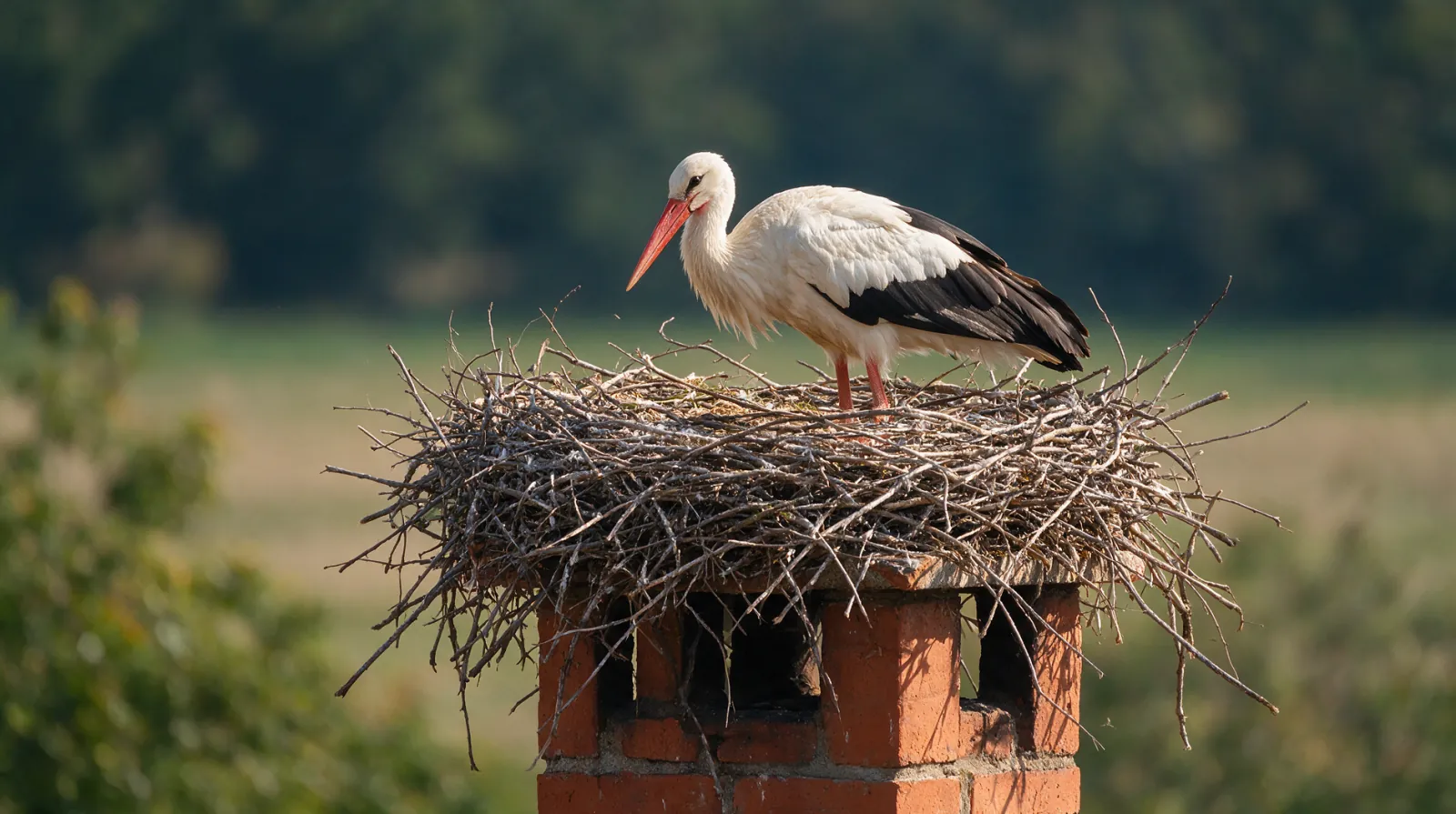
A stork on the roof once meant the house had been blessed, and the belief was practical enough to shape how people built. In villages across Europe, a nest on the chimney was read as luck, protection, and proof that the household was in good order. People built platforms, left the nest alone, and waited each spring for the bird to come back.
The house that was chosen
A stork is particular about where it settles. It wants height, open ground, and a quiet approach, and it returns to a site that has worked before. To have one choose your roof was to be singled out. The nest was a public certificate, and the village could read it from the road. A good, orderly home drew the bird, and a quarrelsome one did not. The reasoning was circular, and it did useful work. It encouraged people to keep their roofs in repair and their quarrels indoors.
Fire, lightning, and the roof
The strongest belief tied the bird to the safety of the roof itself. A nest was said to shield the thatch from lightning, or to bring water to a burning house, or to carry fire away. Harming the bird invited the very harm it had been holding off. The logic was literal: the bird lived on the roof, so it must guard the roof. The practical effect was plain. Children did not throw stones at the nest, and a household with a nest had a reason to look after its chimney.
Platforms, wheels, and invitations
People fixed cartwheels and flat platforms to chimneys to make a nest easier to build. The platform stayed through the winter, an invitation waiting for spring. When a pair accepted it, the household had a project. Sticks were added, the base thickened, and the structure grew heavier every year. A nest used for a generation becomes a landmark, and a landmark is hard to remove. In some places the nest was passed with the house, and a new family inherited the bird along with the roof.
Babies, marriage, and the full house
The roof nest also carried fertility. The baby story put a bundle in the stork's bill, and a stork on the roof and a child in the cradle became a single picture of a full house. At weddings, storks were embroidered on cloth and painted on banners. A bird that returned to one nest was a picture of a marriage that would do the same. The roof, the pair, and the cradle made a wish that could be seen from the street.
The taboo
Harm the bird and the luck leaves. Pull down the nest and the roof is exposed. The taboo protected the bird and the story at once. A rule that is also a story is easier to keep. In some regions the stork was called a guest, and a guest has a claim on the house. The claim was honoured by leaving the nest in peace, and the peace was repaid by the bird's return. The arrangement suited both parties, which is why it lasted.
The roof today
Modern storks still nest on chimneys, poles, and platforms built for them. Conservation groups put up nest supports where an old chimney is unsafe, and the birds accept the substitute. A nest can damage a roof, and a platform moves it to a safer place without breaking the old welcome. The blessed house is now a house that makes room. The folklore has changed its tools and kept its shape. In spring a stork lands on a roof, the household below looks up, and the oldest part of the story repeats itself. If you want to mark a house where a child has arrived, adopt a stork and the welcome gets a name.
Explore the gift