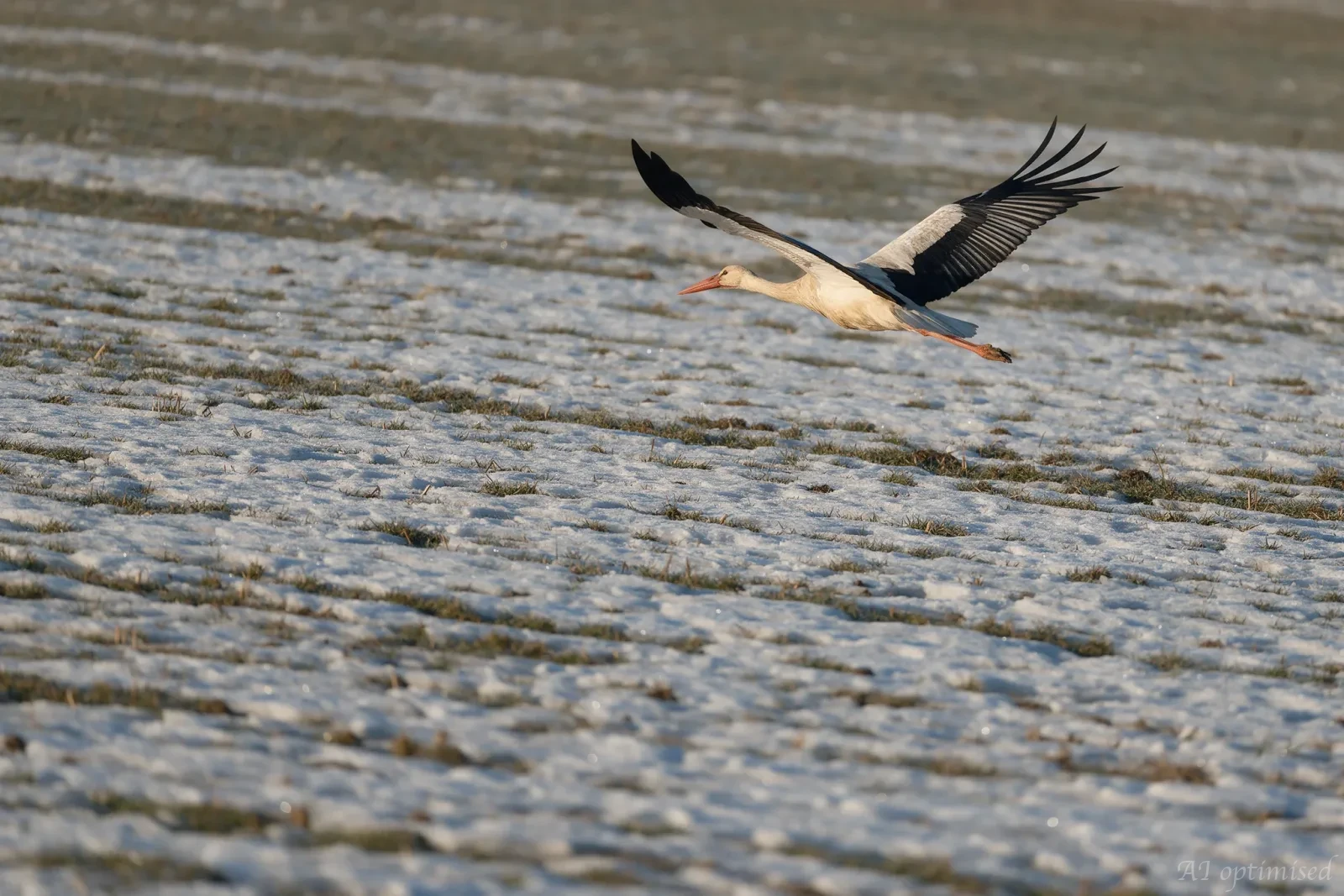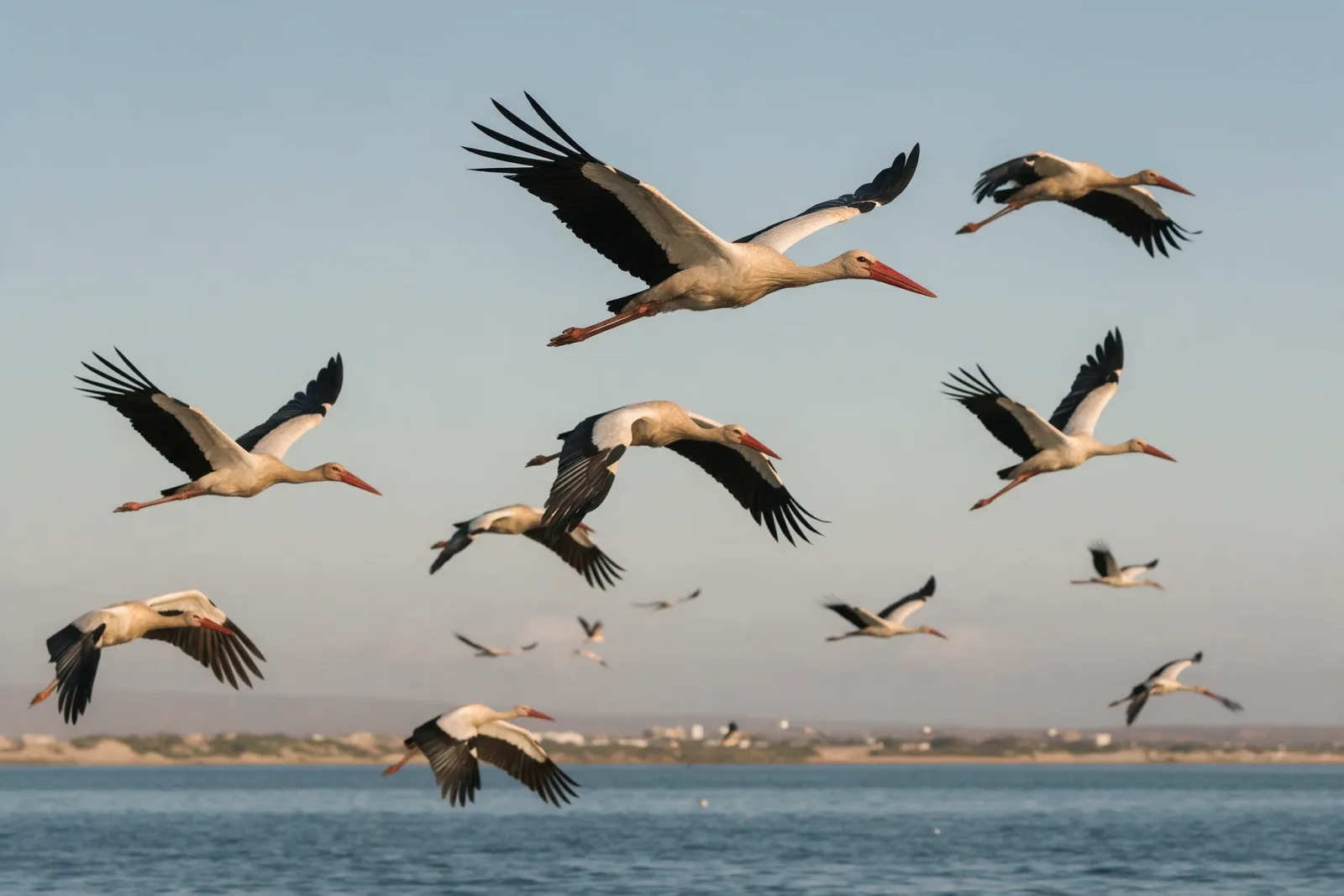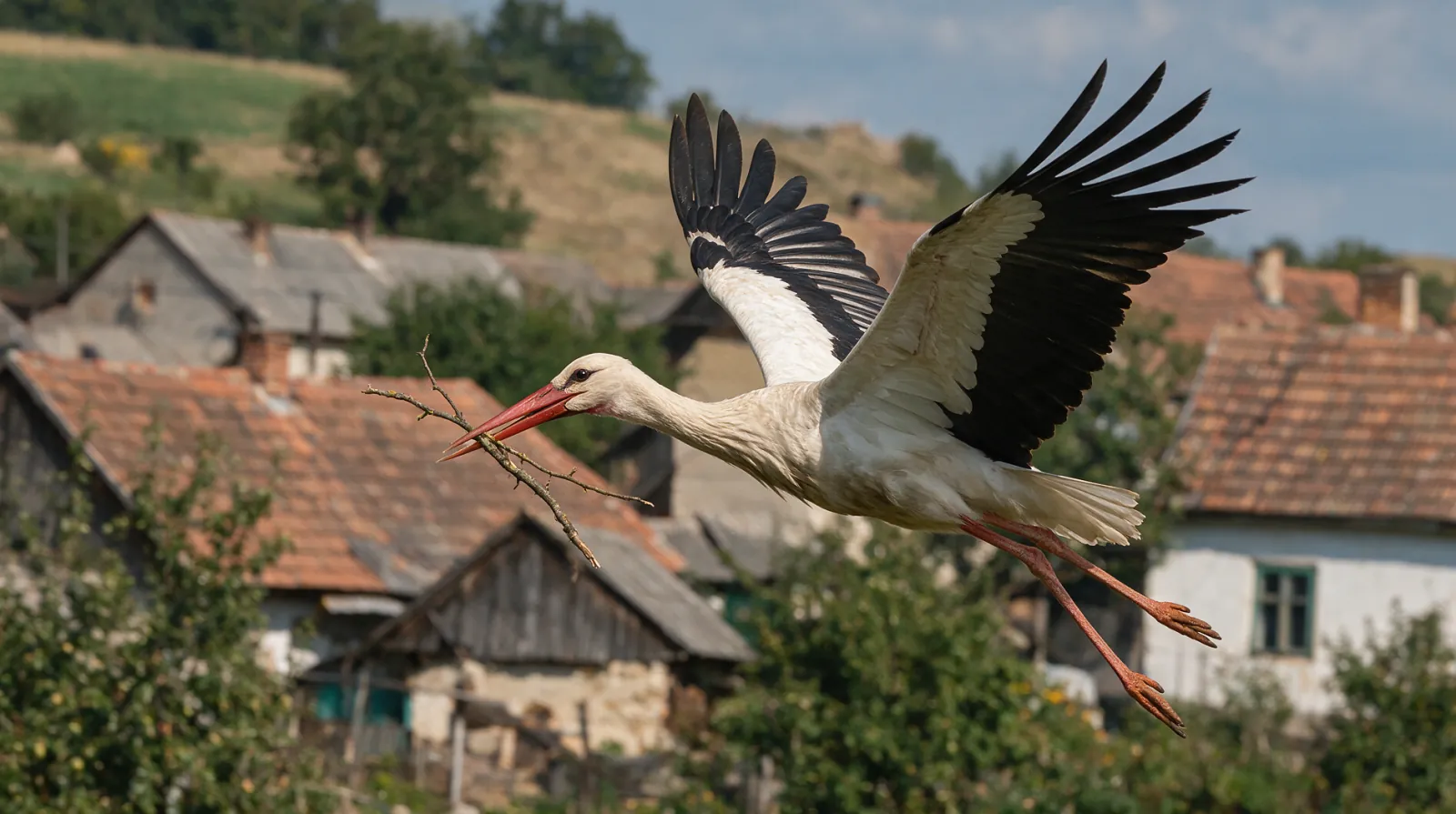
In Denmark and Sweden the stork belongs to the roof and to the start of spring, and the two countries remember it differently. Denmark has the longer stork tradition: the bird nested on farmhouses and chimneys across the country, and the baby story settled into the language. Sweden has fewer storks, and the bird's folklore is thinner, tied mostly to the southern province of Skåne.
The Danish roof
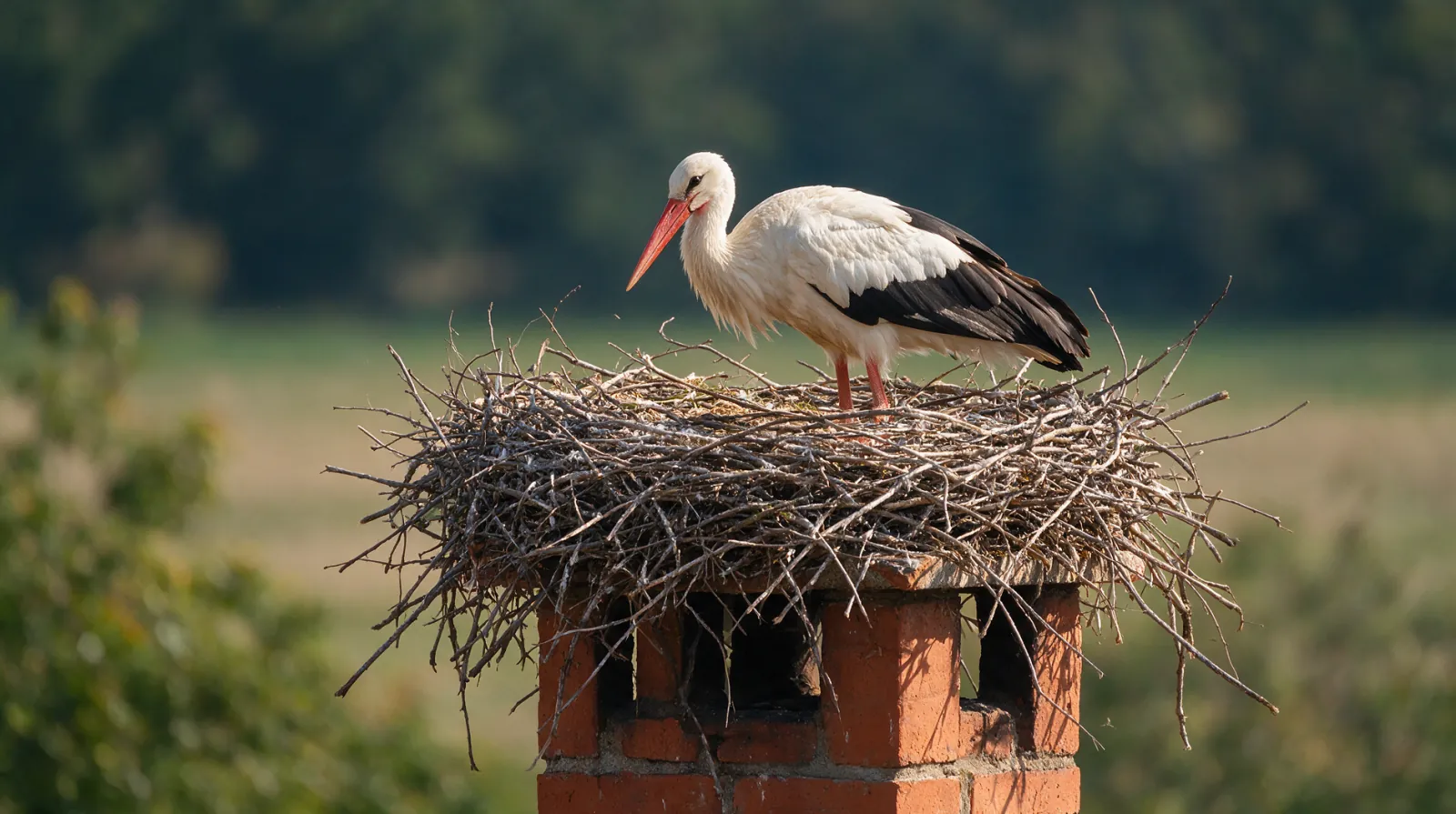
Denmark is low, wet, and farmed, and the white stork found the shallow meadows and the high roofs it needs. A nest on the farm was read as luck. People built platforms, left the nest alone, and watched for the first bird of the year. A stork on the chimney was a public sign that the household was in good order. The bird returned to the same nest, often to the same mate, and the return was folded into the farm's calendar. Spring work began when the storks were back, and the first sighting was passed from house to house.
Storken and the baby
In Danish the bird is storken, and the old answer to a child's question was that storken had brought the baby. The story arrived with the bird in spring, and the bundle came down the chimney. The chimney was the one opening that led from the sky into the house, which made it the obvious route for a delivery. The tale gave parents a gentle reply and gave the bird a job that matched its timing. Babies were born in the same season the storks returned, and a village that watched the two events for generations did not need a better explanation. The story was told to children, and the children told it again.
Andersen's storks
Hans Christian Andersen wrote The Storks in 1838. The tale gives a family of storks a rooftop nest and a sense of justice, and it folds in a pond where unborn children wait. The story did not invent the delivery legend. It gave the legend a literary shape, with named characters, a grievance, and a promise. Andersen's version is the one the nursery kept, and it carried the Danish bird into other languages. The pond and the bundle became the standard furniture of the story, even in places where storks had never nested.
The Swedish edge
Sweden sits at the northern edge of the white stork's range. Breeding birds are few and mostly in Skåne, where the flat land and the wet meadows suit them. The arrival is watched, the nest is protected, and the bird is a rare sight rather than a household neighbour. A stork in Sweden is news; a stork in Denmark was once ordinary. The Swedish tradition is quieter because the bird was quieter. Where storks were scarce, the folklore had less material to work with, and the crane and the swallow took more of the spring stories.
What the neighbours share
Both countries read the bird as a sign of spring, and both linked it to good fortune. The difference is density. In Denmark the stork is a folk figure with a word in the language and a place in children's songs. In Sweden it is a visitor from the south, admired and counted. The same bird, at two different distances from the centre of its range, produced two different traditions. Folklore follows abundance. A bird you see every day becomes a character. A bird you see once a year becomes an event.
The bird today
White storks declined sharply in Denmark in the twentieth century as wetlands were drained and farming changed. Reintroduction projects and nest platforms have brought birds back to some places, and the old welcome has been revived with modern tools. In Sweden the population remains small, and each nesting pair is watched. The folklore has outlasted the abundance, which is the usual order of things. A stork on a Danish roof in April still means what it meant a hundred years ago: the season has turned, and the house has a guest. The stork gift keeps that welcome in a form a family can hand to a child.
Explore the gift