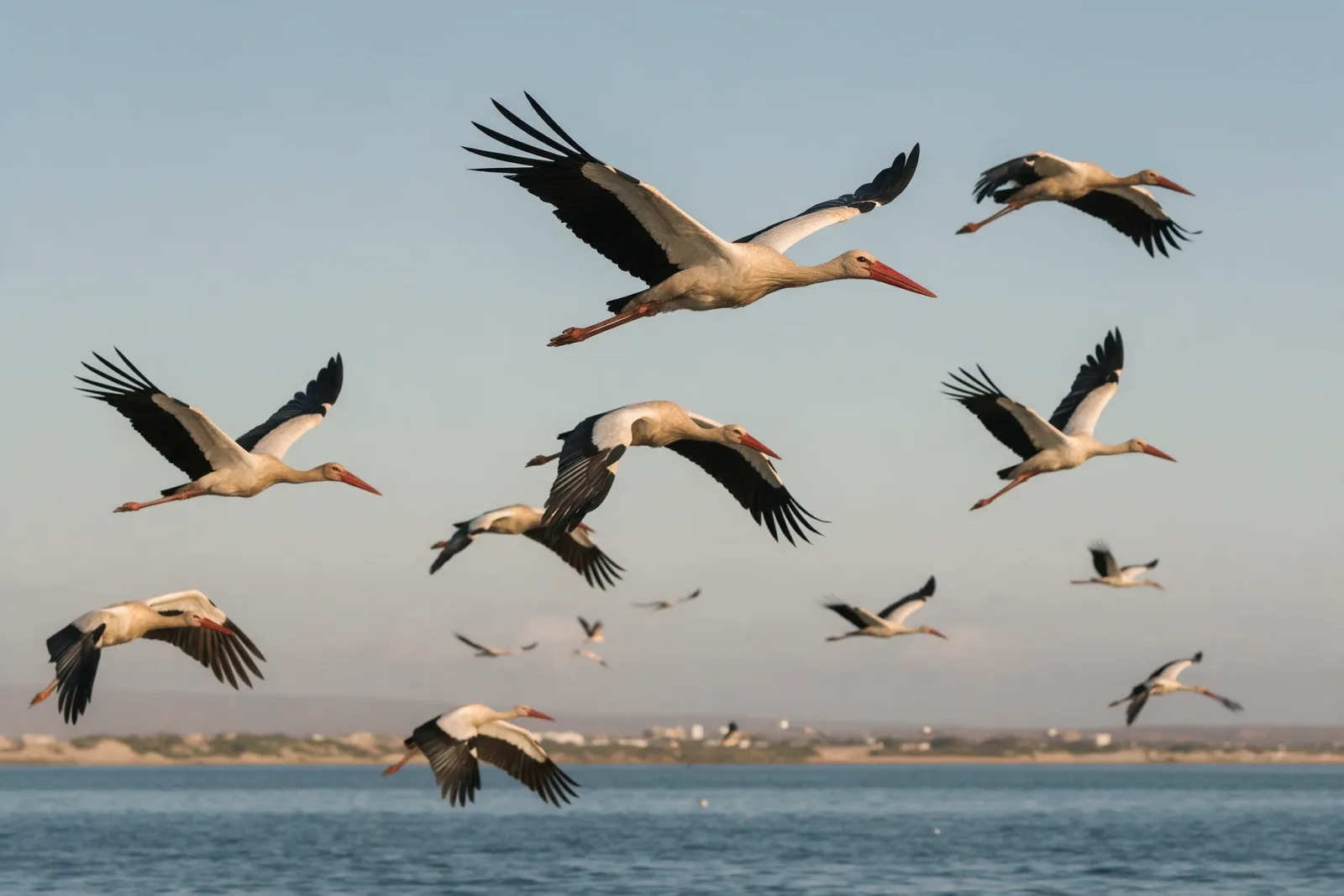
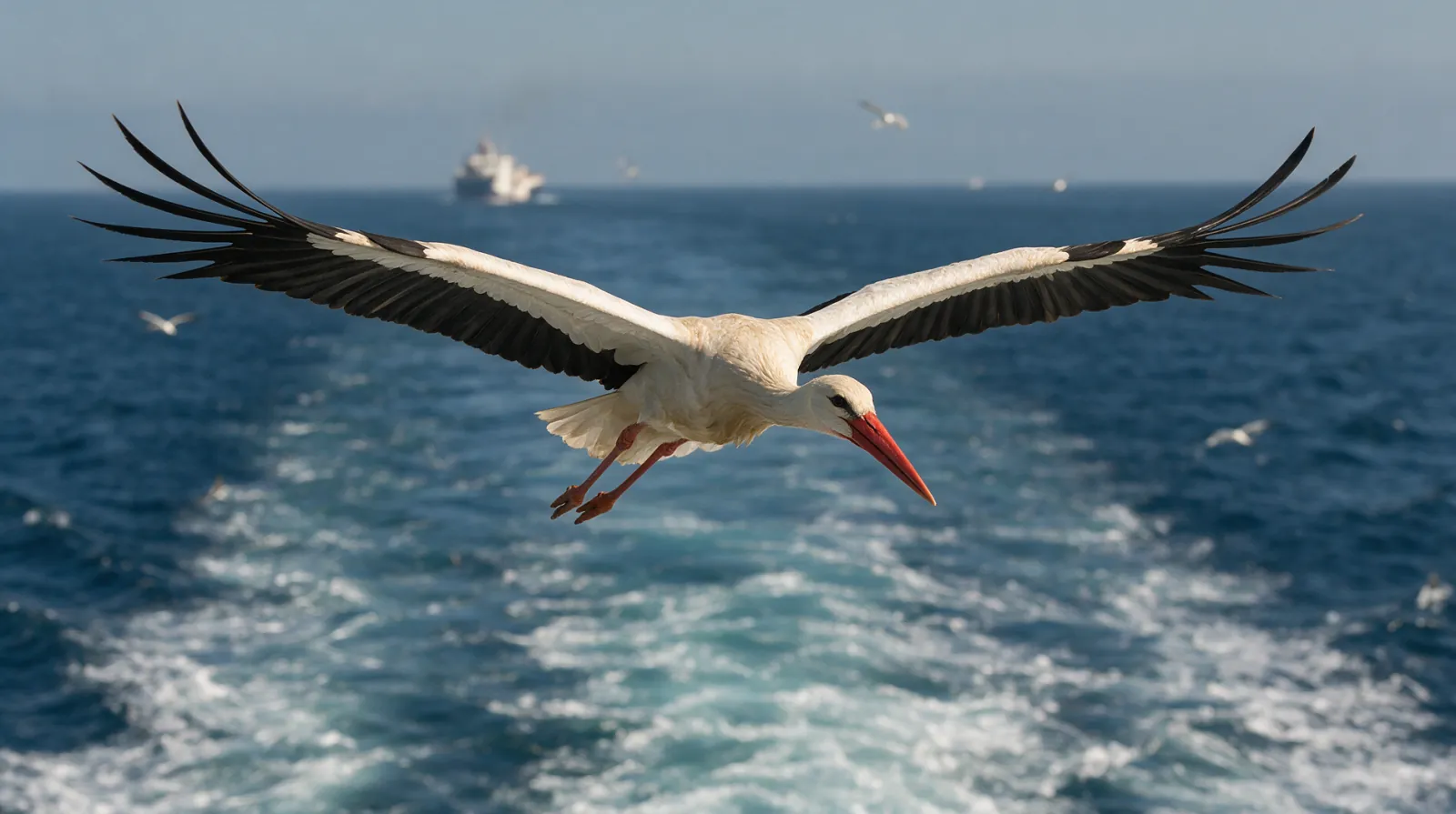
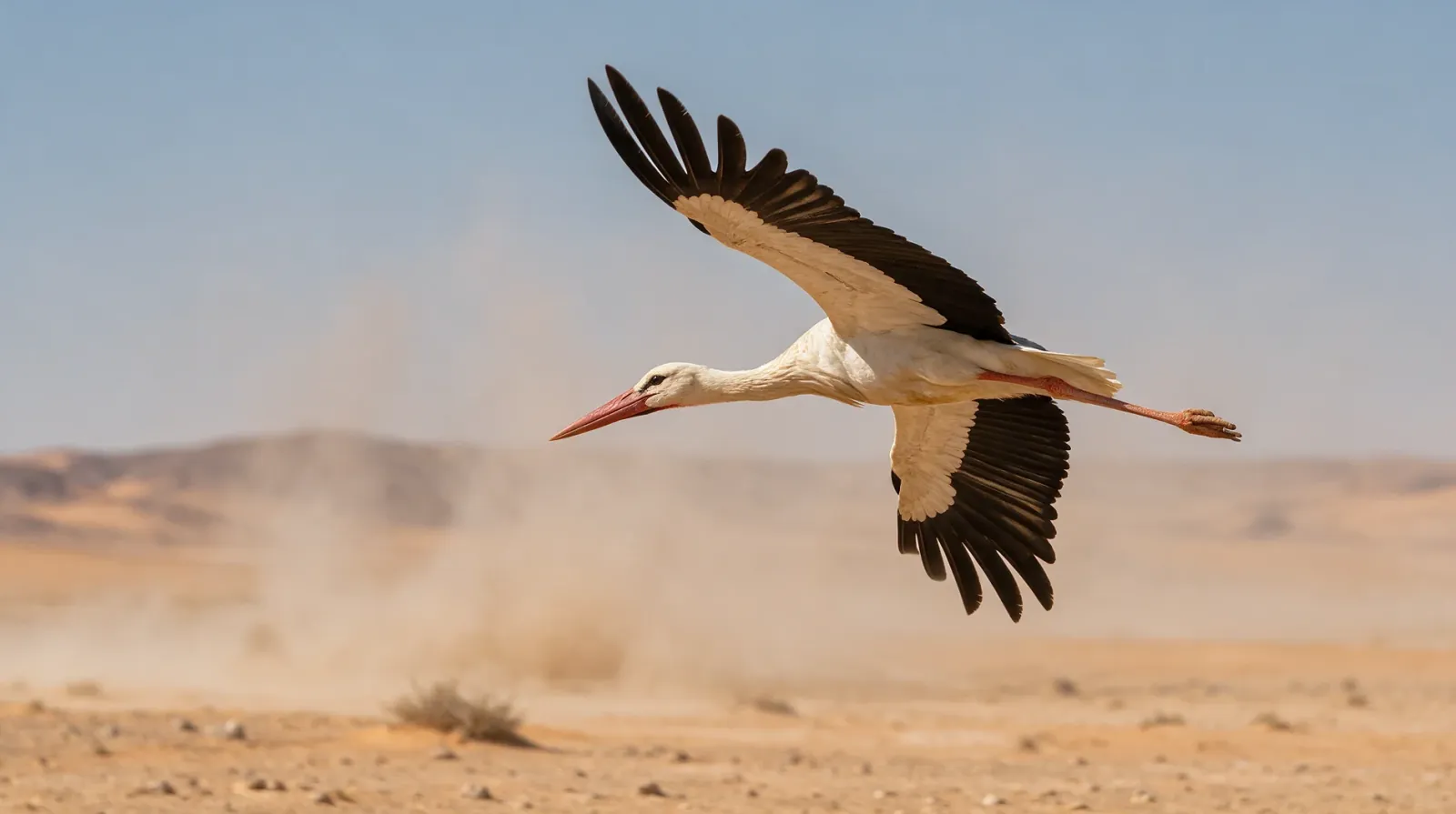
The Sahara is the largest hot desert on earth, and white storks on both routes must cross it or fly around it. There is no water, no shade and no food for days. The birds go high, use the heat itself to climb, and cover the ground in one long push.
Heat over sand
Sand and bare rock heat quickly under a desert sun. The air above them rises in strong columns, stronger than most thermals over green country. A stork that finds one can climb fast, and the birds often leave the desert edge early in the day to make use of the first of them.
By mid morning the air is shimmering, and the ground below looks like water. The haze is hot air moving, and to a stork it is a road. A bird that climbs above the worst of the heat spends less energy keeping its body cool, and height also gives a wider view over featureless country.
Crossing on reserves
There is nothing to eat over the sand. The flight is paid for before it begins, with fat laid down in the fields of Europe and North Africa. A stork over the Sahara flies on reserves, and there are no second chances if the weather turns.
The birds keep going through the heat of the day where they can, and some cross at night when the air is cooler and the desert gives up its stored warmth slowly. Storks crossing the desert often fly in loose groups, and a bird that loses its thermal can follow the birds ahead rather than search alone.
Flying high
Height helps in two ways. Air at altitude is cooler, and a bird above the worst of the heat spends less energy on its body temperature. Height also shows the next column, and over country without landmarks the birds read the air rather than the ground.
The desert is fierce at midday and gentler in the early morning. A bird that climbs with the first heat can be high and away before the worst of it. A bird held at the edge by a headwind waits, feeds in the last green fields, and crosses when the wind drops. Patience is part of the crossing, and a bird that leaves too early can be pushed back with nothing left to spend.
What can go wrong
A dust storm can close the air for days. A strong headwind can hold a flock at the desert edge until the fat they carry begins to thin. Young birds on their first crossing are the most exposed, because they have less experience of reading the sky and less margin in reserve. Some do not make it.
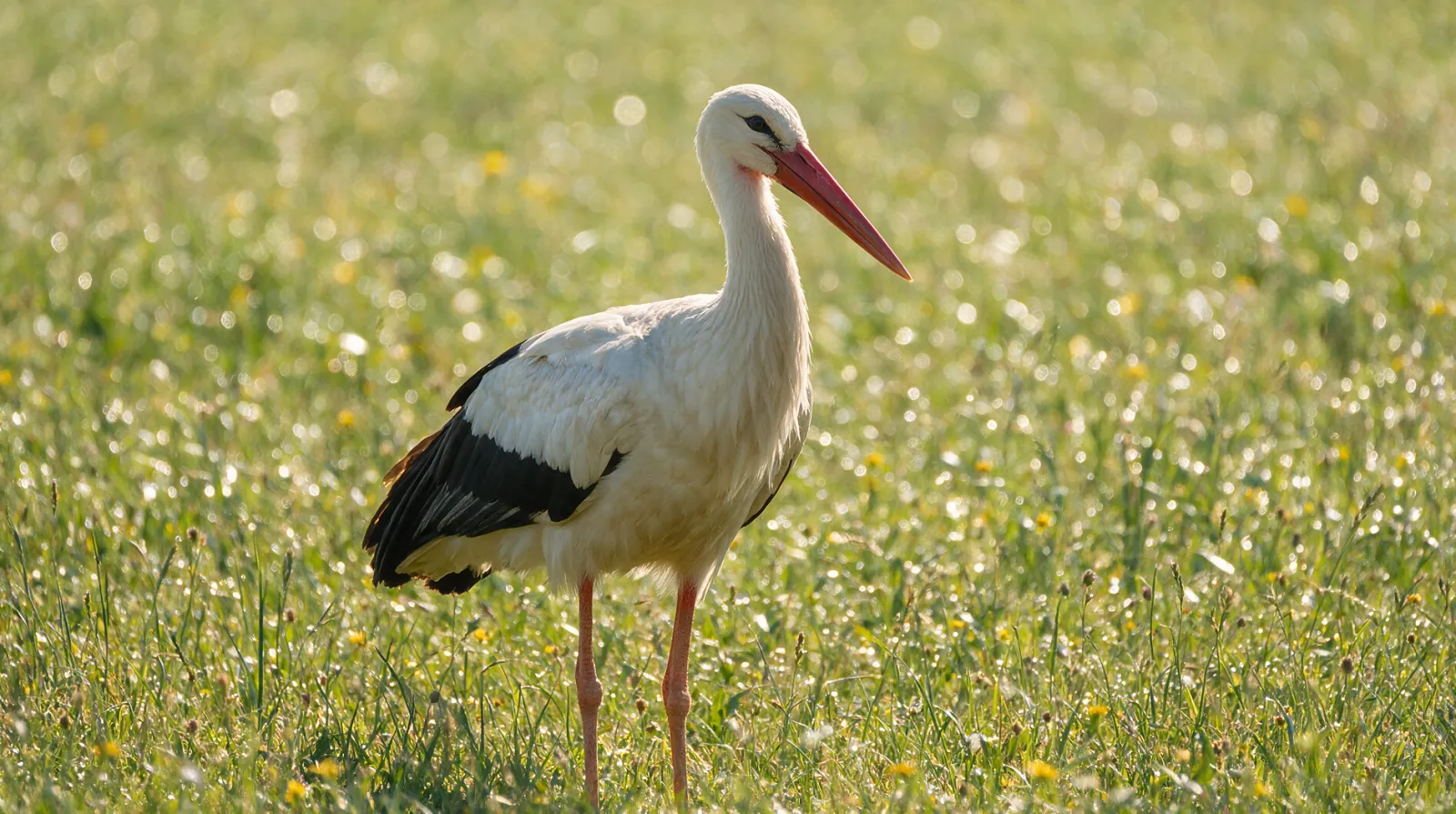
The far edge of the desert is a gradual change from sand to thorn to grass, and the first green is a signal. Storks come down in the Sahel where the rain has already fallen, and the feeding begins again in earnest. The birds that spent days over empty ground stand in wet grass and hunt frogs as if nothing had happened.
The desert takes a share of every migration, and the birds that arrive on the far side are the ones that read the weather well. The hard stretch is short, and the birds cross it as a single act of stored fuel and patience.
The Rift Valley corridor
On the eastern route, the country south of the desert has its own shape. The Great Rift Valley runs down eastern Africa as a long break in the land, lined with lakes, cliffs and hot ground. For white storks it works as a corridor, guiding them south through country that offers water, food and lift.
The rift is edged by escarpments, high walls of rock that face the sun and warm quickly. Warm slopes make thermals, and thermals make free height. A bird travelling south can climb along one wall, glide to the next lake, and climb again without ever working hard. The valley also gives direction. In a continent of many possible headings, a long line of cliffs and water is a route that can be followed.
The valley floor holds a string of lakes, some fresh and some so salty that nothing lives in them. The fresh ones are the important ones for storks. Shallow edges, marsh, reeds and wet grassland hold frogs, insects and small fish. The lakes are the stops that make the corridor usable, and the birds use them year after year.
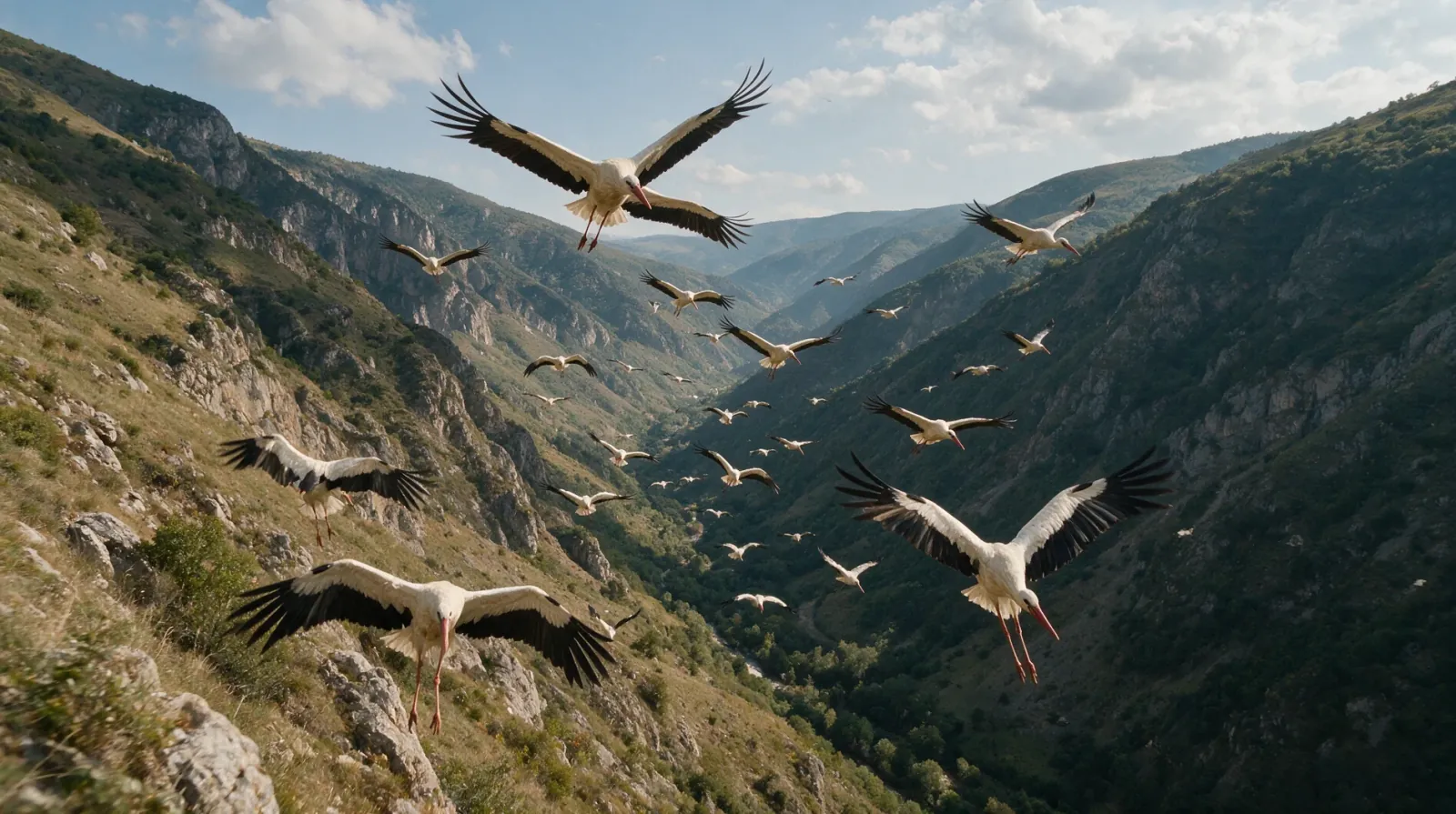
Storks work the cliff lines in the morning, when the rock is warming and the air begins to rise. They circle up in groups, drift along the ridge, and lose height slowly on the way to the next lift. In the afternoon, when the thermals weaken, they come down to the water. The pattern repeats down the valley, day after day.
Not every stork follows the rift to its end. Some stop in the wetlands of East Africa, where the food and the water suit them. Others continue south through Malawi and Mozambique toward the floodplains further down the continent. The corridor is a road with many exits, and each bird leaves it where the country looks right.
Some of the lakes are too salty to hold fish, and the birds pass over them without stopping. Others are shallow and rich, and a flock may stay for a week. Reading the water from the air is part of the skill, and older birds know which lakes are worth the descent.
Landing with the rains
The seasonal rain moves across Africa in a slow wave, and white storks arrive with it. It does not fall everywhere at once. It moves across the continent with the season, turning dry ground green in a slow wave. Birds on the eastern route meet it in the wetlands of East Africa or further south. Birds on the western route come down into the Sahel and the country beyond it, where the first storms have already softened the ground.
Dry ground looks empty and is not. Frogs and insects wait out the dry season in mud, under stones, in cracks in the earth. The first heavy rain wakes them. Pools fill, grass grows, and the shallow water spreads into places that were bare a week before. The rain turns a hard country into a wetland, and the birds arrive to use it.
On the wintering grounds the flocks break up. Birds that travelled together spread across the grass and the shallow lakes, sometimes alone and sometimes in loose groups. The food is scattered, and there is no need to stay close. In Africa the bird's best strategy is to find its own quiet corner of wet ground. The rains do not last, and the storks follow the water as it retreats.
As the season turns, the pools shrink and the grass dries, and the birds move to the last wet places: river margins, lakes, irrigated fields. Some begin to drift north before the worst of the dry season. The country that welcomed them with water slowly closes, and the birds that stayed too long find themselves standing in dust.
By the time the rains return to Europe, the storks are already on their way back. The African wet season and the European spring are two halves of one timetable, and the bird lives on both.
Explore the gift