The return journey north begins in the heat of late winter, when the storks on the African savannas start to grow restless. A white stork spends the winter far to the south of its breeding grounds, then turns and flies home as the northern spring approaches. The return mirrors the autumn journey, and it is a different road.
The signal to leave
The first sign comes with the changing light and the first rains. The storks on the wintering grounds begin to gather, and the gathering tells you the birds have felt something. The days are lengthening in the north, and the storks know it, in the same untaught way they knew the way south.
The departure is a matter of weeks. Some leave early, eager for the best nests, and some wait, until the whole wintering population is on the move.
Before departure the bird lays down fat and its reproductive organs enlarge. The flight muscles are already built, but they must be fuelled. A stork that leaves Africa thin will struggle, and a stork that leaves fat has a buffer against bad weather.
The body also has to time the moult. A bird cannot replace its flight feathers in the middle of a hard migration, so the work is done in the winter grounds, well before the journey north. By the time the bird turns toward Europe, the wings are new and the reserves are high.
A stork that leaves the south with fat and new feathers has a buffer against a cold snap, and a bird that leaves thin has none.
A different wind
The northward crossing is made in a different season. The birds that flew south with the autumn winds now fly north into the spring, and the weather they meet is changeable, warming and full of rising air.
The thermals are strong in the hot south, and the birds climb high and glide for long stretches without effort. As they move north the air cools, the thermals thin out, and the birds work a little harder. The return is a gradual climb from the easy heat of Africa into the cooler sky of Europe.
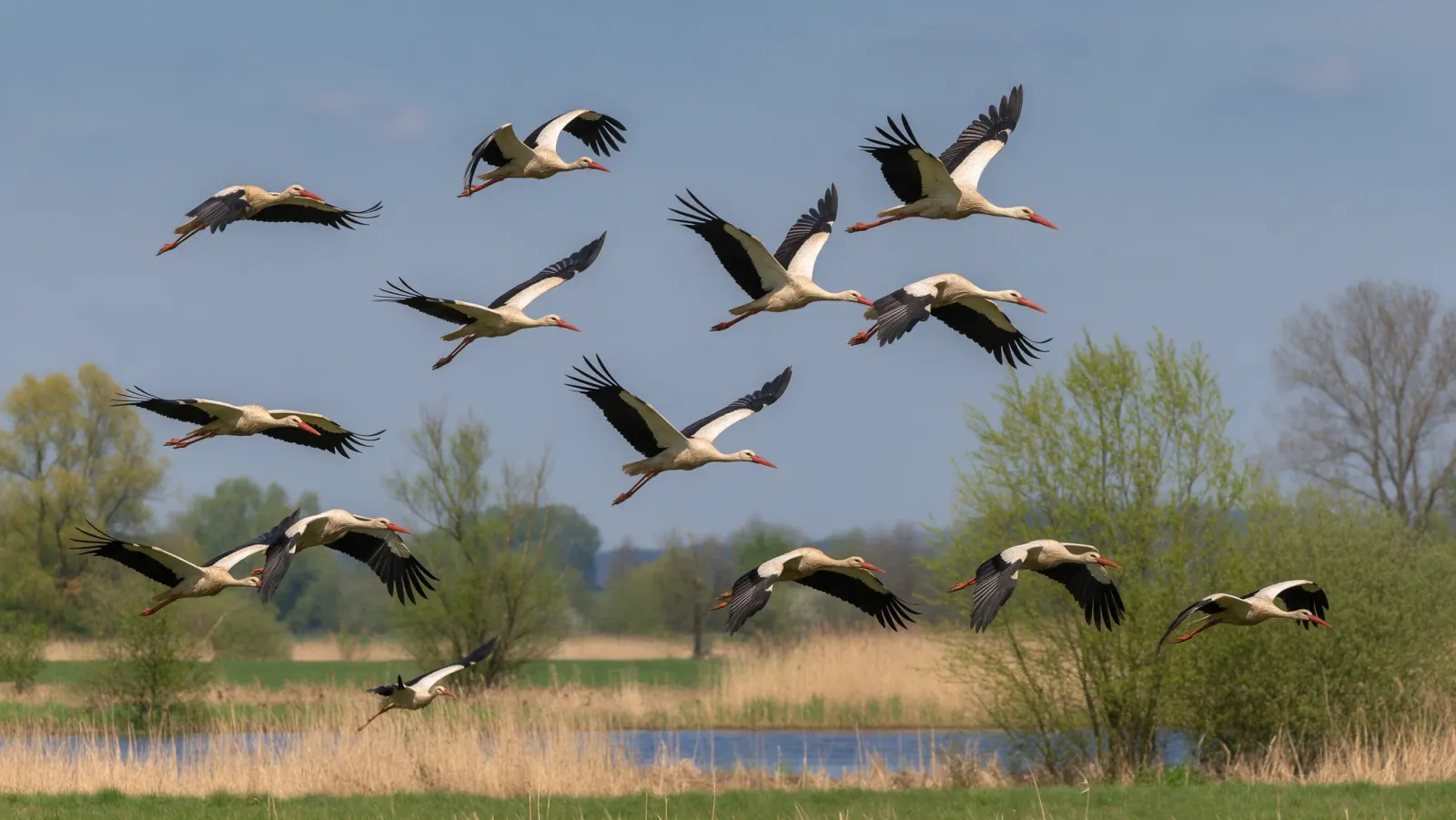
It follows the flyway it used in autumn, back through the same corridors and the same narrow crossings. Western birds come up through Morocco and over Gibraltar. Eastern birds cross the Bosphorus again or come up the Levant. They climb on thermals, glide, and climb again, covering the miles in stages.
The route bends where the warm air is, and the return follows the same shape in reverse.
The hurry
There is a purpose to the northward flight that the autumn one lacked. A stork flying south is travelling to a place. A stork flying north is coming home to a job.
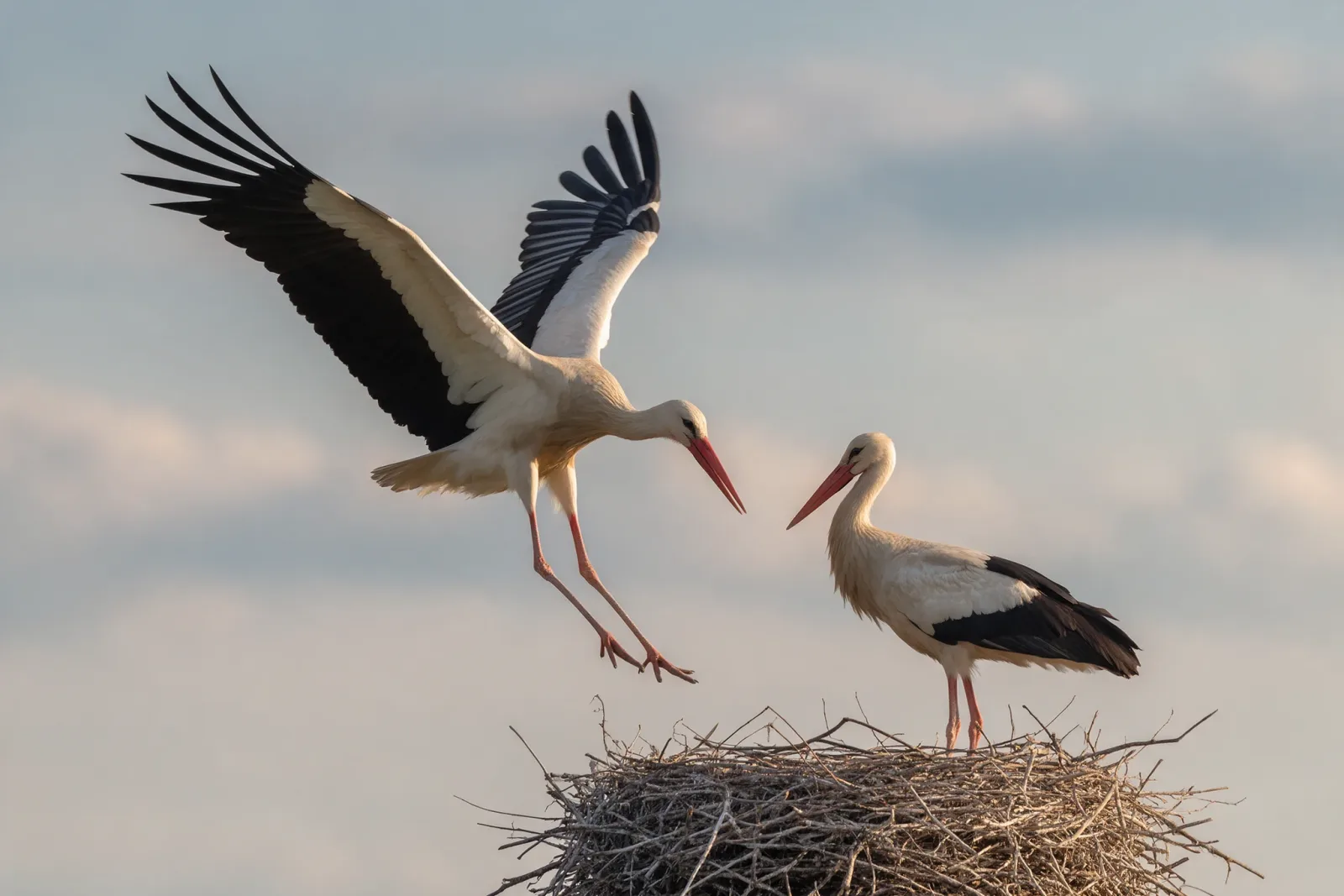
The first birds back claim the best nests, the strongest birds pair off, and the whole season waits on an early arrival. Males often arrive before females and take possession of a nest, clattering to advertise it. A bird that arrives late may have to build from nothing or fight for a site.
That urgency shows in the daily distance. Spring birds often fly longer days than autumn birds, and they are quicker to move when the weather allows. They still stop to feed and rest, but the pauses are shorter. What took weeks in September can take less time in March, and the birds arrive with the work of the nest still ahead of them.
Spring migration is often faster than autumn. The birds stop less, fly more hours in each day, and many travel in pairs. The route is known, the crossings are familiar, and the body is lean after a winter in the south.
The gamble of arriving early
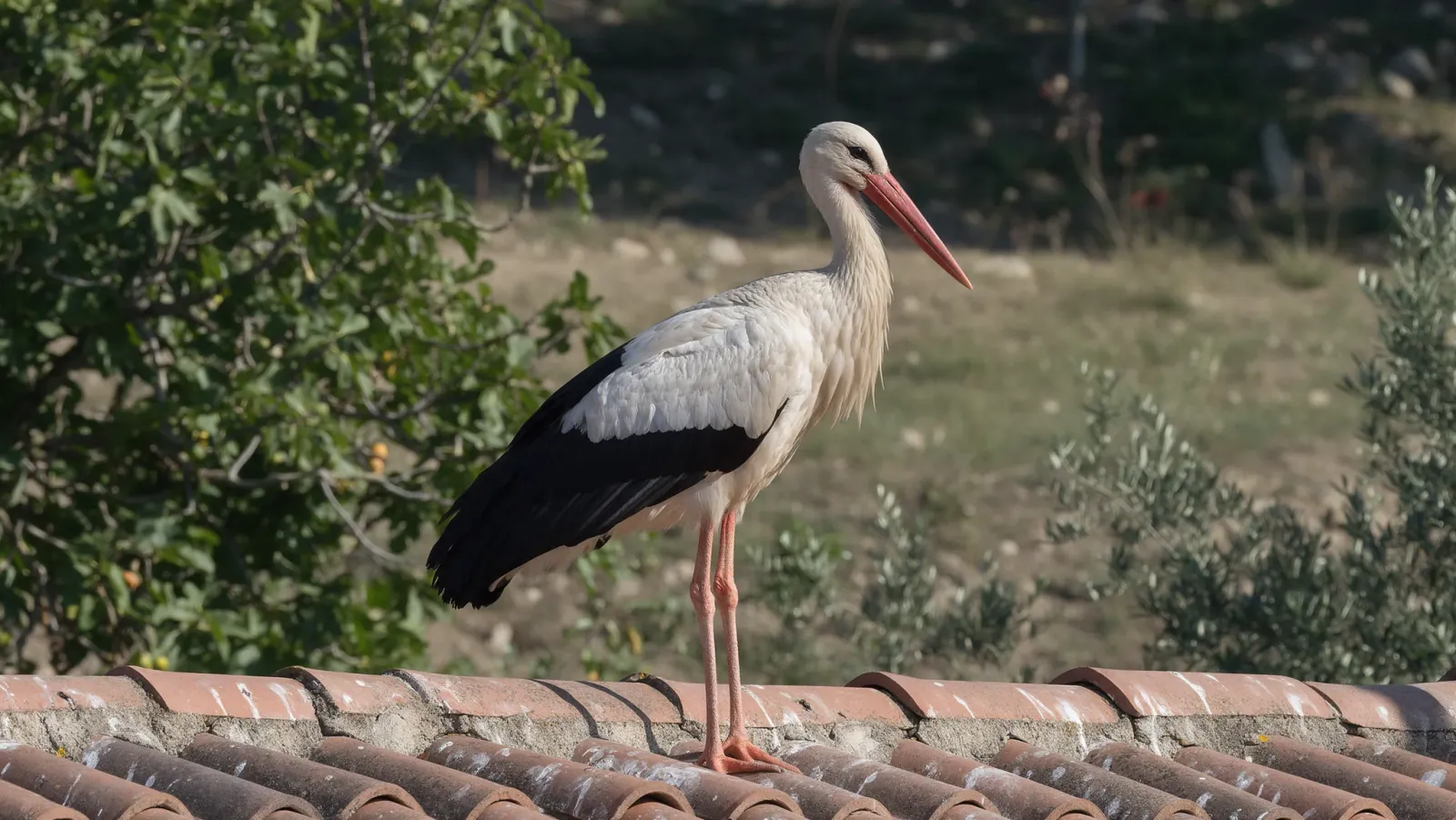
The first birds come back in early spring, before anyone expects them. The fields are still wet and half frozen, the mornings still carry a frost, and the nest on the roof has stood empty for months. Then a white stork appears on the old sticks as if it had never been away.
The birds that come back first are often the ones that wintered closest to the route home, or the ones that judged the winds well. A few warm days and a following wind can put a single stork a week ahead of the rest of the flock. That bird is early by luck and by skill, and it has taken a risk to be there.
A stork that arrives too soon stands in a hard, empty meadow and waits. If spring stalls and the ground stays cold, there is little to eat. Most years the gamble pays, because the bird that gets home first gets the first pick of the nests. A good nest is worth a week of hunger. It is a site that has survived winters, holds a deep cup of sticks and sits above the worst of the ground.
Around it the fields are still quiet. The frogs are not yet out, and the insects have not hatched.
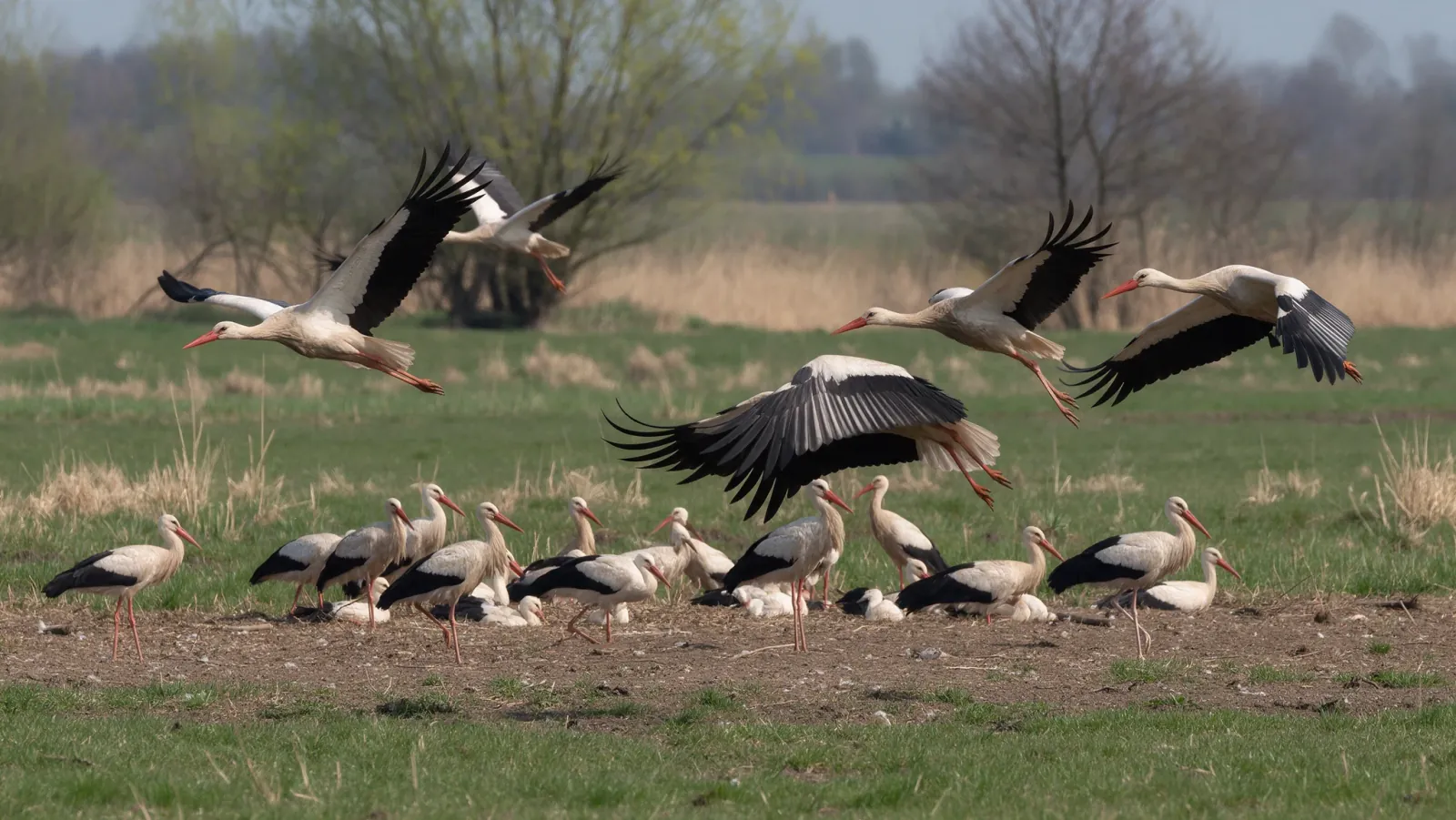
Weather still rules
The hurry meets its match in the sky. A cold snap in March can close the feeding grounds, and storks that arrived early may stand in snow for days. A strong headwind can pin a flock to a field for a week. The migration is urgent and patient at once. The bird wants to be early, and it will not fly into weather that could kill it.
This is the risk of the early arrival. The best nest is worth having, and the price of arriving too soon can be high. Most birds read the odds and wait for a window.
The first bird is rarely alone for long. Within days, and sometimes within hours, others arrive, and the empty nests of the village fill one by one. The sky that was empty in February is full again by April. The first bird, the one that took the gamble, is by then one stork among many, already settled and already building.
No bird leads the flock home. The first one simply gets there first, and the rest are not far behind. Each one follows its own sense of the season, and the arrival spreads through the village like a rumour.
The first arrival
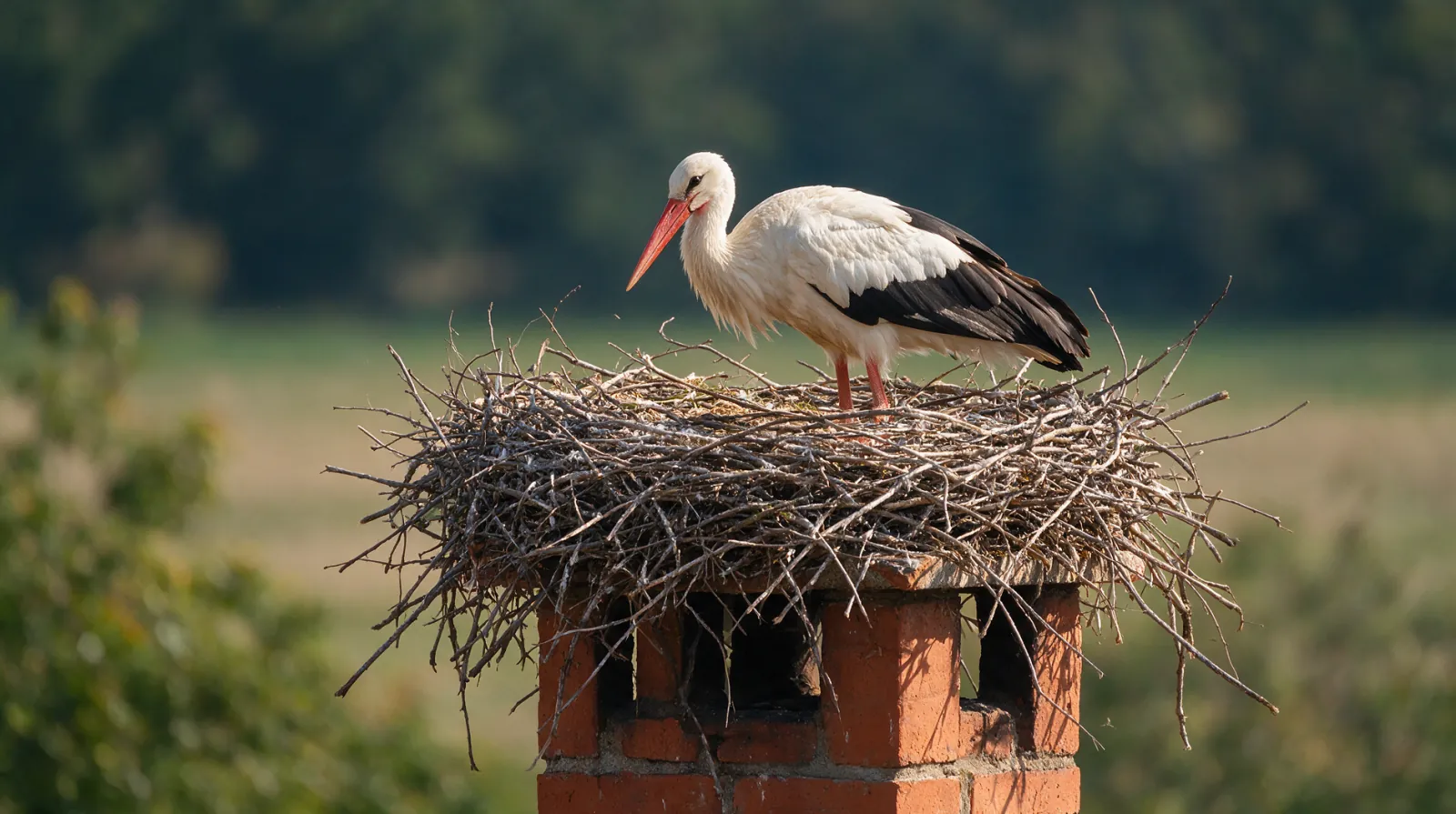
The first stork back is an event in the villages of Europe. It lands on the old nest, stands for a moment, and the spring has begun. The rest of the returning birds follow over the coming weeks, until the rooftops and the fields are full again.
The empty nest marks the winter, and the first stork back marks the spring.
People mark the return in different ways. A farmer notices the bird on the roof and knows the ploughing can begin. A child spots it from a window and runs to tell the house. In many places the first stork is news worth sharing, the way the first swallow or the first cuckoo is news.
It means the wheel of the year has turned, and the village has a witness. The bird itself has no idea it is a sign. It has done what a stork does, following an instinct that sends it north as the days lengthen.
The return journey north ends where it began the year before, on a nest that has waited through the winter. The bird that lands on it has come a very long way to be home. Behind it, the rest of the flock is still crossing the sea and the desert.
Explore the gift