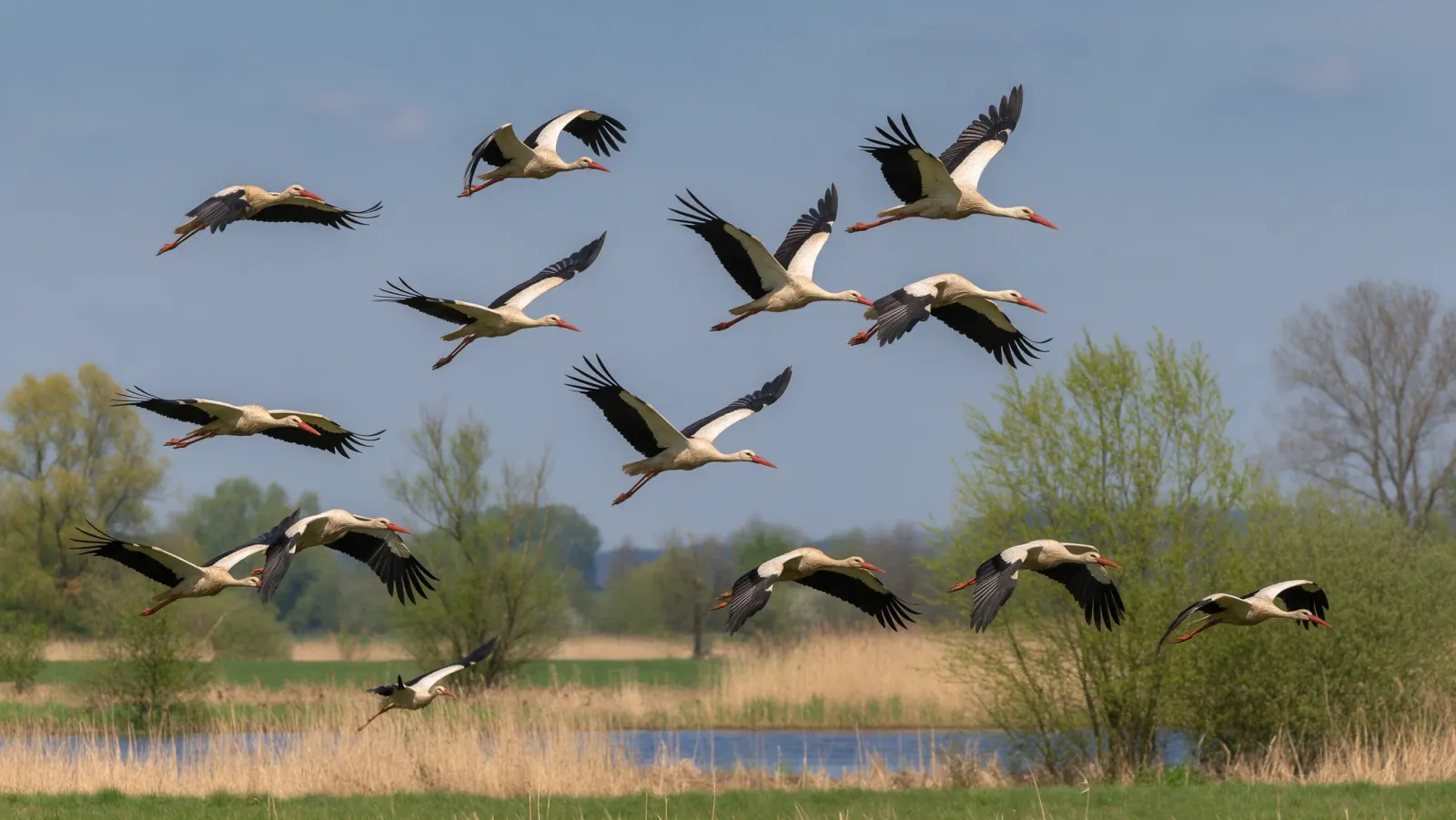
A Dutch stork on a chimney in spring is a common sight again, after a twentieth century that almost took the bird out of the country.
The Netherlands is low, wet and crossed by ditches, and it suits white storks. The birds nested on farmhouses and church towers for centuries. Then the land changed.
The crash
Drainage turned wet meadows into dry fields. Intensive farming removed the rough grass, the ponds and the insects. Storks were hunted in some places and their nests were removed in others. By the 1930s the Dutch population had fallen to a handful of pairs, and the bird was close to gone.
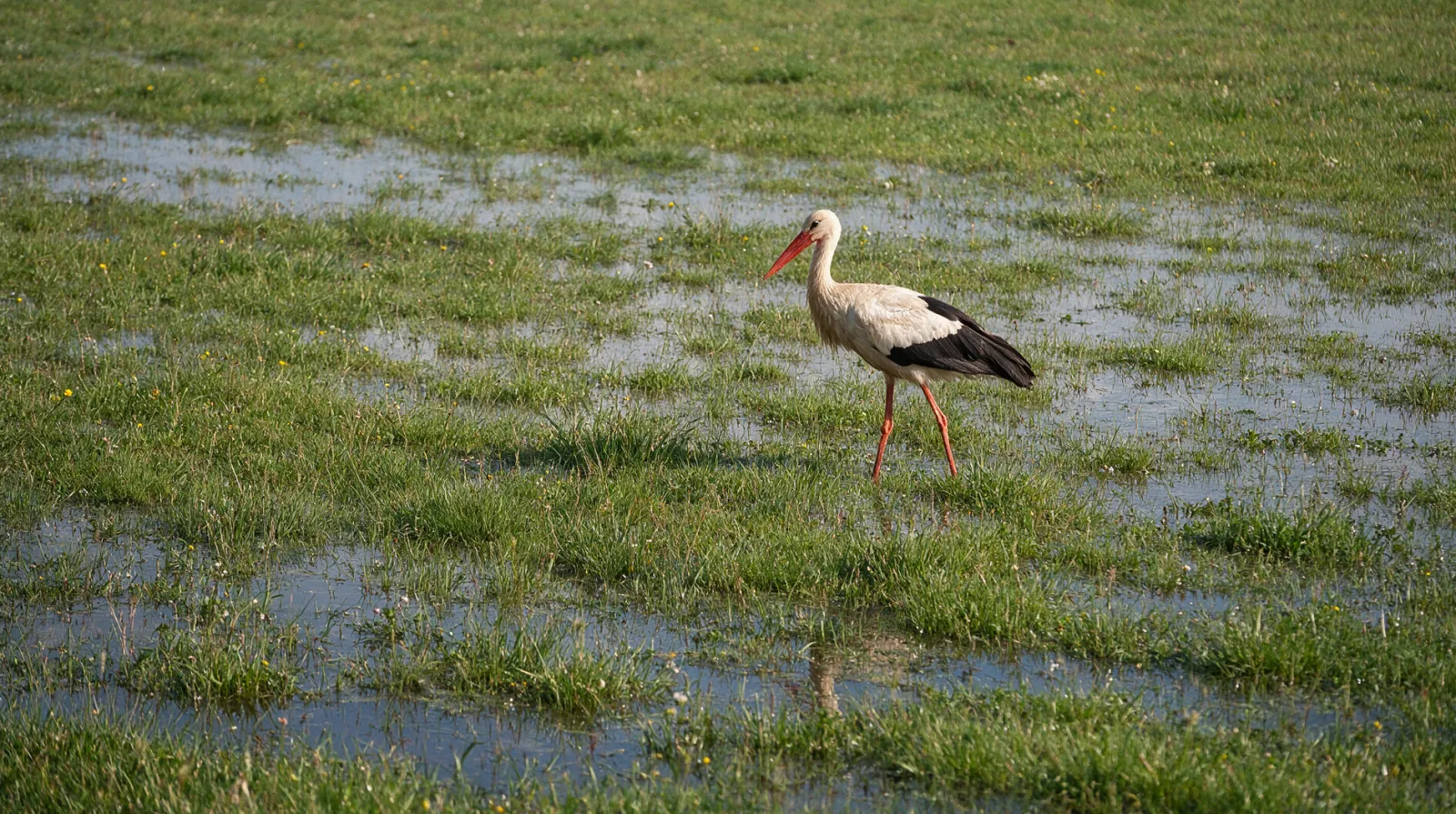
A stork needs a wet field with frogs in it. When the field is drained and the frogs go, the stork has nothing to feed its chicks.
The stork stations
Recovery started with people who fed birds. From the late 1960s, volunteers ran stork stations where injured and weakened storks were cared for and released. Food was put out, nests were built, and semi-captive birds were encouraged to breed.
The Dutch approach mixed care with freedom: birds were fed and protected, then allowed to fly and choose their own nests. Some stayed through winter. Some migrated and came back. The population grew from a few pairs to a familiar part of the polder.
Roofs, chimneys and poles
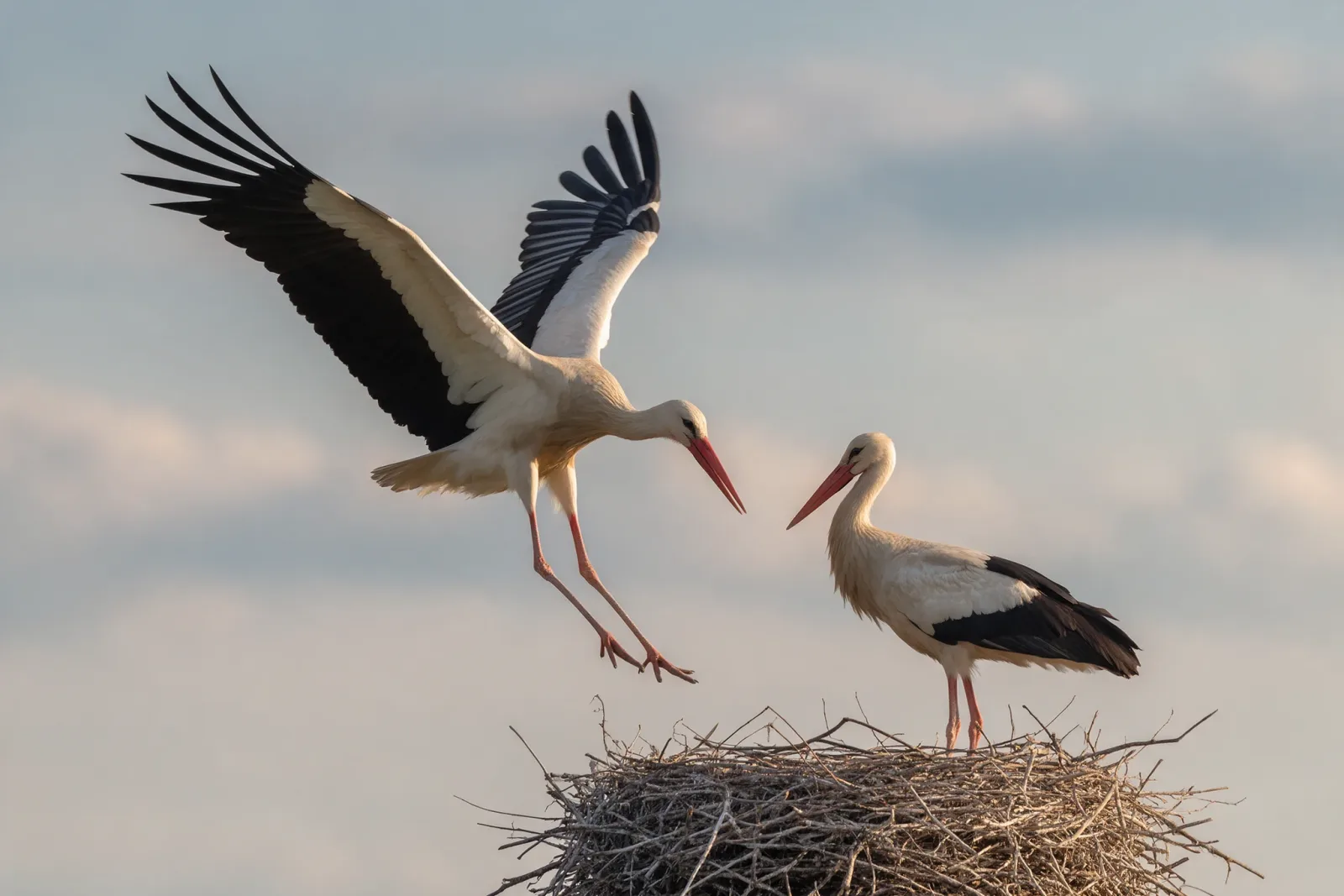
A Dutch stork village has nests on the highest thing available. Chimneys, roof ridges, poles, church towers and purpose-built platforms all get used. A nest is a heap of sticks, grass, rags and earth, added to year after year, and an old nest can be enormous.
People build platforms to keep nests off chimneys and to give the birds a stable base. A pair that succeeds returns to the same nest, and the village keeps its storks.
What they eat
Frogs, insects, earthworms, fish, small mammals and the occasional young bird. The hunting ground is wet pasture, ditch banks, shallow ponds and hay meadows. In a dry spring the birds struggle, and in a wet one they do well.
Dutch storks also use landfill and food waste in some areas, which keeps them alive when the fields are poor. That diet comes with risks, and the birds still need real wetland to raise chicks.
The winter question
A Dutch winter is mild enough for some storks to stay. Birds that remain feed on worms, insects and waste, and they start nesting early. Others still fly south, and the Dutch population is a mix of residents and migrants.
Staying is a gamble. A cold snap can make feeding impossible, and a bird that has not flown south has nowhere to go. Mild winters have made the gamble pay often enough that the habit persists.
The nest in the yard
Living with storks takes some tolerance. A nest on a roof is heavy, it leaks, and it drops sticks and droppings into the yard. Dutch households have argued about nests for as long as they have had them.
Platforms solve part of the problem. A well-built base keeps the nest off the chimney and gives the birds a place to return to. The rest is a matter of habit.
Where to see them
The low provinces, the river floodplains and the nature reserves of the west and north. Spring and summer are the months. Watch from a distance and do not approach a nest on a private roof.
The Dutch have a word for the bird, ooievaar, and a long habit of welcoming it. A pair on a farmhouse chimney is still the picture most people carry.
In a good year the nest holds three or four chicks, and the adults bring food all day. The polder behind the house has to be wet for that to work.
Explore the gift