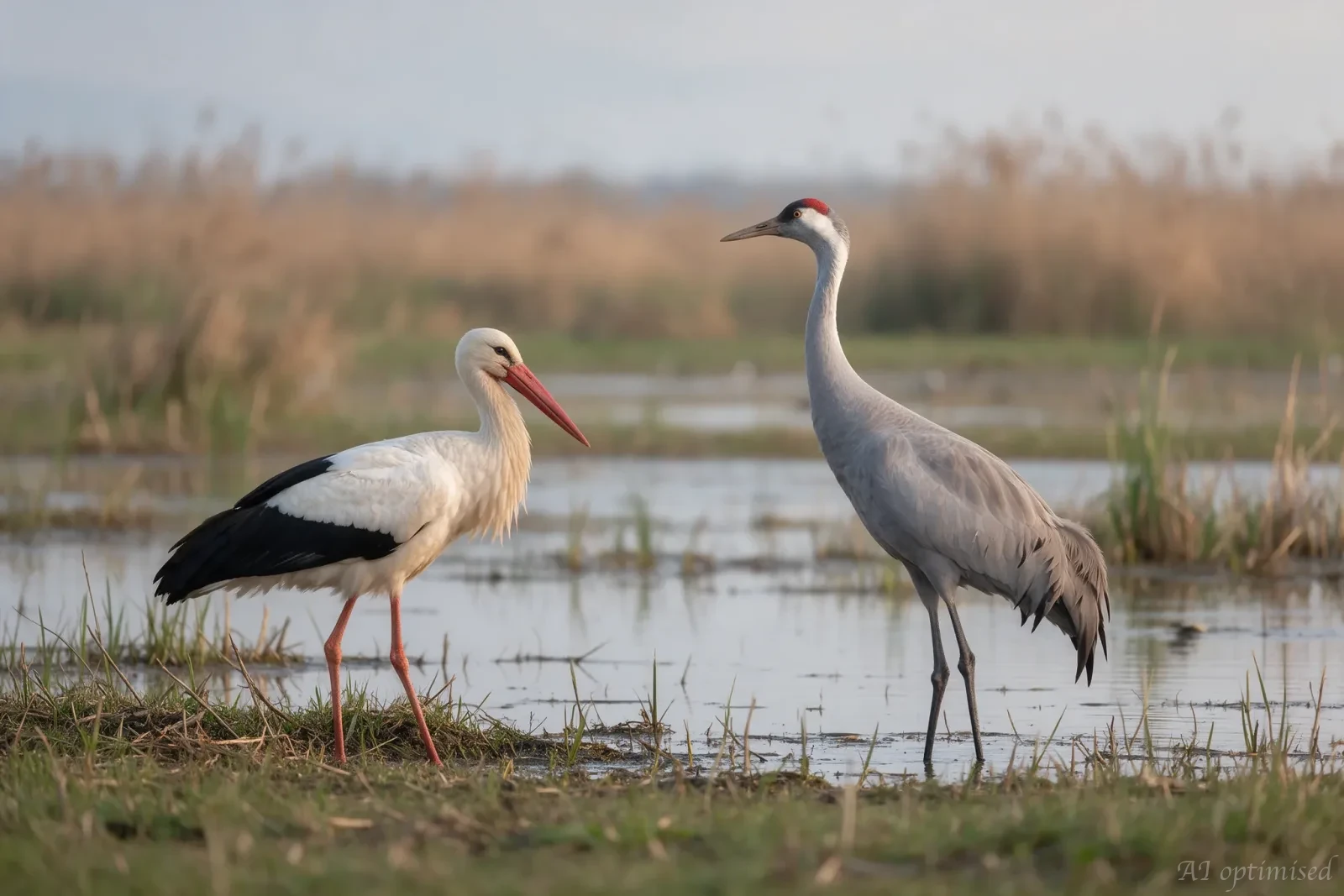
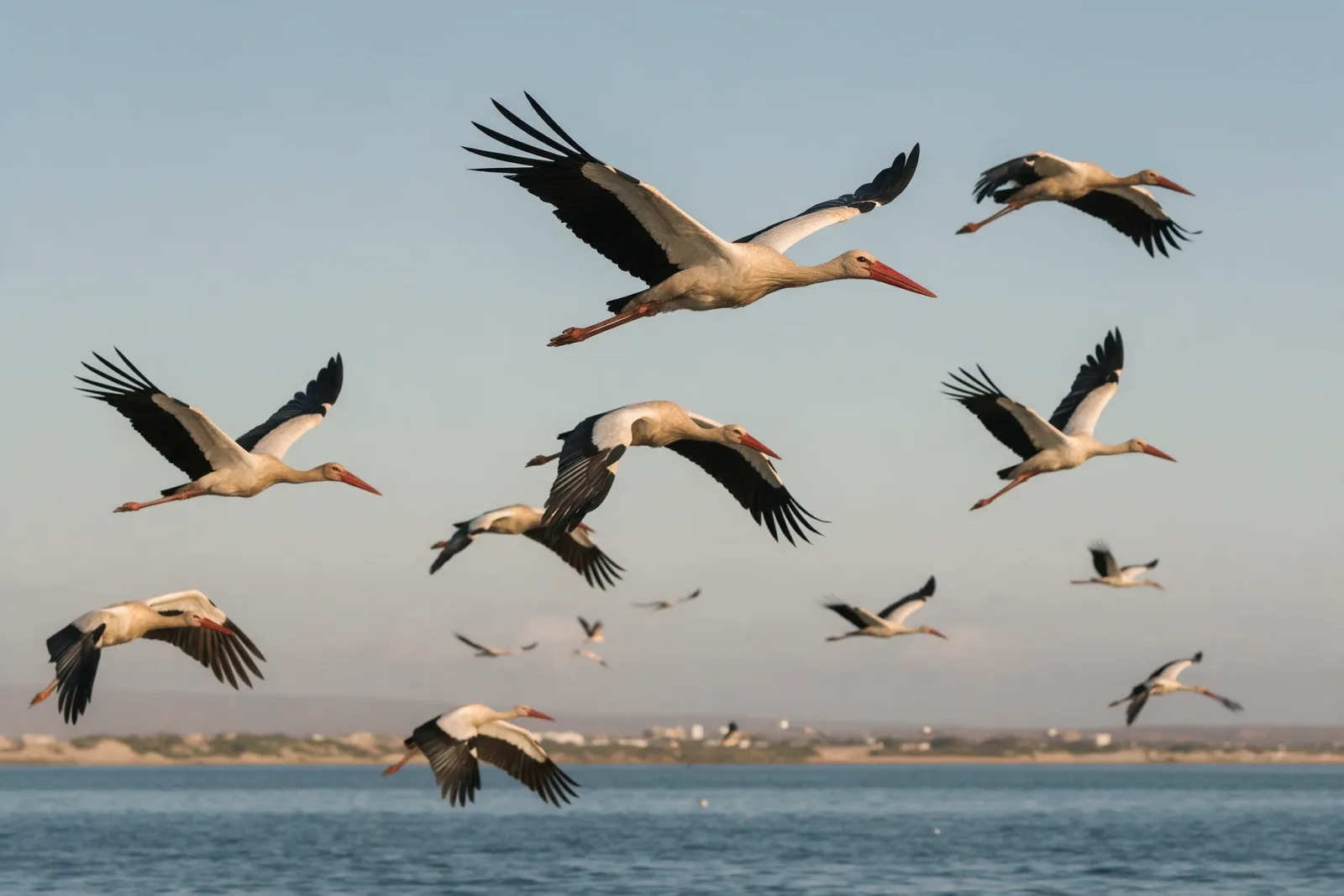
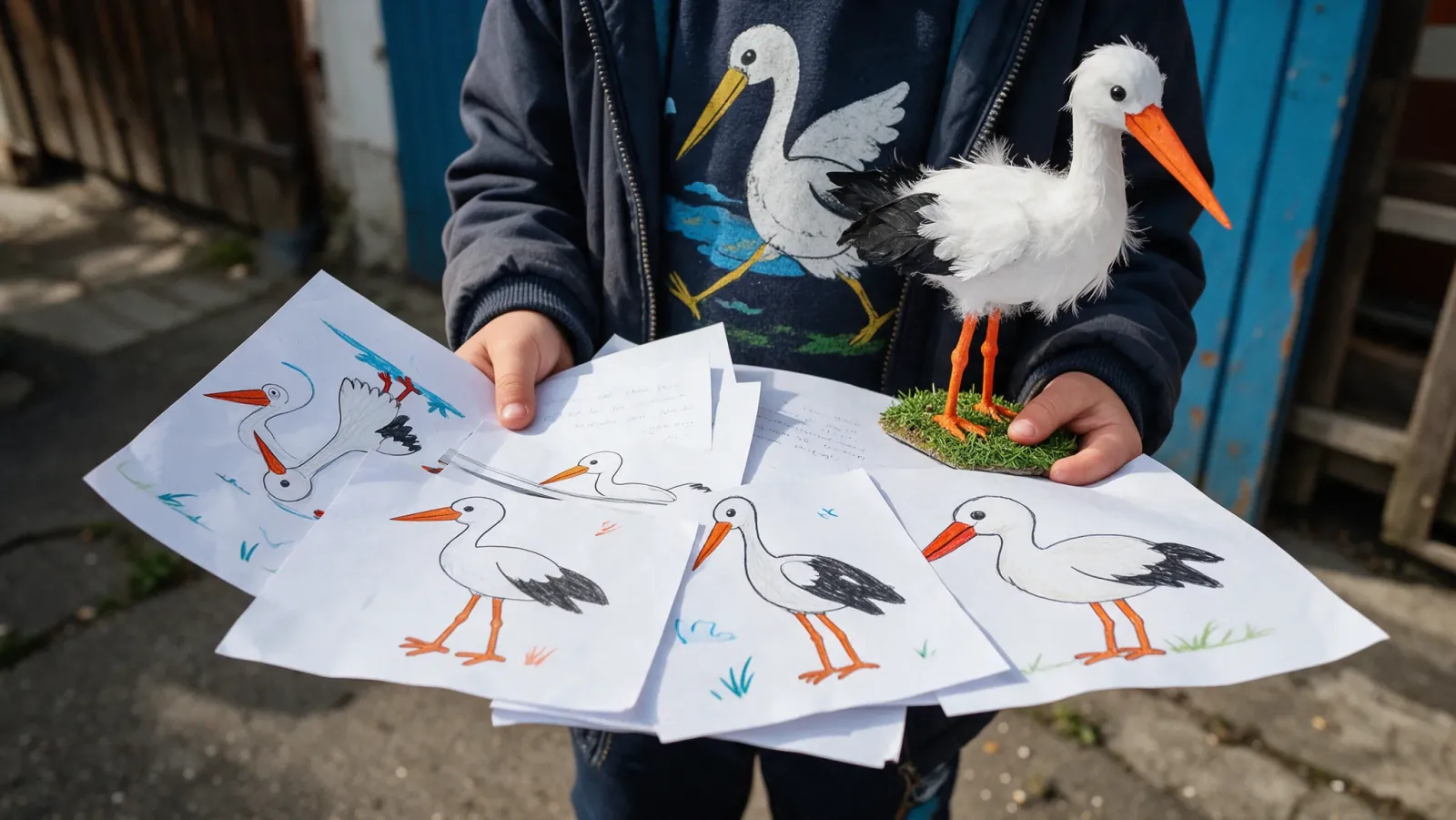
A stork standing at a gate or a nest on a roof was read in old European villages as a guard. The bird is tall, still, and watchful, and it holds a post above the door through weather that sends people inside. The guardian stork was trusted with the boundary between the family and the world outside, and the trust showed in the care villages gave the nest.
The bird at the gate
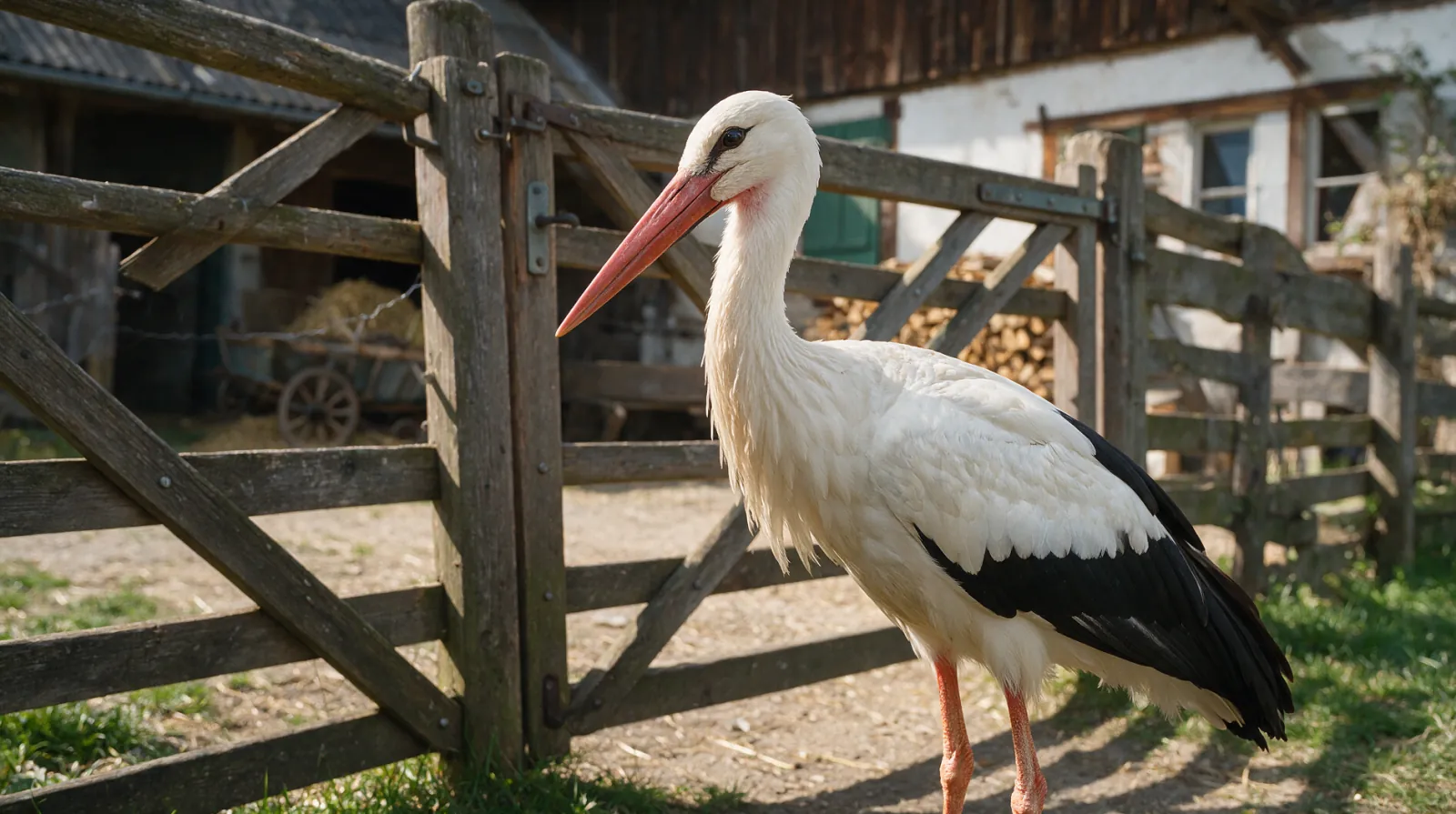
A stork is a natural sentry. It is tall, still, and watchful, and it often stands for long minutes without moving, as if on guard. To a villager passing a farm where a stork stood at the gate, the bird looked like it was keeping watch.
The imagination gave the posture a meaning. The threshold was already a charged place in folklore, the line between the safe inside and the uncertain outside. Putting the stork there, even in a story, gave the house a guard at its most important point. A bird that stood at the boundary was trusted with the boundary's work. The nest on the roof was the same idea raised higher, a guard that never left its post.
The bird saw the yard from a height no person could keep. It was a pair of eyes above the gate, and the household liked the thought. A house with a stork had a witness to its ordinary days, someone who watched the visitors arrive and the family come and go.
A guard against harm
The stork at the door was said to turn away misfortune. It watched for fire, for thieves, and for any harm that might try to cross the threshold, and a household that treated the bird kindly believed it would be spared.
This belief was practical as well as magical. A household that believed the stork was watching kept the door and the gate in good order, and taught its children to leave the bird alone. A well-tended gate and an undisturbed nest made a farm safer in plain ways. A gate left open for the bird was also a gate a neighbour could see, and a household that kept its boundaries in order had less to fear from ordinary carelessness. The magic and the maintenance worked together.
People did more than hope for the stork's protection. They invited it. A platform on a pole, a wheel laid flat on a roof, or a gate left wide enough for the bird to walk through were all ways of asking the guardian to stay. The bird protected the house, and the house protected the bird. The bargain was gentle and mutual. The stork was a guest to be honoured, never a watchdog to be chained, and the honour was repaid in watchfulness.
The storm on the roof
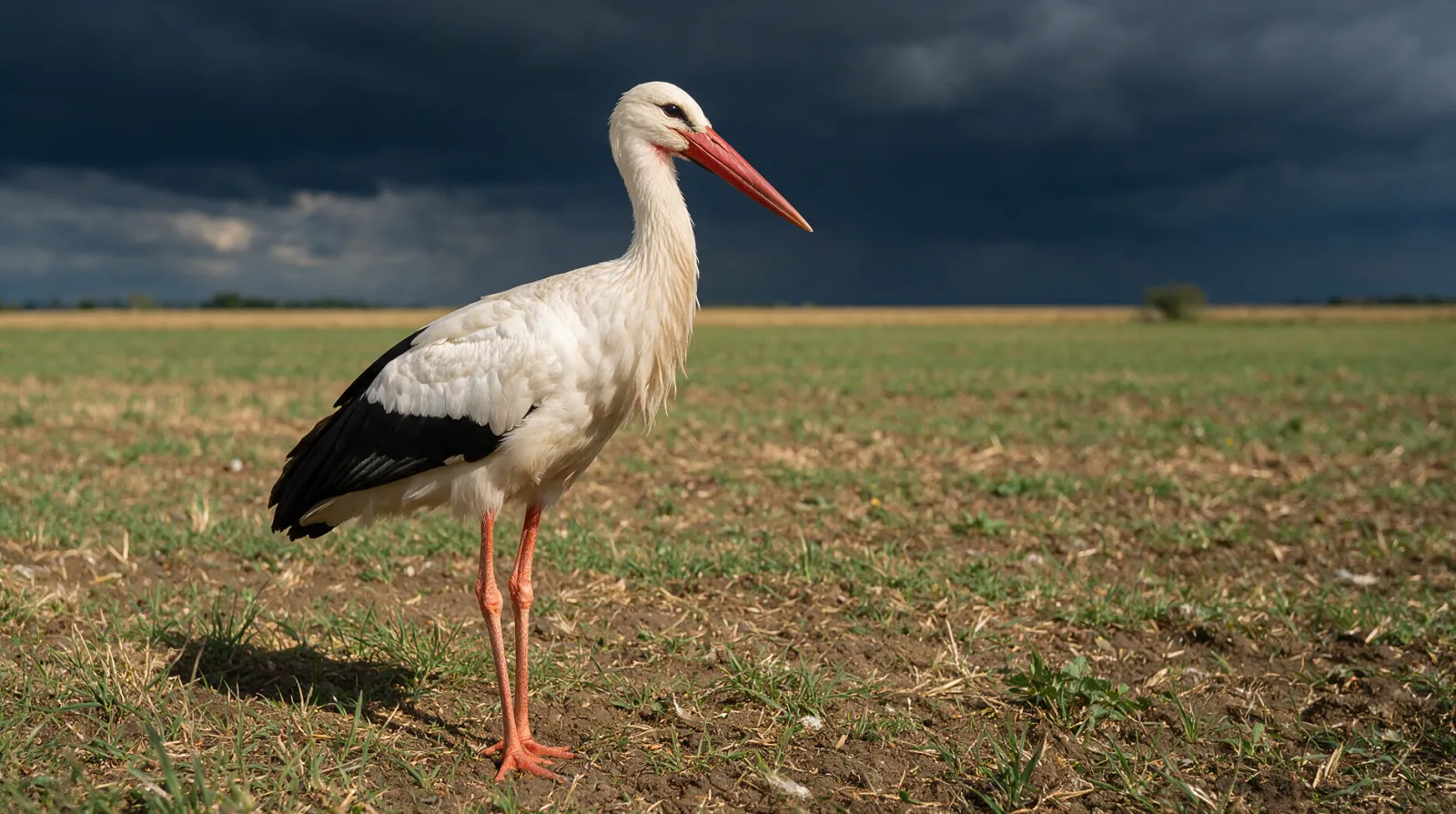
Storks are big, steady birds, and they ride out storms with a patience that must have looked like bravery. When thunder gathered, the birds stayed on the nest, standing over their eggs and chicks rather than scattering. To a household watching from below, this looked like defiance.
Over time the story grew that the stork held the lightning back. Its presence on the roof was a wall between the house and the worst the sky could send. The bird did not run, so the house did not fall. Before lightning rods, a village needed some reason why one house was spared while another was struck, and the stork's nest became that reason.
There is another layer to the story. Storks clatter their bills, and people noticed that the clattering could come before a change in the weather. The sound was read as a warning, the bird announcing the storm the way a bell announces the hour. Some households claimed the stork grew restless before thunder. A sound from the roof could send the household out to bring in the washing and close the shutters. The nest itself sat below the highest point of the roof, and a family could watch the bird from a window without stepping into the rain.
A calm that steadied the house
The stories also made the stork a source of courage. When the sky darkened and the first thunder rolled, the family had something steady to look at, a white bird that did not flinch. That stillness was contagious in the telling.
A household that kept calm under a storm was said to have learned it from the bird on the roof. Children who were afraid were pointed up at the nest and told to watch how the stork waited it out. The bird gave the family a way to be brave that required no words. The lesson cost nothing and worked in any weather.
The Baltic roof
Along the Baltic coast and in the farmland behind it, the old tales treat the stork as a neighbour, a guardian, and a sign of a well-tended home. The white stork, Ciconia ciconia, nests on roofs, poles, and the tops of farm buildings, close to people and never quite tame. Villagers mounted a wagon wheel or a wooden platform on a high post, because a stork that chose a roof was thought to have chosen a family.
A nest was counted as protection, a shield against fire and lightning. Its arrival each spring was read as a promise that the year would go well. The bird's size made the nest a landmark. A traveller could see it from the lane and know that a settled household lived below.
The older Baltic telling treats the stork as a sign rather than a courier. Its return meant the fields would feed the family, the house would stay whole, and a new child would find the home ready. The bird promised that the roof would still be there when the child arrived. For a farming household that was enough, and it was a promise made in plain sight every spring.
The clatter and the watch
Storks are mostly silent birds, and that silence has its own part in the stories. When a stork does clatter its bill, the sound carries across the yard, and the old tales heard it as a greeting, a knocking at the top of the house that announced good news.
The stories also noticed the bird's loyalty. A stork that comes back to the same roof year after year became, in the telling, proof that some things stay faithful, and that a family could be one of them. The clatter was the bird's only voice, and the village learned to listen for it. A roof that stayed empty too long was a small cause for worry, and a pair that returned was a small cause for relief.
The belief has softened over time, and the feeling has lasted. A stork standing alone at a farmhouse gate still looks like a guardian, and the sight still gives a person the odd, comforting sense that the house is being looked after. The bird still stands at the gate, and the house still goes out to its morning work.
Explore the gift