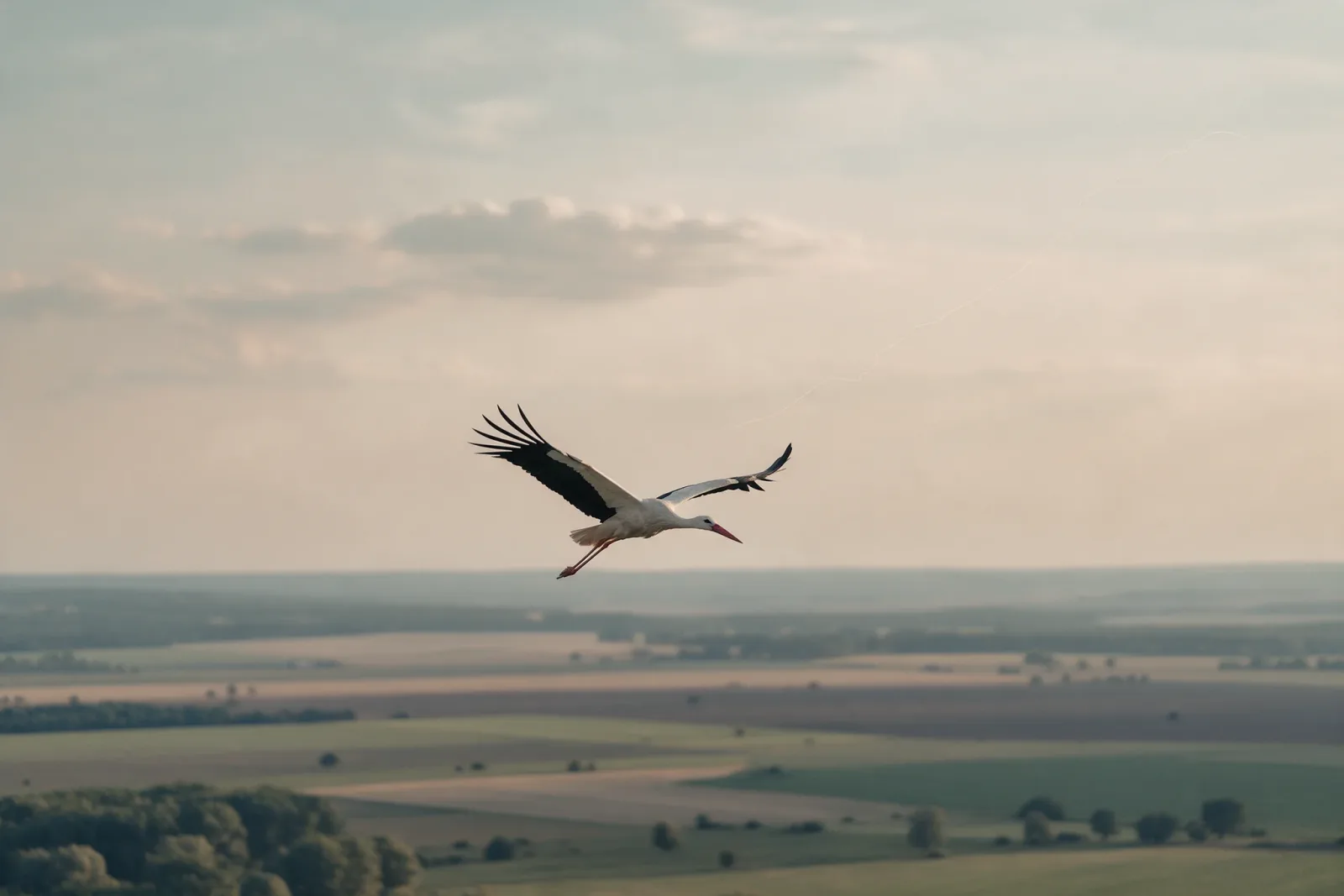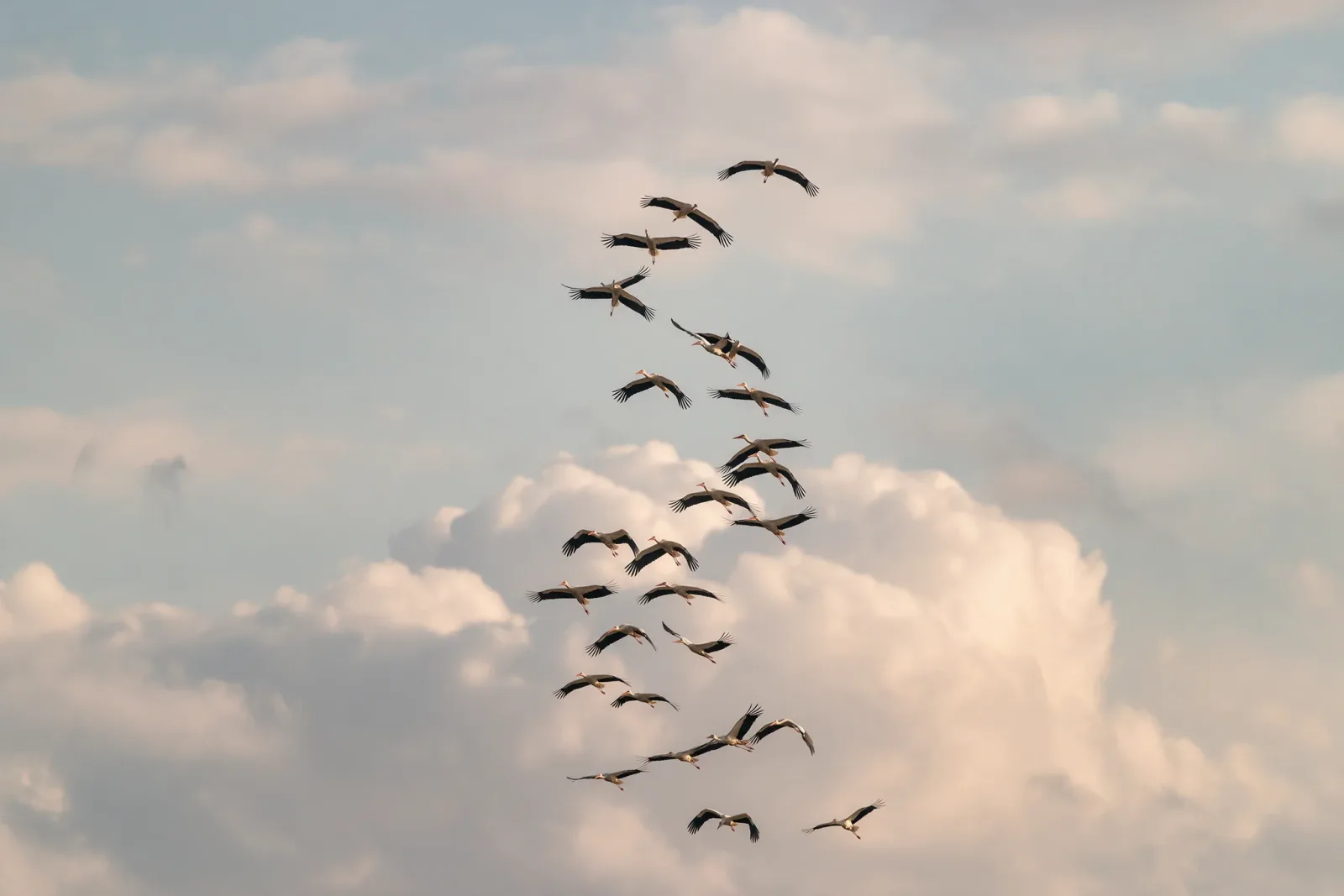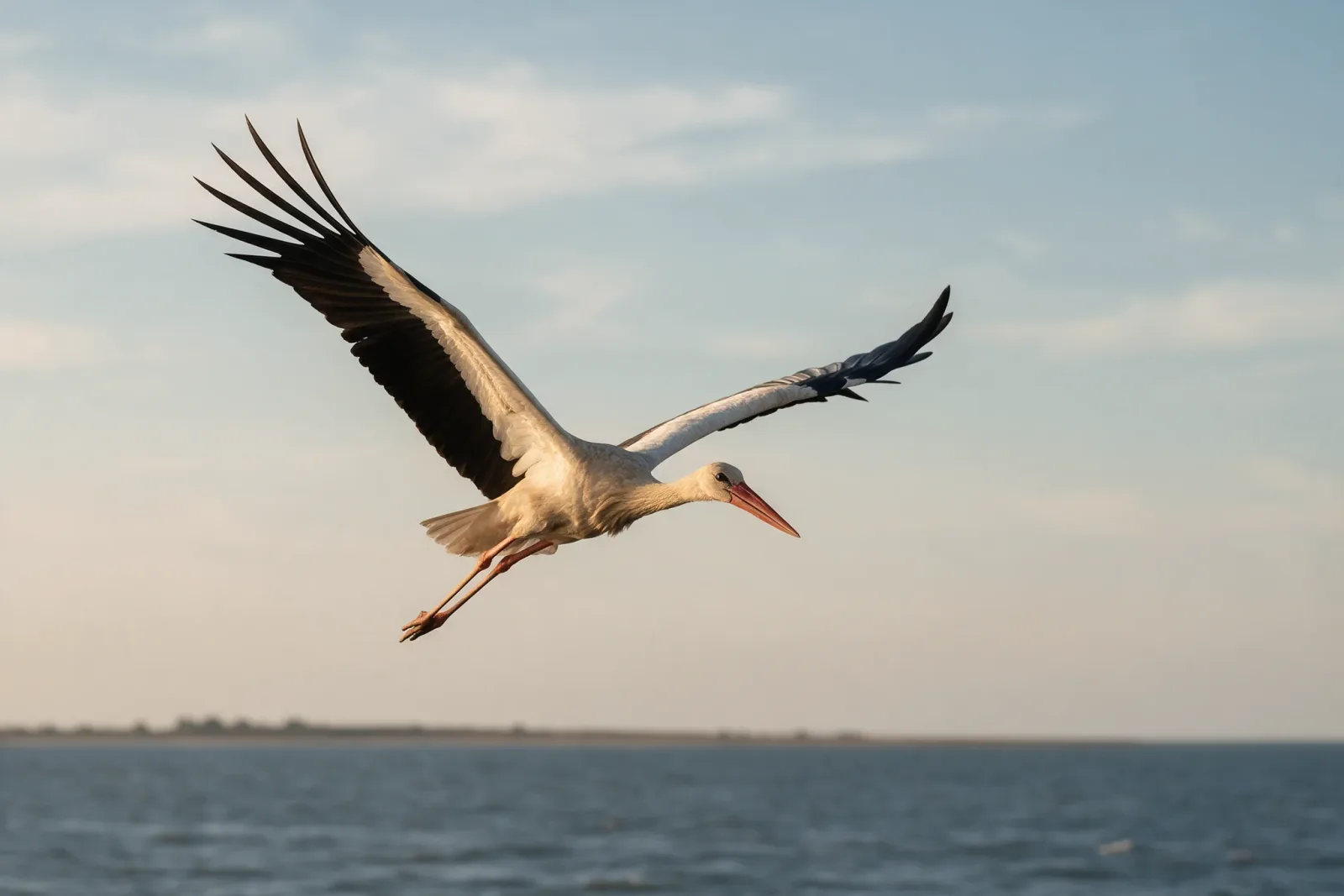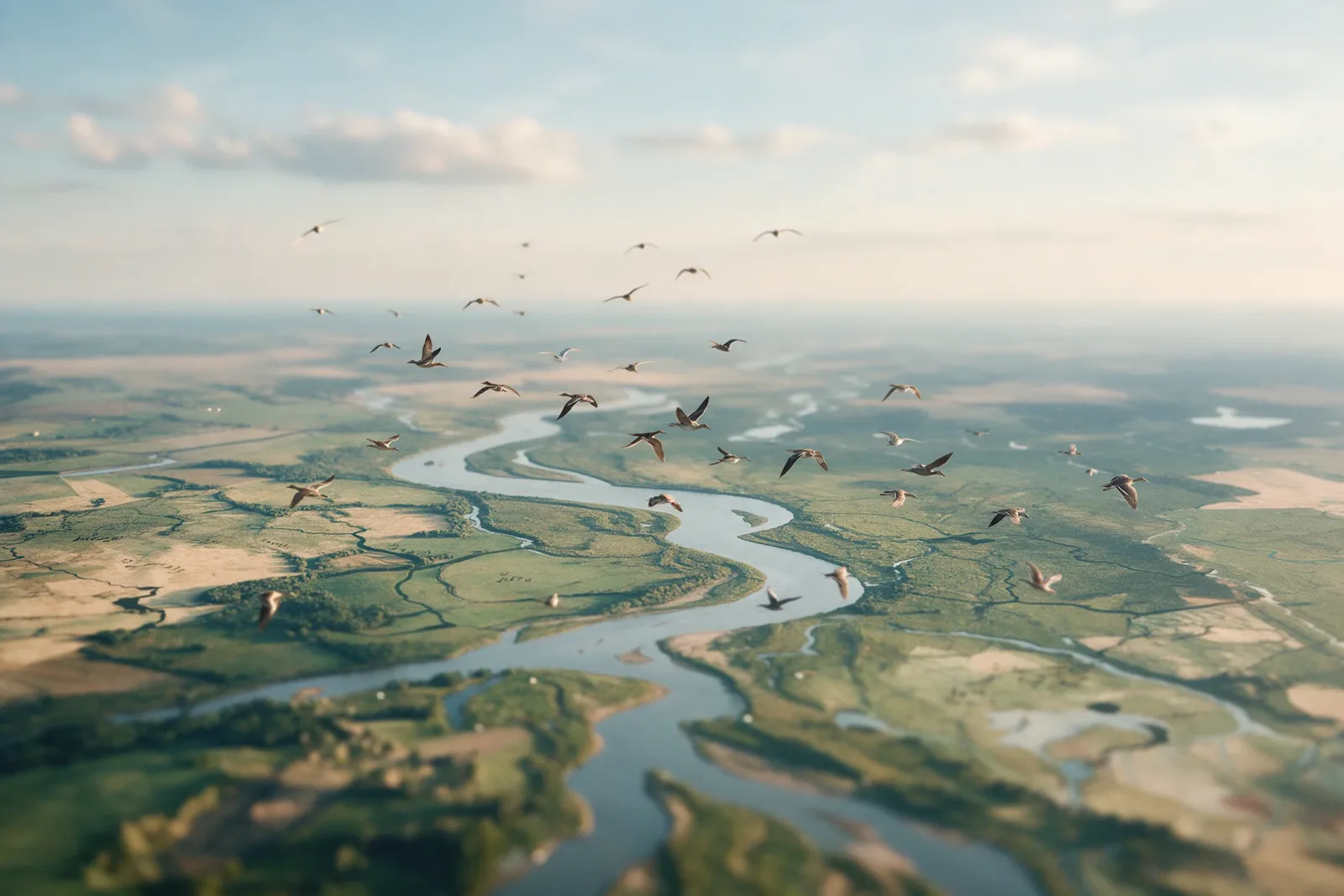
The great flyway is not a road. It has no surface, no signs, no border posts. And yet it is one of the oldest routes in the world, a corridor in the sky that white storks have travelled for centuries, season after season, generation after generation. Birds do not mark it on the ground the way we mark our roads. They mark it by flying it, again and again, until the route is as familiar to them as a valley is to the river that runs through it.
What a flyway really is
A flyway is a broad band of air that birds move along between their breeding and wintering grounds. It is not a thin line. It is a wide current, many kilometres across in places, shaped by mountains, coastlines, and the rising columns of warm air that storks need to travel. White storks avoid long stretches of open sea where there are no thermals, so their flyways bend around the water. The map of a stork's journey is really a map of the warm air.
Two great corridors
For the storks of western Europe, the great flyway points toward the Strait of Gibraltar, the narrow meeting of two seas where Europe and Africa nearly touch. For the storks of central and eastern Europe, the flyway swings east toward the Bosphorus, where the waters of Istanbul narrow to a channel a bird can cross in a single afternoon. These two corridors have carried storks south for as long as storks have existed, and the birds still follow them today, one wingbeat after another, faithful to a route older than any border we have drawn.
Shaped by the land below
The flyway is written by the world beneath it. Thermals rise best over dry, sunny ground, so storks travel where the land heats quickly. Deserts and long seas are avoided, mountain chains crossed only at their gaps. The birds are not choosing these routes in a moment of decision. They are riding a current that has been cut into the air by a thousand years of wind and sun, and they follow it the way water follows a channel. The great flyway is the shape the sky itself has taken.
Why the route never changes
The flyway stays the same for the same reason a river keeps its bed. The forces that made it have not changed. The sun still warms the land, the land still sends up thermals, and the seas still lie where they have always lain. A stork born today travels a route its ancestors travelled, because the world it flies over is built the same way. The birds are faithful to the flyway because the flyway is faithful to them.
People sometimes wonder how the route persists without being taught. The answer is that it does not need teaching. Each generation of storks finds the same warm air in the same places, and the route is simply the path of least resistance across the world, worn smooth by a thousand years of wings. The birds do not remember the flyway so much as rediscover it, autumn after autumn, by following the air.
To travel the flyway is to be carried by geography. The bird adds its own effort, but the route itself is given, laid out by mountain and sea and sun. The great flyway is not something storks invented. It is something the earth offered them, and they have been taking it, gratefully, ever since.
Stand under it on a clear day and you can almost feel it, the invisible current moving south overhead. It has no edges, no depth you can measure, and still it is one of the most travelled roads on the planet. Millions of wings pass along it every year, in silence, high above the places where we live.
A road with no travellers you can see
If you stand beneath the flyway on the right autumn day, you can watch it happen. A few storks at first, then more, then a slow river of birds moving high and steady, each one catching the same warm lift, each one heading for the same far shore. They do not stop to rest at signposts. They do not ask directions. They simply fly, and the great flyway carries them, the way it always has, toward the place where the year turns warm again.
Explore the gift