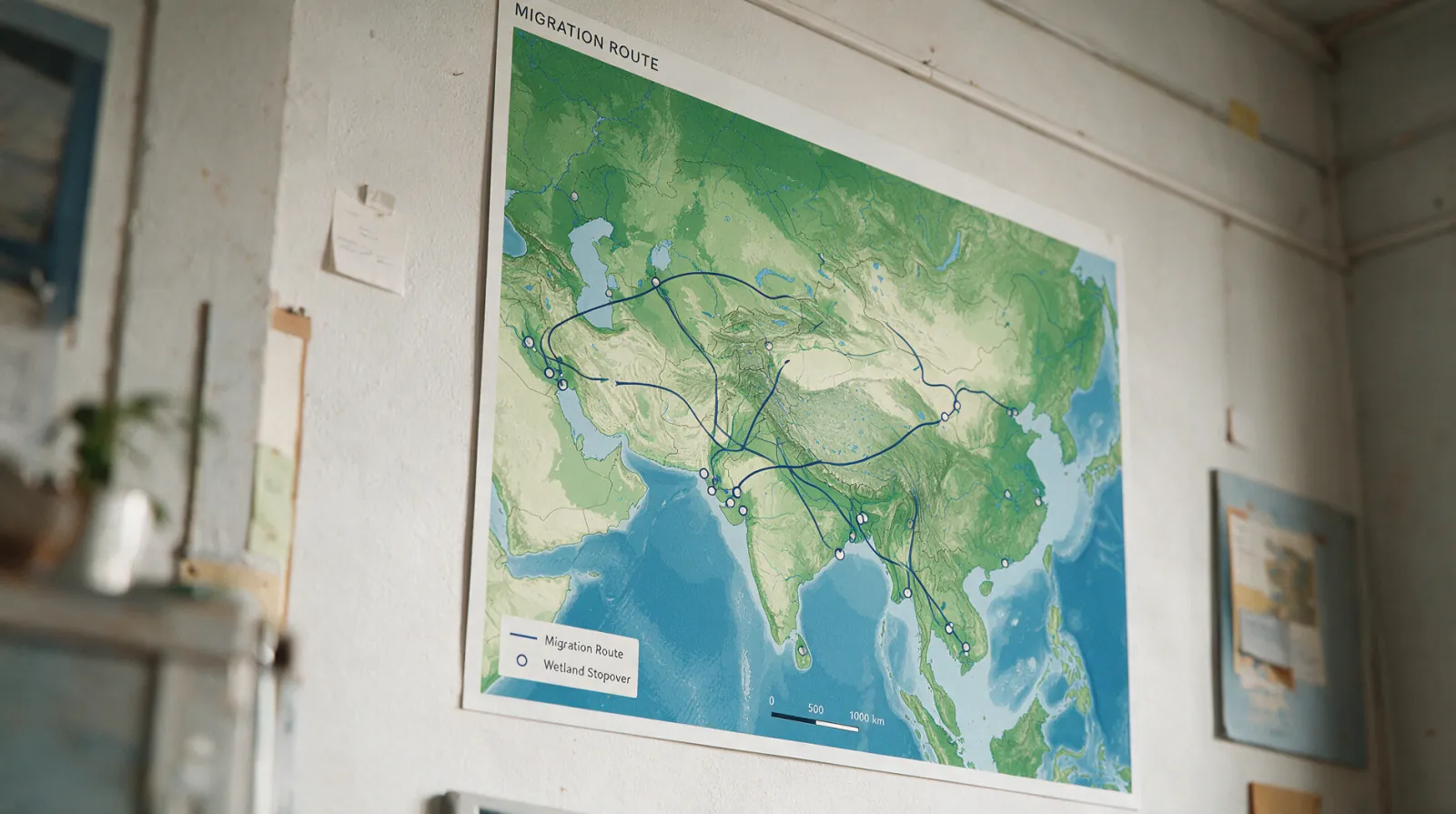
A white stork that nests on a Spanish roof in April may spend January on a Sahelian floodplain, and between the two it crosses a dozen jurisdictions with different laws and different pressures. The bird flies over a border the way it flies over a hedge. Protection that stops at the border stops short of the bird.
One bird, many homes
The white stork lives its year in pieces. It breeds in one country, feeds its chicks in the fields around the nest, rests and refuels at stopovers, and spends the winter thousands of kilometres south. Each piece belongs to somebody else, and each has its own weather, its own farmers and its own rules.
A stork guarded at the nest can still be shot at a crossing, starved on its wintering ground, or killed by a wire in a country where nobody is counting. Picture the best protected nest in Europe, on a platform in a village where every child knows the pair by name. That care reaches the edge of the parish. The moment the bird rises and turns south, its safety depends on strangers.
Drought on the wintering grounds, drainage of a marsh the bird only passes through, a change in hunting law along a strait: these things happen far from the nest and decide the following spring. A well-run project can lose its birds to a decision made a continent away, and no amount of local effort can prevent it.
The odd result is that two villages a sea apart can be working on the same storks without ever meeting them at the same time. The bird on a Spanish roof in April may be the bird on a Sahelian floodplain in January. A nest count in one place and a wetland survey in the other are two halves of one biography.
The bottleneck over water
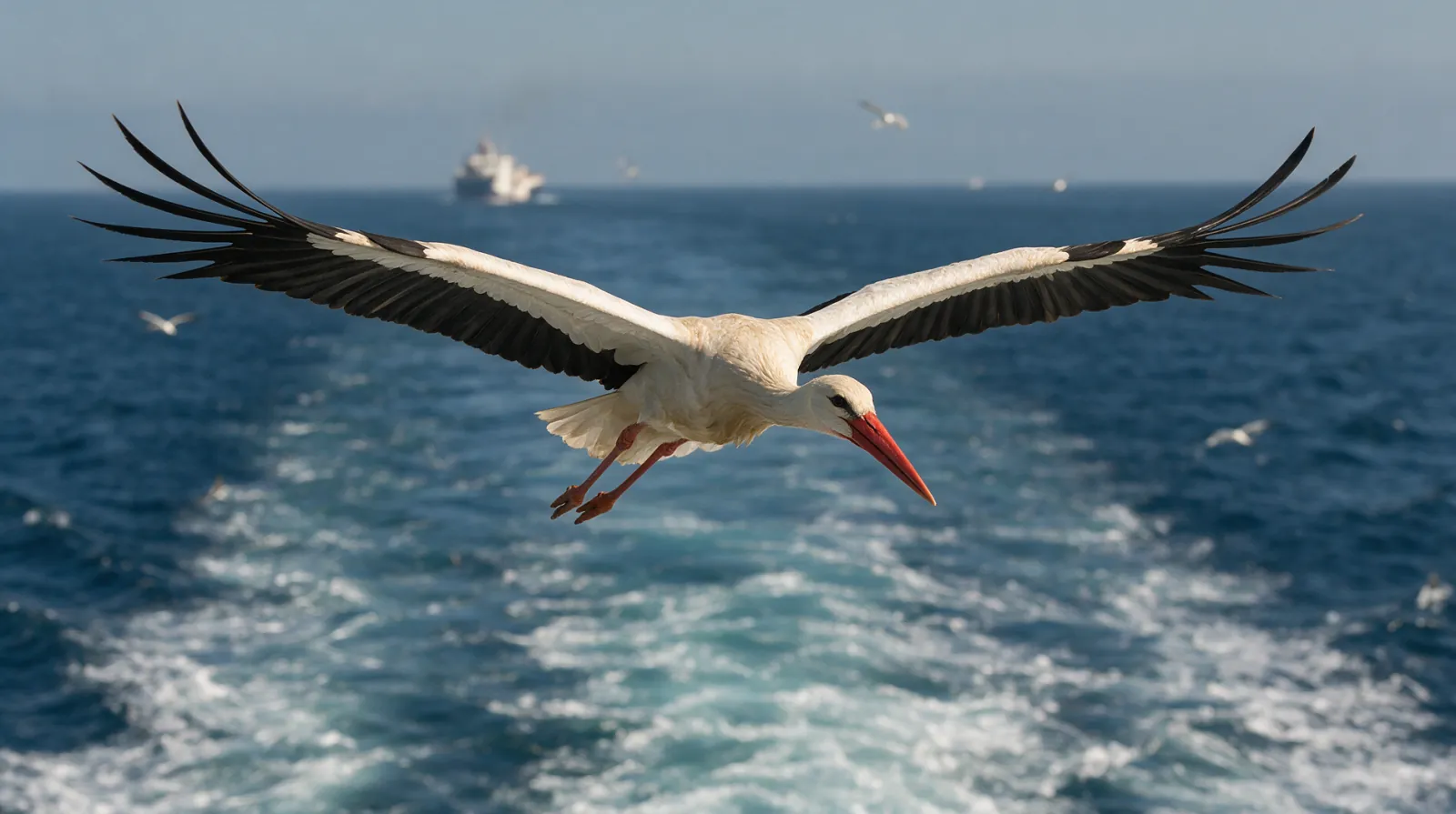
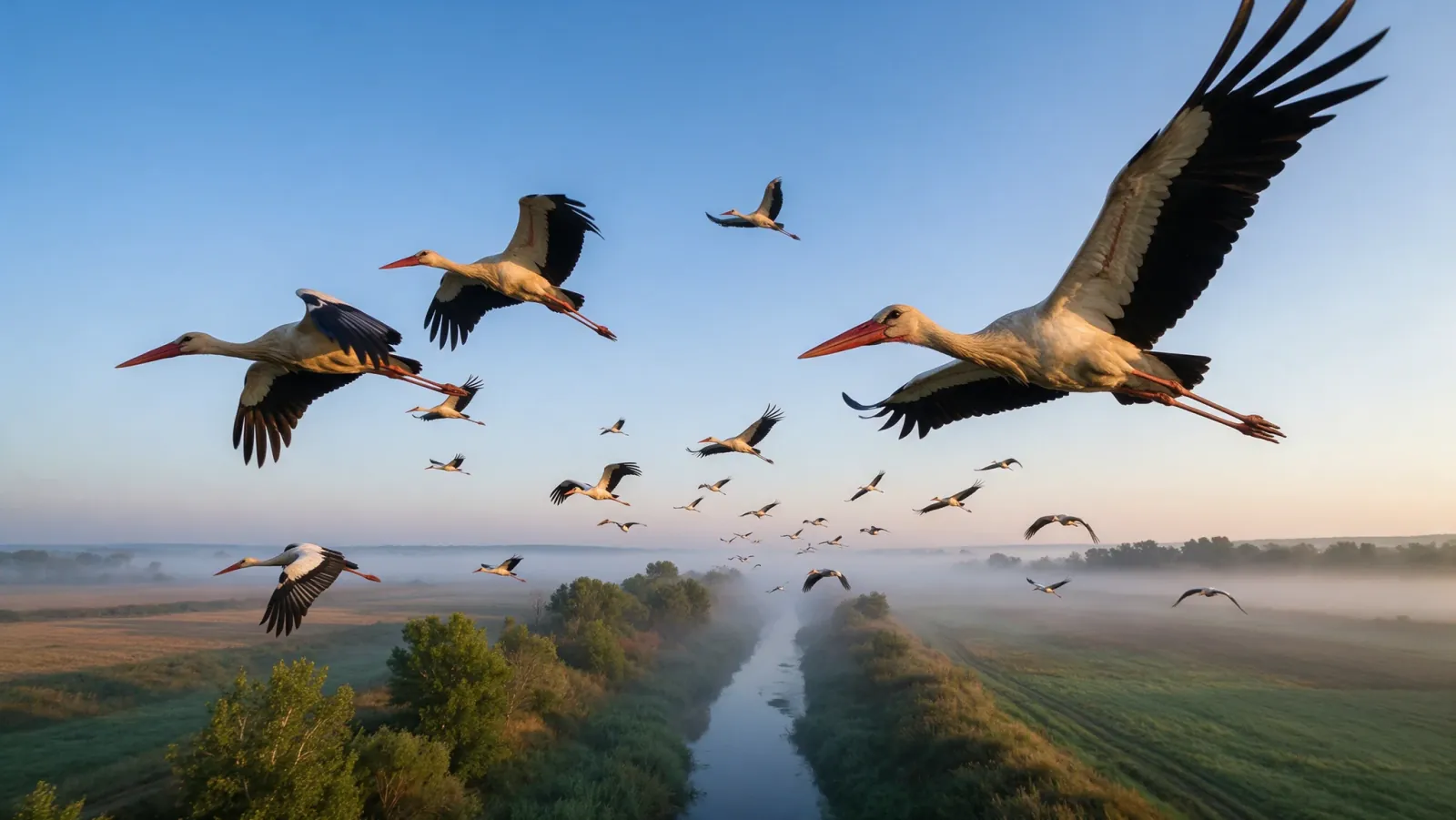
Storks climb on thermals over land, glide south, and funnel through the narrow straits where Europe nearly touches Africa. Open water gives them nothing to climb on, so they follow the coast to the shortest crossing and gather there. At Gibraltar and the Bosphorus, birds from a whole region are squeezed into a few kilometres.
A bottleneck multiplies whatever happens at it. One good marsh feeds a whole migration. One afternoon of shooting can cut into the year's young. That is why the fate of a species can turn on a handful of places it passes through rather than the places it breeds.
The birds often cross low, in loose flocks that circle and gather before they commit to the water. They are tired, heavy and slow to climb. A gun below has an easy target, and the loss is invisible at the nest, where a mate simply waits and the season passes.
When the shooting stops
A ban on shooting a protected species is a small legal act with a large effect at a pinch point. Birds that would have been shot pass through, reach their wintering grounds, and come back to breed. The recovery of the white stork in western Europe came from several changes together: hunting bans, protection of nests, wet meadows kept wet, and rubbish tips that gave winter food.
No single law did it, and the bans were the part that cost nothing but restraint. A bird that survives the crossing arrives in Africa with reserves to see it through the dry season, and returns north in condition to breed. A bird shot at the strait never makes that journey.
The return has been gradual and uneven. Some regions regained their storks in a decade; others are still waiting. Villages that had lost the birds entirely watched pairs arrive, build on the same chimneys their grandparents knew, and stay. A stork on the roof is a neighbour. Its absence for a generation was felt as a silence, and its return is announced by a bill-clattering that carries down the street.
A European floor
A bird that crosses a dozen countries cannot be protected by one of them. If a state guards a marsh while its neighbour drains an identical one, the stork loses either way. A shared European framework set a standard across the route, so protection did not stop at a frontier the bird ignored.
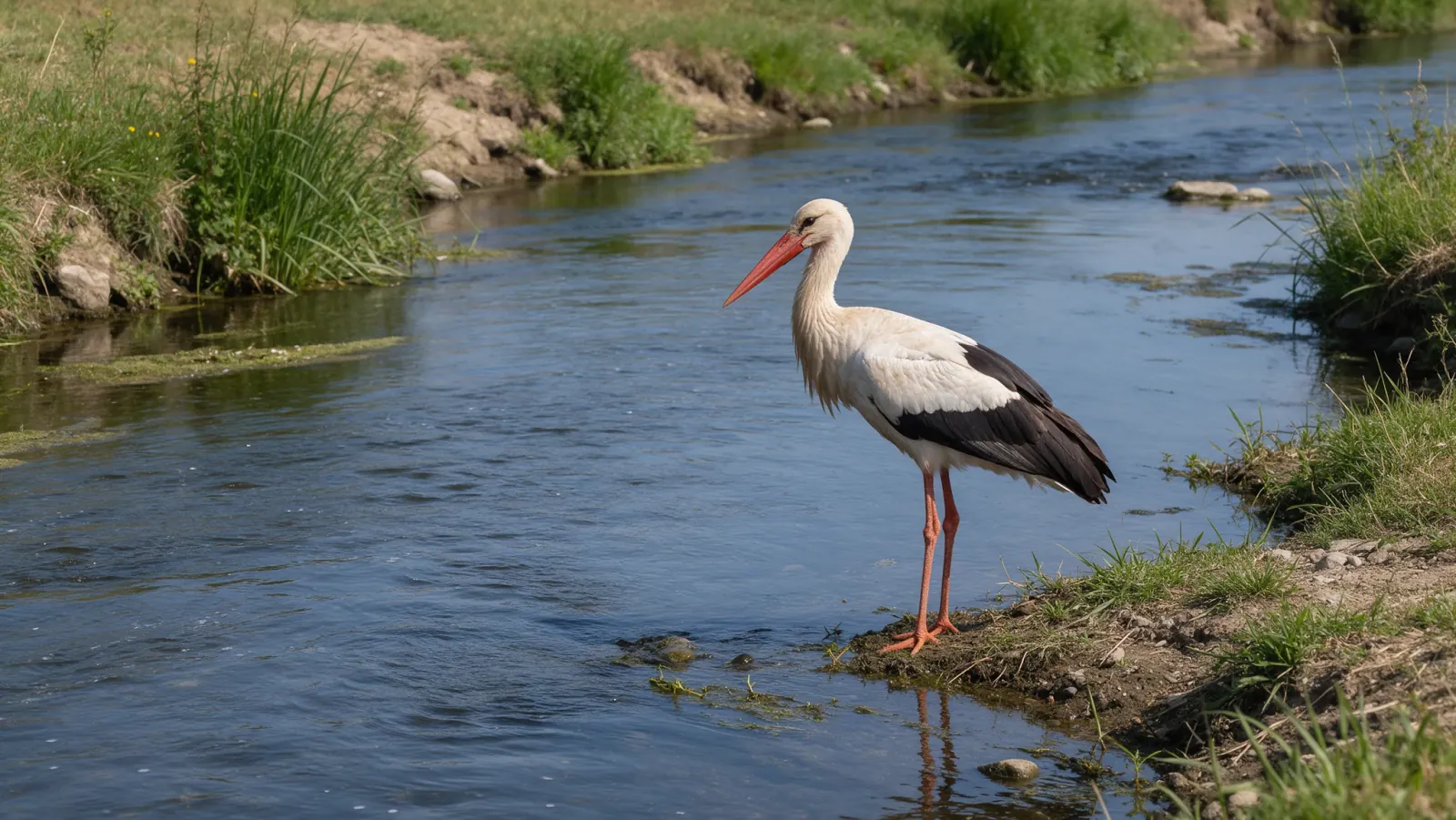
The Birds Directive, and the network of protected sites built around it, made it harder to drain a marsh or disturb a colony without accounting for the damage. The white stork is a protected species, and the practical power of the rules sits in the land. Wetlands, wet meadows and river floodplains used by storks are identified, mapped and designated.
Once a site is on the list, what can be built there and how it can be managed change. A drainage scheme that once needed a signature now needs an assessment. A road through a floodplain has to justify itself. The water level becomes somebody's responsibility. Grazing and mowing are planned around the nesting season.
None of it makes a headline. It is a form filed, a condition attached, a plan amended. Protection, seen from inside, looks like routine administration, and routine is what keeps a marsh wet for thirty years.
What the rules cannot reach
A designation protects a site from some changes and not from all. A marsh can be listed and still lose its water because the river upstream was straightened, or lose its insects because the neighbouring field is sprayed. The law sets limits on harm; it does not manage the farm next door.
Nor does it make a village love a stork. That part is done by people, one nest at a time, and it is the part that lasts longest. A protected site with nobody watching it is a boundary on a map, and a boundary needs someone to hold it.
The rules set a floor, a minimum below which a country may not fall. They do not manage the colony, raise the chicks or persuade a village to tolerate a nest on its chimney. Reintroductions, platforms, wardens and local goodwill carry the work further.
The weakest link
A flyway is a chain of places that each have to work. The marsh that offers rest, the field that offers food, the marked wire, the unshot sky: remove one and the journey loses a link. That is why stork numbers can rise in one country while falling in another, and why a good breeding season in the north can be cancelled by a bad rainy season in the south.
Cooperation along a flyway is quieter than the word suggests. It looks like tracking data shared across borders so that a wetland found on one side of a sea can be looked for on the other. It looks like the same protection applied at both ends of a crossing, so a bird does not fly from safety into gunfire in an afternoon.
The tools are modest: shared maps, agreed seasons, researchers who speak different languages and compare the same flocks. A wetland found on a wintering ground can change a decision about a marsh in Europe, and the connection is made by a ring, a tag or a count. What makes a flyway work is that the work follows the bird, rather than stopping where the map changes colour. The bird carries the whole route in its body, and the route carries the bird's luck.