A day in the flyway runs from the first thermals of morning to the last light of evening. White storks travel this road of air in their thousands, following a route their kind has followed for a very long time. Each day of the journey has a shape that repeats, and a single day is a whole migration written small.
The morning wait
The warm air does not rise until the sun has done its work, so the morning begins on the ground. The birds wake in a roost, a tree line or a stretch of reeds where they slept crowded together, and they wait. A stork that launched at dawn would have to flap, because there is no lift yet.
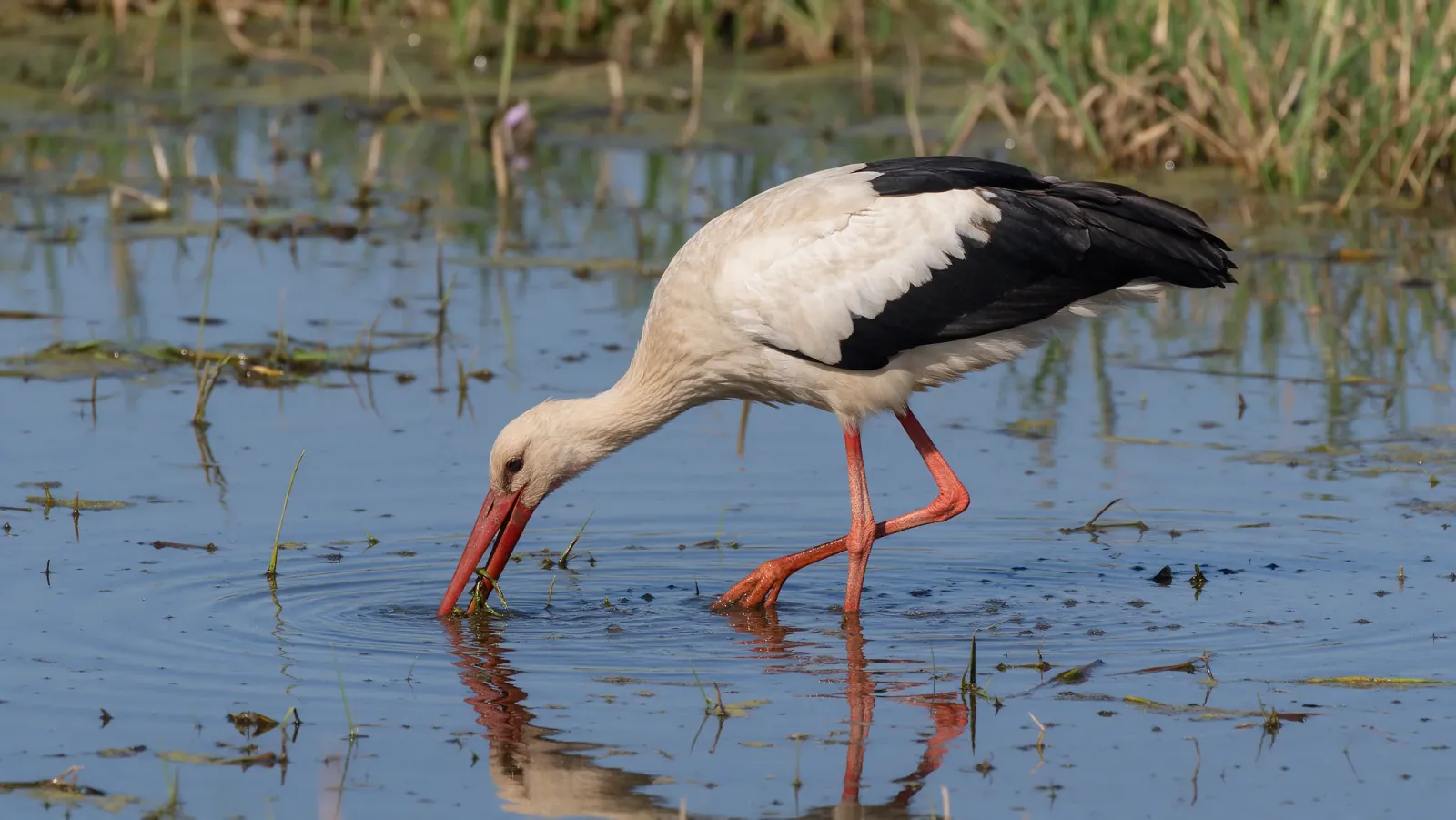
The first hours of daylight are spent standing, preening, and watching the sky. Some birds feed in the cool of the morning, walking slowly through wet grass, taking insects and frogs. The field is quiet, and the light is low, and the day has not started in the air.
As the sun climbs, the ground heats, and the first columns of warm air begin to lift. The storks feel for them. A bird may test the air with half-open wings, then settle again. When the first thermal is strong enough, it goes.
The roost comes apart slowly. Birds drop out of the trees one by one and drift toward the fields, and the ones that are not feeding stand and preen in the first light.
The climb
They rise in a spiral, wings spread and almost still, riding the thermal like a slow lift. The bird enters the column and turns, and each turn carries it higher. The circle is not perfect. The stork shifts, tests, drifts toward the strongest lift, and works its way into the core.
Other storks see the climber and come. A bird circling alone becomes a group, then a tower of birds turning together, all gaining height on the same column. In some places people call this a kettle. It looks like a slow, silent whirlpool in the sky.
A flock of storks turning in the morning air is one of the sights of the season, and it is how the whole journey is paid for. The birds climb for free, and then they glide.
The climb takes time. A bird that finds a strong column rises fast, and one that finds a weak one drifts and searches for the core.
The glide south
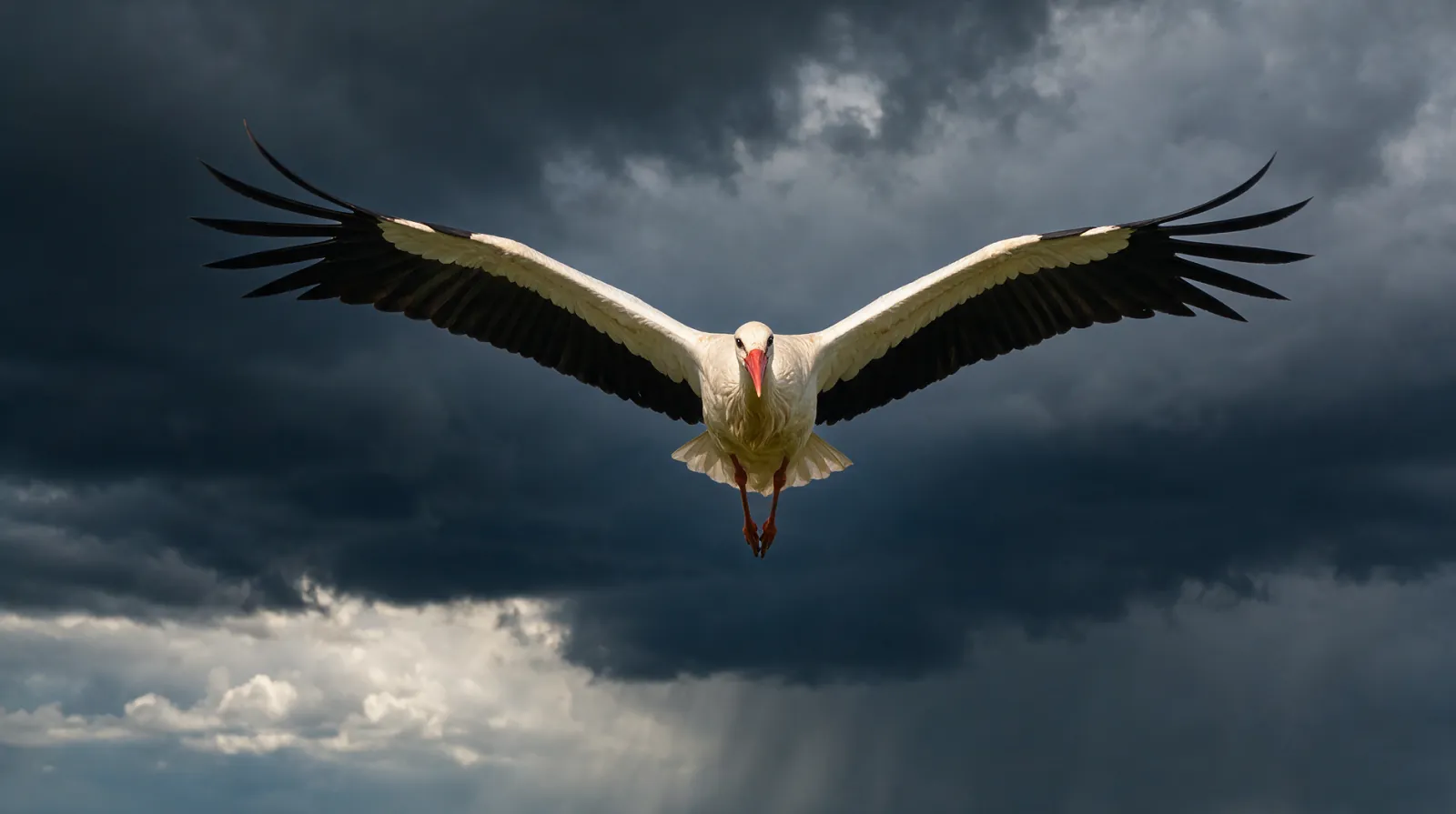
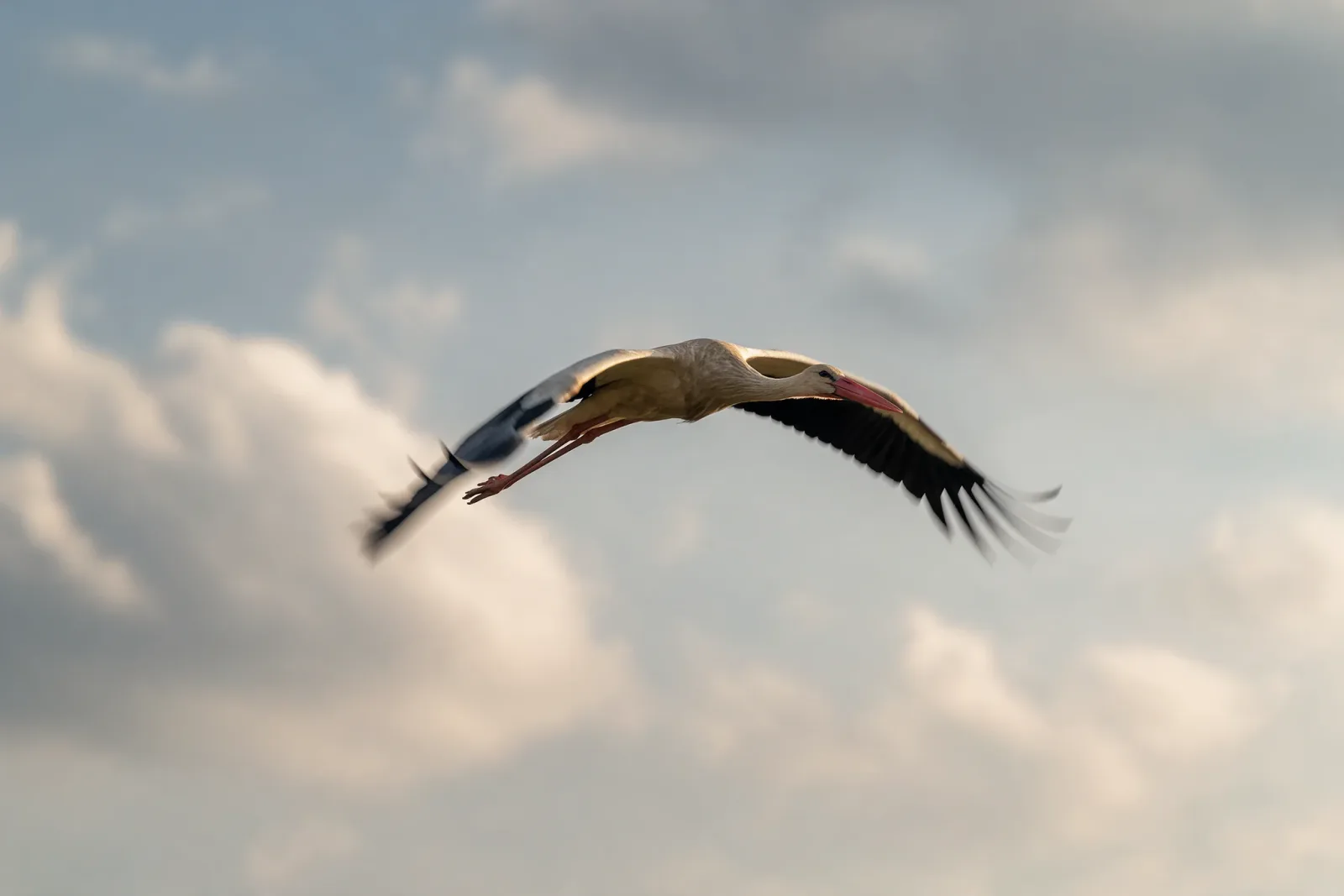
Once a stork is high, it sets its wings and slides forward on the next thermal. Gliding uses almost no energy, and it is how a heavy bird like a stork crosses a continent. The birds string one thermal to the next, climbing, gliding, climbing again.
A good glide can last for miles, and the bird loses height slowly, saving it for the next climb. Their route bends where the warm air is, which is why the flyway is never a straight line. It follows the shape of the weather as much as the shape of the land.
Below them the country passes: fields and rivers, villages and roads. The storks do not stop to look. They are watching the sky, reading the lift, holding their place in the loose flock. On a good day the climbs are quick and the glides are long, and the bird covers a few hundred kilometres without flapping more than a handful of times.
The birds do not flap on a glide unless they must. The wings stay fixed, and the bird trades height for distance, saving the height for the next climb.
The noon stop
Migration includes long pauses. A stork comes down for the night and often rests in the middle of the day, dropping into a wet meadow or a harvested field to feed. The flyway is lined with these stopover places, and the birds know them the way a traveller knows a good inn.
The strongest lift comes in the middle of the day, when the sun is high and the ground is hot. That is also when the heat is hardest on the bird. A stork may keep flying through it, or it may come down to rest, feed, and wait for the afternoon to soften. The tracking data shows the choice as a cluster of points on the ground, or as a line that keeps moving.
At a stopover the birds drink, preen, and stand in the shallows. A good field can hold a flock for hours, and the map shows it as a tight cluster of points that do not move.
Some days the wind is wrong and the birds barely move at all. A day of waiting is still part of the journey, and a bird that wastes its fat on a headwind has less for the desert ahead.
The flock in the air
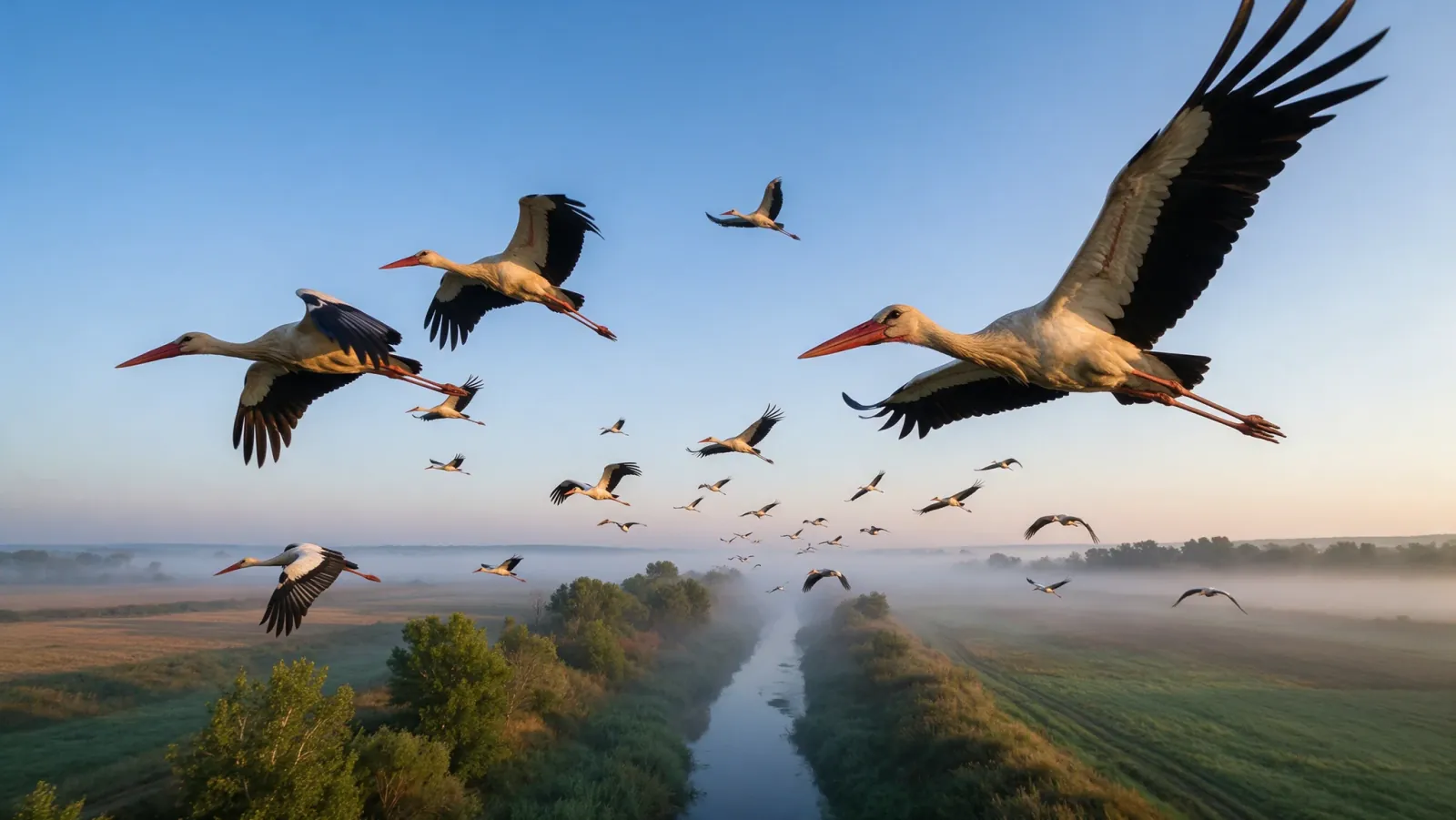
One stork can only see so much sky. A flock sees more. When a bird at the edge of the group starts to circle, the others notice within seconds and come to the same column. The same happens with a change in the weather, a good field below, a line of trees that offers a roost. Information passes bird to bird without any sound at all.
Thermals are patchy. Finding one costs time and altitude, and missing one costs energy. In a flock the search is distributed. The first bird to find a column begins to climb, the rest join, and the whole group rises on lift that one bird discovered. Each bird still does its own climbing, but none has to do all the searching.
Storks do not fly in the neat V of geese. A thermal forces birds into a spiral, so a migrating flock often looks like a loose tower turning in place, then a straggling line as the birds glide away. The shape changes through the day. What stays constant is the loose association, birds keeping each other in sight.
At dusk the birds come down wherever the ground looks safe, and the flock dissolves into a roost. In the morning it forms again, from the same set of decisions: leave, climb, glide, follow the lift.
The evening roost
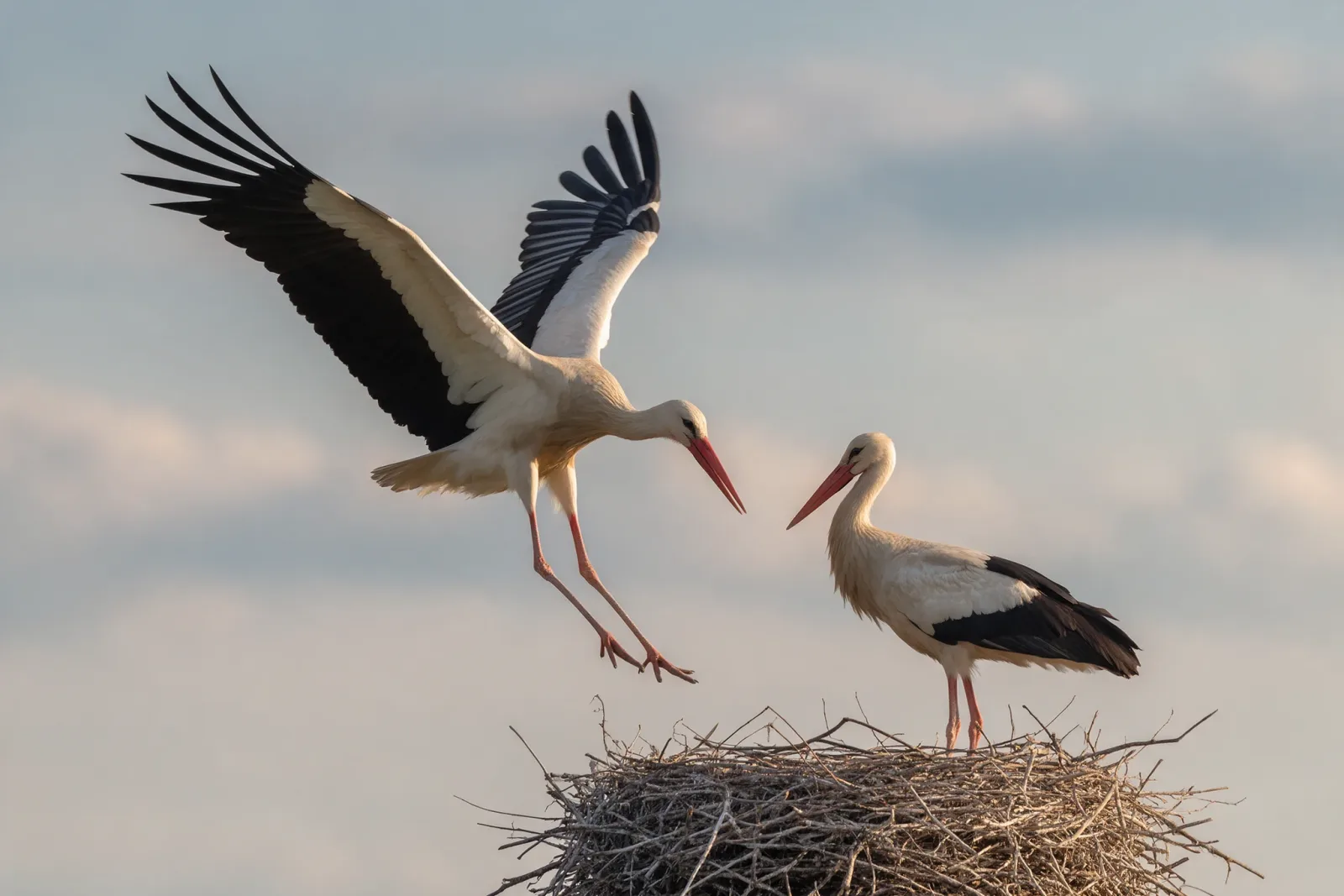
When the light begins to go, the thermals fade with it, and the storks come down. They choose a roost they can share, a stand of trees or a quiet marsh, and they settle in numbers. A field, a marsh, a shallow lake, a quiet roof: any of these will do. The bird lands, folds its wings, and stands.
The air that carried them all day goes still, and the flock sleeps packed close together, resting for the next morning's thermals. A day of migration ends where it began, on the ground, waiting for the sun. By dark the only sound is the water and the shifting of wings.
By full dark the trees are covered with white bodies, row after row of storks roosting shoulder to shoulder. The noise dies down after dark, rises again at some small disturbance, and settles once more.
Not every day is a flying day. Weather can stop the migration for a week, and a good feeding ground can hold a flock longer than the weather requires. Those days look like nothing on a map: a tight cluster, no progress, no drama. They are part of the journey. A bird that did not rest would not finish the journey.
Explore the gift