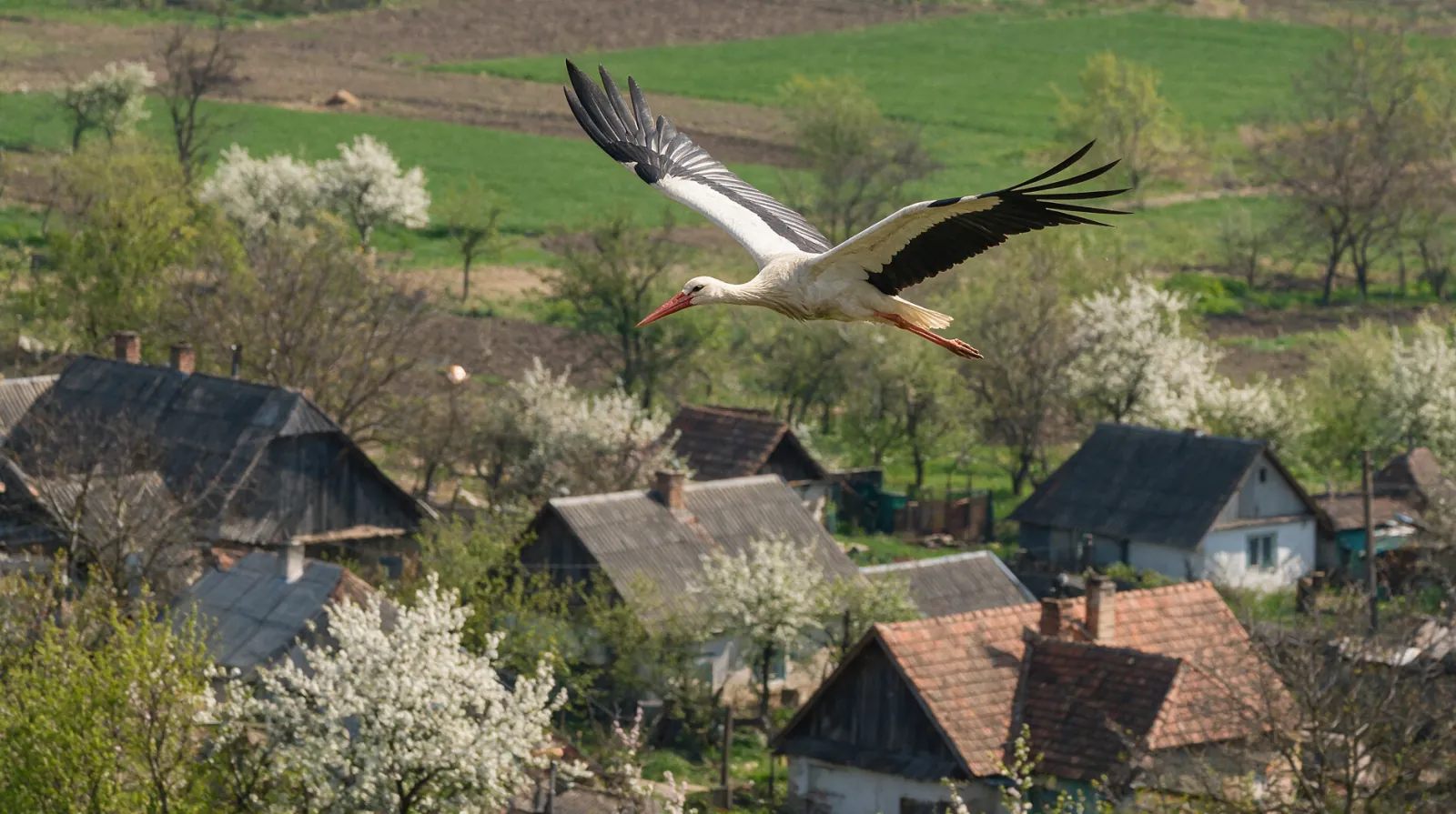
Before a white stork leaves Europe it eats far more than it needs. The fat laid down in the weeks before departure is the fuel for the crossing, and it is spent over the journey south, field by field and thermal by thermal.
The eating season
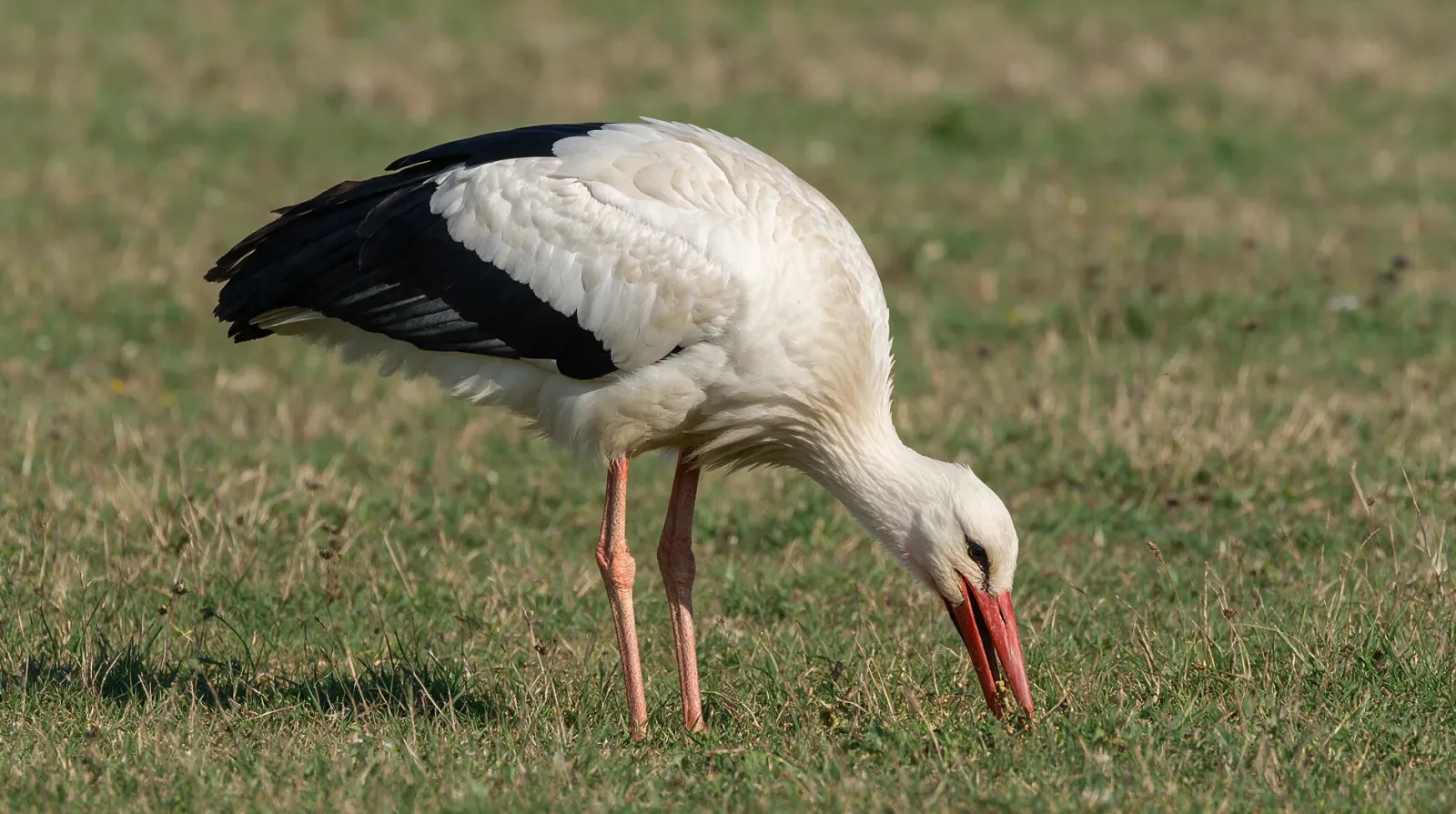
Migration begins with appetite. Through late summer and early autumn the birds feed hard, taking insects, frogs and small animals from fields and ditches. A stork that has finished breeding has time for this. The young are flying, the nest is empty, and the short days are spent hunting.
The bird's weight climbs, and the extra mass is fuel, laid down as fat rather than muscle. The final days before departure are spent close to the roost, in the best feeding fields the bird knows. It eats, rests, and eats again. Then a morning comes with the right wind and the flock lifts.
Where the fuel goes
Fat is stored under the skin, in thin yellow layers along the body. A stork in late autumn is visibly heavier than one in spring, and the difference is mostly this reserve. Fat holds more energy for its weight than anything else the body can store, and burning it also releases water, which matters over dry country. A migrating stork carries its own supply of food and water in a form that weighs as little as possible.
The layer is thin, and it does not change the bird's shape much. Only the weight changes, and a stork in the hand in autumn feels surprisingly solid. Muscle could power flight, and the bird already has strong flight muscles. Building more would add weight without adding much range. The body also breaks down some muscle during a very long flight, but the main reserve is fat, and the bird arrives thin rather than damaged.
The weight problem
Extra weight makes flying harder. A heavy stork climbs more slowly and needs stronger thermals. There is a balance: enough fat to cross the hard parts of the route, and not so much that the bird struggles to get off the ground.
The bird finds this balance without knowing the arithmetic, guided by appetite and by the length of the days. When the stores are right, the bird leaves. When they are not, it stays and feeds. A very heavy bird may wait for a strong thermal before it can leave, and a bird that is too light may not reach the next good field.
The gathering
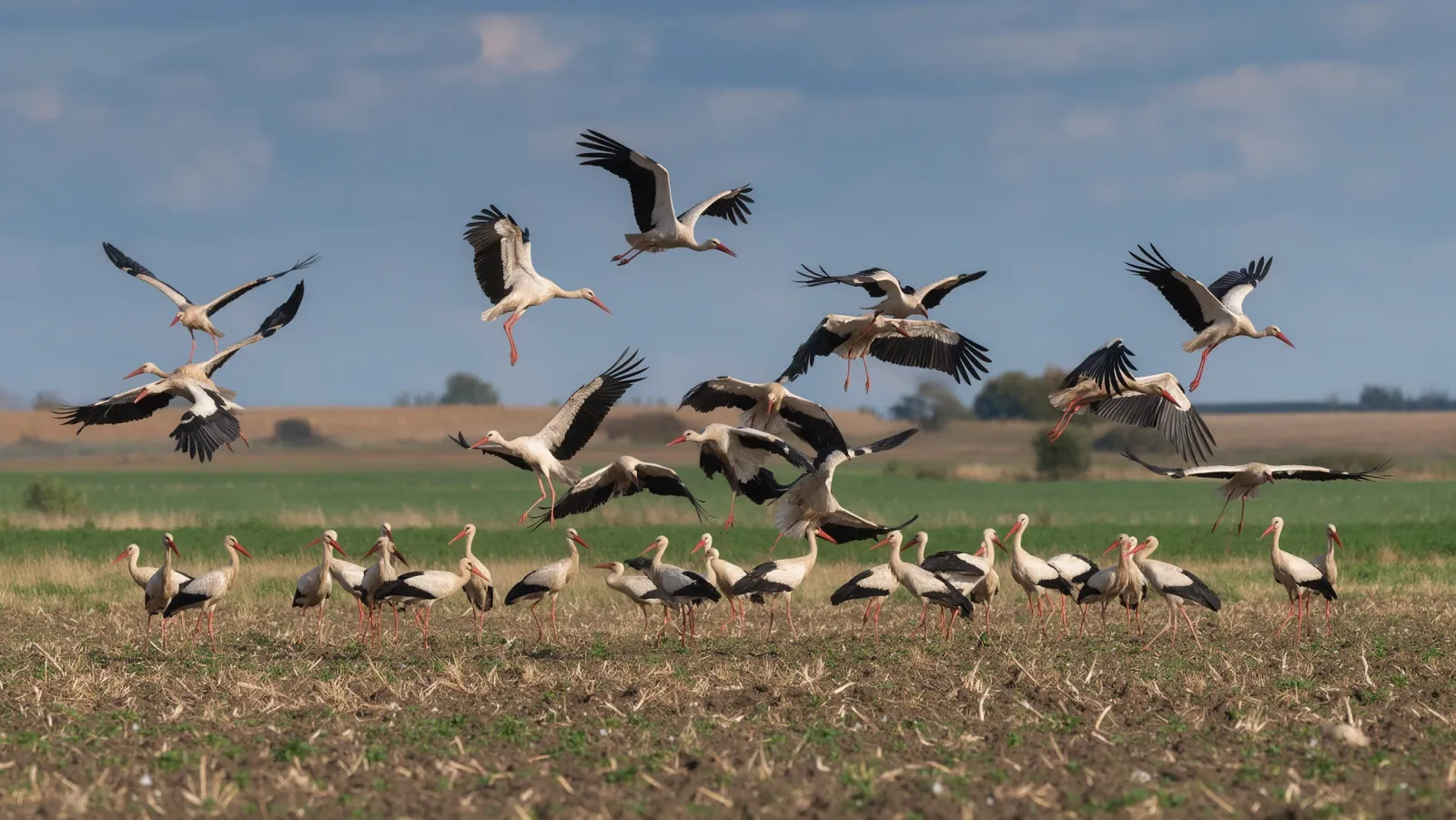
By late summer the nesting season is over. The young are flying, the nests are quiet, and the storks begin to collect in the wet fields and shallow marshes. Birds that nested alone now stand in groups of dozens. Some are adults that have bred, some are young of the year, and some are birds that never found a mate. A field that held two storks in June can hold fifty by August.
The gatherings serve more than food. The birds circle over the fields on the first thermals of the day, climbing and drifting, coming down again. For a young stork this is practice. It learns how to find lift, how to hold a heading, how to stay with the flock. A juvenile that has spent a week climbing over the same field will meet its first real thermal with some idea of what to do.
Leaving in waves
The flock does not leave on a single morning. A group goes, and the fields are quieter for a day. Then another group forms and goes. The migration is a series of departures, spread over days or weeks, and the birds that remain are still deciding. Weather decides for them. A good tailwind takes a wave. A headwind holds the rest.
The waiting has a purpose. A flock that leaves into a headwind burns fuel for nothing, and the birds seem to know the difference between a morning that looks fine and one that will carry them. They stand in the stubble, feed, and lift a wing now and then to test the air. Then a day comes with the wind behind it, and the field empties.
At the end the fields hold only a few birds. They are often young, or birds in poor condition, or birds that have found a good food supply and are reluctant to leave it. Some will not go at all. The ones that do leave late face a harder journey, with fewer companions and worse weather, and some turn back.
A late bird has less company to find the crossings and less margin when the wind turns against it. The field that empties in stages is not emptying evenly: the strong go first, and the ones that remain are often the ones with the least to spend.
The birds that stay
Most white storks fly south, and a growing number do not. Southern Europe is not what it was. Winters in Spain, Portugal and parts of Italy are often gentle, with frost rare and snow rarer. A stork that stays can feed through most of the season, especially near the coast and in the wet lowlands. A run of mild winters teaches a population quickly, and the habit spreads from one bird to the next.
Storks are opportunists, and people provide opportunities. Landfills hold food all winter. Rice fields and irrigated farmland stay wet when the countryside around them is dry. In parts of Spain, an introduced crayfish has given the birds a food source that lasts through the cold months. None of this is natural, and all of it is reliable. A bird that can find a meal on a tip in January has little reason to cross the Sahara.
Staying is a gamble. A mild winter can turn hard in a week, and a stork that has not flown south has no easy way out. Ice closes the shallow water, frogs disappear, and the bird must find something else. The birds that stay are betting on a winter that may not hold, and some years the bet fails. A cold snap can kill many of them in a few days, and the ones that die are often the young and the thin.
The birds that remain are often the ones with a dependable food supply: a landfill, a fish farm, a river that does not freeze. Age matters too. An adult that has bred on the same roof for years has more reason to stay, and more experience of finding food when the weather turns. Young birds are more likely to leave, and more likely to be lost on the way.
In parts of Iberia, winter stork counts have risen while the northern population still migrates. The birds are the same white storks, and their young may fly south as their ancestors did. Behaviour spreads through a population slowly, one bird and one winter at a time, and it depends on a world that keeps offering food when the fields are bare.
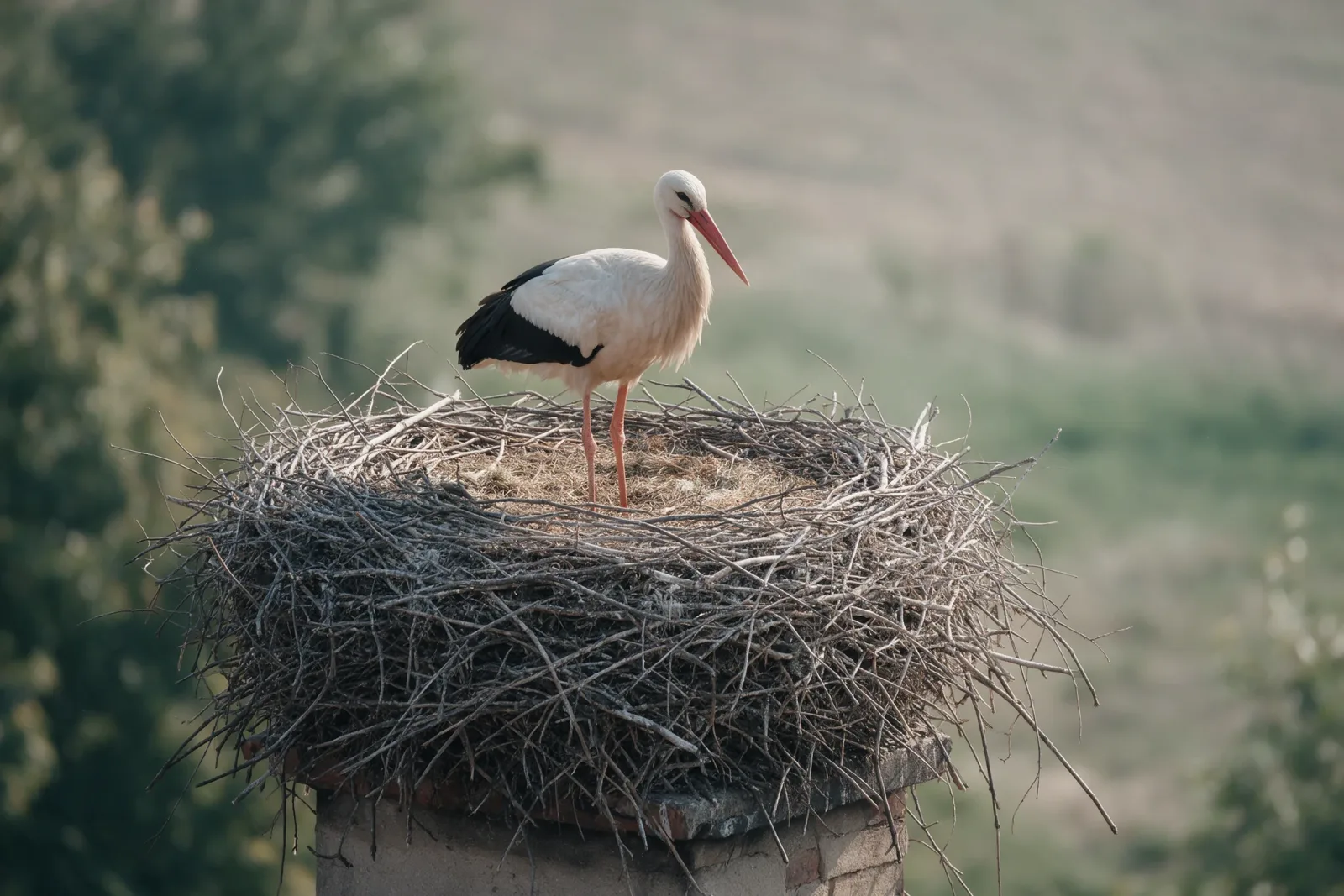
On a cold January day a stork on a nest can look out of place, standing in a frosted field where it should be in Africa. Nothing has gone wrong. It has found a winter it can survive, and it stays close to the thing that feeds it, waiting out the cold in the place it knows.
Explore the gift