Spring arrived in a European village through the senses before it arrived on any calendar. A rattle of bills on a chimney, a line of children walking with branches, a white flower in the grass, a pale star above the horizon: each was read as proof that the cold had broken. The stork stood at the centre of that evidence, and the welcome it received took several forms.
The first rattle
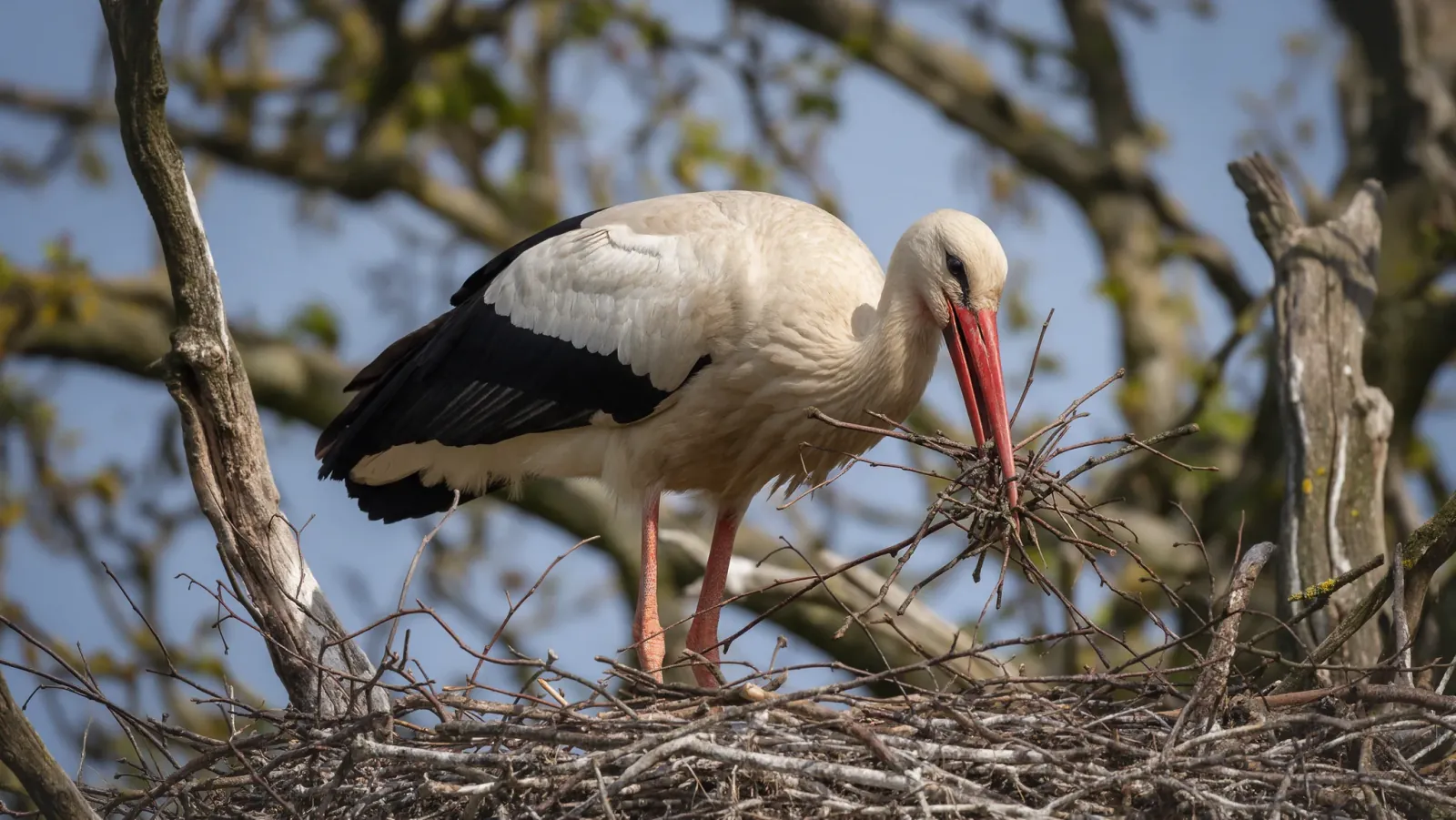
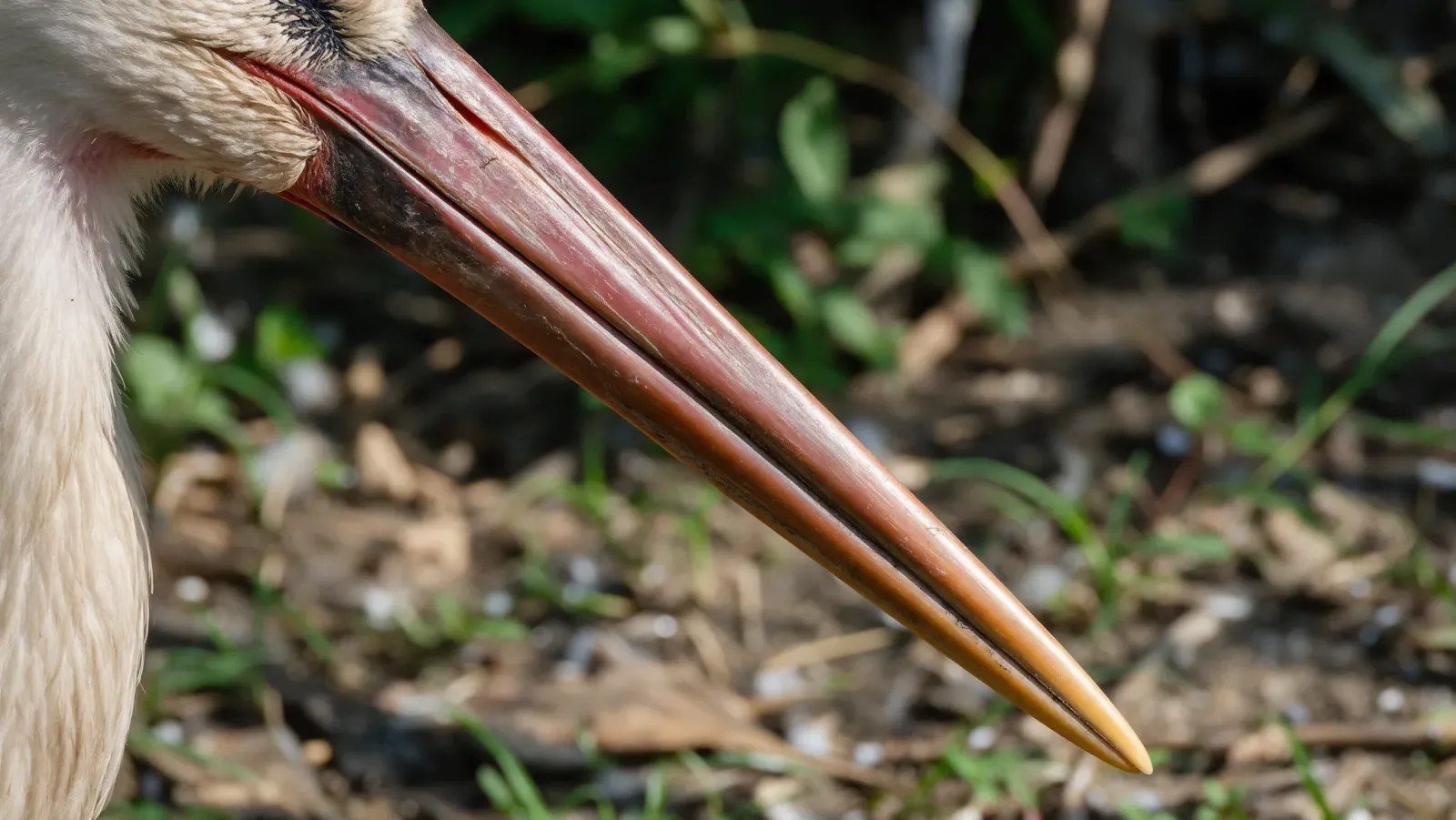
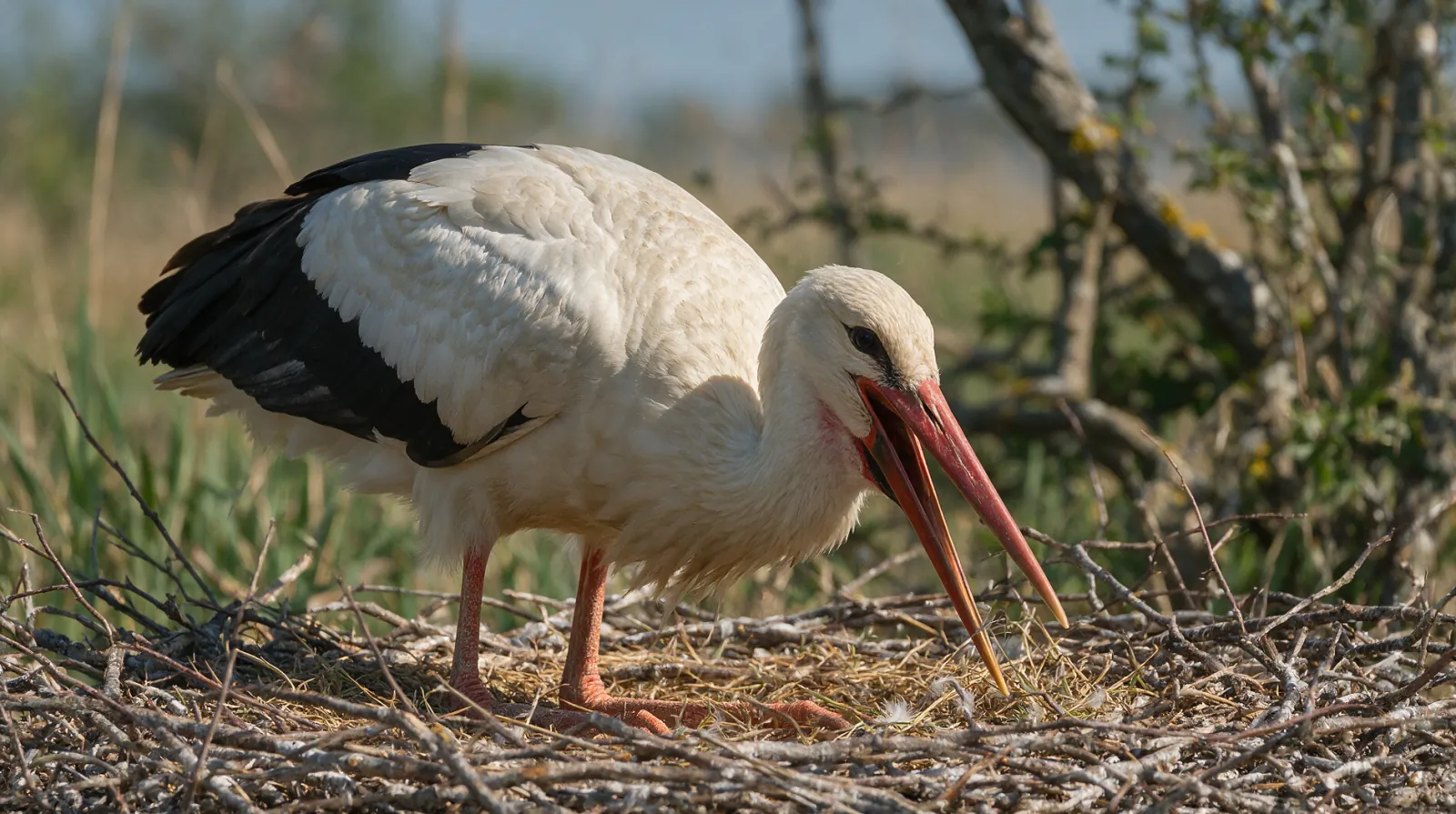
The stork is nearly voiceless. It has no real song, so it speaks with its bill, clattering the two halves together in a quick, hollow drumming that any ear can pick out from far off. Mated birds clatter when they meet, when they trade places on the eggs, and when they settle the nest.
The sound is part courtship and part greeting, and it is one of the oldest noises a farm village knows, older than the bells and older than the songs. Because the stork cannot sing, its clatter became its signature. People recognised the bird by sound long before they saw it.
The first clatter of the year was a village event. It meant a stork had come back, found its old nest, and announced itself. Neighbours told one another. The sound of a bill snapping on a chimney was as welcome as the first warm day. It was taken as the true beginning of the season, whatever the calendar said, because the ear believed it before the eye. A rattle from the roof ended the winter more firmly than any date. The village heard the news and repeated it in kitchens and at gates for days.
Rituals gathered around the clatter. Children were brought out to hear it. A house whose stork clattered early was thought to be favoured, and the family made sure the bird was left in peace to settle in, with no one climbing up to look. The sound was a small public good. A bird that announced itself gave the whole lane something to talk about.
The walk through the lanes
In many parts of Europe, the return of the white stork was marked with a procession, a walk through the lanes to welcome the bird home and to celebrate the end of winter. Villagers, often the children at the front, carried branches, ribbons, and sometimes a small figure of a stork made of cloth or wood.
They sang, and the songs asked the stork to stay, to nest, and to bring a good year to every house it passed. The walk ended where the storks nested, and there the welcome was offered in full, a greeting shouted up to the birds on the roofs. The village spoke to the sky, and the sky had a white shape in it.
Children had the biggest part. The stork was their bird, tied to the story of the baby and the bundle, and the spring procession gave them the job of calling the bird home. They ran ahead of the adults, and their voices did most of the welcoming. The custom was a handing-over, the older generation teaching the younger to watch for the bird and to love the season it announced.
The procession was also a prayer, and it did not need a church. It asked for a good summer, for healthy fields, for a house full and safe. By putting the stork at the centre, the village tied all these hopes to one returning bird. For one bright morning the hopes felt as if they had already been answered.
The flower and the bird
The snowdrop is among the first flowers of the year. It comes up through thin snow and hard ground, a small white bell on a green stem, often while the fields are still mostly brown and the hedges bare. It asks for almost nothing, only a little warmth. It is gone again by the time the bigger flowers arrive, so its beauty is brief and all the more noticed. The snowdrop carries the promise of spring before spring is certain.
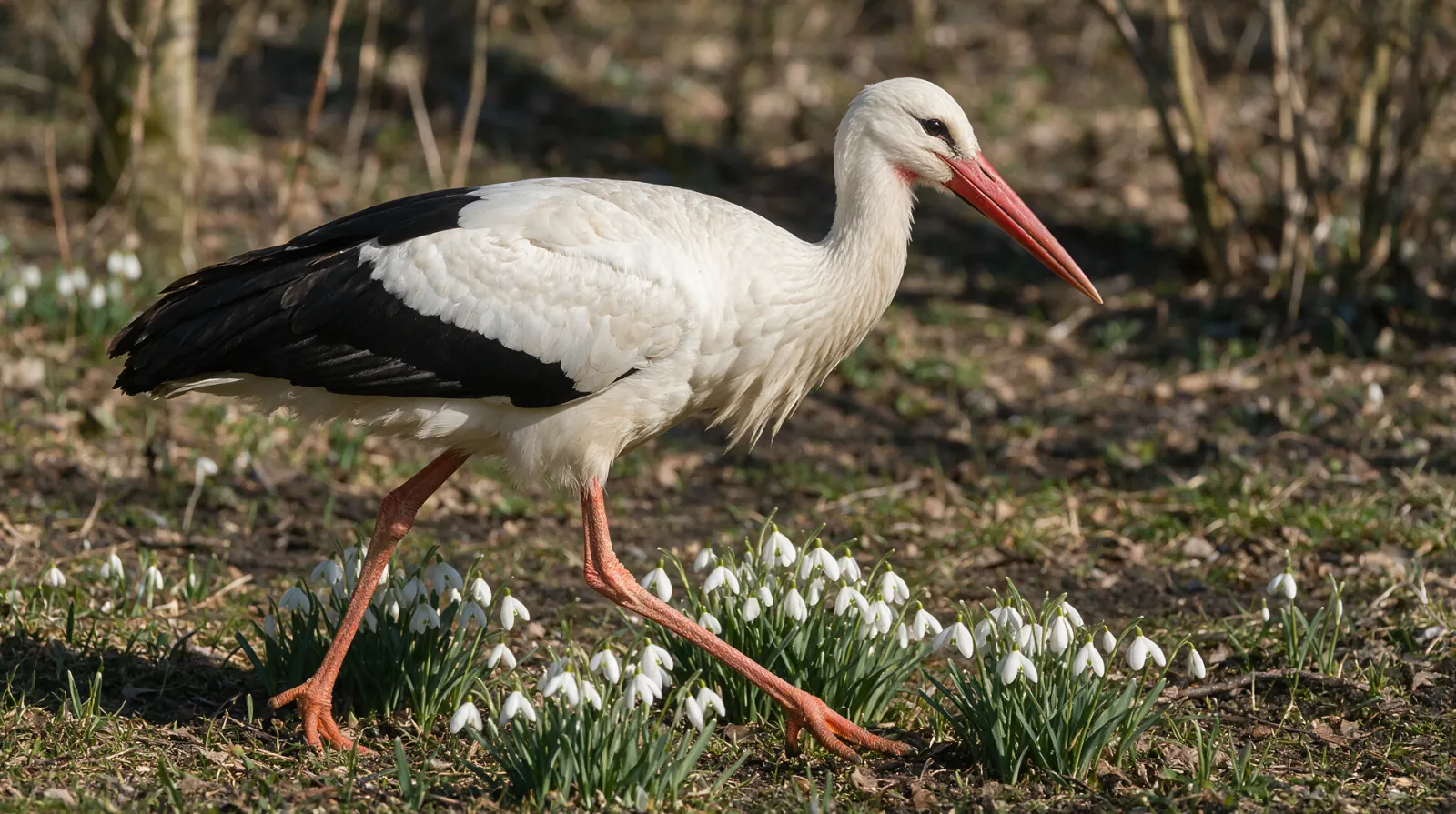
The stork returns in the same weeks, arriving from the south as the ground begins to soften, following the same road it has known all its life. It does not wait for the meadows to green. It comes early, sometimes to a country still touched with frost. The best nest must be claimed and the season of raising young is short. There is no time to waste on caution. The bird bets on the spring the way the flower does, and both are usually right.
White mattered. The snowdrop is white and the stork is mostly white, and to a folk eye the two read as a pair of matching promises. The flower promised that the ground was waking. The bird promised that the sky was filling again. Together they closed the season of waiting and opened the season of growth, each in its own place. One sign came out of the earth, the other out of the air.
A child could be sent out to find the first snowdrop and the first stork on the same morning, and to report back which came first. The answer differed from year to year, and the changing of it was part of the fun. The game taught a child to look closely at the ground and at the sky. Two kinds of attention, learned on one walk.
The star before dawn
On a spring morning in a European village, a person awake before sunrise looked for two things: the pale star still holding above the horizon and the white stork back on the chimney. The morning star is the planet Venus, rising ahead of the sun and bright enough to outlast every other star as the sky lightens.
Shepherds and farmers knew it well. It marked the hour when work could begin, low and steady, and then it faded as daylight came. For anyone who rose before dawn it was the first reliable company of the day. The star kept its appointment with the horizon, and the morning could be trusted to follow.
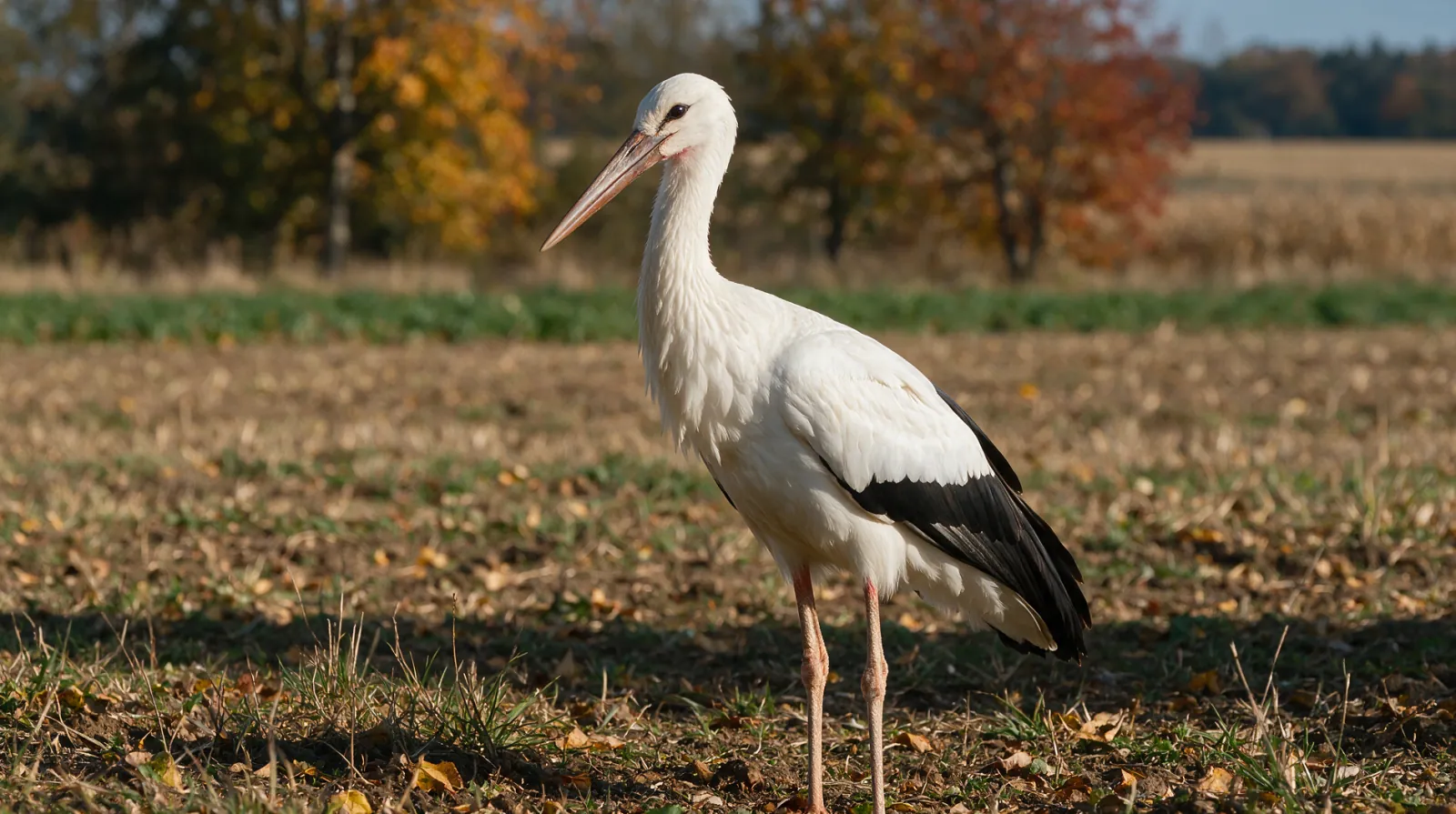
A stork shares something of that quality. It is white and calm, and it stands very still, a pale shape on a dark roof that the eye finds before anything else. A bird that bright, seen in the half-light, could pass for a piece of the departing night or the arriving day. The star and the bird were both white points in a grey world. One was above the fields, one was above the house, and both told the watcher that the dark was nearly over.
The star meant the sun was near. The stork meant the year's work of raising young could begin. Two lights, one in the sky and one on the roof, announced the same morning. The village did not need to choose between them.
Watching for both
Some spring customs sent children out early to look for the first stork, and the morning star hung above them while they watched. The two sights answered each other. A child who saw the star and then, a few hours later, the bird, felt the day had delivered twice.
There was a practical reason for the pairing too. Both signs were dependable. Venus returns to the morning sky on its own steady rhythm, and the stork returns to its own roof on a rhythm just as old. Dependability is its own kind of magic, and the old stories were built on it.
What the stork and the morning star share most is the promise of coming back. The star vanishes at dawn and rises again the next morning. The stork leaves in autumn and returns each spring. Neither is a sign of something ending. Each is a sign of something on its way home.
The processions have mostly stopped, or changed into something else, and the songs are remembered only in fragments. The instinct they carried has not gone. When the first stork returns each spring, people still pause and point and tell one another. In that small, scattered welcome the old procession lives on. The first rattle still comes from a roof in March, and the lane still hears it.
Explore the gift