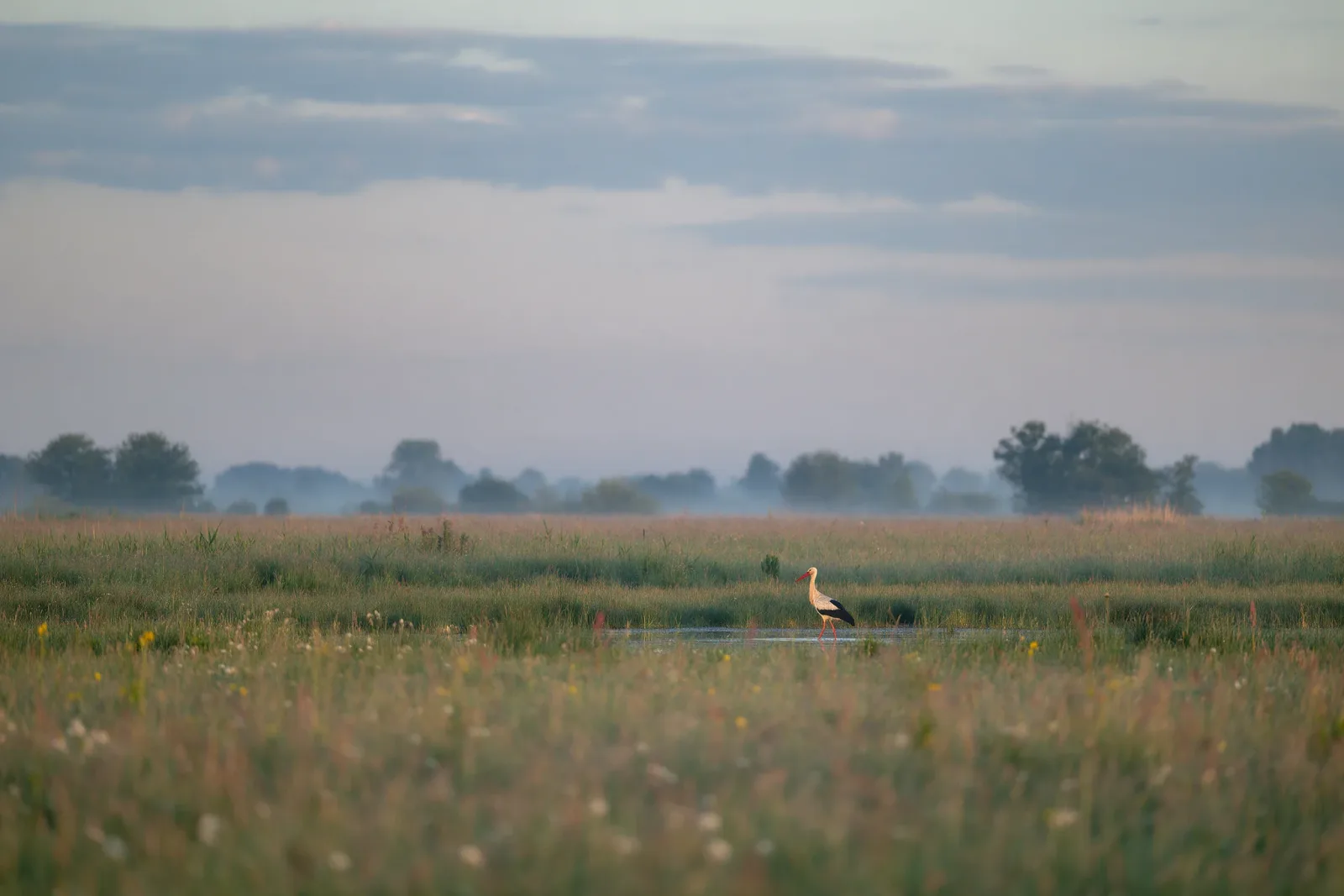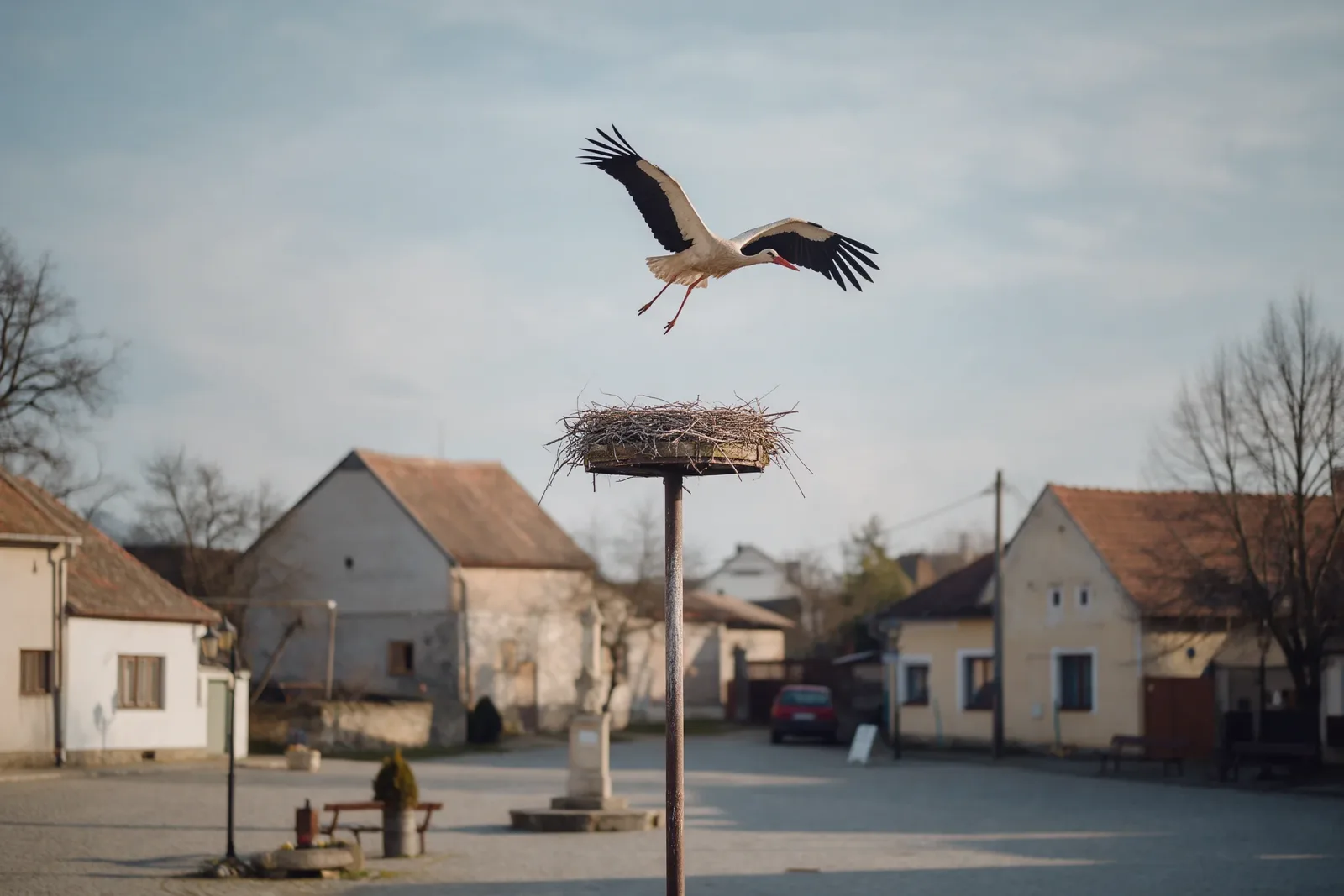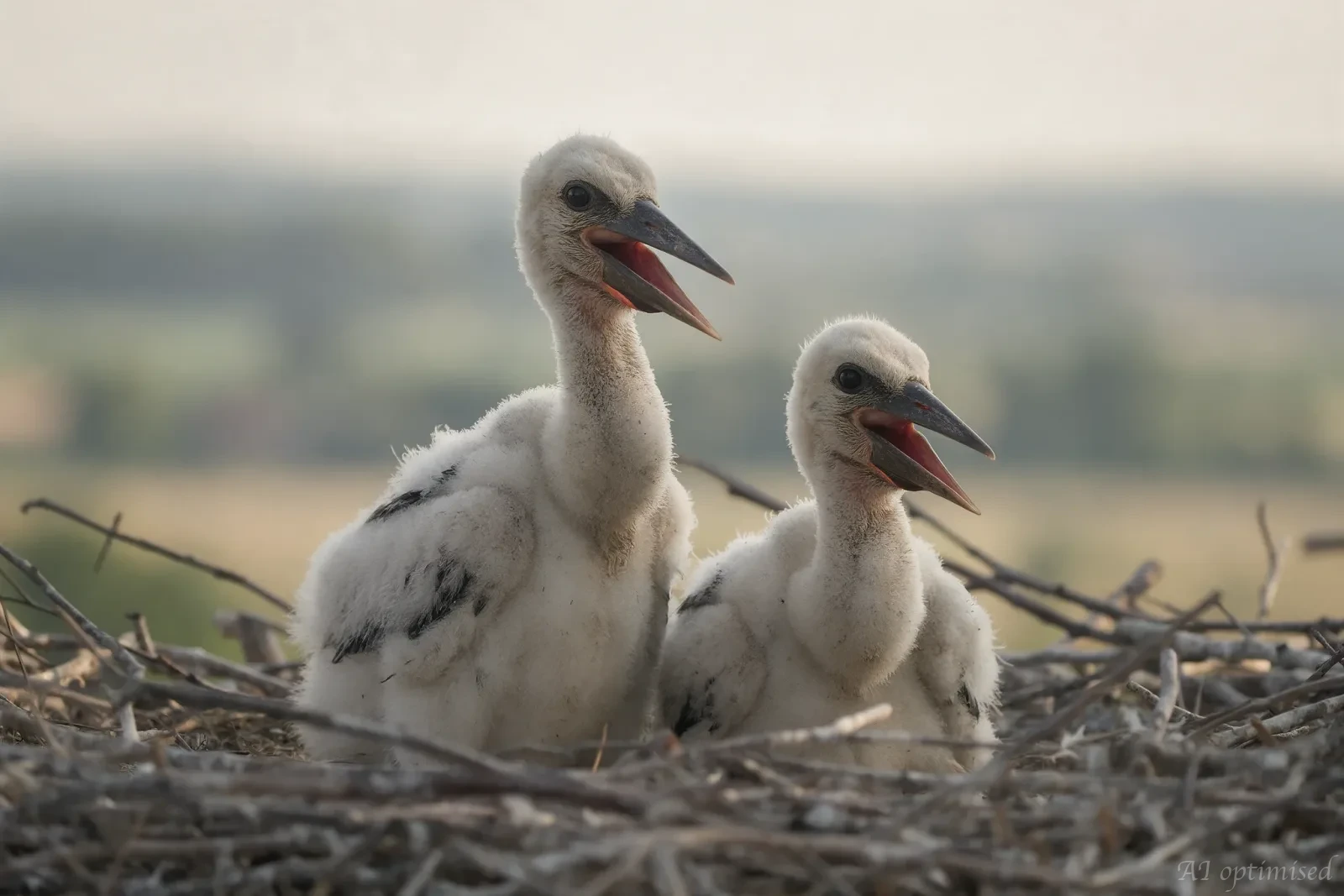
The chicks we owe a world are the ones peering over the edge of a nest right now, beaks open, waiting for a parent to come back. They did not choose the century they hatched into. They did not choose the wires, the drained marshes, or the warmed climate. They arrived into a world we are still deciding the shape of, and every one of them that survives to fledge is a small promise kept.
A chick is a wager
A stork chick is a wager placed on the future. It takes weeks of constant feeding to turn a downy hatchling into a bird that can ride a thermal. Every frog, every insect, every safe night on the nest is a coin in that wager, and the odds are never certain.
The parents do their part without hesitation. They feed through the heat and the rain, sheltering the chicks from sun and storm, until the day the young birds are strong enough to stand at the rim and try their wings. That day, when it comes, is the payoff of an entire summer.
What we take out of the wager
We affect the odds in ways the stork cannot control. A wetland drained mid-season removes the food the parents were counting on. A wire strung across the fledging route becomes a wall. A pesticide drifting off a field finds its way into the insects, and the insects find their way into the chicks.
None of this is done with malice. It is done in the ordinary course of building, farming, and living, which is what makes it so dangerous. The chick does not distinguish between an act of harm and an accident of progress. To it, the result is the same.
What a fledged stork means
When a young stork lifts off the nest and does not come down again, something specific has been earned. That bird is a travelling survivor. It will join the autumn migration, cross the sea, winter far south, and, with luck, return in spring to breed in its turn.
Each fledged stork is therefore not just an individual. It is a link between this summer and all the summers to come. It carries the population forward, and it carries the promise that the species will still be here for the children now sleeping in their cots below.
The debt and the payment
We owe these chicks a world not out of guilt but out of recognition. They are the visible result of everything we have chosen: the water we kept, the wires we marked, the meadows we left wet. When a chick fledges, it is a sign that some of those choices were right.
The debt is paid slowly, in frogs and safe skies and unpoisoned fields, and the payment is made by ordinary people who will never see the bird they helped. But the bird is real, and it is flying, and that is enough to keep the promise alive.
Explore the gift