Taking the baby out for the first time is less about the destination than the door. You will stand in the hallway with a bag, a pram, and a baby, and wonder how people do this casually. The first time, you will forget something. Everyone does. Nothing bad happens at the door. The air is the same air.
Pack the night before
Do it the night before, while you are tired and the baby is asleep, because that is the only free hour you will get. Nappies, wipes, a spare vest, a muslin, a blanket, a hat, and something for you to eat. A bottle if you are bottle feeding, with a cool bag.
Put the bag by the door. Charge the phone. Check the pram folds and unfolds, and that the brake works, before there is a baby in it. A change of clothes for you is worth packing too. Babies leak, and a spare t-shirt in the basket has rescued more parents than any gadget.
Keep a bag packed by the door after that: nappies, a spare vest, a muslin, a snack for you. The bag will not stay packed, and having it there at all saves ten minutes. A hook at shoulder height for the changing bag saves the daily search. So does a bowl for keys, because you will not be able to look for them with a baby in one arm.
The threshold
The hardest metre is the one between the hall and the pavement. You will feel exposed, and that feeling will fade about twenty steps in. If it helps, do the first outing with someone else. Two adults and a pram is a different proposition from one.
Pick a mild day and a short route. You are not proving anything to anyone. The first trip is a rehearsal, and rehearsals are allowed to be clumsy.
Walk slowly. The baby is in a new temperature, a new light, a new soundscape. A newborn will often sleep through the whole thing, which is the point. Check the baby at the first corner: is the chest rising, is the face covered, is the blanket still on. Then keep going.
If the baby cries, stop. Pick it up, settle it, and start again. The walk can wait, and a crying baby in a pram is not a failure of the outing.
The window before the door
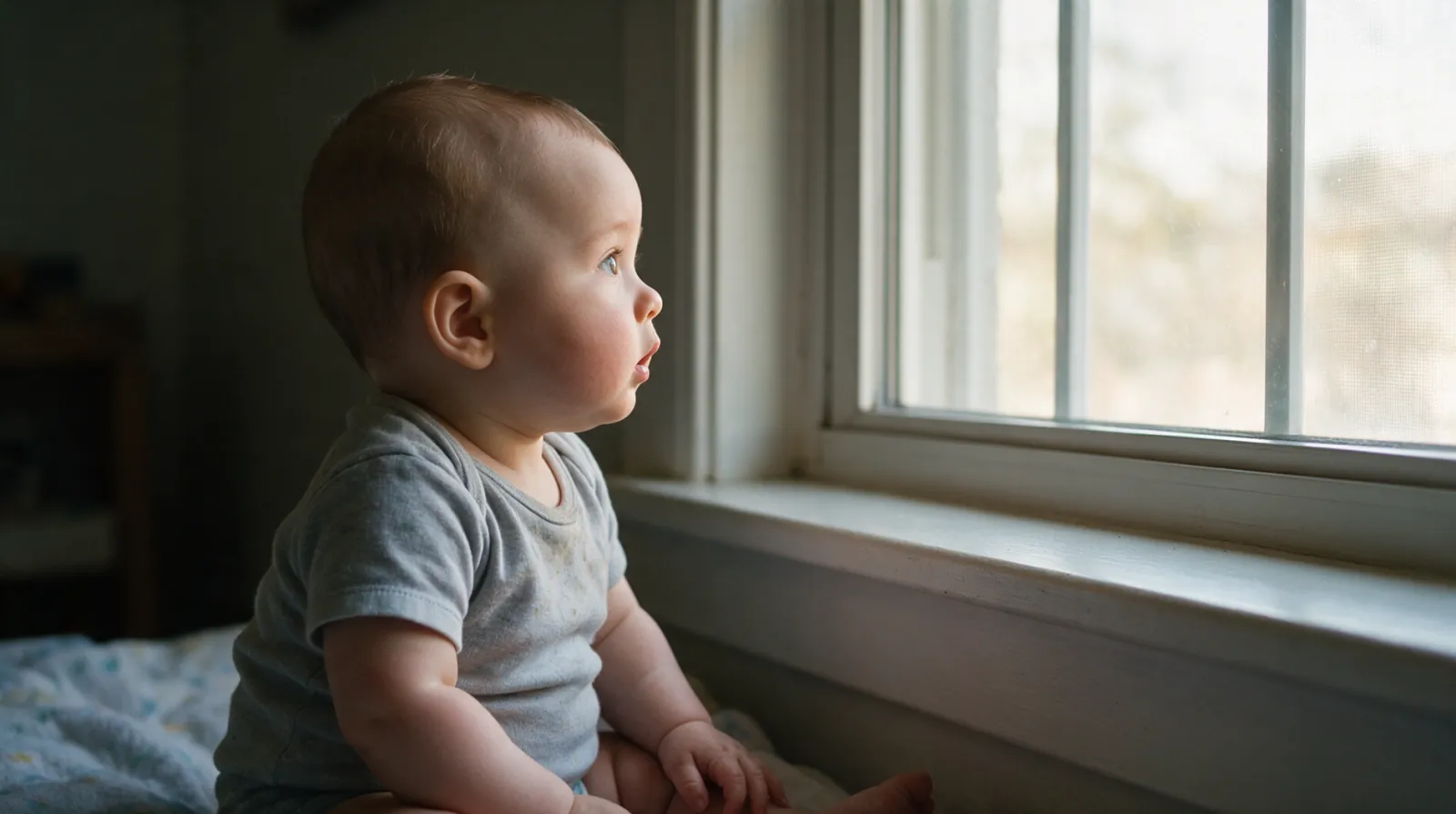
Before the door, there is the window. The window the baby stares at is often the most-used object in the room, and it is free. Branches move. Light changes. A bird crosses. A window is a screen that never repeats itself.
A newborn sees strong light and dark shapes before it sees detail. A dark branch against a pale sky is more interesting than a pastel mobile. A roofline, a lamp post, a bird on a wire: all good. By two or three months the baby will follow a moving thing across the glass, and you will see the eyes tracking.
Talk about it in the plain words you have. Grey today. Wet. Bright. The tree is moving. The baby will not understand, and will hear the tone of a person paying attention.
If the view is a wall, put something on the wall. A hanging mobile in the window, a row of postcards on the sill, a plant that moves. The eye needs something with an edge. A mirror is a window with a person in it, and babies find faces compelling.
Rain on the glass, snow on the sill, low sun in the afternoon. The view is the same and never the same. On the first really cold morning, breathe on the glass and let the baby watch the fog appear and fade.
In the evening the glass turns into a mirror and the room appears in it. A baby will stare at that too, working out that the room is behind it. At night the glass goes dark and becomes the most interesting mirror in the house. Keep a lamp low and the curtain open a little. A baby who is wide awake at two in the morning will often settle at a window. The dark is less boring than a ceiling, and you are both standing in the same place.
Rain on the hood
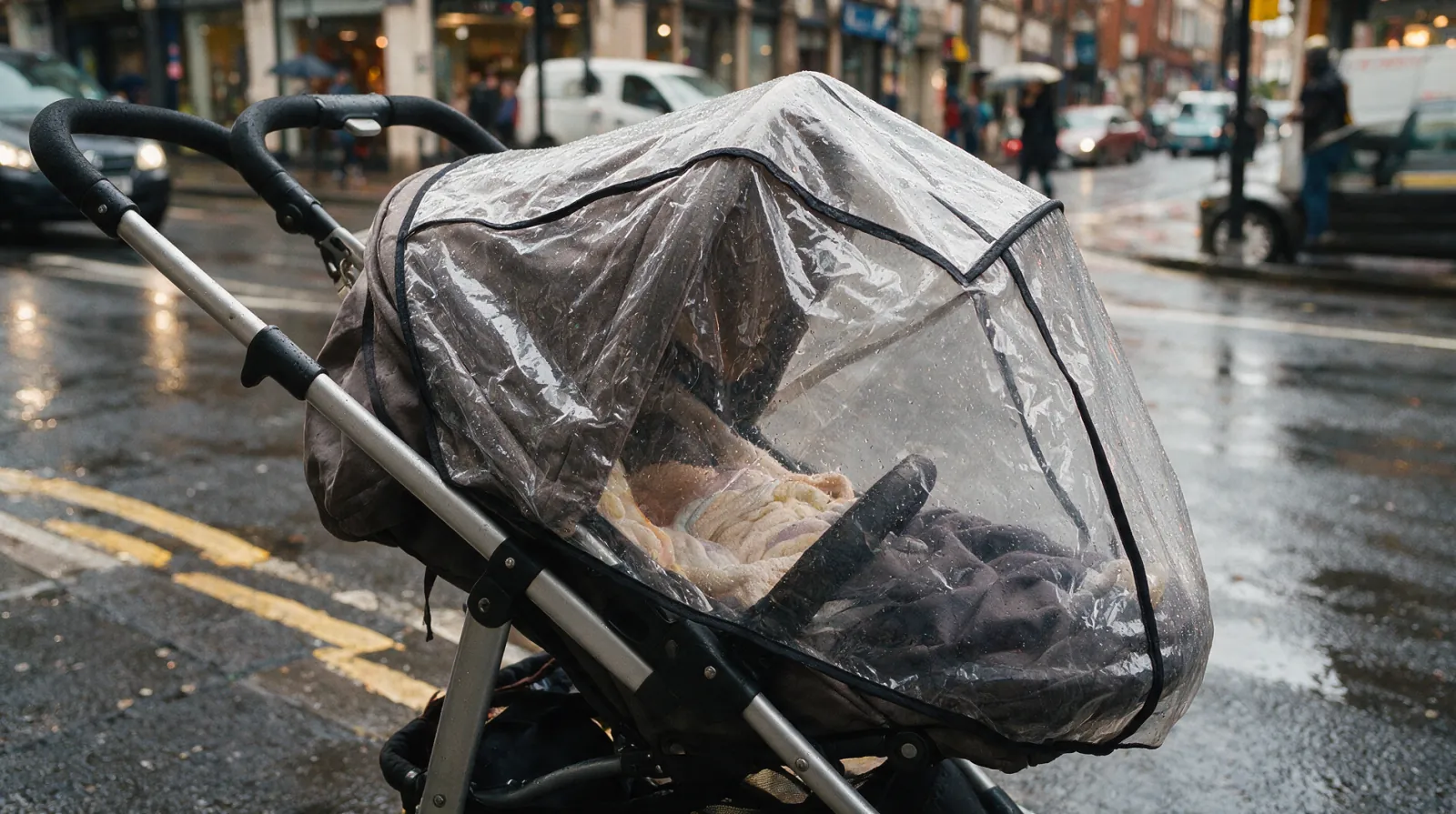
The pram in the rain is the outing most new parents avoid and most babies enjoy. A baby in a pram in the rain is a small dry room moving through a wet world. Ventilation matters more than waterproofing. Leave a gap at the back, and check the baby's neck for heat.
A cover that only comes out in a storm is a cover you will not use. Keep it in the basket under the pram, folded, with the clips attached. Never cover the pram with a blanket or a muslin instead. That traps heat and blocks air.
The baby is not walking, so it needs one more layer than you do, and a hat. A blanket over the lap and a cover over the top is usually enough. Do not put the baby in a snowsuit and then zip a rain cover over it. Check the neck every ten minutes. If it is damp with sweat, take a layer off at the next sheltered stop. Wool, cotton, and a puddle suit for older babies. For a newborn, layers are easier to manage than one thick item, because you can remove one without undressing the whole baby.
Rain on a pram hood is one of the most effective sleep sounds there is, and it comes free with the weather. The drumming is steady, low, and close, which is exactly what a newborn settles to. Walk slowly. The combination of motion and rain will put most babies under within ten minutes.
You will get wet. Wear a coat with a hood and accept damp shoulders. The baby is the one who needs to stay dry. Avoid busy roads in heavy rain. Spray from passing cars is worse than the rain, and the noise is louder than the baby is used to. If it is really coming down, walk a loop around the block and come home. Ten wet minutes is enough to reset a fussy afternoon.
Where to go
Anywhere flat. A park path, a quiet street, a loop around the block. The first outing does not need a destination, and it does not need to be long. Ten minutes outside is enough to count.
Rain empties the streets, which makes them easier. The park is quiet, the pavements are yours, and nobody stops to admire the baby and tell you it is cold. Choose a route with shelter: a covered arcade, a shop doorway, a row of trees. Turn back before the rain gets heavy.
Avoid the supermarket on the first trip. Too much light, too many trolleys, too many people who want to look. Save it for when you are both better at this. If you meet another parent with a pram, say hello. The first year is easier with three or four people who know what your Tuesday looks like.
Coming home
Take the cover off outside the door, rather than in the hall, so the drips stay outside. A dry baby and a wet coat is the correct outcome. Hang the cover open to dry, over the bath rather than on the radiator. A cover put away wet will smell of mildew by the next rain.
Take the baby out of the pram slowly if it is asleep, or leave it in the hall with the brake on and a hand nearby. A pram nap in a cool hallway is a real nap. Then make tea and sit down. The rain did the work.
Write the time down if you like: first outing, 11:20, light rain. It will seem absurd later, and it will also be true. The next outing will be easier, and the one after that will be ordinary.
Explore the gift