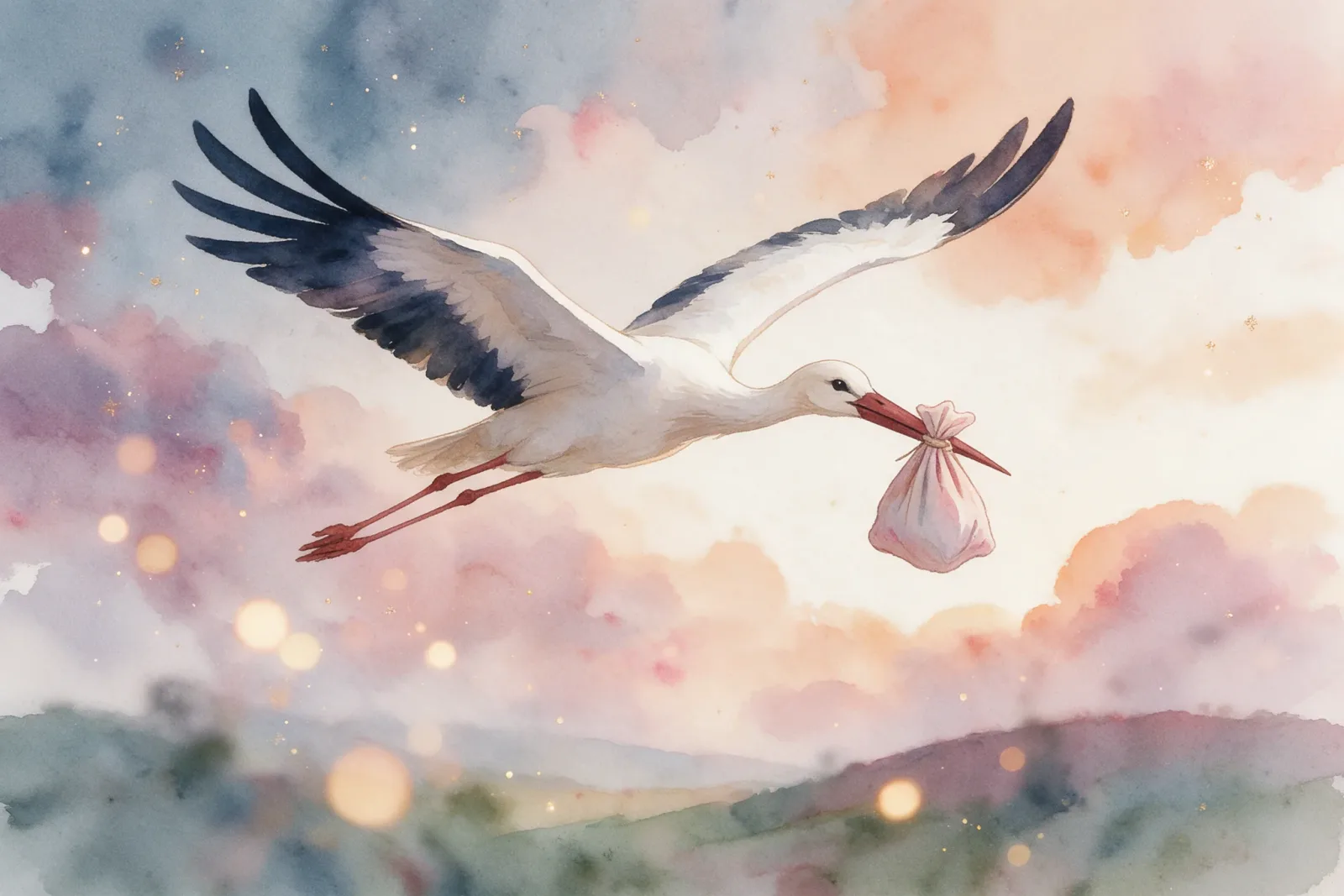
There was a time when people credited the stork with power over the weather. Storks and weather magic belonged together in the old imagination, where a bird that could leave for the winter and return for the summer must surely know something about the sky. The bird became a sign of the storm, the sun, and the turning of the year.
The bird that read the sky
Anyone who watches storks soon notices how closely they follow the air. They rise on warm thermals, wait out bad weather on the ground, and leave on a good wind. To a farmer with no barometer, the stork was an instrument. Its behaviour told him what the sky was about to do.
So the bird that read the weather came to be credited with making it. The step from knowing to steering is a short one in folklore, and the stork crossed it long ago.
The flight that brought the season
The great belief was simple. When the stork returned, spring returned with it. The bird was not merely a sign of the thaw, it was the thaw's companion, and some said its arrival dragged the warm air north behind it. A village that saw the first stork early could expect a fine, mild year.
In the same spirit, the stork's autumn departure was read as a warning. When the birds gathered and lifted off, the first cold was not far behind. The stork's leaving was the sky's own signal to make ready.
The stork and the storm
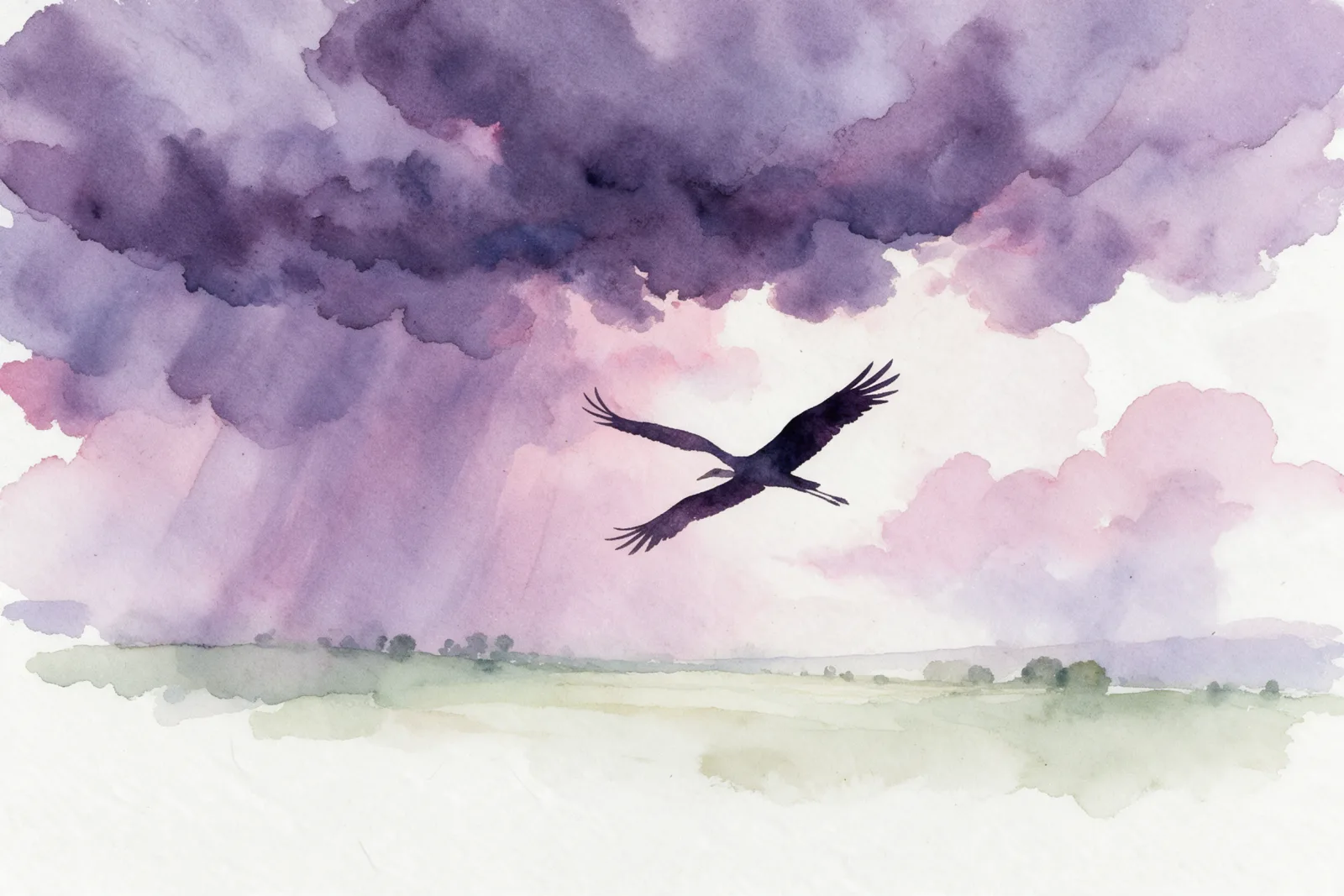
Some regions credited the stork with a hand in the storm itself. A stork could be a bearer of lightning, or a guardian against it, depending on the village. The nest on the roof was sometimes thought to shield the house from a strike, and harming the bird was said to draw the storm down instead.
These beliefs were practical as much as magical. A protected stork nest meant an undisturbed bird, and the story kept the children from throwing stones at the roof.
The herald of rain and sun
Weather lore was full of small rules. A stork standing on one leg meant cold. A stork flying high meant fair weather, while one flying low meant rain. The bird's position in the sky was read like a dial, and every movement carried a forecast.
Most of these readings grew from real observation. Storks do fly differently in rising air than in falling air, and a patient villager could learn the difference without ever putting it in words. The magic was only the coat the knowledge wore.
A belief that outgrew the need
The barometer replaced the bird, and the weather forecast replaced the proverb. What remains is the feeling that the stork and the sky belong together, and that a bird wheeling high on a warm current still looks like a creature consulting the heavens.
Storks and weather magic are gone as science, but they stay as poetry. The bird still seems to carry the season on its back, and nobody who sees one arrive in spring is entirely sure it does not.
Explore the gift