The stork in North African and Islamic tradition is a protected guest, and the tradition is carried more by custom than by text. The bird is a summer visitor across the Maghreb, nesting on minarets, mosque walls, ruins, and high poles. In many towns people leave the nest alone, and children are taught not to throw stones. The respect is general, practical, and old.
A bird of the Maghreb summer
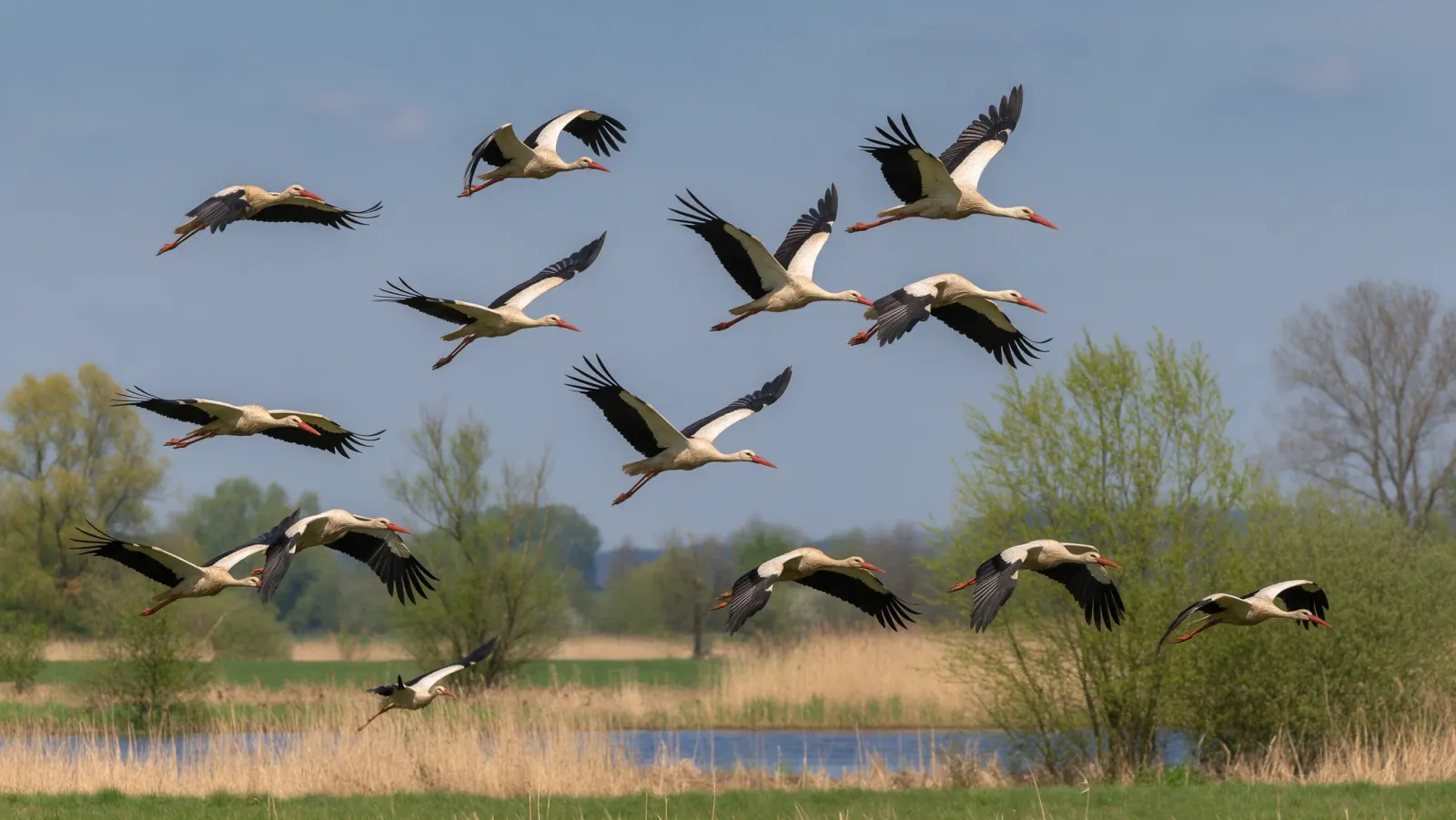
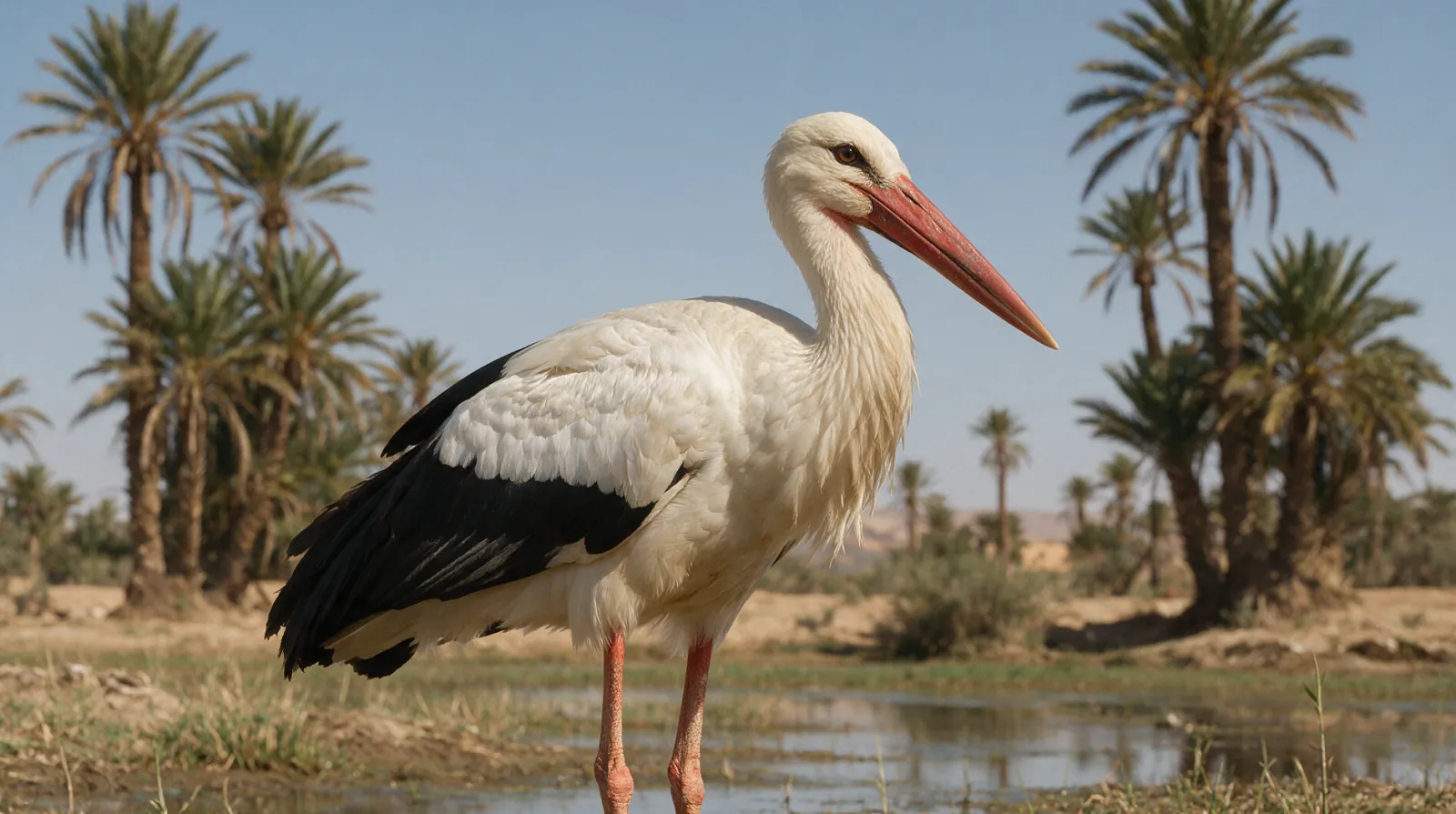
White storks cross the Strait of Gibraltar and the Mediterranean and arrive in North Africa in spring. In Morocco, Algeria, and Tunisia they nest in the middle of towns, on the highest thing available. A stork on a minaret is one of the ordinary sights of a North African spring. The bird feeds in wet fields, marshes, and river edges, and it returns to the same nest when it can. The nest is a heavy platform of sticks, and it is often left in place for years. People repair the roof beneath it and let the bird get on with the season.
What the religious texts say
The Quran does not single out the stork. It names other creatures, including the hoopoe and the ant, and it teaches a general care for living things. Islamic tradition has many stories about kindness to animals, and the stork falls under that broad care. The protection is a practice before it is a doctrine. A bird that is not hunted, not stoned, and not driven from its nest is protected by custom rather than by a rule aimed at storks alone. The custom is real, and it does not need a special verse to be worth keeping.
The guest on the minaret
Nesting on a mosque does not make the bird holy. The stork chooses height and safety, and a minaret offers both. People read the nest as a good sign anyway. A bird that settles on a mosque or a shrine is a quiet blessing, and the blessing is understood without being explained. The nest is left alone because the bird chose a place people already honour. The two kinds of respect meet on the same tower, and neither cancels the other.
Spring, birth, and the household
In North African folklore the stork is associated with spring and with the health of the household. The baby story is told in some places, carried by the same European current that gave the bird a bundle and a chimney. The stork's arrival and the birth season coincide, and the coincidence has always been enough for a story. A bird that comes back when the year turns is read as a sign that the house will turn with it. The reading is gentle, and it belongs to the household rather than to a school of interpretation.
Protection and its limits
Custom protects the nest, and the bird still faces modern pressures. Power lines cross the migration routes, wetlands are drained, and pesticides gather in the insects a stork eats. Hunting along the flyway is a problem in some countries, and conservation work in the Maghreb has focused on nests, wires, and the wet ground the birds need. A protected bird on a minaret can still be in trouble over the sea. The old respect is a start, and it is not a complete answer.
What the tradition holds
The North African stork is a neighbour with a claim on the house, and the claim is honoured by leaving it in peace. That is a modest tradition, and it has lasted because it asks little. It does not require a shrine or a festival. It requires a person to walk past a nest and not touch it. In spring the nests are occupied again, and the roofs below carry on with their ordinary business. The bird is a guest, and the guest returns. The stork gift borrows that old welcome and gives it to a household expecting a child.
Explore the gift