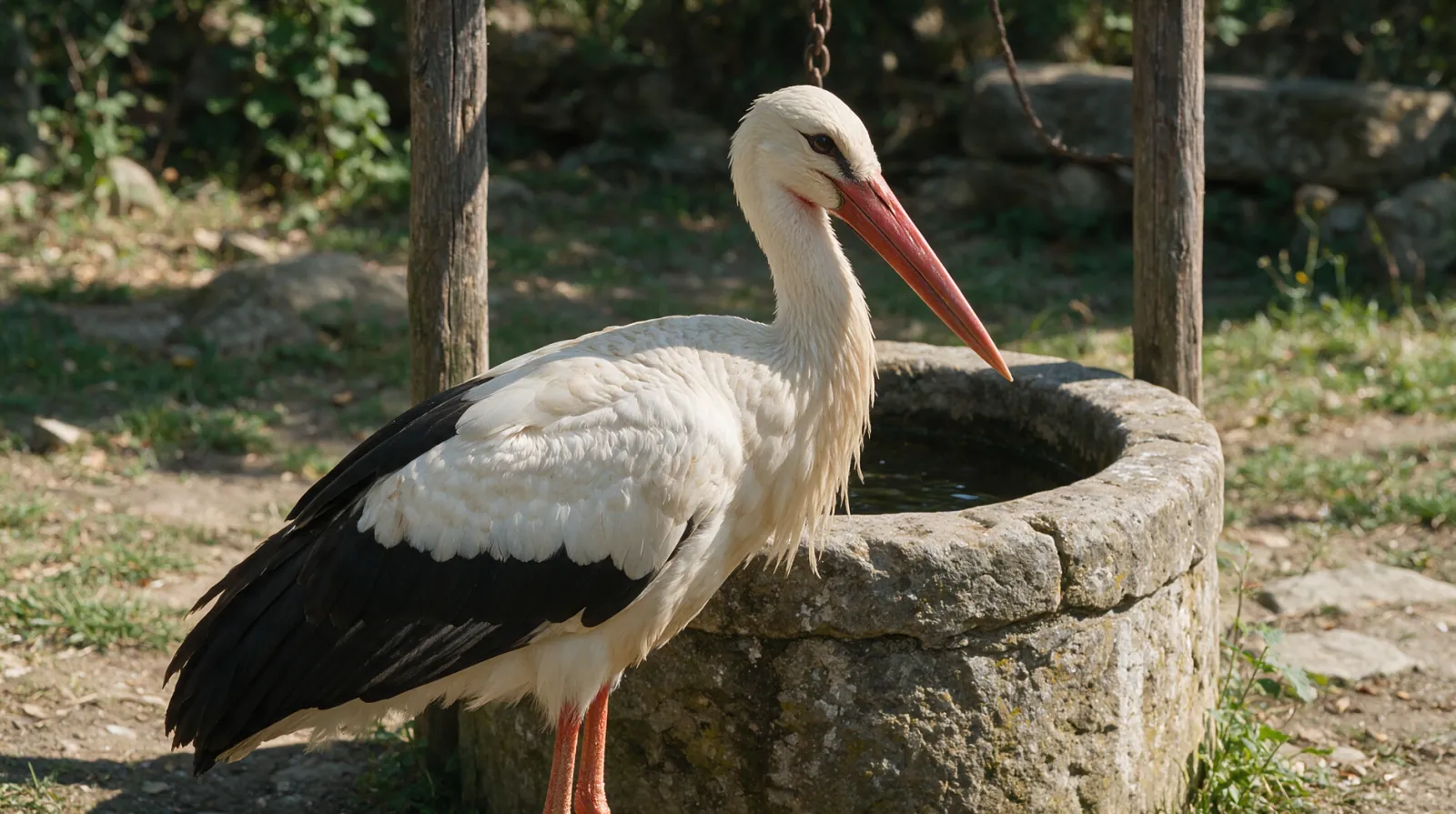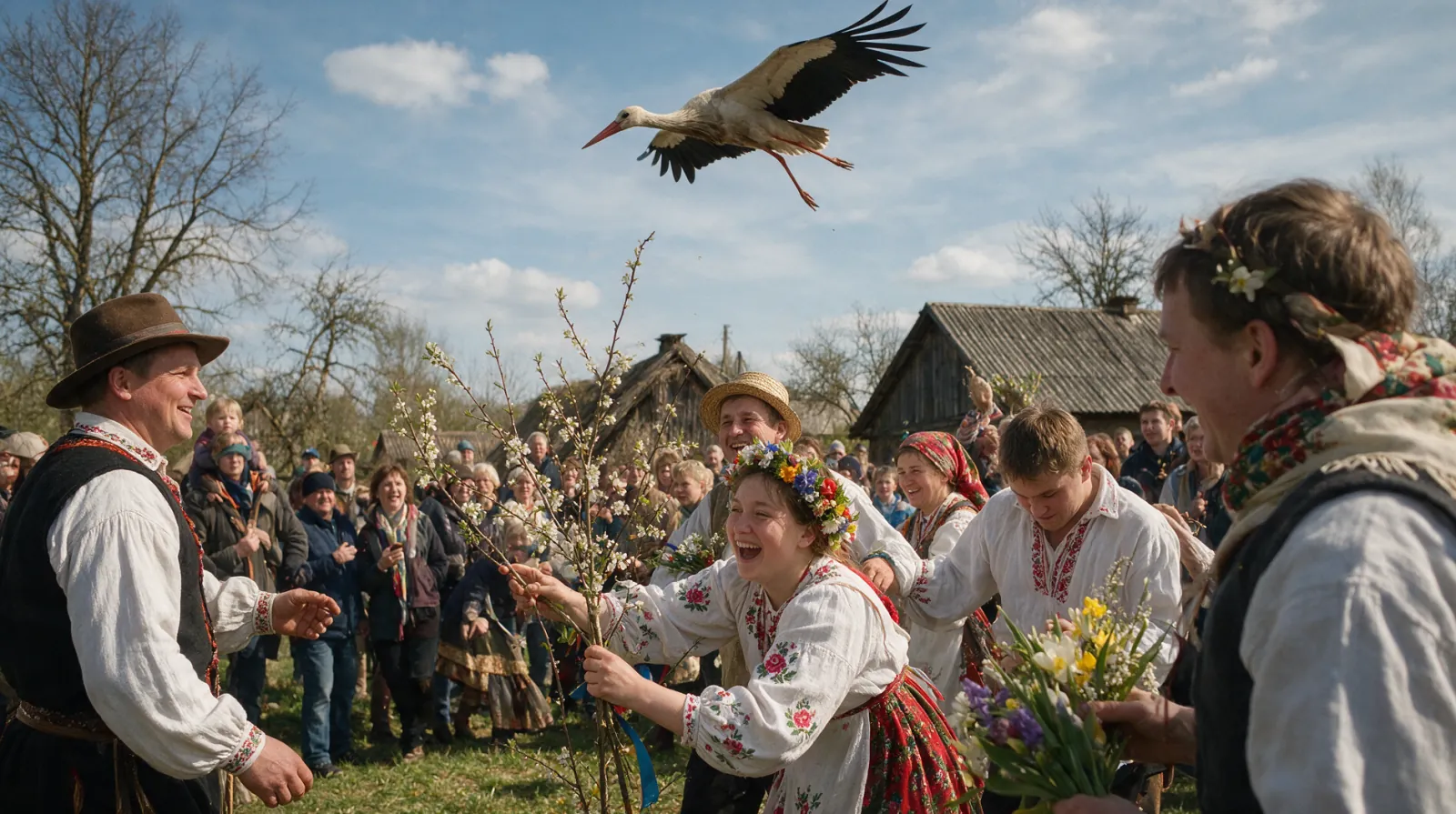
The stork in Greek and Roman myth is a bird of family duty, seasonal return, and one or two strange transformations. It was never a major god or a constellation in the way the eagle was. It belonged to the household, the field, and the law of care, and that is where the stories keep it.
Hera, Juno, and the family bird
Greek tradition linked the stork to Hera, the goddess of marriage and the household. Roman tradition gave the same bird to Juno. The association rested on the bird's visible family life: it builds a nest, feeds its young, and returns to the same site. A bird that raises its brood in plain view made an easy emblem for the goddess of the home. The stork was not a temple animal in the way the owl was at Athens. It was a neighbour with a patron, and the patron watched over the same things the bird seemed to practise.
The story of Antigone
One Greek myth tells of Antigone, daughter of Laomedon of Troy, who compared her hair to Hera's and was turned into a stork. Ovid retells the story in the Metamorphoses, and the transformation is a punishment for pride. The tale explains the bird's form as the record of a human mistake, and it places the stork among the mythic birds whose bodies carry a moral. The stork in the story is a woman who spoke too highly of herself, and the bird is what remained. The myth is small and sharp, and it survived because the bird was familiar enough to carry it.
The stork law
Roman writers praised the stork for feeding its aged parents. Pliny the Elder repeated the observation in his natural history, and later writers turned it into a proverb. The habit became known as the stork law: the duty of grown children to care for the parents who raised them. The bird was used to argue for a human obligation. The logic was simple, and it did not require proof. A creature that cared for its old folks was a model, and a model is more useful than a fact. The observation was repeated more often than it was tested, and it lasted for centuries.
Aesop and the cranes
One of Aesop's fables has a farmer spread nets over a field and catch cranes and a stork together. The stork pleads that it is harmless and useful, and the farmer answers that it was caught with the thieves. The fable is about company and reputation, and it is not kind. The stork in the story is judged by the flock it flew with. The moral is harsh and practical, and it survived in collections long after the bird stopped being a common farm sight. A reader can take the warning without taking the farmer's side.
The bird of the household
Roman augury read the flight of birds, though the stork was not among the birds with a fixed public office. Its arrival in spring was a sign of the season, and its presence on a roof was a domestic omen. That is the stork's real place in the old world: close to the house, tied to the calendar, useful as a picture of care. The bird did not carry the fate of the state. It carried the fate of a household. The distinction is modest, and it is the reason the stork stayed in the story after the temples closed.
What the myths leave
The Greek and Roman stork is a bird of the household, and the stories about it are stories about duty. Hera and Juno gave it a patron. Antigone gave it a warning about pride. The stork law gave it a human obligation. Aesop gave it a lesson about the company it keeps. None of these tales asks anyone to believe that a bird can choose a family's fortune. They ask only that the bird be noticed, and that the noticing teach something about how to live. The stork returns each spring, and the return is the oldest part of the legend. If you want to follow a real one, a named stork comes with a route that can be checked from one spring to the next.
Explore the gift