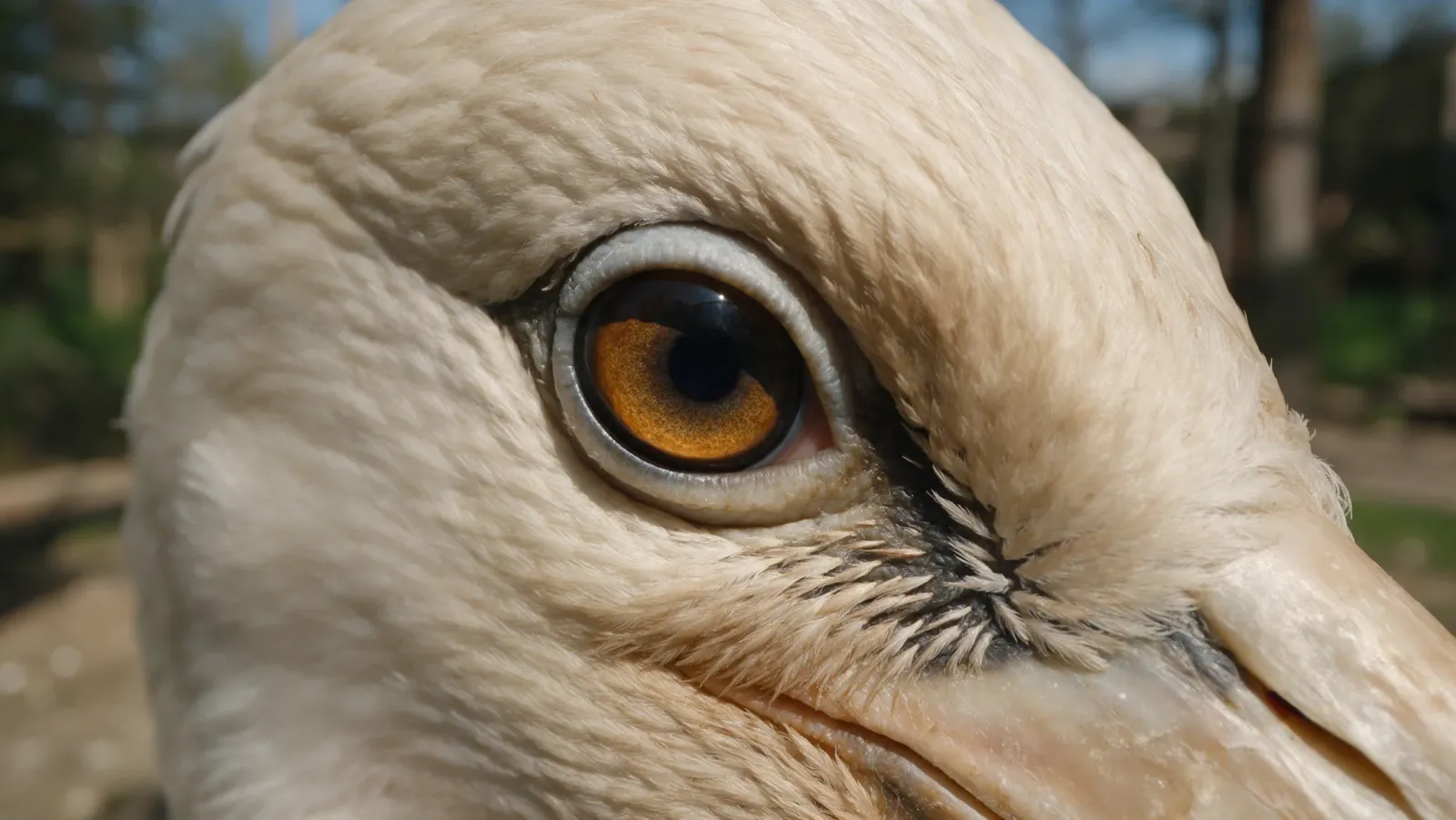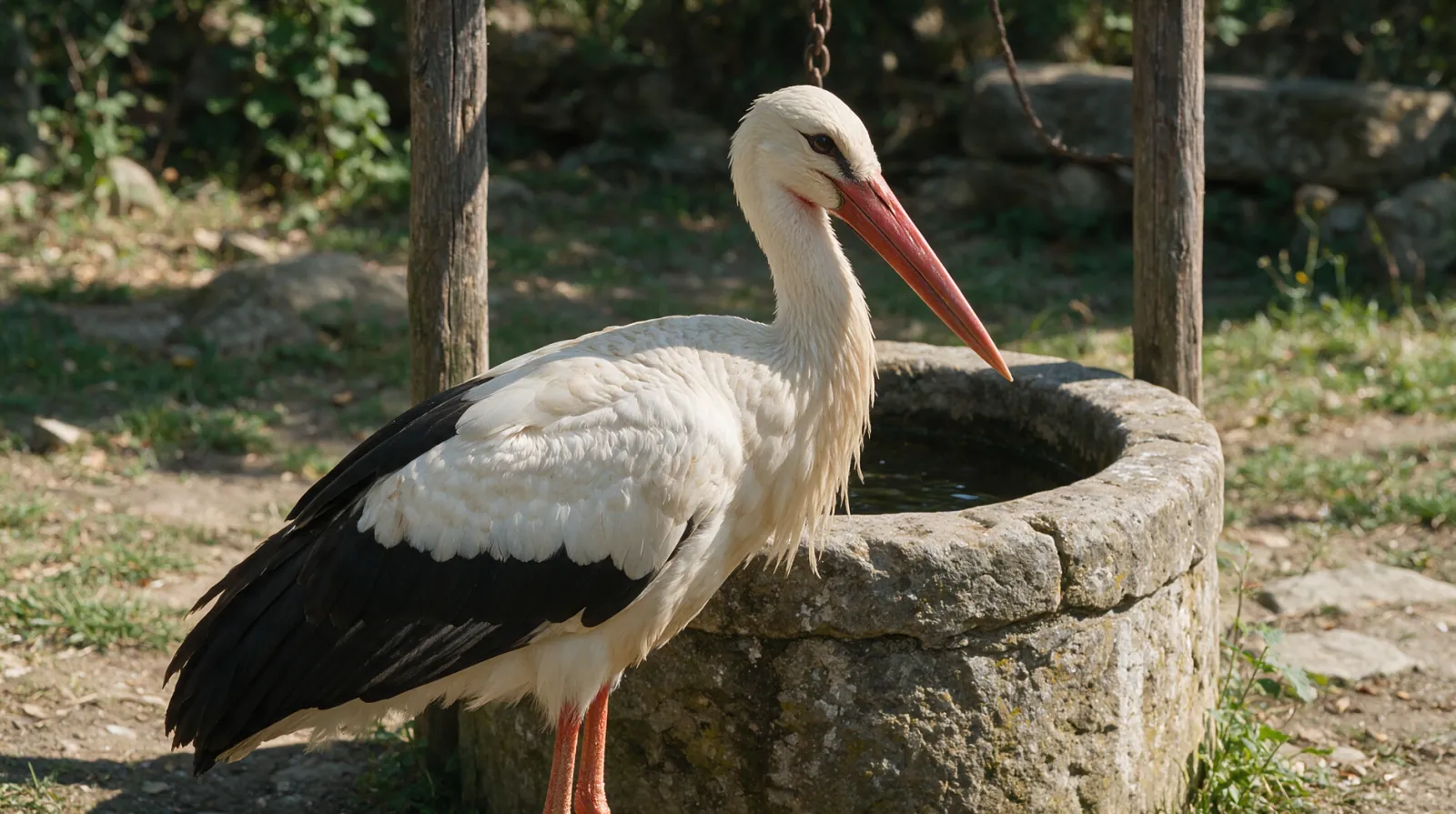
The stork did not leave the mark. The story says it did, and the story is one of the gentlest in European folklore. A stork carries a baby through the air, holds it by the neck or takes a nip, and leaves a small pink mark where the beak touched. The mark is real. The stork is a story. The two have travelled together for a long time.
How the story goes
In the old telling, the stork brings the baby to the house and leaves it with the family. The mark at the nape is the place the bird held on. A mark on the face is a kiss. The tale gave parents a way to talk about birth without explaining it. It also gave the bird a kindly role in the household.
The story appears in many versions across Europe. The details change: the bird may carry the baby in a cloth, in its beak, or on its back. The mark may be a grip, a nip, or a kiss. The constant is the stork, the baby, and the small mark that people could see.
Why the mark is really there
A stork bite is a nevus simplex, a capillary malformation present at birth. Small vessels near the surface stay wider than usual, and the skin above them shows their colour. It is common on the back of the neck, the eyelids, the forehead, and above the upper lip. It is not an injury, and nothing a parent did caused it.
Most marks fade within the first year or two. Marks on the nape may stay faint. No treatment is usually needed. If a mark changes or a parent is worried, a doctor or health visitor can look at it. This is general information, not medical advice.
Why the myth lasted
The story lasted because it is useful. It turns a strange mark into a sign of arrival, and it gives a family something to say to a child. A myth holds a fact in a form a family can say aloud. The fact is that the mark is common and harmless. The myth is that a bird brought the baby.
Folklore also travels well because it is easy to repeat. A grandparent tells it, a book prints it, a card shows a stork with a bundle. The mark appears in the same story, and the two become linked in memory. The image of the bird is older than the medical term, and it is warmer.
Telling it now
You can tell the story and still tell the truth. A child can hear that a stork brought them and that the mark is a small patch of vessels in the skin. The two explanations can sit side by side without confusing anyone. One is a story, one is a fact, and children are good at holding both.
If a relative says the mark is where the stork held on, you do not need to correct them at the table. You can smile and say the doctor calls it a salmon patch. The room will survive the mixture.
When the story helps
A story can carry a parent through a moment when the skin looks strange and the internet is loud. The story says the mark is a sign of arrival, not a warning. That is a kind thing to hear at a first bath. You can take the comfort and leave the biology. The comfort does not oblige you to believe the bird.
A story for the nursery
If you want the old story in the room, pick out a new-baby gift and let the bird take its place beside the cot. The mark will fade or stay on its own schedule. The story can stay as long as you like.
Explore the gift