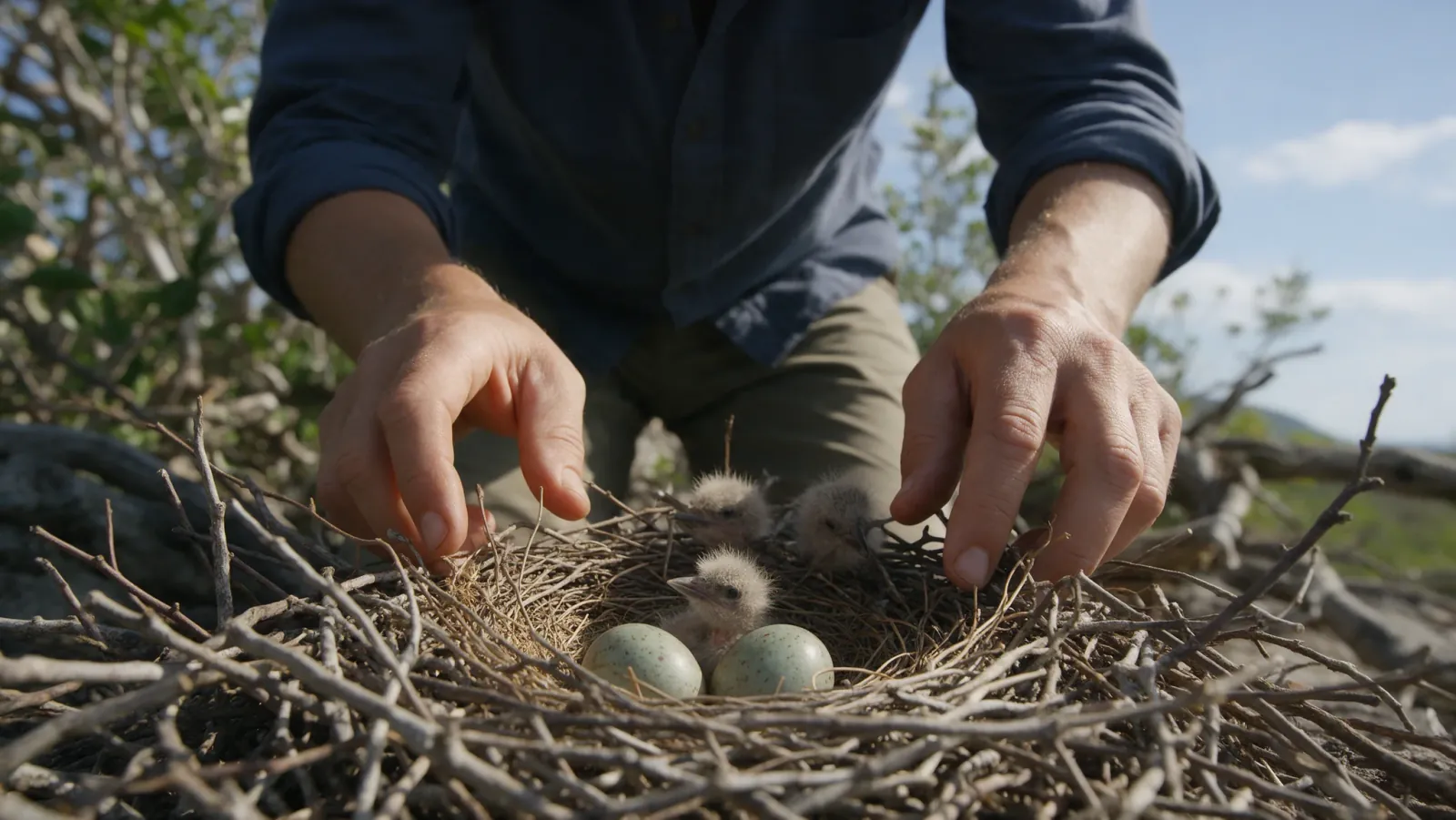
A stork nest is a heap of sticks that becomes a home, and it is never finished. Birds add to it every spring, repair what winter took, and line the cup again for the eggs. The work begins with one stick set down where it will hold.
A nest heavy as a person
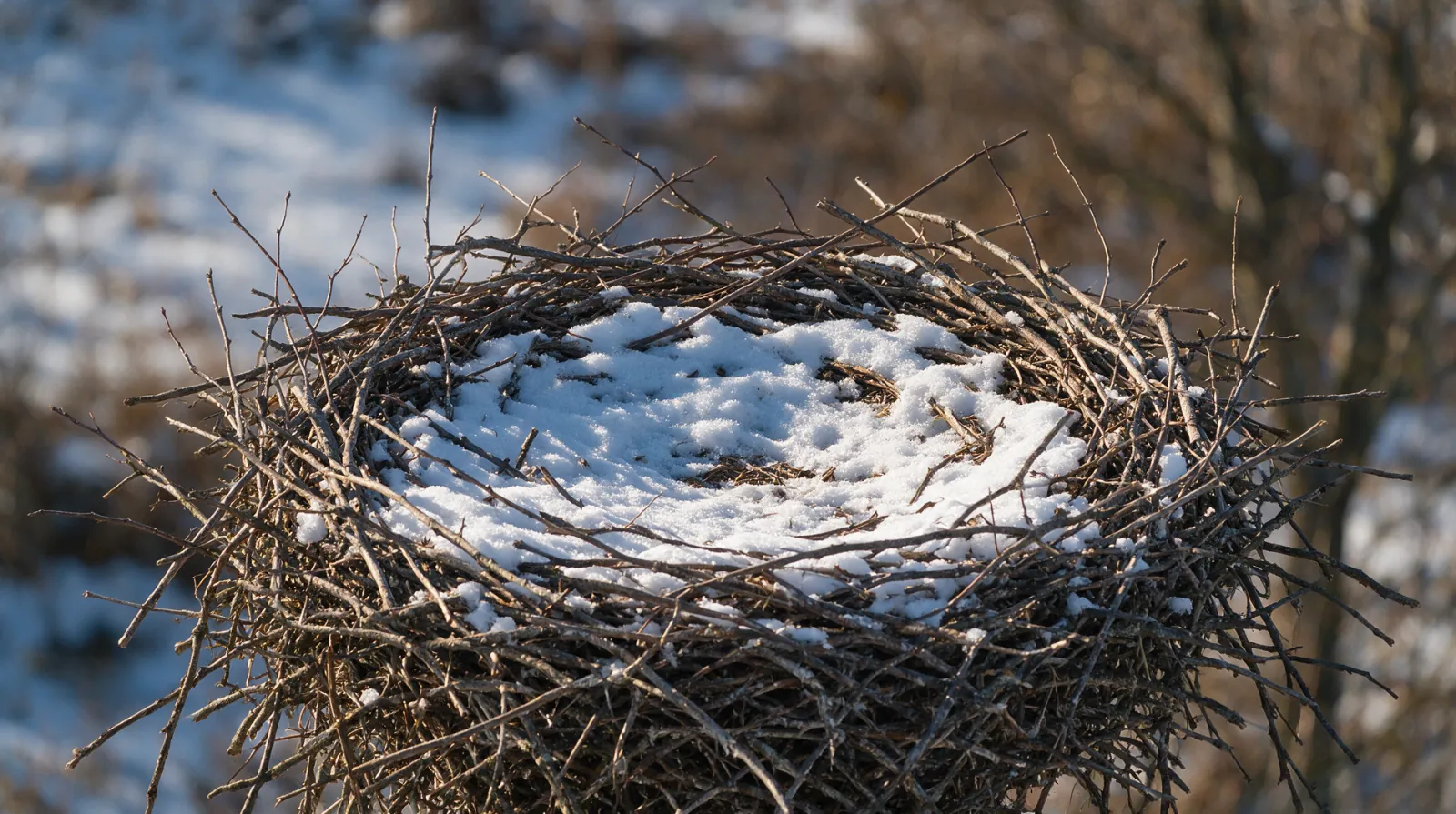
Sticks, grass, earth and years of repair build a platform that can weigh as much as a person. A hard winter works at every joint. Snow sits on it, thaws, freezes again, and one wet day the whole thing can let go and slide off a roof.
Sora came home from the south and found the rooftop he had used for three seasons bare. The pile of sticks was gone. He circled the roof twice, clattered once at the empty tiles, and then went looking for somewhere to begin. A stork nest is heavier than it looks, and a roof feels the weight through every winter.
A platform put up in winter
Someone in the village had seen this before. In the yard below, bolted to the top of a tall pole, a wooden platform waited. It had been put up in the winter, square and solid, with a rim of boards to give a nest something to grip. People who live with storks do this. A pole is easier to maintain than a chimney, and it keeps the mess off the roof.
Sora found it on his second day. He landed on the rim, walked the boards from corner to corner, and tested the surface with his bill. He did not trust it at first. He came and went, stood on it in the wind, and watched how the boards moved. A stork needs a site that will hold through a gale with eggs under it, and a new platform has no history.
The inspection
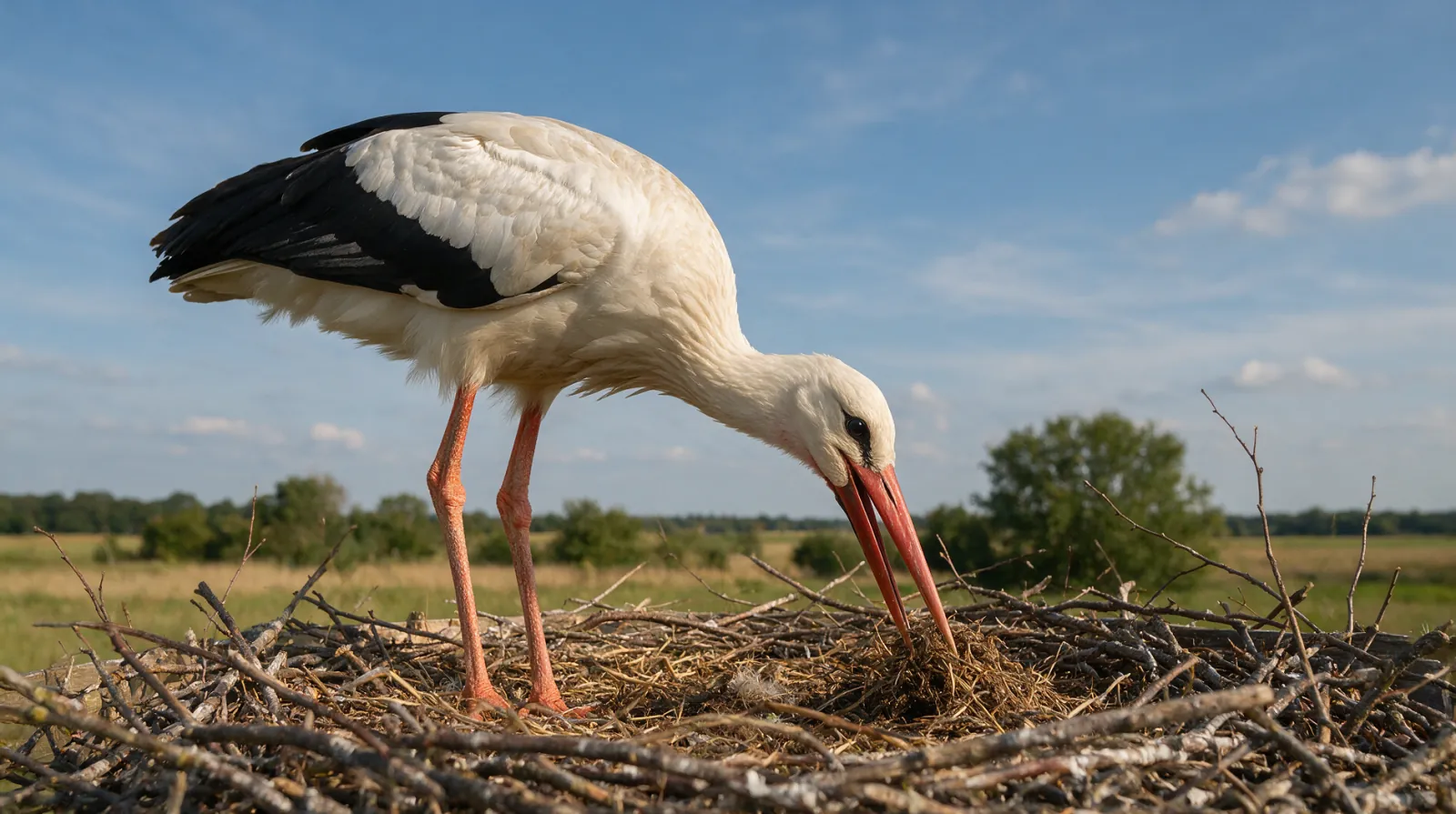
He spent a week deciding. He brought one stick and dropped it, then another. By the end of the week he had begun to carry sticks in earnest, and that was his answer. A stork checks a site with its feet and its feathers before it checks it with its eyes.
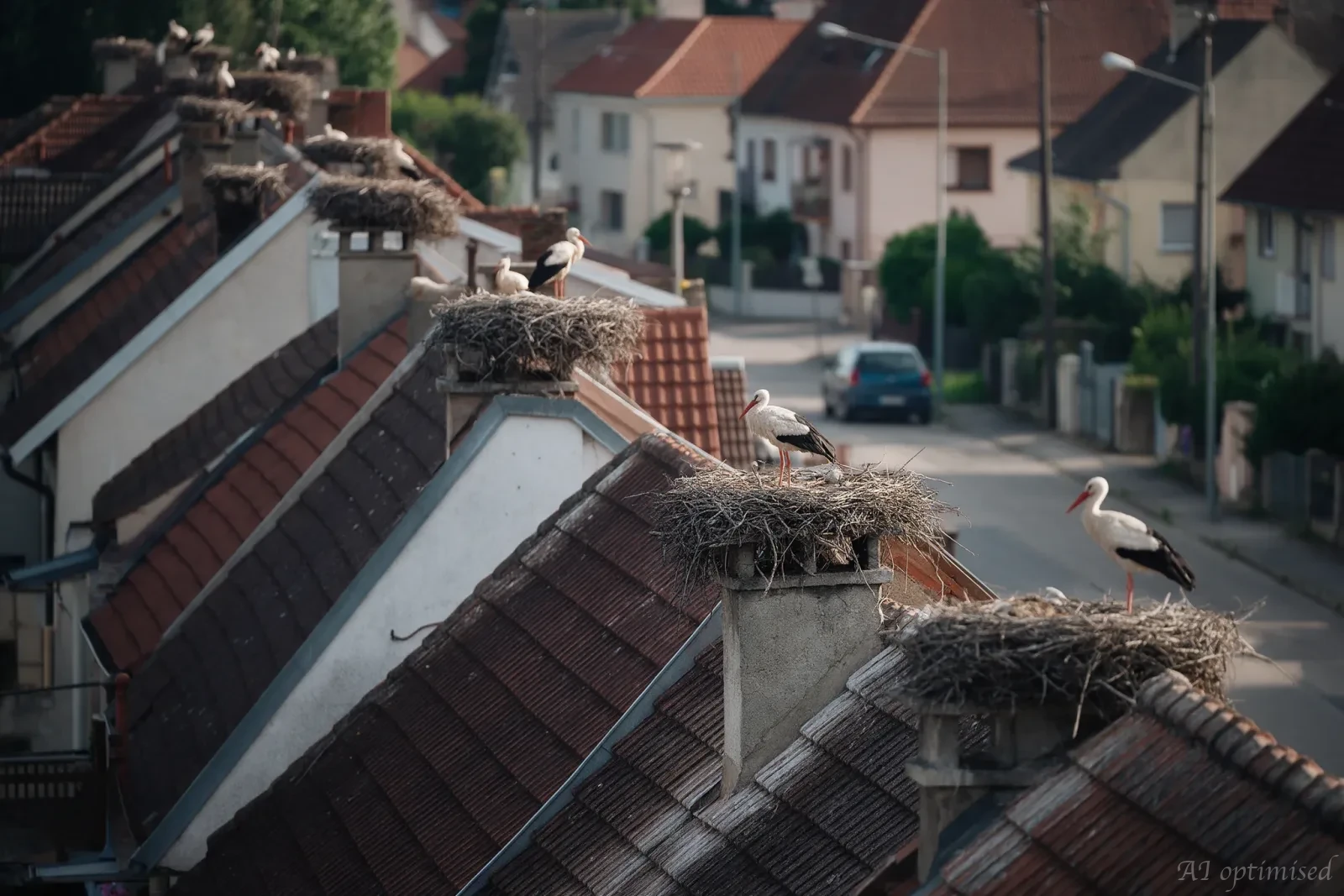
Juno did the same in her first year. She was three summers old and had spent two of them wandering, feeding in wet fields and following the flock without a nest of her own. Her first choice was a fine chimney on the tallest house in the village. She stood on it for an hour and then left. The wind came over the roof in a way she did not like, and a pair of jackdaws already owned the gutter. That chimney would have been a hard place to land in a gale.
She chose a bare chimney pot on the edge of the village instead. It was high, with a clear approach from the east, and no tree within reach of a predator. She stood on the pot for a whole morning, turning, looking, and clattering at nothing. A nest site is chosen for the view and the wind, and a young stork checks both before she builds. Then she carried the first stick.
The first nest
The first ring of sticks is a mess. It slides, it tips, and the wind takes pieces of it. Juno rebuilt hers. She learned to wedge the long twigs under each other and to weight the base with earth, and she learned the shape of a bowl. It took her three weeks. Rain stopped the work, and then heat did, and she started again each time with the same patience.
Halfway through, a young male landed on the chimney. Juno clattered at him and he clattered back, and then he began to bring sticks. He was clumsy, and she took his sticks and placed them herself, and he kept coming. By the end of the week they were building together, and the nest had a shape.
A stork nest is made of whatever the neighbourhood offers. Long twigs for the frame, grass and straw for the lining, earth and dung to bind it, and now and then something strange: a rag, a piece of rope, a strip of plastic. Juno used what she could carry, and the nest took on the colour of the fields around it.
A nest that grows
A pair chooses the site together. One bird lands, stands and clatters, and if the other joins, the work starts. The first sticks are the hardest. They have nothing to rest on, and the wind takes them, and the birds rebuild the base until it holds. Then they add earth and grass, and the loose heap becomes a cup.
A nest is a structure with a foundation, walls and a lining, and a stork builds all three with a bill and a pair of feet. The first season's nest is rough. The tenth season's nest is a fortress.
Rune was kept by the same pair for years. They arrived in spring, clattered over the roof, and spent a week repairing what winter had done. Storks add to a nest every season, and a nest used for a decade can grow as tall as a barrel and as heavy as a small cart. A returning pair patches the old nest. A stick here, a lining there, and the shape of the old cup is restored.
The neighbours under the rim
A stork nest holds more than storks. The cup holds eggs and chicks, and the underside holds sparrows. House sparrows nest in the gaps beneath a stork nest, and the storks ignore them. Sora's new nest had sparrows in it before it was half built. They slipped under the rim and made a home of their own, and he let them. A stork nest is a small village. Sparrows, starlings and sometimes a pair of kestrels take the gaps, and the stork on top goes about its business above them.
In a hard spring the nest holds heat, and in a wet one it drains. It also holds the life of the village. People look up at it the way they look at an old clock tower, just to check that it is still there. The village had a relationship with Rune that no one had negotiated. The nest was a landmark and a nuisance. It was the first thing looked for in spring and the reason the gutter needed cleaning in autumn. A car parked beneath it learned to park somewhere else.
What the years add
An old stork nest is a serious object. Every spring adds a layer, and the layers bind with earth and dung until the whole thing is more like masonry than twigs. A nest used for a decade can weigh as much as a small cart, and the roof beneath it has to carry that weight through snow and rain. People sometimes shore up a chimney or fit a platform. The birds do not know or care about the load. They add sticks because the cup needs repair, and the roof takes what comes.
Sora's new nest went up stick by stick. He brought long twigs from the hedges and short ones from the garden, and he wove them into a rough ring, then a bowl. He added grass, then earth, then more sticks, and he turned around in the cup a hundred times to press it into shape. He brought mud in his bill and pressed it into the gaps, and he lined the cup with dry grass until the sticks stopped showing through.
By the time the first eggs came, the new nest was high and solid, a small fortress of sticks above the yard. A second stork had arrived and stood beside him, and the two of them clattered over the rooftops at dawn. The old chimney stayed bare. Sora did not look at it again. Somewhere below, the person who had bolted the platform to the pole heard the clatter and looked up. The storks were back, and this year they had a better roof than the one winter took.
Explore the gift