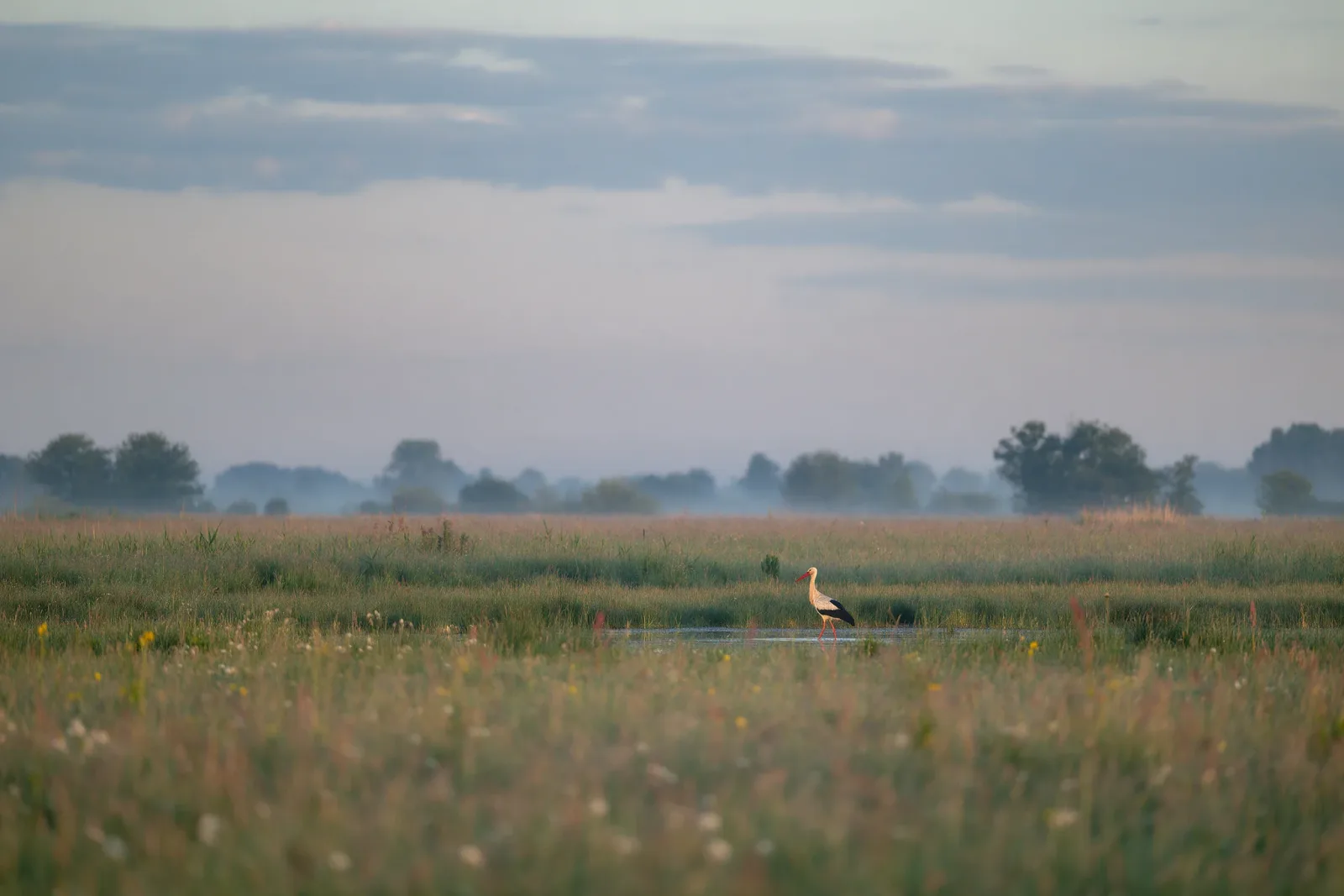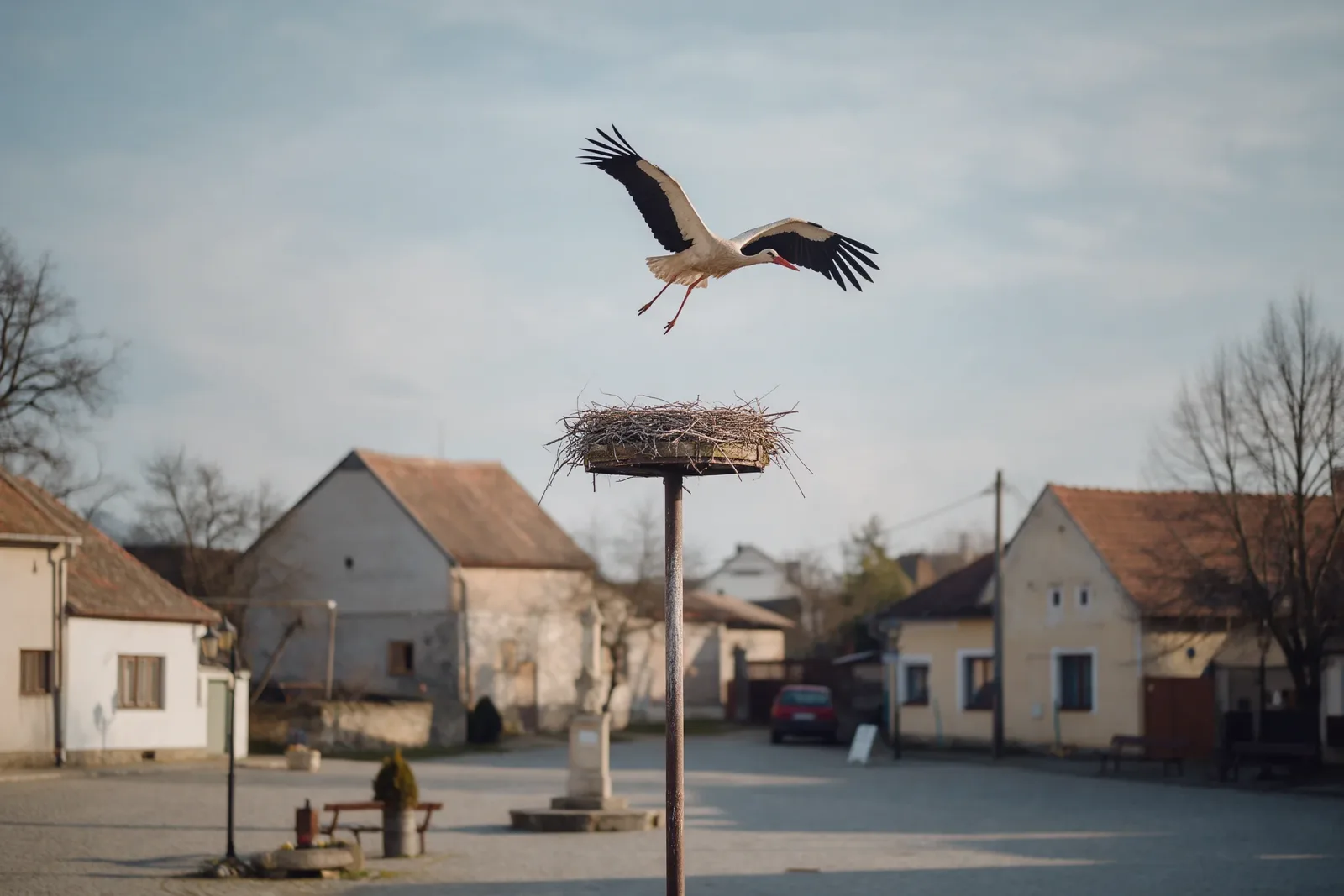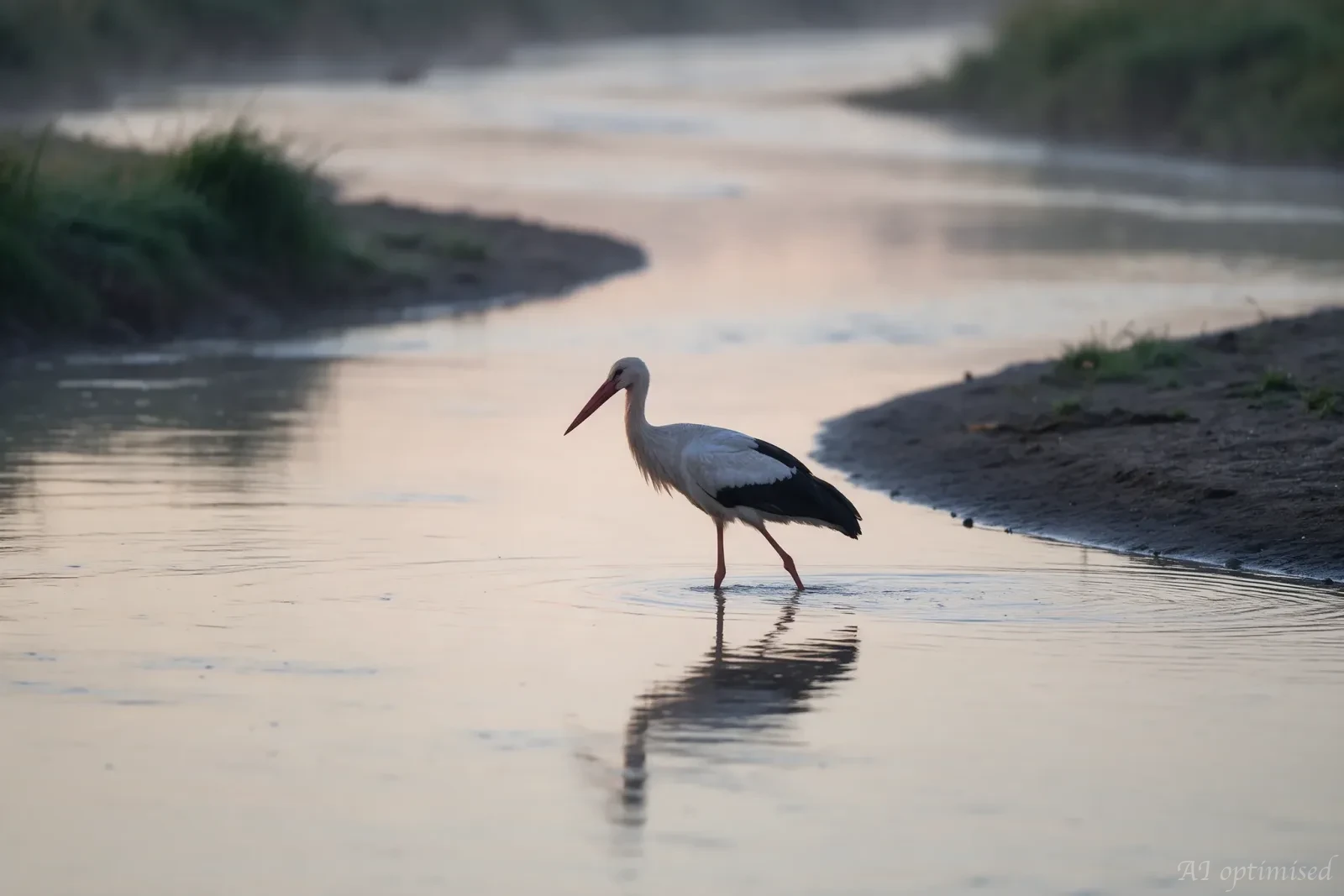
Keeping rivers alive is one of the most unglamorous and essential jobs in conservation, because a river is not a line on a map. It is a living system, and everything that feeds on it, drinks from it, or nests beside it depends on that system staying whole. A white stork on its longest days, when it is feeding hungry chicks, leans on the river and its flooded margins more than at any other time of year.
A river is not a pipe
The trouble begins when we treat a river as a channel whose only job is to move water downhill quickly. Straightened, dredged, and lined, a river can carry a flood away, but it can no longer support life the way it once did. The shallows vanish. The backwaters dry out. The banks, once soft and full of insects, become hard and bare.
A stork cannot hunt in a rushing pipe. It needs the slow margins, the pools, the flooded grass at the edge, where frogs and fish and insects gather. Keep the river alive, and you keep the stork fed.
The bends and the overflow
A healthy river wanders. Its bends slow the water, and in spring it overflows into the fields beside it, spreading a thin skin of water across the land. That seasonal flooding is not a problem to be engineered away. It is the very thing that makes a floodplain fertile, for the stork and for everything else.
When we let the river rise and fall naturally, we get a system that feeds itself. The overflow carries nutrients onto the land, the receding water leaves shallow pools, and those pools are exactly where a stork wades at dawn. Straighten the river and drain the floodplain, and the whole web collapses.
The things a river carries
A river is also a highway, and not only for water. Sediment, seeds, and nutrients travel downstream, rebuilding banks and deltas, feeding the land as they go. When we dam and channel a river, we stop that movement, and the places downstream slowly starve.
Keeping rivers alive means letting them carry what they have always carried. It means keeping the water clean, so that the creatures in it do not accumulate the poisons that ran off the fields. A poisoned river is a dead one, even if it still looks like water.
Water that connects everything
The river is where the whole landscape meets. The stork drinks from it, feeds beside it, and follows it south on migration, using its course as a signpost across the country. The child in the nearby town drinks water that came down that same river, filtered by the land it passed through.
Keeping rivers alive is not a task for one season or one group. It is a way of thinking about water as something with a life of its own, and of trusting that life to look after us, the storks, and everything downstream.
Explore the gift