Keeping the baby warm is the oldest job in the house. Heat is borrowed before it is made. A newborn has little fat and cannot shiver well enough to generate heat, so your body is the first source of warmth. Skin to skin, a blanket over both of you, and the baby's temperature steadies.
Borrowed warmth
This is why a baby settles on a chest and fusses in a cot. The cot is correct and cool; you are warm and breathing. A hat makes a surprising difference. A newborn loses a lot of heat through the head, and a thin cotton hat indoors is often enough.
The needing will not last. One day the child will push the blanket off and say it is too hot. For now, keep the room warm, keep the blanket near, and let the borrowed heat do its work.
If the room is very cold, warm it before the baby goes to bed. A radiator on for twenty minutes is enough. Most homes are fine at ordinary room temperature with a vest and a blanket. A room that is comfortable for you in a t-shirt is usually comfortable for a baby with one more layer.
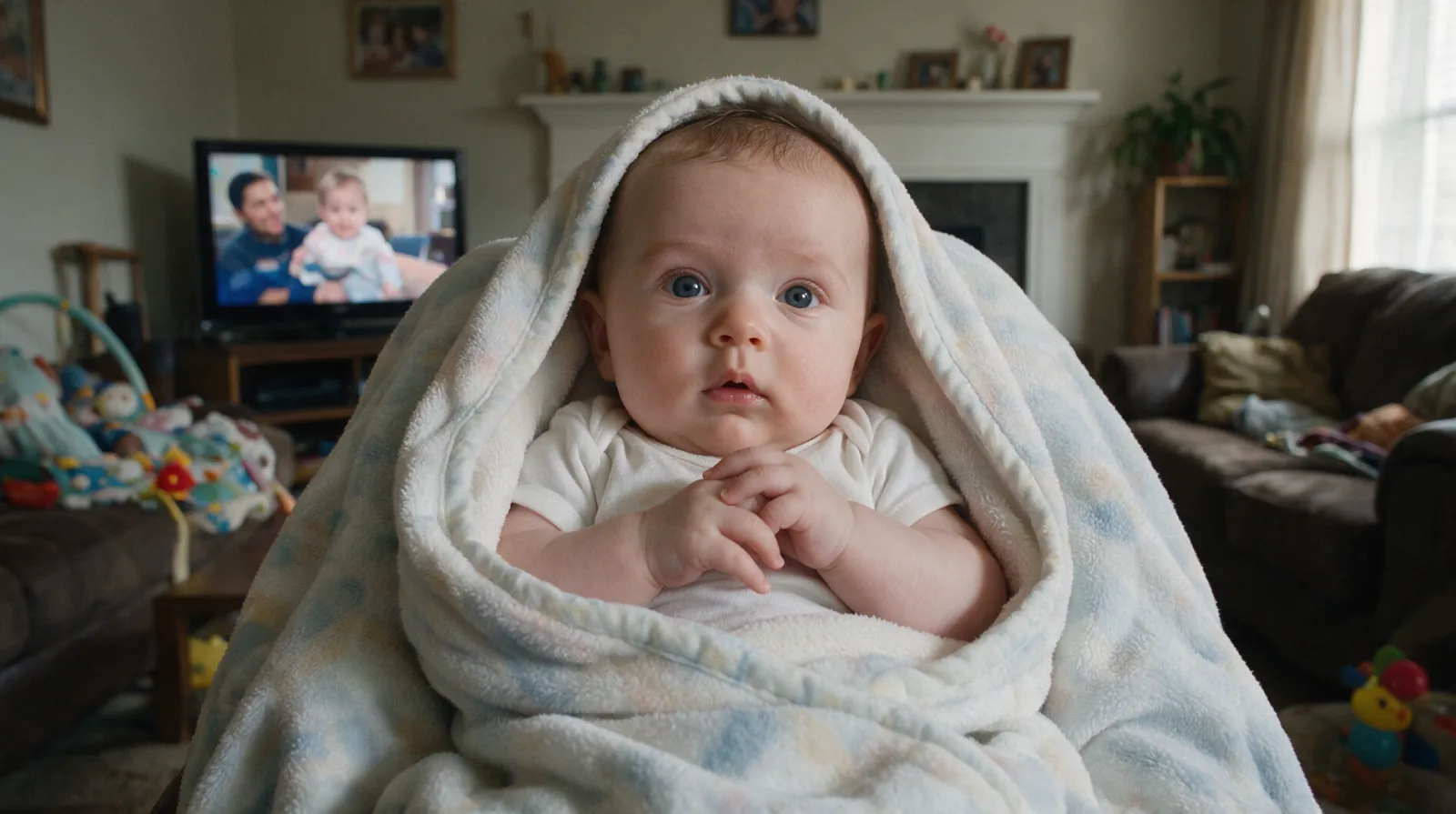
The neck, the hands
Put a hand on the back of the neck or the chest. Warm and dry is right. Hot and damp means too many layers. Cold and mottled means add one. Hands and feet are unreliable. They are often cool in a perfectly warm baby, because the circulation is still learning its routes.
Check every hour or so in the first weeks. You will get faster at it, and the check will become a habit rather than a worry. In the pram, one more layer than you, plus a hat. A baby in a pram cannot move to keep warm, so the blanket does the work. Check the neck when you stop.
In the car, a thick coat under a harness is unsafe. Take the coat off, strap the baby in, and put the coat over the harness like a blanket. In very cold weather, warm the pram with a hot water bottle before the baby goes in, then take the bottle out. Never leave it against the baby.
The pile of tiny clothes
A stack of sleepsuits in a drawer is the first thing in the house that belongs to someone who has not arrived. Wash everything before it is worn. Newborn skin is thin and easily irritated, and new clothes carry sizing and dust. A gentle, unscented detergent and a warm wash is enough.
People buy newborn size, and babies grow out of it in weeks. A baby may never fit the smallest size at all. Keep a few pieces, and leave the tags on the rest so they can be exchanged. You need more of the size above than you think: sleepsuits, vests, a cardigan. Six of each is a reasonable start. Wash the pram blankets and the cot sheets at the same time. A baby spends more time against those than against any outfit.
Do not buy ahead in bulk. A baby can skip a size entirely, and a drawer full of unworn clothes is a small sadness.
Sleepsuits with zips, vests with envelope necks, a hat, a cardigan. Anything with more than five press studs will be abandoned at three in the morning. Choose clothes you can open in the dark. Dresses, tiny jeans, and stiff collars look lovely in photographs and are miserable to put on a newborn.
Set aside one thing you will not use: the first outfit, the one a grandparent knitted, the one with the small embroidered stork. Put it in a cotton bag with a note and the date. A kept outfit becomes an object with a date on it.
The drawer empties fast. One day the smallest vest will not go over the head, and you will put it in a bag for someone else. You will be surprised by which ones you cannot throw away. It will be the soft one that always fit. Keep one vest. Keep the hat from the hospital, if there was one. The rest can go.
The first bath
A newborn bath is less about washing than about warmth, and it takes about five minutes once you stop being afraid of it. Get everything ready before the baby is undressed. A towel laid flat, a fresh nappy, a vest, a warm room, and a basin of water at about body temperature. Test it with your wrist or elbow.
Two adults make it easier: one holds, one washes. If you are alone, have the towel within reach and do not let go of the baby for a second. A bath support or a folded towel in the bottom of the basin stops the baby sliding. A washing-up bowl works for the first weeks.
Deep enough to cover the baby's shoulders when held, shallow enough that the head stays clear. A newborn does not need soap every day. Plain water is enough for most washes, with a little gentle cleanser for the nappy area. Do not add anything to the water unless a health professional has suggested it. Do not use cotton buds inside the ear or nose. Wash between the fingers and behind the ears, where milk collects.
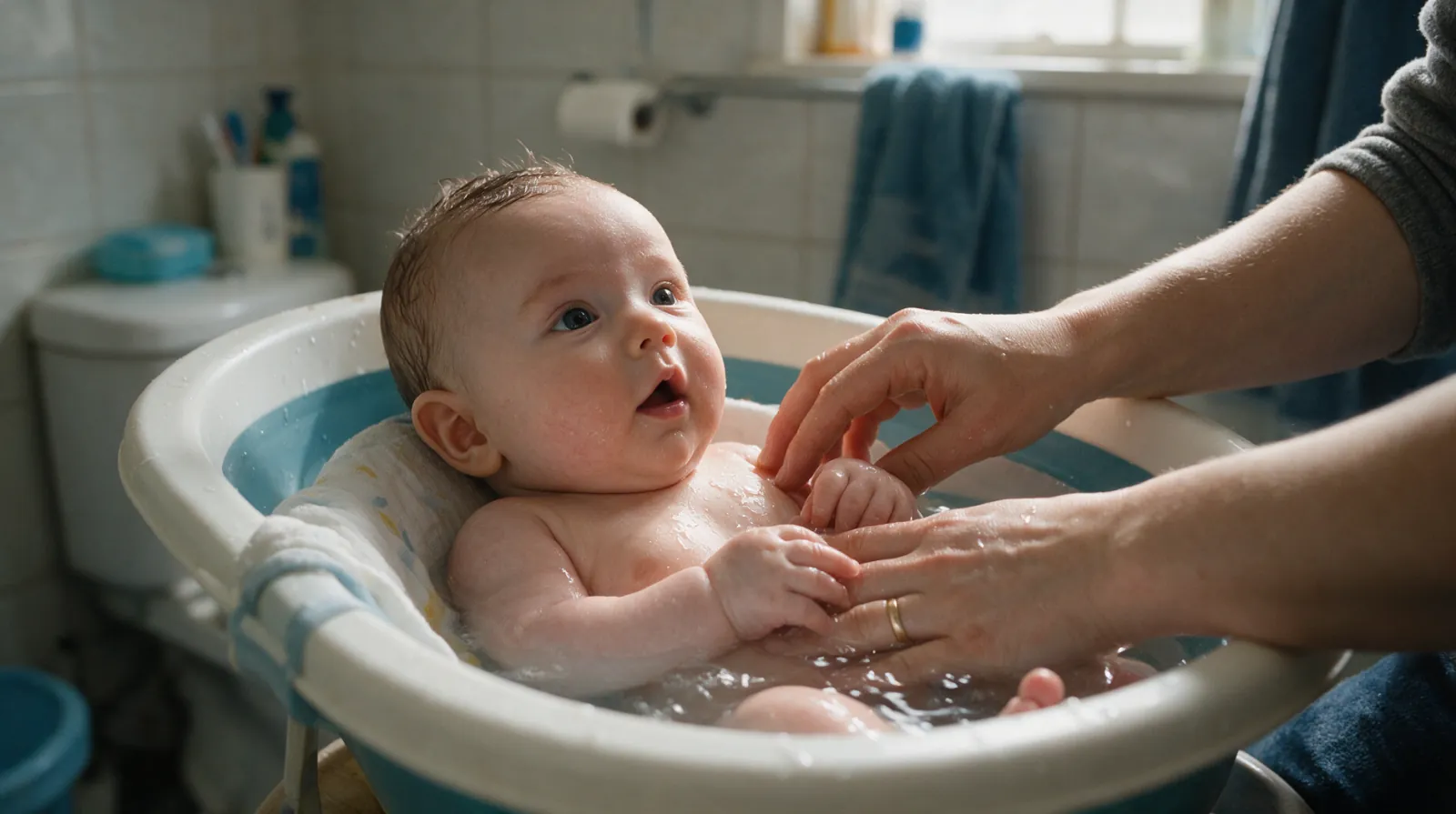
The wrap after
Hold the baby with one arm behind the back, your hand supporting the head and neck. The head is the heavy part, and it needs support the whole time. Wash the face with a cloth, then the body, then the hair last. Talk through it. The voice is doing as much as the water.
Lift the baby out into the towel, head first, and wrap before you do anything else. The towel is the point of the bath: warmth after the water. Dry the creases gently, put on the nappy and vest, and hold the baby for a while.
Some babies hate the bath and love the wrap. Some are the other way round. Both are normal. A hooded towel keeps the head warm. If you do not have one, a normal towel folded over the head works.
There will be water on the floor. A bath in the kitchen means a wet kitchen, and a wet kitchen is easier to clean than a wet bathroom. Mop it later. The bathroom is the warmest room in the house, and it will be used more than you think. If it is small, keep a basket on the floor for the baby things. It comes out at bath time and goes back under the sink.
The room at night
Keep the cot away from radiators, windows, and draughts. A cellular blanket tucked in firmly at the foot of the cot is safer than a loose quilt. At night, a sleeping bag sized for the baby's weight is simpler than a blanket, once the baby is big enough. Until then, tuck the blanket under the mattress.
You will not remember the temperature of the room. You will remember the weight. Some parents keep the first hat in a drawer, with the date on a card, or adopt a stork in the baby's name and set it beside the cot.
The first bath will feel like an operation. By the tenth it will be part of the evening, and you will be able to do it half asleep. That is the direction of travel with almost everything in the first year.
Explore the gift