Have you ever caught a stork asleep? It is one of the quieter wonders of the bird world, and if you watch closely you may find a stork in the middle of it, standing on one leg with its head turned back and its bill tucked into the feathers of its shoulder. How storks sleep tells you a great deal about how they are built, and it holds a few gentle mysteries besides. The sleeping stork is a portrait of a bird at perfect ease, balanced and still, and there is more going on in that stillness than meets the eye. Sleep, for a stork, is not a simple thing. It is a balance, a rest held lightly against a world that never quite stops being dangerous. The sleeping stork is a picture of trust, and of the careful compromises a wild bird makes every night.
One leg, not two
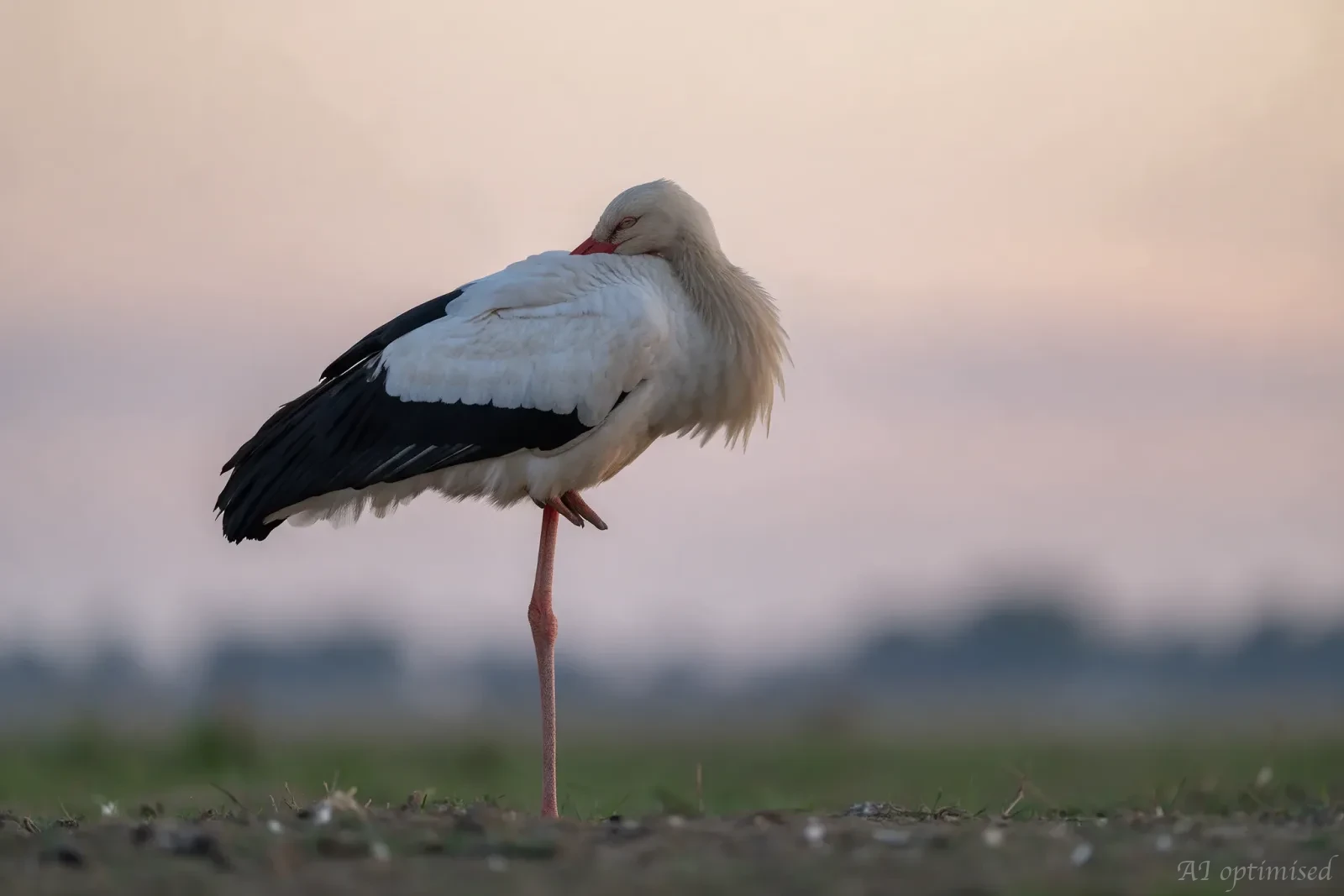
The one-legged pose is the most famous part of a stork's rest. A stork lifts one leg and folds it up into its belly feathers, balancing on the other. The reason is partly warmth and partly comfort. Tucking a leg up keeps it out of cold water and cold air, and it gives the standing leg a rest when the bird switches sides. A stork can lock its legs at the joint, so standing for hours costs almost no effort. The bird is not straining. It is simply leaning on its own bones, resting one leg while the other holds it upright.
The head turned back
A sleeping stork often turns its head around and lays its bill along its back, tucked among the feathers. This does two quiet jobs. It keeps the long bill out of the way, and it lets the bird rest its neck. The pose looks uncomfortable to a person, but for a bird built on length it is the natural way to settle. The neck folds back, the eyes close, and the bird drops off, still balanced, still ready to wake. The long neck that makes a stork so elegant by day folds neatly away at night.
Half asleep, half awake
A stork's sleep is rarely deep. Wild birds sleep lightly, ready to rouse at the first hint of danger, and a stork may doze with one half of its brain at a time. This lets it keep watch while it rests, the way many birds do. Even in sleep, a stork never fully leaves the world around it, and a faint sound is enough to bring it back to full attention. Sleep for a wild bird is a careful compromise, a rest that never quite lets go of the need to be alert.
Sleeping in company
Many storks sleep near others, on a nest, in a tree, or on the ground among a flock. There is safety in numbers, and while most of the group dozes, a few birds stay half alert. On a nest, a pair may take turns resting, one bird always a little more awake than the other. Companionship is part of how a stork rests safely, and it is part of why storks like to gather. A sleeping flock is a watchful flock, and each bird rests easier for the others nearby.
Where a migrating stork sleeps
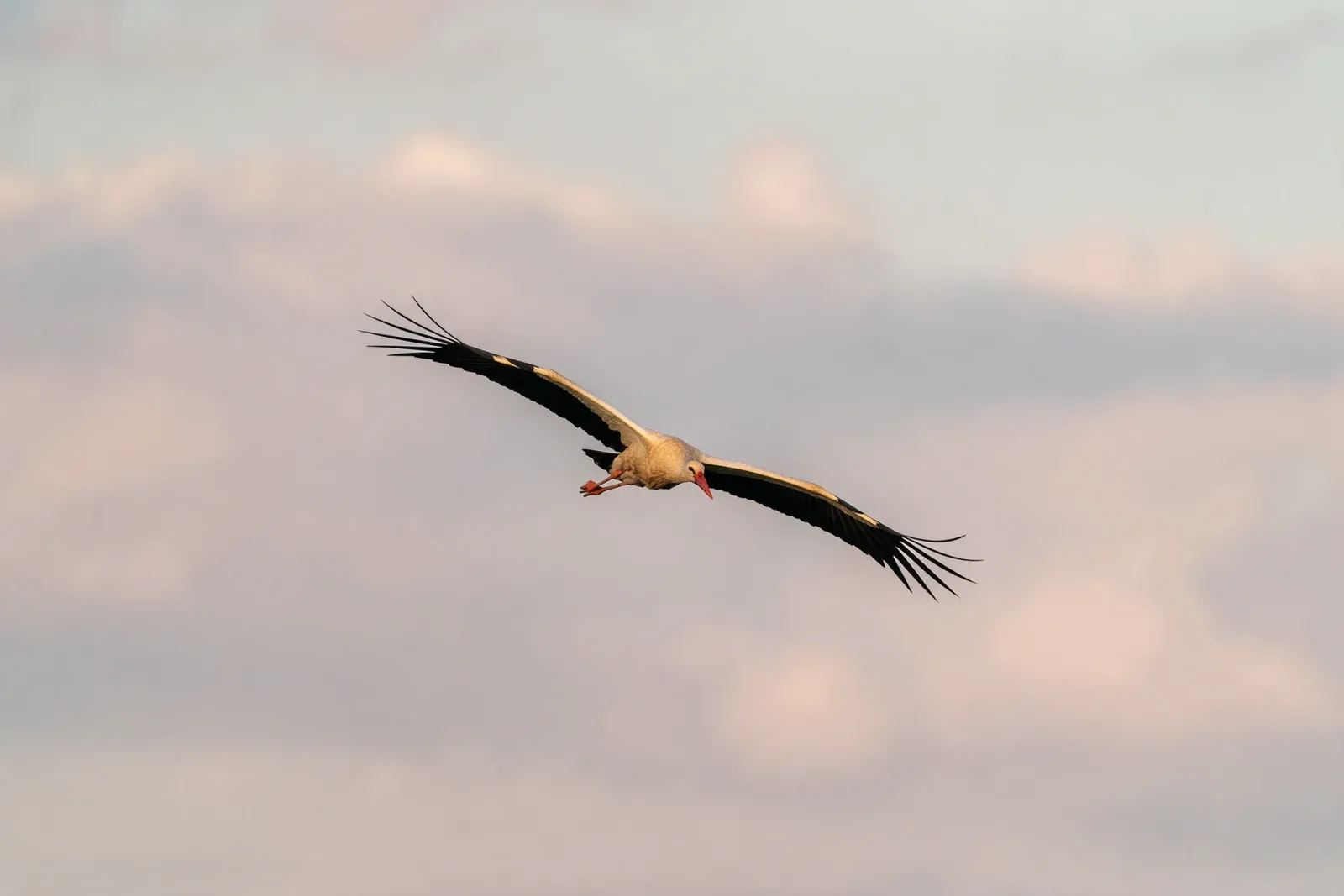
During migration a stork must find somewhere to stop each night. It comes down to a tree, a marsh, or a quiet field, often with other birds, and rests through the dark hours before setting out again at dawn. The long flight south is built on thousands of small rests, each one a night of one-legged sleep somewhere new along the way. A stork's migration is not one long flight but a chain of sleeps and flights, each night a small recovery before the next day's distance. Each night is a small homecoming, a place found and held for a few hours before the journey begins again at first light.
So the next time you see a stork standing still at dusk with one leg lifted, do not mistake it for waiting. It may simply be asleep, balanced and dreaming, as perfectly at rest as a bird can be.
Explore the gift