A seed sits in the palm like a crumb. An egg fits in two hands. A newborn sleeps in the crook of an arm, and a whole life is folded into that quiet weight. Nothing arrives at full size, and the small version carries the plan for everything that follows.
The size of a beginning
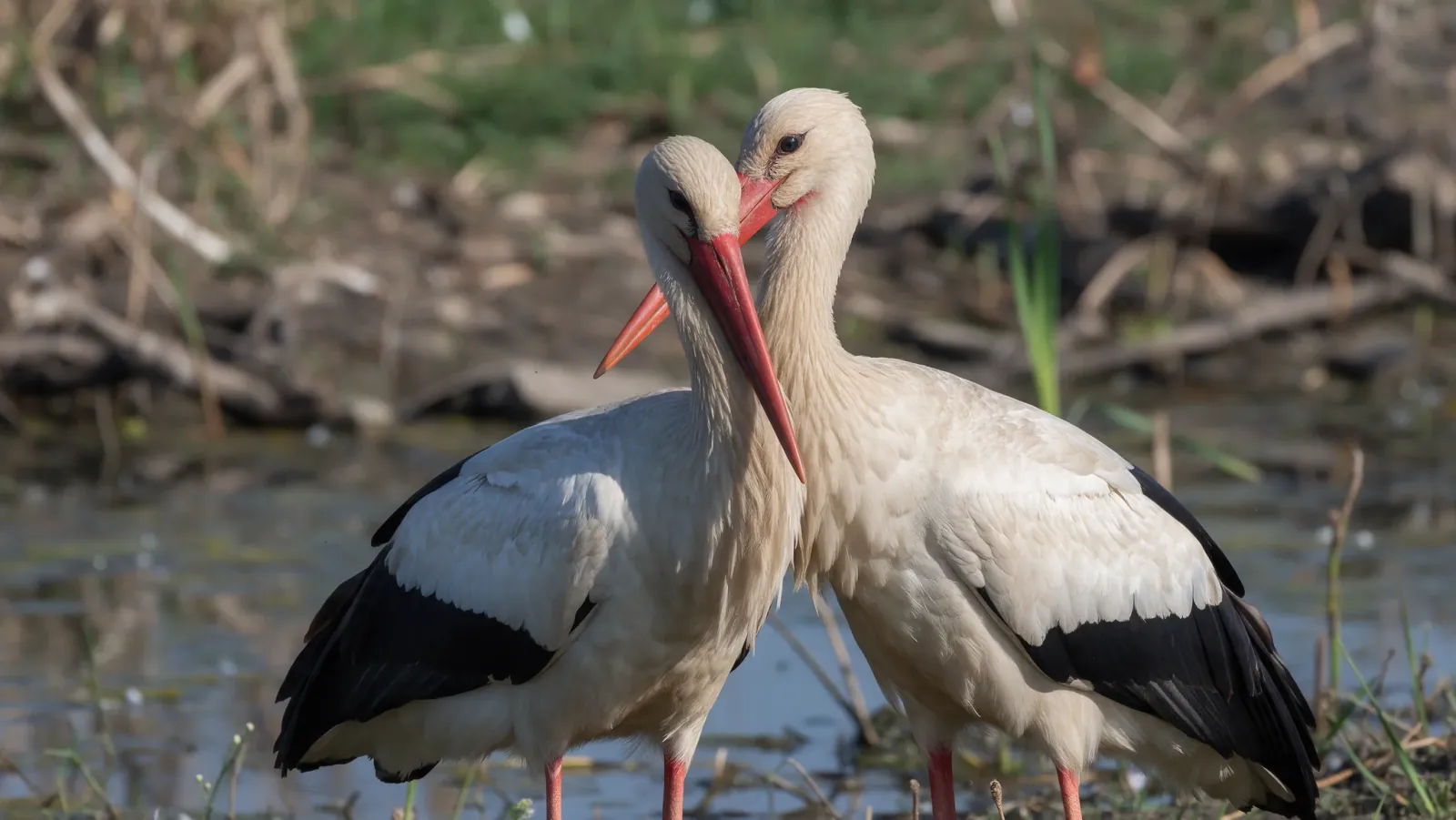
A beginning is easy to overlook because it asks for so little room. A beech seed is smaller than a thumbnail and contains the instructions for a tree that will shade a road. A white stork's egg is about the size of a large fist, and inside it a bird is assembling a wingspan of roughly two metres.
Smallness is a way of travelling light. A seed can be carried by wind, by a bird's gut, by the cuff of a coat. An egg can be warmed under a body. A baby can be carried in a sling while dinner is made. Everything large begins as something portable.
That portability is part of the design. A beginning has to survive a journey before it can grow. The seed travels, the egg waits under a warm body, the baby is carried from room to room. The small size is what makes the moving possible.
What a seed carries
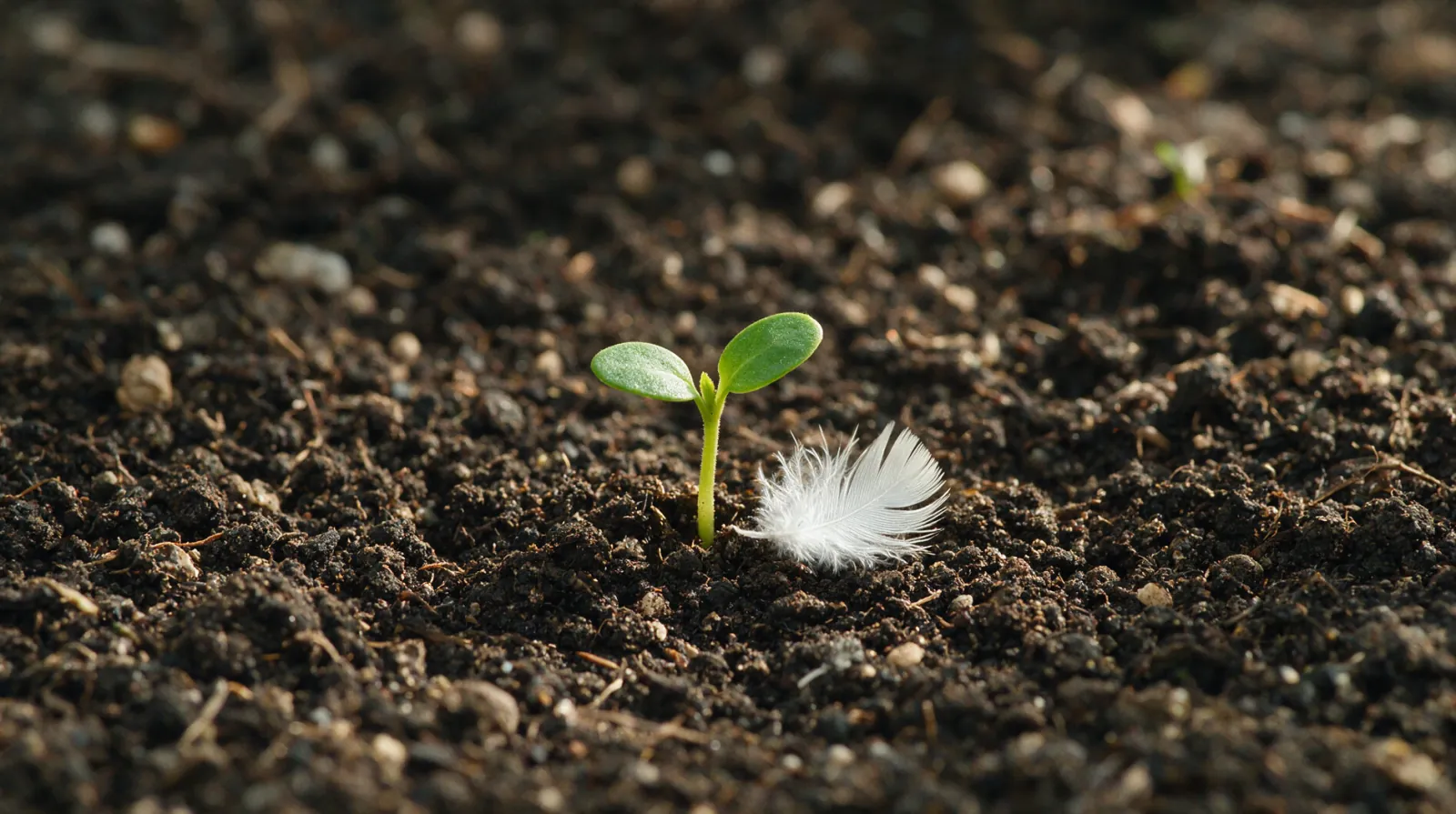
Cut a seed open and you will not find a miniature tree. You will find stored food, a small embryo, and a coat tough enough to wait out a winter. The shape of the future is written in chemistry rather than drawn in lines.
Give that seed water and warmth and the chemistry starts. A root goes down before a shoot goes up, which is the order that keeps a plant anchored while it reaches. The first leaves open toward light and begin the long work of turning air and water into something solid.
None of it is added from outside. It unfolds from what was already packed inside. A seed left in a drawer will keep. A seed pressed into wet soil in spring will not stay a seed for long. The conditions matter, and so does the waiting. The mistake people make with small things is expecting them to look like their future too soon.
The egg in a nest of sticks
A white stork's nest is a heap of twigs, grass and sometimes cloth, added to year after year until it can weigh as much as a small cart. In spring the pair tends it, and the female lays a clutch that both birds take turns warming.
For about a month the nest looks unchanged from below. The eggs do not move. The sitting bird shifts, stands, turns an egg with its beak, settles again. Then a chip appears, made from the inside, and a wet chick pushes free. Within weeks that chick stands on the rim of the nest and flaps at air it cannot yet use.
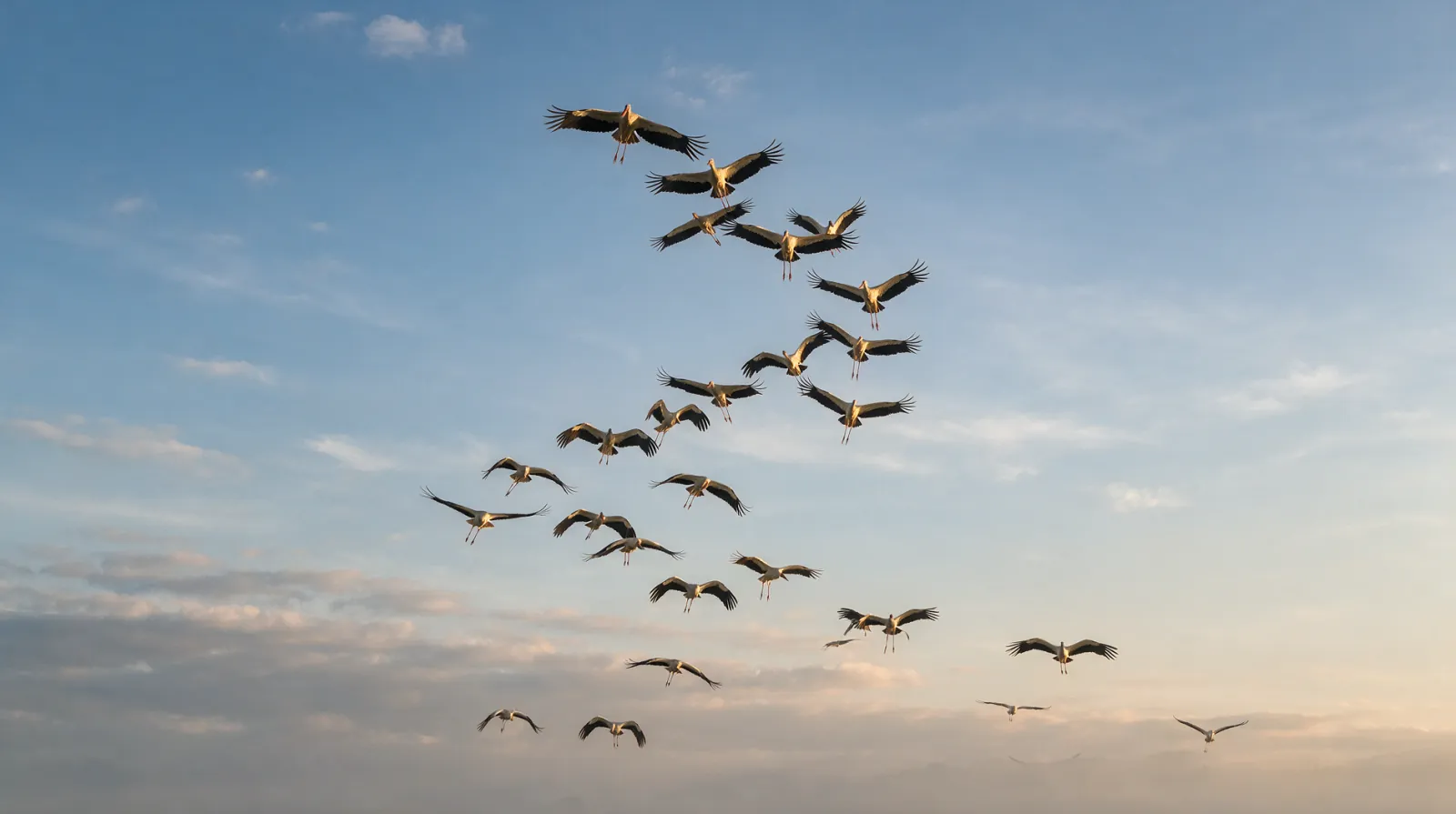
The flight across a continent starts in a shell the size of a fist. Nothing about the nest announces the change. A person walking past sees sticks and a bird. The work is happening under a warm body, out of sight, at a pace nobody can hurry.
A morning with no witnesses
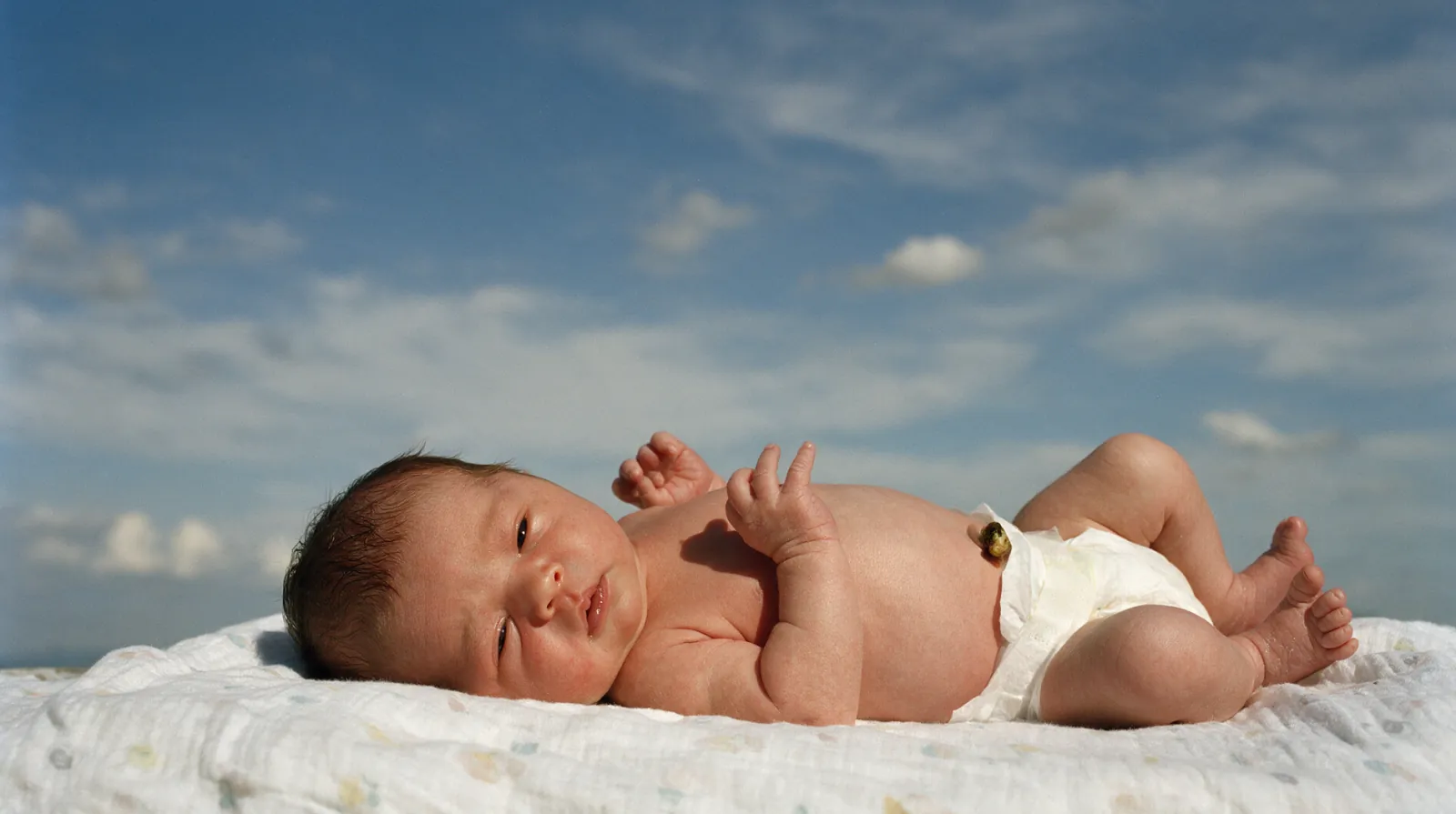
The first morning of a long story usually goes unrecorded. Nobody sets an alarm for it. Light comes through a gap in the curtains, finds a cot, and settles on a sleeping face, and the day that begins is the first full day of a life.
In a hospital the morning has its own noise, trolleys in the corridor and a handover at the desk. At home it is quieter. A parent wakes at the sound of a small shift in the cot, checks the clock, and finds that dawn arrived without them. The first morning needs no announcement. It arrives the way most mornings do, and nobody is performing.
By the end of that first day and night, something has completed a circuit. The sky has gone dark and light again over a person who was not here last week. It is the smallest unit of a life and also its whole shape: light, dark, hunger, sleep, arms.
A house with a newborn in it learns new rules fast. Doors close more slowly. The kettle gets switched on and forgotten. Meals are eaten standing up. Someone checks the cot every few minutes and finds the same sleeping bundle each time. The first morning teaches the rhythm that will run the next months: feed, change, settle, wait.
The grip that arrives first
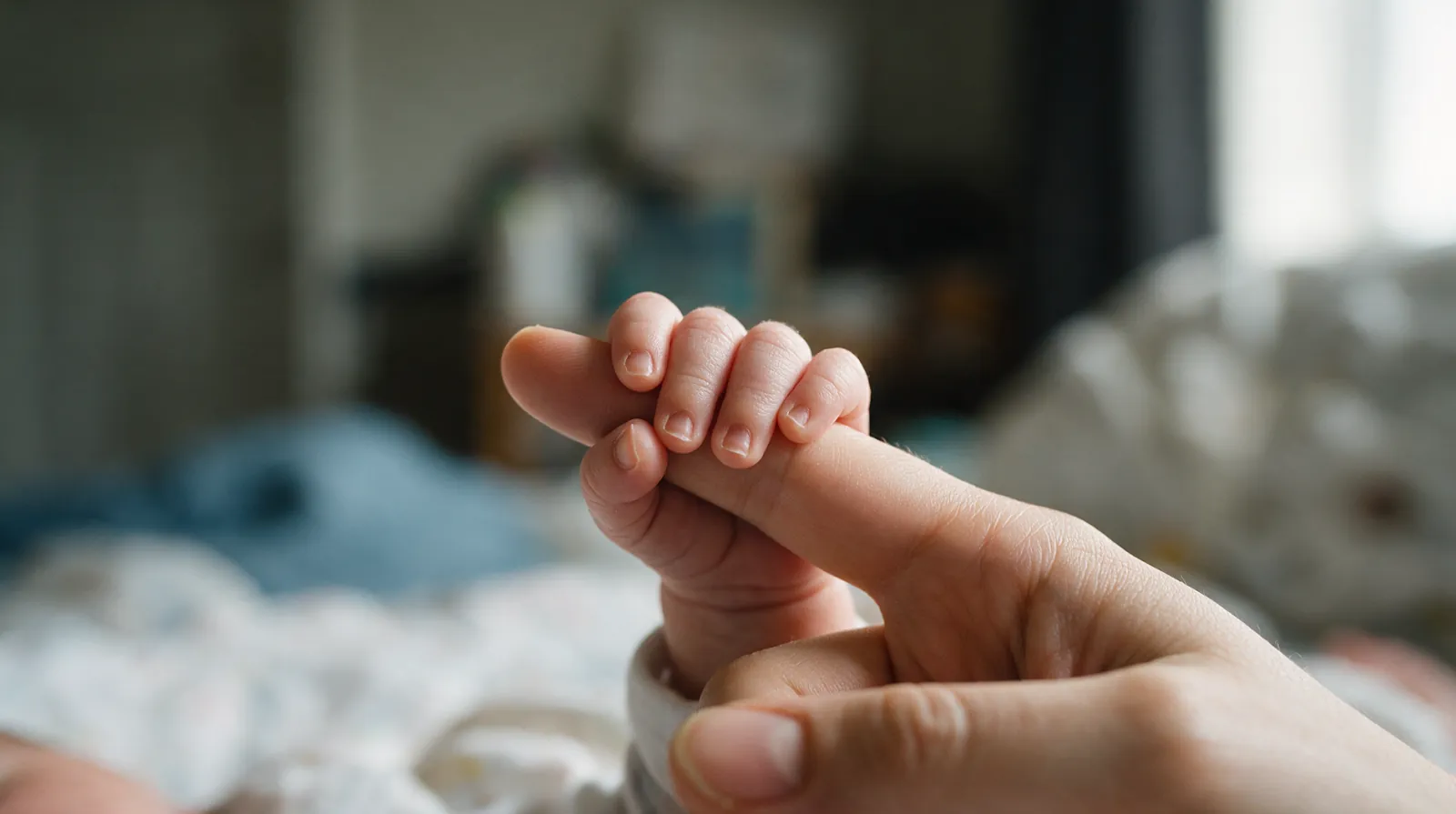
A newborn closes a fist around an adult finger and holds on with a force that seems borrowed from somewhere larger. The grip is there in the first hours. It needs no practice and no encouragement, and it will be gone before the baby learns to hold a spoon.
The palmar grasp is one of the reflexes a baby is born with. Stroke the palm and the fingers curl. Put a finger in and the hand closes. Some newborns can briefly hang from a bar this way, supporting their own weight. Parents find it by accident at two in the morning, then spend an hour offering a finger to see it happen again.
The strength is real and temporary. The reflex runs on its own wiring, and the baby has no idea what the hand is doing. Around three to six months, the automatic grip loosens and a deliberate one takes over. The baby opens the hand on purpose, looks at it, brings it to the mouth, and starts grabbing at whatever passes within reach.
Letting go is the skill that takes longest. A baby of six months can hold a block and cannot release it on request. By ten months the block is dropped, thrown and handed over, and the handing over is the beginning of sharing. The hands that gripped a finger without knowing what a finger was will learn to wave goodbye, to clap at a song, to pat a dog too hard.
Growth you cannot watch
Most growth happens out of sight. A child gains weight in sleep. A stork chick puts on bulk at a rate that would alarm anyone who watched it daily. Grass lifts a stone an inch over a summer without anyone seeing it move.
Families often mark a birth with something small and lasting, like a white stork that sits on a shelf while the child grows past it. The object stays the same size. The child does not. That is the quiet arithmetic of beginnings: the small thing stays small only for a season.
A beginning needs the right conditions and enough time, and it asks for little else. A seed is a crumb with a forest inside it. A newborn is a few kilos of sleep with a whole life folded in. The size of a beginning tells you almost nothing about what is coming. The card is one way to keep the date while the rest changes size.
If you want a small marker of a large beginning, adopt a stork for €9.99 once. The card stays the same size while the child grows past it, and the bird keeps flying somewhere out of sight.
Explore the gift