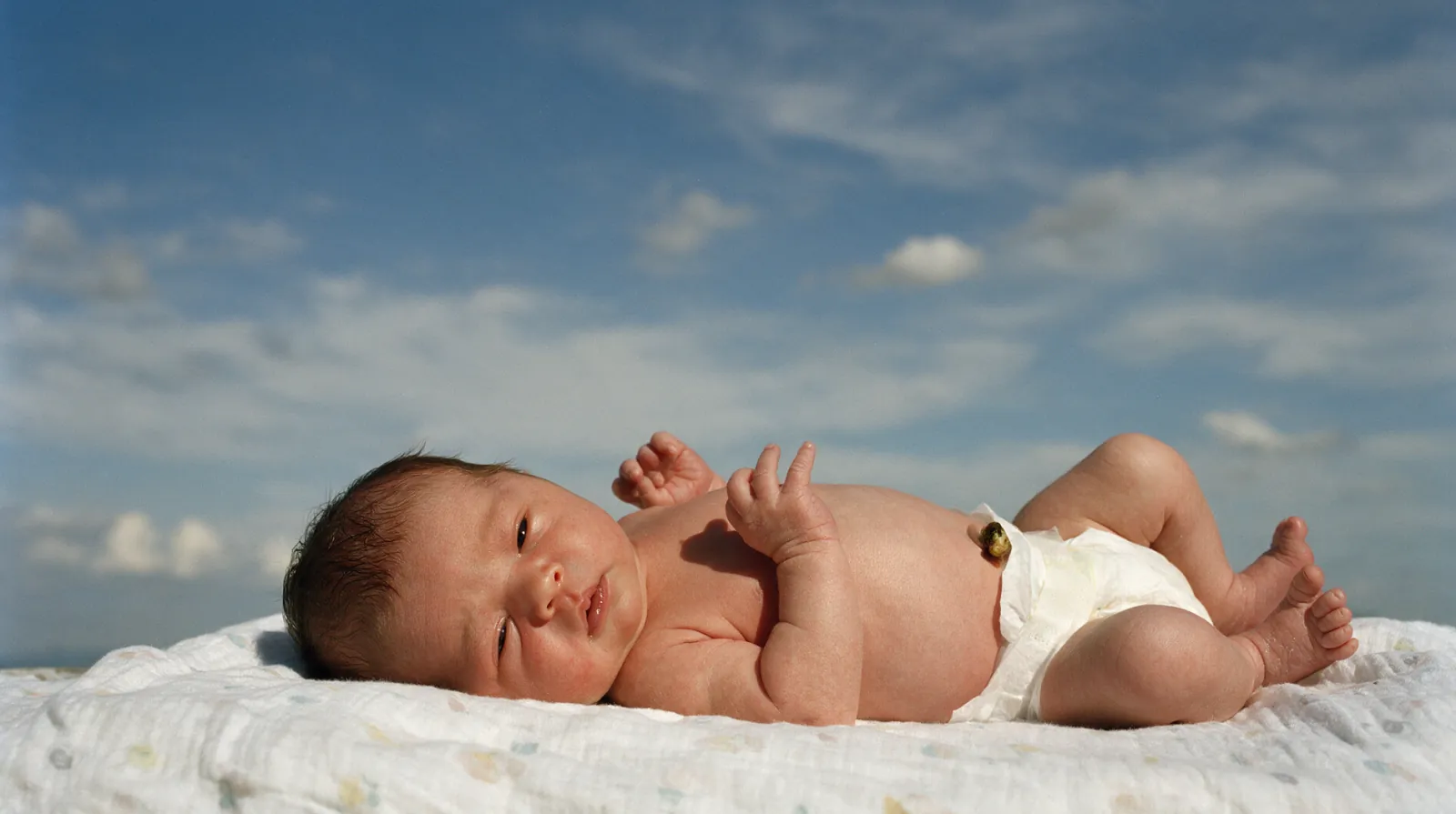
A small life and a wide sky meet without ceremony. A newborn is lifted from a pram on a path, the blanket slips, and the eyes find an open blue with no edge to it. The baby has known ceilings, a cot hood, the underside of a feeding chair. The sky is the first thing they see that does not stop.
The first look upward
It usually happens by accident. A walk pauses. Someone adjusts a hat. The baby's gaze drifts past the adult face and keeps going, into a brightness that has nothing to hold on to.
A newborn cannot make sense of it. The eyes focus best at about 20 to 30 centimetres, roughly the distance from a feeding face to the baby's own. Beyond that the world softens. A wide sky is mostly a wash of light and slow movement, which may be why it calms.
The sky gives the eyes no shape to hold. It has no edge to rest on, no corner to finish. The gaze slides across it and comes back. A baby who is easily crowded by noise and handling finds in the sky something that cannot be too much.
A pram hood can be pushed back. A blanket can be lifted. The sky arrives without either.
A sky that asks nothing
A wide sky makes room. There is no corner of it that is full. No shelf that will not take one more cloud. Parents feel it too. Standing with a baby under an open sky, the list of tasks loses its grip for a minute. The ceiling of the house, with its monitor and its night feeds, is out of sight.
The sky makes the day feel larger than the problem. In its place is the old, patient blue that has covered every child ever born. If a bird crosses that sky, so much the better.
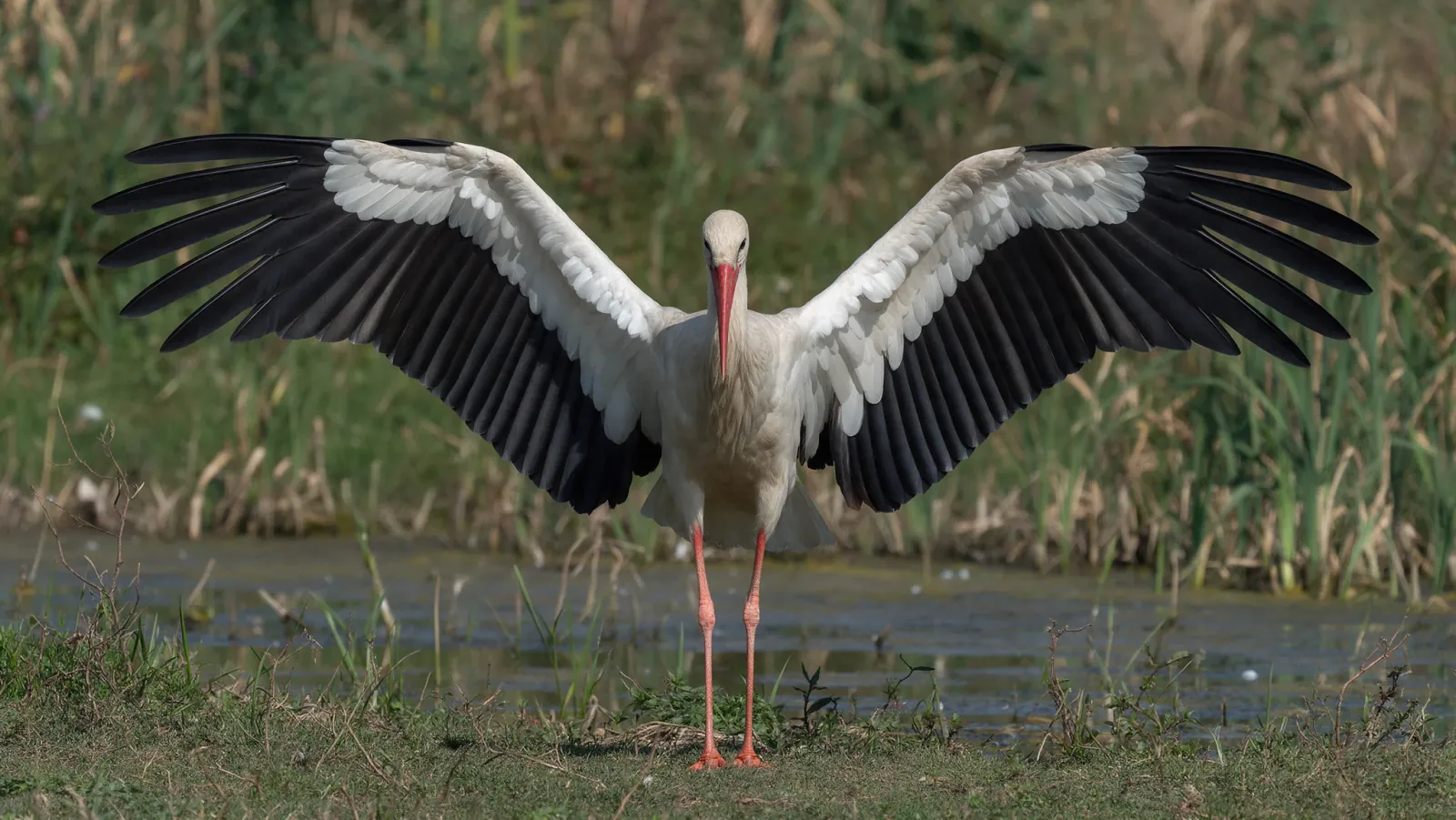
A white stork on a thermal rides the warm air in wide circles, climbing without a wingbeat. A baby cannot follow it yet. The bird is high enough that the sound of it does not arrive. Only the shape, the slow circle, the tilt of a wing. Storks use thermals on migration, spiralling up over warm ground before gliding south.
Clouds move slowly enough to follow. A bird crosses and is gone before the gaze catches up. The blue is the same blue that covered the house before the baby was born, and it will be there after the pram is gone.
The old world makes room
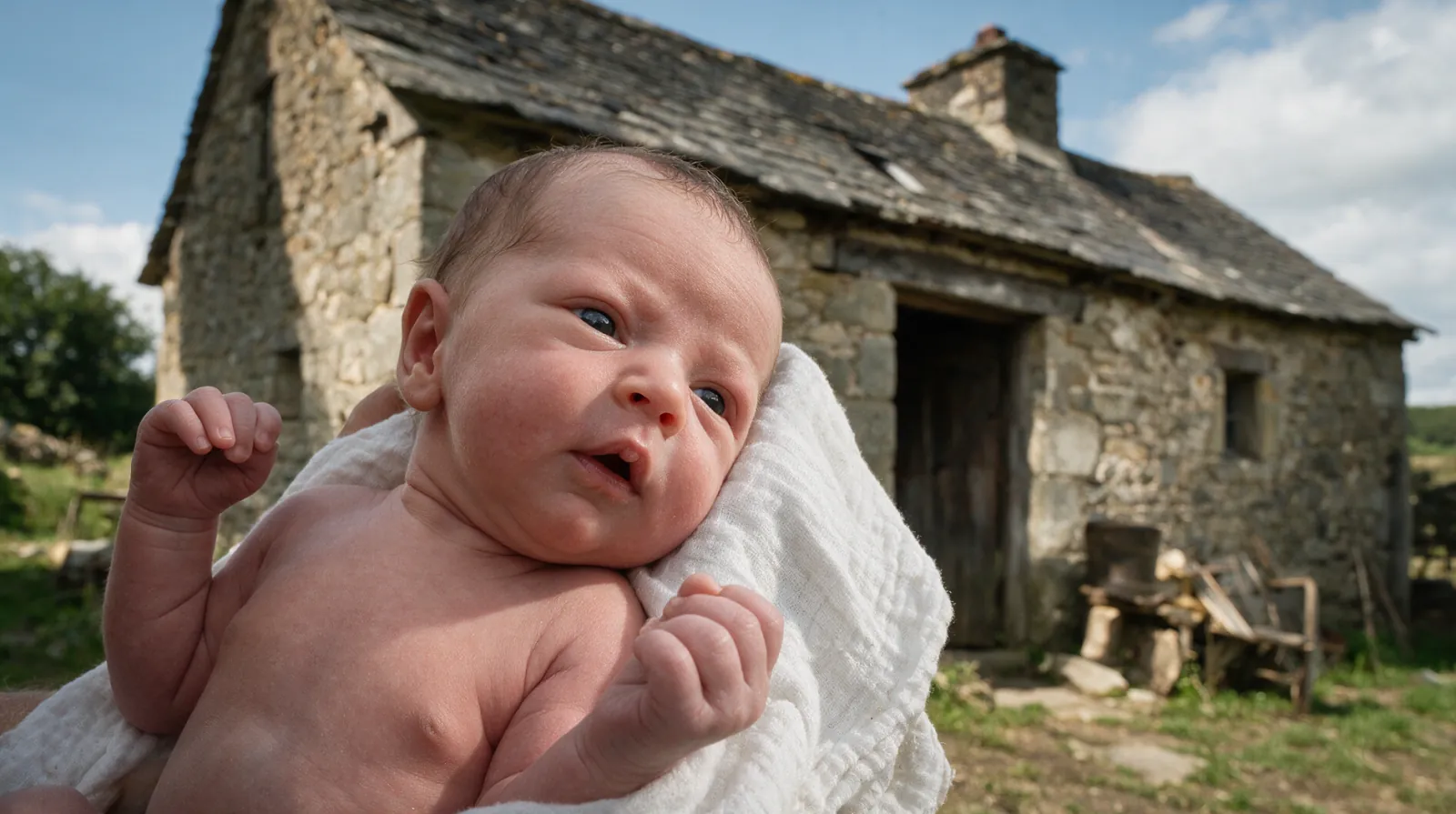
A newborn arrives in a stone house, in a village that was old before the parents were born, and the two meet without ceremony. Stone walls thick enough to hold summer heat and winter cold. Fields ploughed for centuries. A road that has carried feet and carts and cars for longer than anyone can remember.
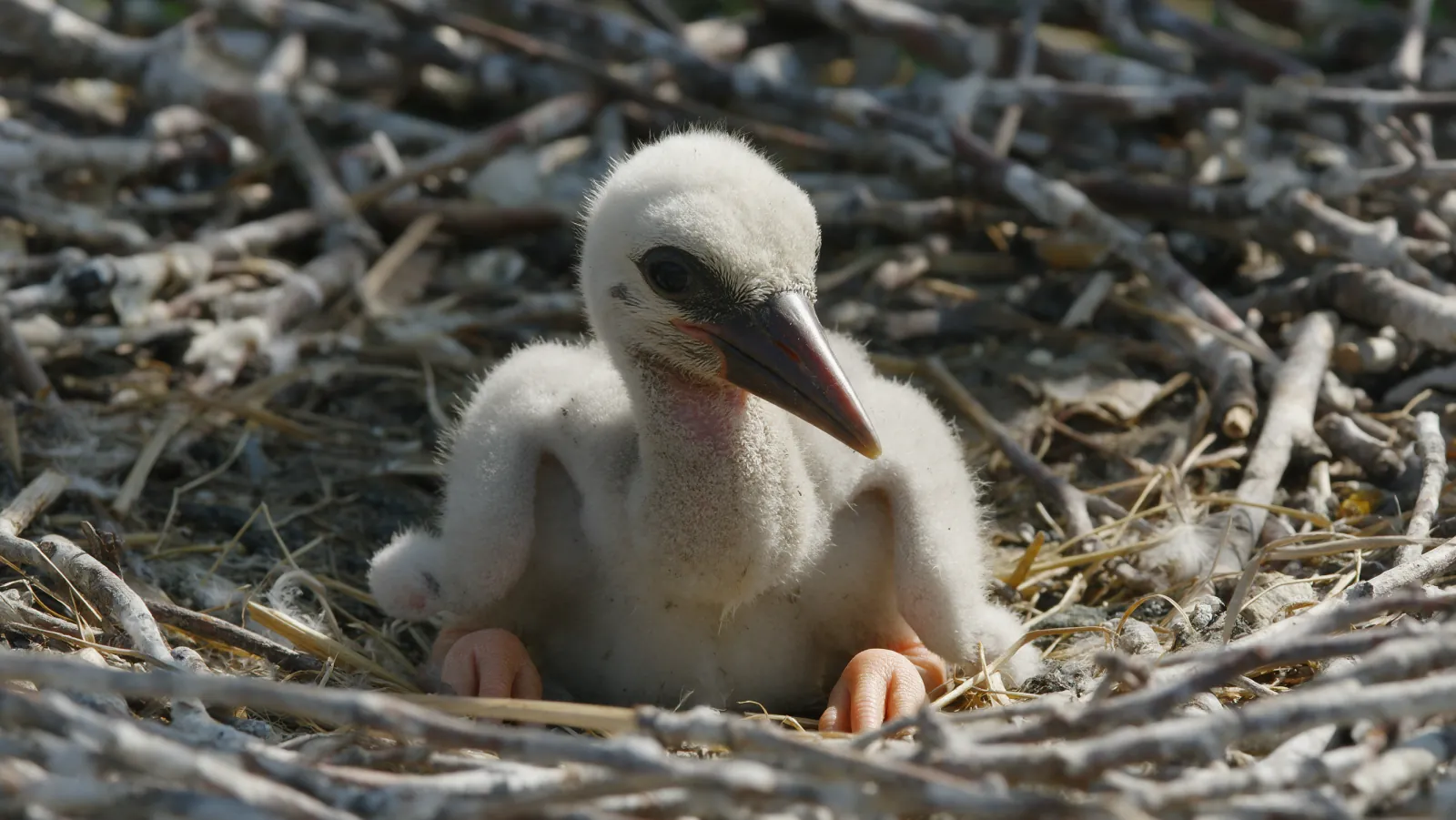
Into that settled place comes a person with no history and no habits. The old world makes room, the way it has made room for every life before this one. The walls do not shift. The seasons arrive in the same order. White storks return to the rooftops in spring, and the child will learn to watch for them the way every child in the village has.
The village has a shop, a church, a bus that comes twice a day. None of it is new, and all of it will be part of the child's map. A place that has lasted a long time can afford to wait.
There is comfort in arriving somewhere old. The world has already worked out how to hold a new life. The house is patient. The village is patient. The walls are not surprised by any of it. They have heard other babies cry in the same room and watched them grow and leave.
A fresh set of eyes
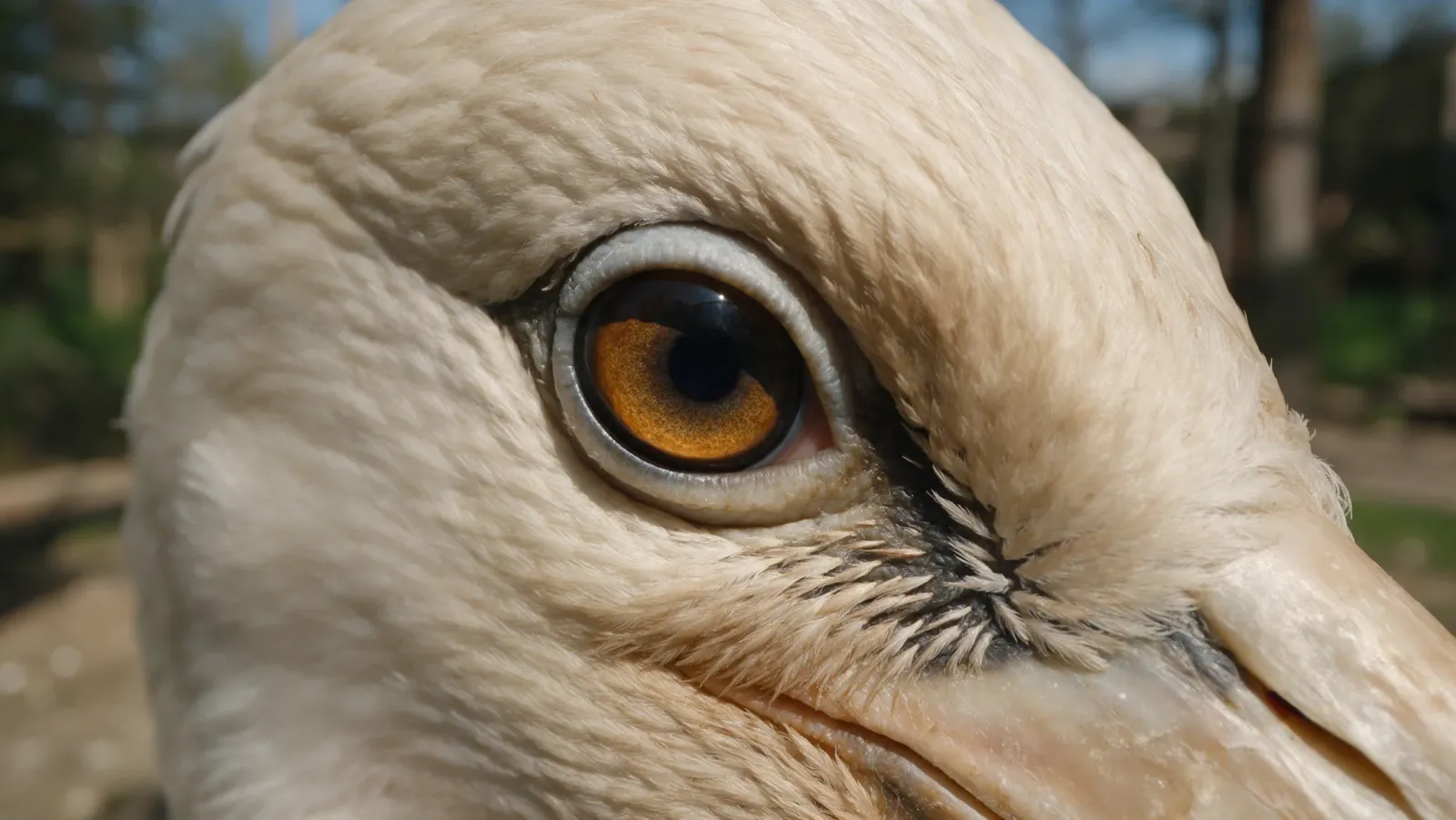
The house has been seen a thousand times. The baby will see it for the first time, and through the baby the parents see it again. The light on the stone. The sound of the door. The way wind moves a curtain. A baby notices the edge of a blanket, the grain of a table, the dust in a shaft of light. The parents had stopped seeing those things years ago.
The world gives its steadiness, and the baby gives back its freshness. In time the child will not be new. The old world will absorb the child the way it absorbs everyone. The child will learn the names of the roads and the seasons, and one day be old, watching a newer arrival the way the house once watched them.
The exchange runs both ways for a while, and then the child stops noticing too, and the next arrival starts it again.
Some families mark the arrival with a stork sent to the door, a small object from the year a new person joined an old place. The walls stay. The people change. The room gets used again.
A road out of sight
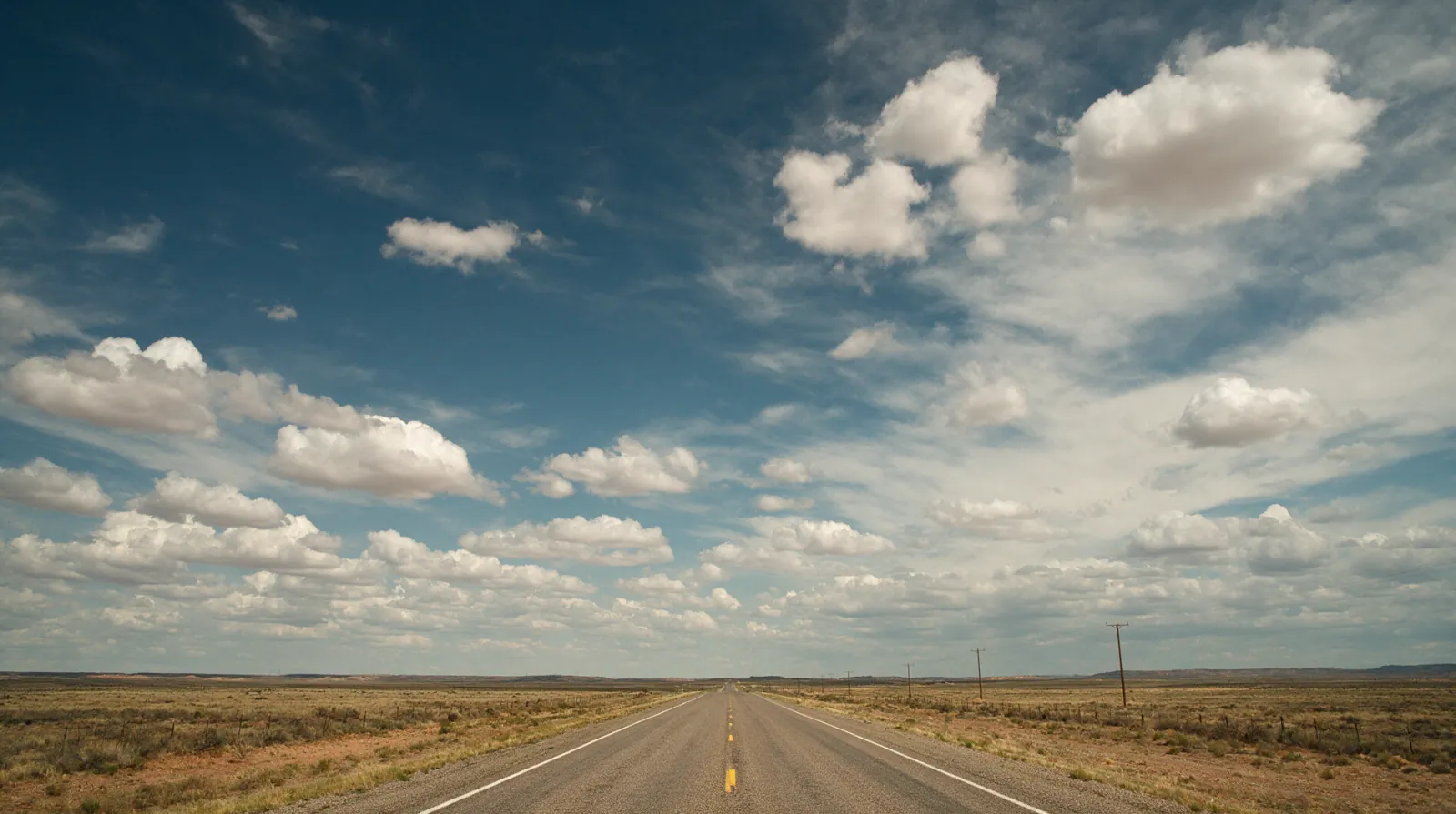
The whole story ahead is the truest thing anyone can say about a newborn. A long road lies in front of a new life, stretching past a horizon the family cannot see. None of it is written. The emptiness belongs to the child, to grow into and to shape.
Parents can plan a room, a name, a first coat, and then the child arrives with a temperament nobody ordered and the plan changes. Some of the road is already visible: the first tooth, the first word, the first day of school. The rest is weather.
A known story would be a small thing. The not knowing is what keeps the parents watching, the way a reader keeps turning pages. The wondering lasts a lifetime, and the child becomes someone who surprises everyone, including themselves.
An unwritten story can look empty. This one is not. The blank page holds the people already around it: parents, grandparents, siblings, friends not yet met. A grandparent's name will be part of it. A song played in the kitchen will be part of it.
The child will not choose these things and will carry them anyway. The story holds the old house, the wide sky, the seasons that will mark the years. Nobody standing at the start can see the end of it.
The first small step
Every road begins with something nobody notices. A first breath. A first feed. A first morning. The steps are small, and they are the start of everything. The road begins under a cot, in a room with a lamp and a chair.
Some families keep a stork with the name and date from that first week, a marker for the place where the road began. Adopt a stork and write the date on the base, then stand it where the window light reaches. The child will not remember it. The object will still be there when the road is too long to see back to the start.
For now there is a cot, a window, and a morning. The road waits. The child sleeps. The sky stays wide enough to hold whatever comes next.
Explore the gift